01 / Scenario
STUDIO
P
High-End Pilates Studios
Premium aesthetics meet quiet operation for boutique studio environments.
ISO
9001
CE
Certified
OEM
Available
10YR
Warranty
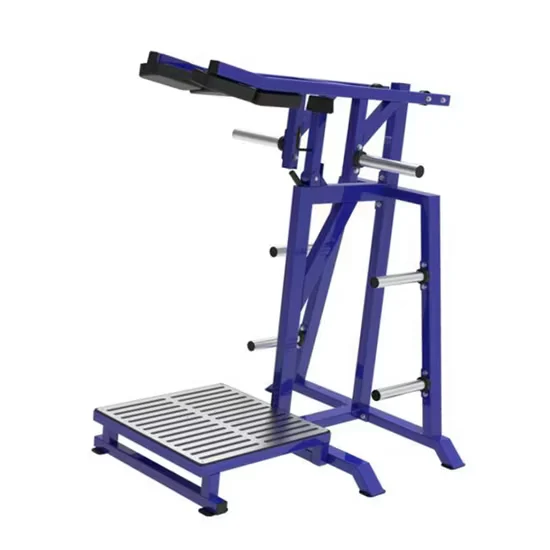
Stand Calf Raise Machine, 1390×1260×1700mm, 116kg Net Weight — engineered with industrial steel frame and plate-loaded resistance for high-repetition calf training in commercial environments. Robotic MIG welding ensures continuous weld lines, eliminating spot-weld fatigue under sustained loading. ISO9001 and CE certified, with OEM customization available for frame and cushion colors. Every unit undergoes individual load testing before shipment, backed by a 10-year frame warranty and professional floor planning support.
// Spec Highlights
• Direct from Manufacturer · No Middlemen · Worldwide Shipping
01
// Material
Imported Solid Wood
Premium hardwood frames sourced for density and visual warmth.
02
// Hardware
Medical-Grade Silent
Whisper-quiet pulleys and springs for clinical environments.
03
// Customization
Appearance OEM
Color, upholstery, and branding tailored to your studio.
04
// Service
Layout Design
Free venue planning for studios and rehab institutions.
Every component is selected for longevity, performance, and aesthetic harmony - from imported hardwood frames to silent medical-grade accessories.
// Features
11-Gauge Traceable Steel — Every coil of Q235/Q345 industrial steel used in this Stand Calf Raise Machine carries mill certification traceable from rolling mill to finished frame, ensuring verifiable structural integrity under repeated heavy loading.
| Parameter | Value |
|---|---|
| Product Type | Stand Calf Raise Machine |
| Frame Material | Steel, 11-gauge, 3×3 inch tube |
| Steel Grade | Q235 / Q345 industrial steel, mill-certified |
| Welding Type | Robotic MIG, continuous weld lines |
| Loading Type | Plate loaded |
| Bearing Type | Sealed industrial bearings |
| Powder Coating | 200μm scratch-resistant, sandblasted pre-treatment |
| Upholstery | High-density commercial grade, color customizable |
| Product Dimensions | 1390×1260×1700mm |
| Net Weight | 116kg |
| Certification | ISO 9001, CE |
| OEM/ODM | Acceptable |
| Warranty | 10-year frame |
| Facility Type | Typical Use |
|---|---|
| Commercial gym strength floor | Dedicated calf station in plate-loaded selector row |
| Hotel fitness center | Compact lower-body complement for limited footprint zones |
| University strength and conditioning room | High-frequency athlete calf development between squat rack sessions |
| CrossFit box functional zone | Plate-loaded accessory work adjacent to rig and platform areas |
| Rehabilitation and performance center | Controlled ankle plantarflexion loading for return-to-play protocols |
Continuous robotic MIG welds distribute stress across the entire joint, eliminating the single-point failure mode that spot welds introduce under eccentric calf loading.
The commercial stand calf raise machine endures a punishing load path: the user’s bodyweight plus added plates concentrate force through the shoulder pad carriage and down into the base frame at angles that shift with every rep. Spot-welded joints pass visual inspection on day one but develop microcracks within months of high-traffic use. A continuous weld bead, laid by robotic MIG along the full intersection of tube and gusset, resists this fatigue cycle far more effectively. When a gym operator replaces a cracked frame member mid-contract, the cost is never just the part — it is the downtime, the member complaint, and the credibility loss that compounds. [NEED_CITE: weld classification and fatigue performance in structural steel]
This machine targets ankle plantarflexion across a full range of motion, engaging the gastrocnemius and soleus under axial load. In a plate-loaded strength zone, it complements squat racks and leg press stations by isolating the lower-leg musculature that compound movements leave under-stimulated. The 1390×1260mm footprint allows placement at the end of a machine row without disrupting primary traffic lanes. Shoulder pad height and platform stance accommodate users from lighter-framed athletes to heavier powerlifters without adjustment hardware changes between sets. The commercial stand calf raise machine earns its floor space by filling a gap that no free-weight alternative addresses with equivalent stability.
A stand calf raise generates a distinctive load profile: peak force at full plantarflexion, rapid unloading at the bottom stretch, and lateral sway as users balance under heavy plates. This creates cyclic bending moments at the shoulder pad upright and torsional stress at the base frame junction. Over thousands of daily repetitions across multiple users, these stress concentrations challenge weld integrity, bearing seals, and platform fasteners alike. Sealed industrial bearings at the pivot points prevent sweat and chalk dust from penetrating the race, preserving smooth articulation where unsealed alternatives develop play. The 200μm powder coating resists abrasion at plate-loading horns and contact surfaces where bare steel would otherwise corrode from constant handling and cleaning chemical exposure. [NEED_CITE: EN 957 structural requirements for stationary training equipment]
The 11-gauge, 3×3 inch steel tubing resists deformation at load levels that would visibly deflect thinner-walled frames, keeping the shoulder pad carriage aligned with its intended travel path. Robotic MIG welding produces continuous bead geometry with consistent penetration depth, a structural advantage over manual spot welding where heat input varies operator to operator. Sealed bearings at moving joints eliminate the grit ingress that causes wobble in bushings and open bearings within the first year of commercial deployment. The sandblast pre-treatment before powder coating creates a mechanical anchor profile on the steel surface, preventing the flaking and under-film corrosion that thin coatings develop at high-wear contact points. Main frame and cushion colors are available as custom options to match facility branding requirements.
Thin-walled tubing flexes visibly under loaded plates, shifting the user’s center of gravity and introducing lateral instability at the shoulder pads. Spot-welded joints that crack under cyclic loading create a liability event — a failed frame member during a loaded set is an injury waiting to occur. Unsealed bearings and low-density bushings require frequent maintenance intervals that drain technician hours and create machine downtime. Low-density upholstery compresses and splits within months under daily commercial use, forcing replacement cycles that interrupt member access. Insufficient powder coating thickness at plate-loading contact points exposes bare steel to sweat corrosion, accelerating the visual degradation that signals poor maintenance to prospective members touring the facility. [NEED_CITE: commercial upholstery compression and replacement frequency in gym environments]
The 11-gauge frame with mill-traceable Q235/Q345 steel ensures that the tube wall thickness and material grade are verifiable, not marketing claims. Robotic MIG continuous welds on every joint intersection remove the operator variability that plagues manual welding on high-volume production lines. Every unit undergoes individual load testing before crating, not sample-based batch inspection, catching structural outliers before they reach the gym floor. The 200μm industrial powder coating with sandblast pre-treatment provides abrasion resistance at the plate horns and base frame contact points where finish failure appears first. A 10-year frame warranty backs the structural specification. For facility layout, 2D and 3D CAD planning support accounts for this machine’s 1390×1260mm footprint plus the safe clearance zones needed for plate loading and user entry from both sides.
Provide your strength floor area and existing machine list to receive a 2D or 3D layout showing this calf raise station integrated with safe clearance zones and traffic flow. Specify expected daily user volume so the structural grade aligns with your traffic density. Confirm the height and weight range of your primary user population to validate pad and platform accommodation. State any custom requirements for frame color, cushion color, or logo application to receive OEM quotation.
Q: How do I tell a commercial-grade calf raise machine from a light-commercial one?
A: Request the steel gauge and tube dimension with mill certification. Commercial-grade frames use 11-gauge or thicker steel with verifiable origin, continuous robotic welds, sealed bearings, and load testing on every unit. Light-commercial frames typically use thinner tubing, spot or manual welds, and batch-only inspection. Ask for individual unit test records, not sample reports.
Q: What is the relationship between steel tube specification and load capacity?
A: Tube wall thickness and cross-section dimension determine how much force the frame absorbs before deflecting. An 11-gauge, 3×3 inch tube resists bending under heavy plate loads far better than thinner, smaller-section alternatives. The steel grade, verified by mill certification, defines the material’s yield behavior. Together these parameters set the deformation threshold under repeated cyclic loading.
Q: How does the standing platform angle affect calf training mechanics?
A: A slight decline angle on the platform increases the stretch on the gastrocnemius at the bottom of the movement, extending the range of motion through which the muscle generates force. The platform surface must provide secure foot grip under loaded conditions. Non-slip tread and adequate width accommodate different foot positions for targeting medial and lateral calf heads.
Q: What is the replacement cycle for upholstery and shoulder pads?
A: High-density commercial upholstery withstands daily compression and abrasion significantly longer than standard foam. Replacement intervals depend on user volume and cleaning practices. Confirm with the manufacturer that replacement pads and covers remain available as spare parts for the specific model, ensuring long-term serviceability without full machine replacement.
Q: What clearance is needed around the machine for safe operation?
A: Allow space on both sides for plate loading and unloading, plus rear clearance for user entry and exit. The 1390×1260mm footprint should be surrounded by a minimum buffer zone that accounts for plate diameter and user movement. Facility layout CAD files help verify that adjacent equipment spacing meets safe operational standards.
Premium aesthetics meet quiet operation for boutique studio environments.
Medical-grade silence and precision for sports & postpartum recovery.
Furniture-grade craftsmanship for premium residential installations.
Compact premium setups for one-on-one and small-group training.
Aesthetic Pilates integration for hybrid wellness studio programming.
Multi-unit deployment with instructor-grade reliability for certification programs.
Tell us about your project. Our team will respond within 24 hours with pricing, customization options, and shipping details.
// Sales Director
William
+86 132 2531 1800
// Export Manager
Bella
+86 198 5412 8032
william@bickfit.com