01 / Scenario
STUDIO
P
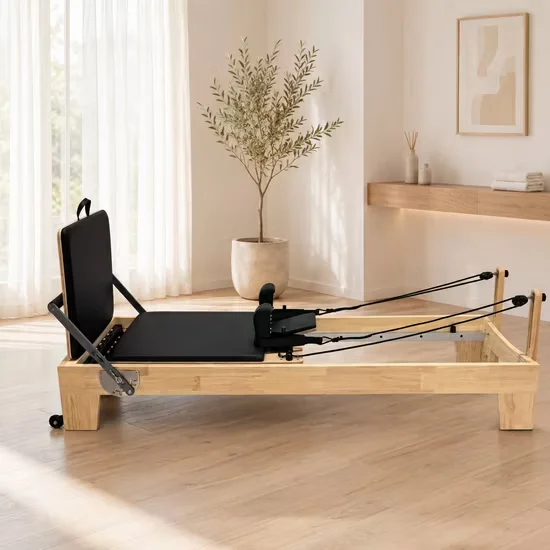
High-End Pilates Studios
Premium aesthetics meet quiet operation for boutique studio environments.
ISO
9001
CE
Certified
OEM
Available
10YR
Warranty
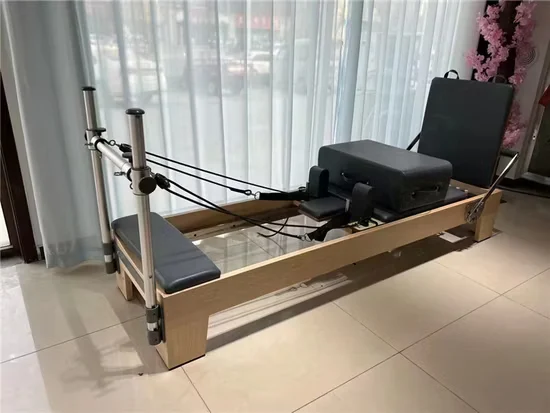
White Wood Pilates Reformer, 2460×730×680mm, 100kg Net Weight — solid wood frame engineered for high-frequency studio use, includes long box, jump board, and platform for full-body conditioning. Customized branding available for private label operators. Each unit undergoes 32-point inspection and 100% load testing before dispatch.
// Spec Highlights
• Direct from Manufacturer · No Middlemen · Worldwide Shipping
01
// Material
Imported Solid Wood
Premium hardwood frames sourced for density and visual warmth.
02
// Hardware
Medical-Grade Silent
Whisper-quiet pulleys and springs for clinical environments.
03
// Customization
Appearance OEM
Color, upholstery, and branding tailored to your studio.
04
// Service
Layout Design
Free venue planning for studios and rehab institutions.
Every component is selected for longevity, performance, and aesthetic harmony - from imported hardwood frames to silent medical-grade accessories.
// Features
Studio-Grade Structural Build — Every commercial wood pilates reformer leaves our line with full load testing to confirm rail alignment and frame rigidity under continuous daily scheduling.
| Parameter | Value |
|---|---|
| Product Type | Pilates Reformer |
| Model NO. | SRY-02 |
| Frame Material | Solid Wood |
| Carriage System | Precision Rail with Sealed Bearings |
| Resistance | Spring-Based, Multi-Level Tension |
| Upholstery | High-Density Commercial Foam, Vinyl Cover |
| Included Accessories | Long Box, Jump Board, Platform |
| Product Dimensions | 2460 × 730 × 680 mm |
| Net Weight | 100 kg |
| Logo | Customized Is Allowed |
| Color | Solid Color Options Available |
| Warranty | 3 Years |
| Production Capacity | 80 Pieces/Month |
| Facility Type | Typical Use |
|---|---|
| Pilates Studio | Daily group and private reformer sessions |
| Rehabilitation Center | Controlled resistance therapy and mobility work |
| Boutique Fitness Studio | Mixed-format classes combining reformer with mat work |
| Hotel Fitness Room | Guest-accessible low-impact strength sessions |
| Home Studio | Personal daily practice with full accessory range |
Most reformers marketed as studio-grade fail within the first year because the rail mounting lacks the structural tolerance for repeated carriage travel under load.
A commercial wood pilates reformer must handle the cumulative stress of back-to-back private sessions, group class rotations, and the lateral forces generated during jump board work. When the wood frame is not properly seasoned or the rail fasteners are undersized, the carriage develops play — and that play transfers directly into the user’s joints during controlled eccentric movements. We have seen competitor units where the rail mounting hardware worked itself loose after several months of heavy scheduling, creating an uneven glide path that instructors could feel through the foot bar [NEED_CITE: EN 957 structural requirements for stationary training equipment]. The wood itself, if sourced without proper moisture content verification, warps seasonally and throws the entire rail system out of parallel alignment.
The reformer anchors the primary movement station in any dedicated Pilates space, covering supine, prone, seated, and standing movement planes across the full accessory range. Paired with a cadillac or tower unit, it handles the majority of classical and contemporary repertoire while the long box extends the working surface for prone pulling and seated rowing patterns. The jump board converts the unit into a low-impact plyometric platform suitable for athletic conditioning clients. This commercial wood pilates reformer accommodates users across a wide height and weight range through adjustable spring tension and foot bar positioning, making it viable for studios serving diverse client populations from rehabilitation patients to advanced practitioners.
Static loading on the carriage during sustained holds, dynamic impact from jump board repetitions, and eccentric resistance during slow controlled returns each produce different stress profiles on the wood frame and rail mounting points. In a busy studio running six or more sessions daily, the carriage bearings complete thousands of travel cycles per week, and any misalignment accelerates wear on the rail contact surfaces [NEED_CITE: bearing fatigue classification under cyclic linear motion]. The spring attachment points endure repeated tension and release cycles that can fatigue undersized hardware over time. Upholstery on the carriage and shoulder rest blocks faces constant compression, perspiration exposure, and cleaning chemical contact — materials that compress too quickly create uneven support surfaces that instructors must compensate for during cueing.
Wood species selection and moisture content at the time of assembly determine whether the frame maintains dimensional stability across seasonal humidity changes — a frame assembled at twelve percent moisture content in a dry warehouse will absorb moisture and swell in a humid studio, shifting rail alignment. Rail material and machining precision control the carriage glide character: ground steel rails with sealed linear bearings deliver consistent resistance feel throughout the travel range, whereas unground rails with open bushings develop perceptible roughness within months. Spring wire gauge and coil geometry define both the resistance curve and the fatigue life — heavier gauge springs maintain their rated tension over more cycles before losing elasticity. The upholstery foam density directly determines how many months of daily compression the carriage pad will tolerate before permanent deformation creates pressure points under the user’s spine.
Thinner frame stock saves material cost upfront but introduces flex under loaded carriage travel, and that flex accelerates bearing wear on the rail system. Undersized spring hardware fatigues faster, requiring replacement intervals that compound maintenance labor costs across a fleet of reformers [NEED_CITE: spring fatigue life under cyclic tension loading]. Low-density foam on the carriage pad compresses within the first few months of commercial scheduling, forcing the studio to either re-pad the unit or accept client complaints about uneven support. Non-standard hardware on rail mounts and spring anchors means replacement parts are unavailable when wear components need servicing, effectively turning a maintainable asset into a disposable one.
Every wood frame is built from verified stock with moisture content checked before assembly, so the dimensions you receive at delivery remain stable through seasonal humidity shifts in your studio environment. Rail systems are mounted with precision hardware and verified for parallel alignment before the unit ships — we do not send out reformers with carriage play that an instructor will discover during the first session. Each commercial wood pilates reformer undergoes full load testing under simulated use conditions, confirming that the spring tension levels match specification and the carriage travels smoothly across the entire rail length. The 200μm industrial-grade coating on all metal hardware resists corrosion from perspiration and cleaning agents. Our facility planning support includes CAD layout files showing required clearance zones around each unit so your studio floor plan maintains safe passage between stations.
Provide your studio floor dimensions and planned equipment count so we can generate a 2D layout showing clearance requirements around each reformer station. Specify your expected daily session volume so we can confirm the structural grade matches your scheduling intensity. Indicate your target client demographic so we can verify the accessory configuration covers the repertoire you plan to program. Submit your branding requirements for logo placement and color selection to align the units with your studio identity.
Q: How do I determine whether a Pilates reformer meets commercial-grade standards?
A: Commercial-grade reformers must sustain daily scheduling without structural degradation. Verify the wood species and moisture content documentation, confirm the rail system uses sealed bearings rather than open bushings, request spring fatigue test data showing rated cycle life, and inspect the upholstery foam density specification. A unit that cannot provide these documentation points is typically built for lighter home-use duty cycles and will require premature component replacement in a studio environment.
Q: What are the trade-offs between solid wood and metal frame reformers?
A: Solid wood frames offer superior vibration damping and aesthetic warmth that clients associate with premium studio environments, but they require moisture content control to maintain dimensional stability. Metal frames eliminate seasonal movement concerns and tolerate wider humidity ranges, though they transmit more vibration during dynamic exercises like jump board work. The choice depends on your studio climate control consistency and the visual positioning of your brand.
Q: How does rail precision affect the user experience during sessions?
A: Rail precision directly controls carriage smoothness throughout the travel range. When rails are machined to tight tolerances and paired with sealed bearings, the user feels consistent resistance without catch points or lateral play. Poorly machined rails create perceptible roughness that distracts from movement quality and forces instructors to cue around equipment limitations rather than focusing on the client’s body mechanics.
Q: How should spring tension levels be selected for different client populations?
A: Spring selection should match the client’s strength level and the exercise being performed. Heavier gauge springs provide higher resistance suitable for athletic clients performing lower body pressing movements, while lighter springs allow controlled eccentric work for rehabilitation populations. A reformer with multiple spring attachment points gives instructors the range needed to progress clients without requiring equipment swaps mid-session.
Q: What is the expected replacement cycle for upholstery and accessories?
A: Upholstery lifespan depends on foam density and daily usage volume. In a studio running six or more sessions daily, high-density commercial foam typically maintains structural integrity for an extended period before compression creates uneven support surfaces. Long box padding and jump board covers experience different wear patterns than the main carriage and may require replacement on a separate schedule based on their specific contact frequency.
Premium aesthetics meet quiet operation for boutique studio environments.
Medical-grade silence and precision for sports & postpartum recovery.
Furniture-grade craftsmanship for premium residential installations.
Compact premium setups for one-on-one and small-group training.
Aesthetic Pilates integration for hybrid wellness studio programming.
Multi-unit deployment with instructor-grade reliability for certification programs.
Tell us about your project. Our team will respond within 24 hours with pricing, customization options, and shipping details.
// Sales Director
William
+86 132 2531 1800
// Export Manager
Bella
+86 198 5412 8032
william@bickfit.com