01 / Scenario
STUDIO
P
High-End Pilates Studios
Premium aesthetics meet quiet operation for boutique studio environments.

ISO
9001
CE
Certified
OEM
Available
10YR
Warranty
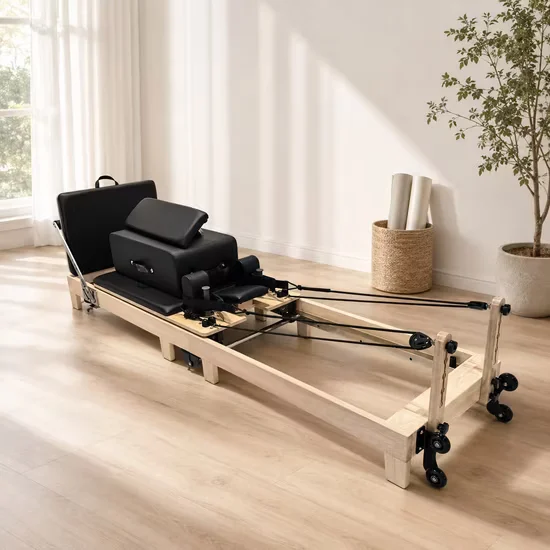
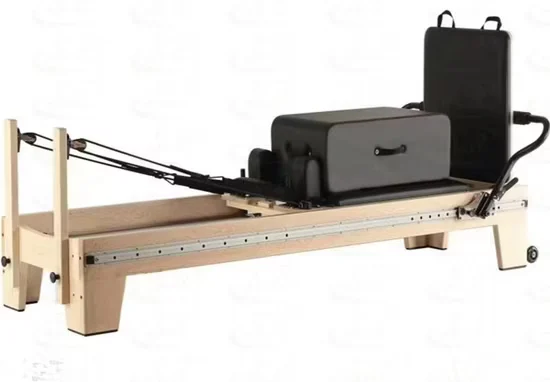
Wooden Pilates Reformer Machine, Oak/Maple Frame, 5-Spring Resistance System — engineered with solid hardwood construction and sealed bearing carriage for smooth, silent glide across 2460×730mm footprint. Includes long box, jump board, and platform accessories rated for high-traffic commercial studio use. 90kg net weight with 3-year warranty and standard wood case shipping. Each unit undergoes 32-point inspection and full load testing before dispatch.
// Spec Highlights
• Direct from Manufacturer · No Middlemen · Worldwide Shipping
01
// Material
Imported Solid Wood
Premium hardwood frames sourced for density and visual warmth.
02
// Hardware
Medical-Grade Silent
Whisper-quiet pulleys and springs for clinical environments.
03
// Customization
Appearance OEM
Color, upholstery, and branding tailored to your studio.
04
// Service
Layout Design
Free venue planning for studios and rehab institutions.
Every component is selected for longevity, performance, and aesthetic harmony - from imported hardwood frames to silent medical-grade accessories.
// Features
Load-Tested Frames — every unit undergoes structural verification before leaving the factory floor, not just sample-based inspections.
| Parameter | Value |
|---|---|
| Product Type | Pilates Reformer |
| Frame Material | Oak / Maple Solid Wood |
| Spring System | 5PC Springs with Resistance Grading |
| Product Dimensions | 2460 × 730 × 680 mm |
| Net Weight | 90 kg |
| Included Accessories | Long Box, Jump Board, Platform |
| Upholstery | Commercial-grade vinyl, color options available |
| Finish | Protective wood coating, moisture-resistant |
| Customization | Logo and color options available |
| Warranty | 3 Years |
| Facility Type | Typical Use |
|---|---|
| Commercial Pilates Studio | Daily group and private reformer sessions across all skill levels |
| Hotel and Resort Wellness Center | Guest-accessible Pilates programming with minimal supervision |
| Rehabilitation and Physiotherapy Center | Controlled resistance work for injury recovery and postural correction |
| Private Training Studio | One-on-one instruction with full accessory utilization |
| University Athletic Training Room | Supplementary flexibility and core conditioning for athletes |
A reformer frame either resists torsional flex or it doesn’t — and the difference shows within the first six months of commercial rotation.
The market is saturated with equipment labeled "commercial Pilates reformer" where the wood specification stops at a generic "solid wood" claim. In reality, frames built from low-density composite or undersized lumber develop joint play where the carriage rail meets the end stops. Under daily studio scheduling — eight or more sessions per day — that play compounds into audible creaking, uneven carriage travel, and eventually structural separation at the bolt-through joints [NEED_CITE: wood joinery fatigue under cyclic loading in fitness equipment]. This commercial wooden pilates reformer machine specifies oak or maple, both closed-grain hardwoods with density ratings that resist the compression deformation that softer woods accumulate at the carriage contact points.
This reformer addresses the full sagittal and transverse plane repertoire — footwork series through the springs, long box prone and supine work, jump board plyometrics, and platform-based standing balance drills. In a studio layout, it pairs with mat stations for warm-up sequences and cadillac or tower units for advanced spinal articulation work. The 2460 mm footprint fits standard commercial studio bay widths with adequate clearance for instructor circulation on both sides. Users across a broad anthropometric range — from adolescent athletic development clients to adult rehabilitation populations — can work within the carriage travel and spring tension range without accessory modification.
The loading profile on a commercial wooden pilates reformer machine is deceptively demanding: the carriage generates repeated impact at both ends of travel during jump board work, while the spring anchor points endure constant tension cycling through hundreds of resistance transitions daily. The highest stress concentration occurs at the rail-to-frame junction, where lateral forces from off-center footwork transfer into the wood joint. Sweat and cleaning solutions create a secondary degradation path — moisture penetrating unsealed end grain causes localized swelling that throws the rail alignment out of parallel [NEED_CITE: moisture-induced dimensional change in hardwood fitness equipment frames]. The protective coating on this frame addresses both surface abrasion from carriage contact and moisture ingress from studio humidity and chemical cleaners.
Oak and maple occupy different positions on the hardness scale, and the choice affects long-term performance. Maple’s tighter grain structure produces a smoother rail surface that requires less frequent conditioning, while oak’s higher density at the joint interfaces resists the compression set that develops where bolts pass through the frame. The five-spring configuration provides graded resistance — lighter springs for rehabilitation and precision work, heavier springs for strength-focused footwork and jump board loading. Carriage smoothness depends on the bearing or bushing type at the rail contact: sealed bearings maintain consistent travel feel across thousands of cycles, whereas unsealed bushings accumulate dust and develop lateral play that manifests as carriage wobble during single-leg exercises. The 90 kg net weight reflects frame mass sufficient to resist walking or shifting during aggressive jump board sequences without permanent floor anchoring [NEED_CITE: equipment stability requirements for dynamic loading in commercial fitness environments].
Thin-frame reformers built from undersized lumber flex visibly when a user pushes through heavy spring resistance in footwork — that flex isn’t a feel issue, it’s an alignment issue that accelerates rail wear unevenly. Non-sealed carriage bearings in a studio environment filled with chalk dust, skin cells, and cleaning residue develop grit intrusion that scores the rail surface permanently. Springs wound from ungraded wire lose tension calibration at different rates, meaning the five-spring system no longer delivers predictable resistance increments. Frames finished with single-coat sealant rather than multi-layer protective treatment absorb sweat and humidity at the end grain, producing dark staining and eventual fiber breakdown at the most structurally critical joints [NEED_CITE: wood finish degradation pathways in high-use commercial environments]. Hardware specified to non-standard thread pitches creates a supply chain problem when replacement bolts or spring hooks are needed.
The frame material on this commercial wooden pilates reformer machine traces to verified oak or maple stock, not unmarked lumber batches. Every welded component on our strength equipment line — and by extension every hardware fitting on this reformer — passes through robotic continuous MIG welding with no spot-weld shortcuts that create fatigue failure origins. Each unit receives load testing before shipment, meaning the carriage and spring system are cycled under resistance to confirm smooth travel and structural rigidity. The 200μm powder coating standard we apply across metal components extends to all hardware fittings on this reformer for corrosion resistance in humid studio conditions. Our floor planning support includes CAD layouts that calculate safe clearance zones around each reformer station, accounting for jump board extension and instructor access paths. OEM customization covers logo placement and color matching for studio branding requirements.
Provide your studio floor dimensions and target station count to receive a 2D or 3D layout showing safe clearance zones around each commercial wooden pilates reformer machine. Specify your expected daily session volume so we can confirm the frame specification matches your usage intensity. Indicate whether your client population skews toward rehabilitation, general fitness, or athletic performance so we can advise on spring configuration and accessory prioritization. Submit branding requirements early if logo placement or custom upholstery color is needed for studio identity alignment.
Q: How do I verify whether a Pilates reformer is genuinely commercial-grade versus home-use construction?
A: Check three structural indicators: the frame wood species and thickness at joint interfaces, the carriage bearing type (sealed bearings indicate commercial intent, while plastic bushings indicate light-duty design), and the spring wire grading. Commercial units withstand eight-plus daily sessions without developing rail play or spring fatigue within the first year of operation.
Q: What is the practical difference between oak and maple frames for studio use?
A: Maple provides a smoother rail surface with tighter grain, requiring less frequent conditioning and producing quieter carriage travel. Oak delivers higher density at bolt-through joints, resisting compression deformation in high-load applications like jump board work. Both species outperform softwoods and composite materials in long-term structural stability.
Q: How does the five-spring system accommodate different training objectives?
A: The graded resistance configuration allows instructors to select lighter springs for rehabilitation and precision control work, or combine heavier springs for strength-focused footwork and plyometric loading through the jump board. Predictable tension increments across all five springs enable consistent programming without guesswork during session transitions.
Q: What maintenance schedule keeps the carriage system operating smoothly?
A: Monthly inspection of bearing surfaces and rail contact points catches dust accumulation before it causes scoring. Quarterly bolt retightening compensates for natural wood compression at hardware joints. Annual spring tension verification confirms that resistance grading remains accurate across the full set, preventing uneven loading during bilateral exercises.
Premium aesthetics meet quiet operation for boutique studio environments.
Medical-grade silence and precision for sports & postpartum recovery.
Furniture-grade craftsmanship for premium residential installations.
Compact premium setups for one-on-one and small-group training.
Aesthetic Pilates integration for hybrid wellness studio programming.
Multi-unit deployment with instructor-grade reliability for certification programs.
Tell us about your project. Our team will respond within 24 hours with pricing, customization options, and shipping details.
// Sales Director
William
+86 132 2531 1800
// Export Manager
Bella
+86 198 5412 8032
william@bickfit.com