01 / Scenario
STUDIO
P
High-End Pilates Studios
Premium aesthetics meet quiet operation for boutique studio environments.
ISO
9001
CE
Certified
OEM
Available
10YR
Warranty
10-year frame warranty and professional floor planning support available for bulk commercial orders.
// Spec Highlights
• Direct from Manufacturer · No Middlemen · Worldwide Shipping
01
// Material
Imported Solid Wood
Premium hardwood frames sourced for density and visual warmth.
02
// Hardware
Medical-Grade Silent
Whisper-quiet pulleys and springs for clinical environments.
03
// Customization
Appearance OEM
Color, upholstery, and branding tailored to your studio.
04
// Service
Layout Design
Free venue planning for studios and rehab institutions.
Every component is selected for longevity, performance, and aesthetic harmony - from imported hardwood frames to silent medical-grade accessories.
// Features
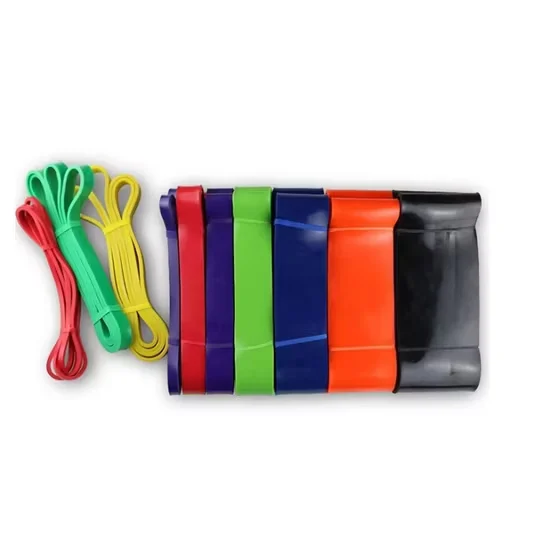
Latex Grade Dictates Band Longevity — Natural latex formulation with multiple width and thickness options ensures consistent elasticity retention under repeated commercial loading cycles without premature snapping or permanent stretch.
| Parameter | Value |
|---|---|
| Product Type | Resistance Band |
| Model NO. | ARB-1000 |
| Product Name | Fitness Latex Resistance Bands |
| Specification | 2080 × 4.5 × 6.4/13/19/21/29/32/45/64/83/102 mm |
| Color | Customized Color |
| Logo | Customized Logo Available |
| MOQ | 50 set |
| Origin | China |
| HS Code | 9506911900 |
| Production Capacity | 10,000 / Year |
| Facility Type | Typical Use |
|---|---|
| Commercial Gym Strength Floor | Accessory zone warm-up, mobility circuits, and resistance-assisted movement preparation |
| CrossFit Box Functional Zone | Band-resisted locomotion drills, partner-assisted stretching, and portable load variation |
| Hotel and Resort Fitness Center | In-room and studio strength training for guests with limited equipment footprint |
| Rehabilitation and Performance Center | Progressive resistance protocols for joint stabilization and controlled range-of-motion work |
Natural latex grade and dimensional tolerance determine whether a commercial customizable latex resistance band survives daily repetition or becomes a recurring replacement cost.
Facilities that source bands based on color alone often discover within weeks that synthetic blends lose elasticity under chalk exposure and repeated anchor-point loading. The latex compound itself — its natural rubber content, vulcanization consistency, and cross-section uniformity — governs snap resistance and long-term stretch recovery. When width and thickness vary even slightly across a production batch, resistance calibration becomes unreliable for structured programming. [NEED_CITE: material grade standards for natural rubber fitness accessories]
A commercial customizable latex resistance band occupies the portable resistance layer of any strength facility — bridging the gap between bodyweight warm-up and loaded compound movement. Multiple width and thickness options allow progressive overload without requiring additional equipment footprint, making it suitable for high-density functional zones where floor space is allocated to rigs and cable stations. The customizable color and logo capability lets facilities maintain visual brand consistency across accessory inventory, while the length and dimensional range accommodates users across a broad anthropometric spectrum for both unilateral and bilateral movement patterns.
Resistance bands experience cyclical tensile stress that differs fundamentally from the compressive and shear loads placed on steel-frame equipment. Each repetition stretches the latex matrix along its full length, concentrating strain at anchor points and any surface contact with floor hardware or rig attachments. In high-traffic environments where bands cycle through dozens of users daily, the cumulative fatigue load accelerates micro-tear formation in lower-grade compounds. Width and thickness directly influence the cross-sectional area absorbing that stress — a 102 mm band distributes load across substantially more material than a 6.4 mm band, which is why resistance level progression must align with intended use intensity. The natural latex formulation resists the brittleness that synthetic alternatives develop under UV exposure and cleaning chemical contact, though proper storage away from direct sunlight and ozone-generating equipment remains essential for maximizing service life. [NEED_CITE: elastomer fatigue behavior under cyclic tensile loading]
The 2080 mm length provides sufficient material for full-body anchoring — whether looped around rig uprights, threaded through door anchors, or held for upper-body isolation work. The 4.5 mm thickness remains constant across the width range, meaning resistance progression is achieved entirely through width variation: from 6.4 mm for rehabilitation-grade light resistance up to 102 mm for heavy-load compound movement assistance. This dimensional approach allows facilities to color-code bands by resistance level using the customized color option, creating an intuitive visual system for members and staff. The production tolerance on length and width directly affects resistance consistency — bands cut from the same extruded sheet with controlled dimensional accuracy deliver predictable force curves, while inconsistent cutting produces units that feel mismatched despite identical labeling.
Facilities that prioritize unit price over material specification frequently encounter bands that develop permanent elongation within weeks, requiring complete inventory replacement rather than targeted substitution. Lower-grade latex compounds or synthetic blends may pass initial stretch testing but degrade rapidly under the combined assault of sweat, chalk residue, and mechanical abrasion from floor contact. When bands snap under load — particularly during assisted squat or pull-up variations — the safety liability extends beyond equipment cost to member injury risk. Non-standard dimensions also create calibration problems: a band labeled as medium resistance from one supplier may deliver significantly different force output than a competitor’s medium, undermining program integrity and user trust in the facility’s accessory selection. [NEED_CITE: tensile failure modes in natural versus synthetic rubber compounds]
The commercial customizable latex resistance band benefits from the same manufacturing discipline applied to BICKFIT’s structural equipment lines. Natural latex material sourcing follows mill-certified supply chains, with batch testing confirming compound consistency before extrusion. Dimensional tolerance control leverages the same precision cutting infrastructure used for steel frame components, ensuring length and width accuracy across production runs. Custom color and logo capabilities integrate with the facility’s existing brand palette — matching rig uprights, cable station upholstery, or plate coating colors for a unified visual environment. The 50-set MOQ accommodates both initial facility outfitting and periodic replacement orders without excessive inventory commitment. OEM private label options allow distributors and chain operators to maintain brand consistency across accessory categories.
Provide your functional zone dimensions and current accessory inventory to receive a resistance band layout recommendation aligned with your training flow. Specify daily user volume and target resistance level distribution to ensure the width range matches your programming intensity. Indicate custom color requirements and logo placement preferences for brand-matched accessory integration.
Q: How can procurement teams verify natural latex content versus synthetic alternatives?
A: Request material certification documentation specifying natural rubber compound percentage. Natural latex exhibits distinct elasticity recovery characteristics and odor profile compared to TPE or synthetic blends. Reputable suppliers provide batch-level material testing confirming composition before production.
Q: How do width and thickness determine resistance level for user progression?
A: With constant thickness across the range, resistance increases proportionally with width — more material cross-section means greater force required for equivalent stretch. Facilities typically stock 4-6 width options covering rehabilitation through heavy-load assistance, allowing structured progression without equipment changes.
Q: What service life can commercial facilities expect under daily use?
A: Service life depends on usage frequency, storage conditions, and resistance level relative to user strength. Natural latex bands in high-traffic environments typically require replacement within 3-6 months of daily use, while moderate-use facilities may achieve longer intervals. Regular inspection for surface degradation determines replacement timing.
Q: What are the custom color and logo options, including MOQ and lead times?
A: Customized color matching is available against Pantone references with 50-set minimum order quantity. Logo application uses silk-screen or debossing methods depending on design complexity. Lead times vary based on customization scope and production scheduling — confirm specifics during inquiry.
Premium aesthetics meet quiet operation for boutique studio environments.
Medical-grade silence and precision for sports & postpartum recovery.
Furniture-grade craftsmanship for premium residential installations.
Compact premium setups for one-on-one and small-group training.
Aesthetic Pilates integration for hybrid wellness studio programming.
Multi-unit deployment with instructor-grade reliability for certification programs.
Tell us about your project. Our team will respond within 24 hours with pricing, customization options, and shipping details.
// Sales Director
William
+86 132 2531 1800
// Export Manager
Bella
+86 198 5412 8032
william@bickfit.com