01 / Scenario
STUDIO
P
High-End Pilates Studios
Premium aesthetics meet quiet operation for boutique studio environments.

ISO
9001
CE
Certified
OEM
Available
10YR
Warranty
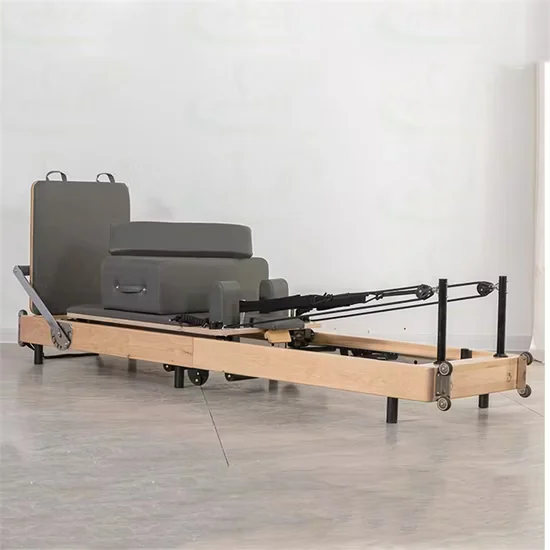
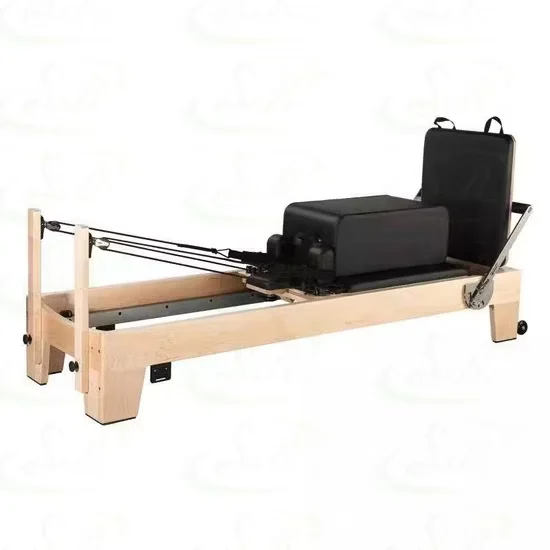
Foldable Pilates Reformer Machine, 2550×680×350mm, 65kg Net Weight, Foldable Assembly — aluminum alloy frame construction reduces weight while maintaining structural rigidity at folding joints; integrated accessory system includes long box, jump board, and platform for full-range training in compact storage footprint. 3-year warranty covers frame and moving components for home and studio deployment confidence.
// Spec Highlights
• Direct from Manufacturer · No Middlemen · Worldwide Shipping
01
// Material
Imported Solid Wood
Premium hardwood frames sourced for density and visual warmth.
02
// Hardware
Medical-Grade Silent
Whisper-quiet pulleys and springs for clinical environments.
03
// Customization
Appearance OEM
Color, upholstery, and branding tailored to your studio.
04
// Service
Layout Design
Free venue planning for studios and rehab institutions.
Every component is selected for longevity, performance, and aesthetic harmony - from imported hardwood frames to silent medical-grade accessories.
// Features
Aluminum Alloy Frame Integrity — Mill-traceable extrusion profiles with reinforced folding joints engineered to resist carriage wobble over repeated setup and stowage cycles.
| Parameter | Value |
|---|---|
| Product Type | Pilates Reformer |
| Frame Material | Aluminum Alloy |
| Product Dimensions | 2550 × 680 × 350 mm |
| Net Weight | 65 kg |
| Assembly State | Foldable |
| Color | Solid Color (custom options available) |
| Logo | Customized Is Allowed |
| Included Accessories | Long Box, Jump Board, Platform |
| Warranty | 3 Years |
| Facility Type | Typical Use |
|---|---|
| Home fitness spaces | Stowable reformer training in limited square footage environments |
| Boutique Pilates studios | Flexible floor planning with multi-room deployment capability |
| Personal training facilities | Semi-commercial reformer sessions with moderate daily throughput |
| Rehabilitation centers | Low-impact controlled-resistance therapy and recovery programming |
Most foldable reformers develop carriage misalignment at the hinge long before the aluminum extrusion itself shows fatigue.
The weak link in any foldable Pilates reformer machine for home use is never the main rail — it is the folding interface. When a hinge mechanism relies on thin-wall pivot brackets or undersized locking pins, each fold-and-unfold cycle introduces micro-play that compounds into visible carriage drift within months of daily operation [NEED_CITE: fatigue cycle classification for aluminum folding mechanisms]. Studio operators who rotate reformers between group classes experience this accelerated wear firsthand: the carriage begins tracking off-center, wheels chatter on the rail, and spring anchors see uneven loading that shortens their service life. This unit addresses that failure path by reinforcing the hinge zone with thicker bracket profiles and a positive-lock engagement that holds the frame in rigid alignment when deployed.
A reformer in this footprint covers the full spectrum of classical and contemporary Pilates repertoire — supine footwork, seated arm work, long box series, and jump board plyometrics when the included accessories are deployed. In a boutique studio layout, foldable units allow operators to clear floor space between class formats, converting a dedicated reformer room into an open mat or functional zone as scheduling demands. The foldable Pilates reformer machine for home use also serves personal training suites where a fixed unit would consume disproportionate square footage relative to session volume. User height accommodation spans typical adult ranges, with the long box and platform extending exercise variety without requiring a second dedicated apparatus.
The carriage rail system bears cyclic eccentric loading every time a user performs unilateral leg work or off-center arm pulls. Over hundreds of repetitions per day in a studio environment, wheel-to-rail contact surfaces must resist pitting and flat-spotting that degrade glide quality. The spring anchor points experience tension-release cycles that demand secure fastening to the aluminum frame — any loosening at these mounting bosses introduces lateral play and inconsistent resistance feedback [NEED_CITE: cyclic tension effects on spring anchor integrity in aluminum extrusions]. Sweat and cleaning agents present a secondary degradation path: aluminum alloy resists corrosion better than uncoated steel, but exposed bolt heads and steel hardware at the folding joint require periodic inspection for surface oxidation. Upholstery on the carriage and long box endures compression cycles and friction abrasion that dictate replacement intervals in high-throughput settings.
The choice of aluminum alloy for the main frame rails delivers two measurable advantages in a foldable reformer context: inherent corrosion resistance without powder coating dependency, and weight reduction that makes the fold-and-stow operation manageable for a single person. However, aluminum extrusion profiles must be specified with adequate wall thickness at the carriage rail channels — undersized walls allow lateral deflection under side loads, producing the carriage wobble that users perceive as instability. The folding hinge mechanism demands a positive-lock interface rather than a friction-fit design; locking pins with sufficient diameter and engagement depth prevent the frame from shifting under dynamic jump board loading. Wheel material selection on the carriage determines maintenance intervals: polymer wheels with sealed bearings track quietly and resist flat-spotting, while unsealed assemblies develop play as dust and sweat infiltrate the raceway. Spring configuration across the anchor bar governs resistance progression — standard reformer setups use multiple springs of varying tension to provide layered resistance options that accommodate rehabilitation through advanced conditioning. The 2550 mm deployed length provides sufficient carriage travel for full-range exercises, while the 350 mm folded profile allows vertical or horizontal stowage against a wall.
When a manufacturer reduces cost at the hinge by using stamped brackets instead of machined pivot assemblies, the first symptom is subtle carriage drift that worsens with each deployment cycle. Operators often misdiagnose this as a wheel or rail issue, replacing components that are not the root cause. Thin-wall aluminum at the fold point also compromises weld integrity — spot-welded joints in this high-stress zone crack under repeated loading, and aluminum welding repairs are seldom viable in the field [NEED_CITE: aluminum weld fatigue at structural fold points]. Non-replaceable spring anchors mean that when a mounting boss strips or cracks, the entire frame section requires replacement rather than a serviceable part swap. Low-grade upholstery adhesives delaminate under studio-temperature fluctuations and daily compression, creating a cosmetic and hygiene concern that drives premature re-upholstery costs. These failure modes compound: a reformer with play at the hinge, degraded wheels, and splitting upholstery becomes a liability rather than an asset within its first year of commercial use.
The aluminum alloy frame with reinforced folding joints directly counters the most common field failure in portable reformers — hinge degradation under cyclic use. Every foldable Pilates reformer machine for home use or studio deployment in this range ships with the hinge mechanism load-verified, not sample-tested. The included accessory set — long box, jump board, and platform — eliminates the need for separate procurement and ensures fit compatibility with the carriage profile. The 3-year warranty covers frame and folding mechanism structural integrity, backed by a manufacturer-direct support model with no distributor handoff. Custom logo application and solid color options allow studio operators to maintain brand consistency across a mixed apparatus floor. For facilities planning multi-unit purchases, CAD layout files support safe spacing calculations that account for both deployed operating clearance and folded stowage footprint.
Provide your studio floor dimensions and intended class rotation schedule to receive a 2D layout showing deployed and stowed reformer positions with safe operating clearances. Specify daily session volume to confirm the folding mechanism rating matches your throughput. Indicate any custom color or logo requirements so that finish samples can be prepared alongside the standard solid color options.
Q: How does aluminum alloy frame construction compare to steel for long-term reformer durability?
A: Aluminum alloy provides inherent corrosion resistance without relying on surface coatings, which is critical in environments where sweat and cleaning agents contact the frame daily. The trade-off is that aluminum extrusion profiles must be engineered with sufficient wall thickness at load-bearing channels to match steel’s rigidity. For foldable designs, aluminum’s weight advantage makes the stow-and-deploy cycle manageable without mechanical assistance, reducing operator fatigue and accidental impact damage during repositioning.
Q: What maintenance prevents folding joint play and carriage misalignment over time?
A: The primary maintenance action is monthly inspection of the locking pins and pivot bushings at the fold hinge for wear or deformation. Any detectable lateral play when the frame is in the deployed, locked position indicates that bushing or pin replacement is due. Keep the hinge interface clean of dust and debris that can accelerate abrasive wear on the engagement surfaces. Prompt replacement of worn locking hardware prevents the progressive carriage drift that results from a frame that no longer sits in true alignment.
Q: How do carriage wheel material and rail finish affect glide quality and service intervals?
A: Polymer wheels with sealed bearing assemblies track quietly and resist flat-spotting under static loads, maintaining consistent glide over extended use. Rail surface finish governs friction characteristics — anodized or hard-coated aluminum rails resist pitting from moisture exposure better than bare extrusions. When wheel or rail degradation occurs, users perceive it as chattering or inconsistent resistance during slow controlled movements. Service intervals depend on usage volume, but sealed bearings meaningfully extend the period between maintenance interventions compared to open or shielded alternatives.
Q: What is the expected spring replacement cycle under semi-commercial daily use?
A: Spring fatigue life depends on the percentage of maximum extension reached during typical sessions and the frequency of full-tension exercises. Springs that are regularly loaded near their elastic limit will show permanent elongation sooner than those used within moderate extension ranges. Visual indicators of replacement need include visible gap spacing changes when unloaded and inconsistent resistance feedback reported by experienced users. Maintaining standard-size spring specifications ensures that replacements remain procurable without requiring full carriage assembly exchange.
Premium aesthetics meet quiet operation for boutique studio environments.
Medical-grade silence and precision for sports & postpartum recovery.
Furniture-grade craftsmanship for premium residential installations.
Compact premium setups for one-on-one and small-group training.
Aesthetic Pilates integration for hybrid wellness studio programming.
Multi-unit deployment with instructor-grade reliability for certification programs.
Tell us about your project. Our team will respond within 24 hours with pricing, customization options, and shipping details.
// Sales Director
William
+86 132 2531 1800
// Export Manager
Bella
+86 198 5412 8032
william@bickfit.com