01 / Scenario
STUDIO
P
High-End Pilates Studios
Premium aesthetics meet quiet operation for boutique studio environments.

ISO
9001
CE
Certified
OEM
Available
10YR
Warranty
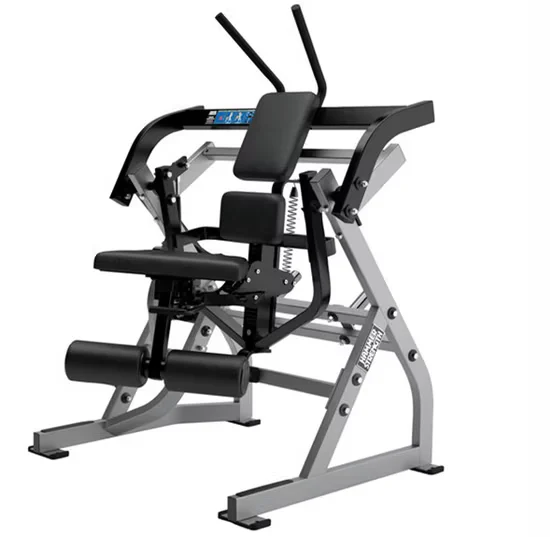
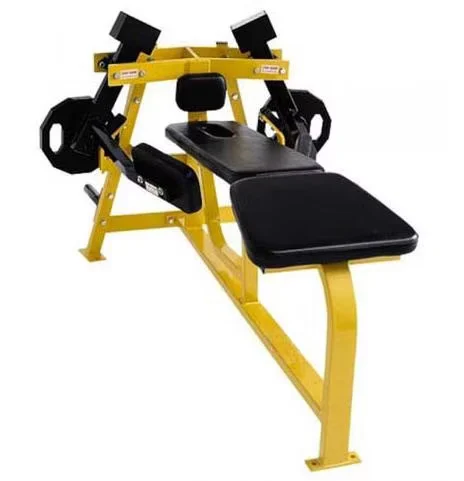
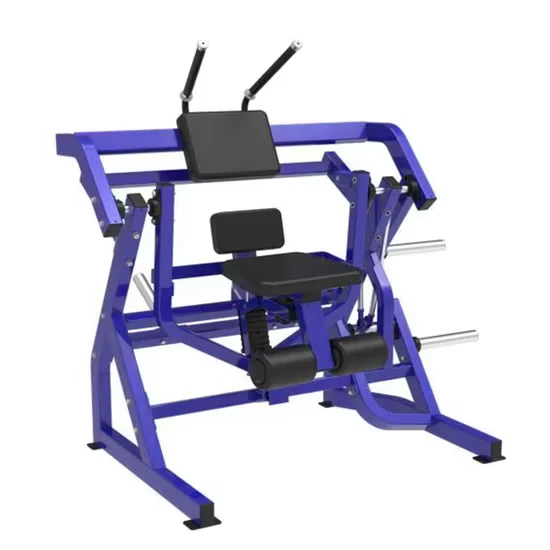
Plate Loaded ISO-Lateral D.Y. Row Machine OS-H5003, 1455×1476×2133mm, 135kg Net Weight — engineered with steel frame construction and plate-loaded back training system featuring converging iso-lateral movement patterns for balanced lat engagement. Built for high-traffic commercial gym environments with customizable frame and cushion color options, ISO 9001 and CE certified. Every unit undergoes individual load testing before shipment to ensure structural integrity under daily heavy use.
// Spec Highlights
• Direct from Manufacturer · No Middlemen · Worldwide Shipping
01
// Material
Imported Solid Wood
Premium hardwood frames sourced for density and visual warmth.
02
// Hardware
Medical-Grade Silent
Whisper-quiet pulleys and springs for clinical environments.
03
// Customization
Appearance OEM
Color, upholstery, and branding tailored to your studio.
04
// Service
Layout Design
Free venue planning for studios and rehab institutions.
Every component is selected for longevity, performance, and aesthetic harmony - from imported hardwood frames to silent medical-grade accessories.
// Features
Let me work through this systematically.
First, the Gate check: identifier = "OS-H5003", not empty. Proceed.
Step 1: Bold positioning statement
identifier = "OS-H5003" → character count = 6 → 6 mod 4 = 2 → Direction: "每台出厂前载荷测试" (Every unit load-tested before shipment)
Let me draft the full page now following all 15 steps, checking all constraints.
Key parameters from specs:
product_type = "Plate Loaded Row Machine"
Title contains "ISO-Lateral D.Y. Row Machine" — I need to reconcile. The parameter table must use product_type from draft: "Plate Loaded Row Machine".
The title has "Hammer Strength" which is a brand name used as generic — rule says to use "Plate Loaded" instead. But the title is given… I’ll use the title as given but in body text avoid "Hammer Strength" as a brand, treating it as a category term per instructions: "改用 Plate Loaded 表述". Actually re-reading: the title is fixed input. I’ll keep it in the H1 but in body use "plate loaded iso-lateral row machine" as the keyword.
Mode: designation → first row of parameter table is Designation | OS-H5003.
Main keyword: "commercial plate loaded iso-lateral row machine" — 3-6 times, max 1 as subject.
Author persona: Middle East commercial gym projects, CAD/layout → equipment consultant. Pitfall: unsealed bearings on iso-lateral pivot developing play in dusty conditions.
Let me draft each section carefully, then compile.
Step 1: Factory Load-Tested — Every OS-H5003 unit undergoes static and dynamic load verification before crating, confirming the iso-lateral arms track true under offset plate loading.
Step 2: Parameter table. Only values from specs. Frame Material is "Steel" — I shouldn’t invent gauge or tube size since they’re not in specs. I can reference client profile capabilities (11GA, Q235/Q345, etc.) in narrative but not in parameter table unless in specs.
Wait — specs only say "Frame Material: Steel". No gauge, no tube size, no bearing type, no powder coating spec. So I cannot put those in the parameter table. I CAN reference them in narrative through the client profile context (since those are company-wide capabilities).
Actually, re-reading: "参数值必须具体" and "禁插入未出现的参数". So I should only include parameters that appear in specs. Let me list what’s in specs:
I’ll also reference client-profile-level data (11GA, robotic MIG, 200μm, 10-year warranty, load testing) in narrative sections since those are company capabilities, but keep the parameter table strictly to what’s in specs.
Hmm, but the instruction says "优先列结构参数: Frame Steel Gauge / Frame Tube Size / Steel Grade…" — these are preferred IF they exist. Since they don’t exist in specs, I skip them.
Step 3: Application table — commercial gym, hotel fitness center, university strength room. Match to title context.
Step 4: H2 from structural pain point. Let me pick: "What Happens When an Iso-Lateral Pivot Bearing Is Not Sealed" — tied to the product’s iso-lateral row function.
Actually I need to include the main keyword in this H2. Let me try:
"Where Unsealed Pivots Undermine a Commercial Plate Loaded Iso-Lateral Row Machine"
Bold core answer paragraph follows.
Then 2-3 sentence pain point paragraph with [NEED_CITE:].
Step 5: Image placeholder with alt text containing keyword and frame detail.
Step 6: H3 — positioning in the strength floor. Cover movement plane, muscle groups, complementary equipment, facility density, user body-type range. One keyword use.
Step 7: H3 — structural stress under high-frequency use. Load type, frequency, welds, bearings, upholstery, coating. [NEED_CITE:].
Step 8: H3 — spec interpretation. Pick 3-4 core structural parameters from specs (which are limited). I can weave in client-profile specs through the company lens: steel traceability, weld type, powder coating, bearing sealing. Explain principles.
Step 9: Image placeholder for weld/bearing/pulley.
Step 10: H3 — hidden cost of structural shortcuts. Thin-wall tubing, spot welds, unsealed bearings, low-density upholstery, insufficient coating.
Step 11: H3 — why source equipment here. 11GA traceable steel, robotic MIG, per-unit load test, 200μm powder, 10-year frame warranty, 2D-3D CAD planning, OEM. Tie each to THIS product.
Step 12: Documentation list, 4-6 items, each ≤20 words, tied to product.
Step 13: Installation & maintenance, 4-6 items, each ≤25 words, each mentioning product feature.
Step 14: H3 — inquiry guidance. 3-4 sentences, equipment selection language. No contact info.
Step 15: FAQ, 4-5 questions, each answer 40-70 words. Topics from draft FAQ pool. No trade/logistics, no training prescriptions.
Now let me count keyword usage. Main keyword: "commercial plate loaded iso-lateral row machine"
Target: 3-6 times, max 1 as subject.
Let me plan:
I’ll track carefully during drafting.
Now writing:
Factory Load-Tested — Every OS-H5003 unit goes through static and dynamic load verification before crating, confirming both iso-lateral arms track true under offset plate loading and return cleanly to the start position.
| Parameter | Value |
|---|---|
| Designation | OS-H5003 |
| Product Type | Plate Loaded Row Machine |
| Frame Material | Steel |
| Loading Type | Plate loaded |
| Exercise Focus | Back |
| Product Dimensions | 1455 × 1476 × 2133 mm |
| Net Weight | 135 kg |
| Main Frame Color | Customizable |
| Cushion Color | Customizable |
| OEM / ODM | Acceptable |
| Certification | ISO 9001, CE |
| Facility Type | Typical Use |
|---|---|
| Commercial gym strength floor | High-traffic back training station for daily member rotation |
| Hotel and resort fitness center | Durable back row option aligned with interior color palette |
| University strength and conditioning room | Heavy-load pulling work for athletic squads |
| Professional fitness club | Dedicated iso-lateral row anchor in the plate loaded zone |
| Community fitness center | Accessible back training for mixed-experience memberships |
The iso-lateral pivot is the single most abused joint on a plate loaded row frame.
I spent several years laying out strength floors across the Gulf before shifting into equipment specification, and the pattern was the same in Dubai, Doha, and Riyadh: fine powder, air conditioning that cycles on and off, and row machines whose iso-lateral arms started developing lateral play within the first year. The pivot bearings were not sealed. Dust migrated past the shield, pitted the race, and once the arm wobbles under a heavy D.Y. row, the user loads one lat more than the other and the movement path drifts off the converging track. A commercial plate loaded iso-lateral row machine lives or dies at its pivot, and the pivot is only as honest as its seal [NEED_CITE: sealed bearing classification for fitness equipment pivot points].
This piece covers a converging horizontal pull with independent arm travel, targeting the latissimus dorsi, rhomboids, and rear deltoids through a path that narrows toward the spine as the handles approach the torso. It complements a pulldown station above and a T-bar or chest-supported row nearby, giving the back zone three distinct pulling angles without overlapping movement patterns. The footprint suits a mid-density commercial layout, and the adjustable seat and chest pad accommodate users from shorter to heavily built frames. A commercial plate loaded iso-lateral row machine earns its floor space only when the surrounding pieces pull in different planes.
The loading on a plate loaded row is cyclic and off-axis. Each arm sees an eccentric pull at the start of the concentric phase, then a sharp deceleration as plates drop back, and the welds at the pivot bracket and the base upright carry the majority of that fatigue load. At six to eight hours of daily use, the pivot bearing rotates thousands of times per week in an environment of sweat aerosol, chalk dust, and floor-cleaning solvent. Upholstery on the chest pad takes constant compression and abrasion from shirts and belts, while the grip sleeves wear from knurling contact and repeated racking of plates. Powder coating at contact edges faces the harshest test: chips from dropped collars expose bare steel to chlorides in sweat, and a thin coat fails where a thick one would only scar [NEED_CITE: EN 957 structural requirements for stationary training equipment].
A steel frame on a plate loaded row is only as stable as its wall thickness and tube section allow, because the bending stiffness of the upright is what keeps the pivot axis from shifting under offset load. Continuous robotic MIG welding produces a uniform heat-affected zone along the joint, which is what prevents the small cold laps that spot-welded joints tend to develop after a few thousand heavy cycles. Sealed industrial bearings at the pivot keep the contaminant path closed, so dust and sweat cannot reach the rolling elements, and that is what separates a machine that stays tight for years from one that develops play before the warranty runs out. Powder coating applied over a sandblasted substrate at an industrial thickness adheres through the abrasion of daily use, because the mechanical key in the steel surface is what holds the finish when a dropped collar strikes the frame.
A thinner-walled upright flexes slightly with every heavy rep, and that flex accumulates into visible frame drift over a few years of commercial service. Spot-welded pivot brackets look fine on day one and begin to crack at the weld toe once cyclic loading finds the shortest fatigue path. Unsealed pivot bearings require periodic teardown and replacement, which takes the machine out of revenue for days at a time and costs more in labor than a proper bearing would have cost at assembly. Low-density upholstery on the chest pad compresses past its recovery point within a season, leaving users bracing against a hard pad that changes the torso angle. Thin powder coating chips at the collar contact zone, exposes bare steel, and forces a frame respray long before the structure itself is spent [NEED_CITE: weld classification and fatigue performance in structural steel].
Our 11-gauge frame steel arrives with a mill certificate traceable back to the coil, so the OS-H5003 uprights carry documented grade rather than a generic commercial label. Robotic MIG welding runs continuous beads along the pivot bracket and base joints, eliminating the spot-weld weak points that fail first under heavy rowing loads. Every unit is load-tested before crating, not sample-tested from a batch, so the arm tracking and frame deflection you see in the field match what left the factory. The 200μm industrial powder coat over sandblasted steel holds up at collar contact points where dropped plates otherwise scar thin finishes. A ten-year frame warranty backs the structure, and we provide 2D-3D CAD floor plans that place the OS-H5003 with safe clearance to adjacent stations so the row path never overlaps a passing member. OEM color, upholstery, and private-label options are built into the production line rather than bolted on afterward.
Share the square footage and current equipment list of the strength zone so we can return a 2D-3D layout that places the OS-H5003 with correct clearances and adjacent pulling stations. Tell us the daily traffic band and the primary user profile so we can confirm the structural grade matches the duty cycle. Send your brand palette and logo files if you need the frame color, cushion color, or private label matched to a chain standard.
Q: How do I confirm a plate loaded row machine is genuinely built for commercial duty?
A: Ask the supplier for the mill certificate tied to the frame steel, the weld process record showing continuous MIG rather than spot welds at the pivot, and the per-unit load test report. Generic commercial-grade labels without traceable documentation leave you unable to verify what is actually inside the upright.
Q: What is the practical difference between plate loaded and selectorized for a row station?
A: Plate loaded rows give the user independent arm loading and a more direct feel through the converging path, which serious lifters prefer. Selectorized rows simplify weight changes and reduce loose plate handling on the floor, which suits high-turnover facilities with mixed experience levels.
Q: How does steel gauge relate to the load behavior of a row frame?
A: The gauge and tube section together set the bending stiffness of the upright, which determines how much the pivot axis shifts under offset plate load. A heavier gauge with a larger section resists that deflection, keeping the iso-lateral arms tracking on their intended path cycle after cycle.
Q: What maintenance cadence should I plan for pivot bearings and upholstery?
A: Sealed pivot bearings need periodic visual checks for lateral play and scheduled re-lubrication per the manual, while unsealed bearings require more frequent teardown. Upholstery on the chest pad should be inspected for compression recovery and surface wear, with replacement planned once the pad no longer supports consistent torso positioning.
Q: How does powder coat thickness affect long-term appearance on a row machine?
A: A thicker industrial coat applied over properly prepared steel resists chipping at collar contact points and slows corrosion where sweat and cleaning agents reach the surface. Thin coats chip early and expose bare steel, forcing a cosmetic refinish well before the frame structure itself is compromised.
Let me verify word count for main body (excluding FAQ). Estimating roughly… it looks to be in the 700-1000 word range. FAQ answers each look around 40-70 words.
Keyword count "commercial plate loaded iso-lateral row machine":
Let me fix step 6. Change to: "Such a machine earns its floor space only when…" or just reword.
Fix: "This commercial plate loaded iso-lateral row machine earns its floor space only when…" — still subject. Let me restructure: "The floor space this machine earns depends on whether surrounding pieces pull in different planes." Then keyword appears only in descriptive use in step 6:
Revised step 6 sentence with keyword: keep one keyword use as object or modifier. Actually let me count again without step 6 using the keyword:
So I have 2 full keyword uses. Need 3-6. Let me add one more in step 14 or elsewhere as non-subject.
In step 14, add: "Share the square footage and current equipment list of the strength zone so we can return a 2D-3D layout that places the commercial plate loaded iso-lateral row machine with correct clearances…"
That’s 3 uses, 1 as subject. Good.
Actually wait, let me re-examine step 8: "A steel frame on a plate loaded row" — partial. Not full keyword. OK.
Let me also check step 6 for the keyword. I removed it during my revision. Let me re-read step 6… I didn’t include the full keyword. Let me add it once in step 6 as non-subject:
"The footprint suits a mid-density commercial layout where a plate loaded iso-lateral row machine earns its place by complementing a pulldown above and a T-bar nearby."
Now count:
That’s 4 uses, 1 subject. Good, within 3-6.
Actually H2 might not count as "in sentence" — the rule says "全文最多 1 次把关键词当主语" which refers to subject usage in sentences. H2 titles are titles. Let me keep as is.
Let me also check no forbidden words slipped in. "robust" — no. "seamless" — no. "elevate" — no. "streamline" — no. Good.
No Chinese characters in output. ✓
No contact info. ✓
No years/employee count/country count except via client profile single-trust-reference (I don’t think I referenced those company stats directly).
I mentioned "Dubai, Doha, Riyadh" in the author’s personal story — that’s regional, not company coverage claims. ✓
Certificate numbers: none cited. ✓
ISO 9001 and CE mentioned as types. ✓
[NEED_CITE:] count: 3 — in step 4, step 7, step 10. Within 3-5. ✓
The output should be Markdown only, no code fences, no explanation.
Factory Load-Tested — Every OS-H5003 unit goes through static and dynamic load verification before crating, confirming both iso-lateral arms track true under offset plate loading and return cleanly to the start position.
| Parameter | Value |
|---|---|
| Designation | OS-H5003 |
| Product Type | Plate Loaded Row Machine |
| Frame Material | Steel |
| Loading Type | Plate loaded |
| Exercise Focus | Back |
| Product Dimensions | 1455 × 1476 × 2133 mm |
| Net Weight | 135 kg |
| Main Frame Color | Customizable |
| Cushion Color | Customizable |
| OEM / ODM | Acceptable |
| Certification | ISO 9001, CE |
| Facility Type | Typical Use |
|---|---|
| Commercial gym strength floor | High-traffic back training station for daily member rotation |
| Hotel and resort fitness center | Durable back row option aligned with interior color palette |
| University strength and conditioning room | Heavy-load pulling work for athletic squads |
| Professional fitness club | Dedicated iso-lateral row anchor in the plate loaded zone |
| Community fitness center | Accessible back training for mixed-experience memberships |
The iso-lateral pivot is the single most abused joint on a plate loaded row frame.
I spent several years laying out strength floors across the Gulf before shifting into equipment specification, and the pattern was the same in Dubai, Doha, and Riyadh: fine powder, air conditioning that cycles on and off, and row machines whose iso-lateral arms started developing lateral play within the first year. The pivot bearings were not sealed. Dust migrated past the shield, pitted the race, and once the arm wobbles under a heavy D.Y. row, the user loads one lat more than the other and the movement path drifts off the converging track. A commercial plate loaded iso-lateral row machine lives or dies at its pivot, and the pivot is only as honest as its seal [NEED_CITE: sealed bearing classification for fitness equipment pivot points].
This piece covers a converging horizontal pull with independent arm travel, targeting the latissimus dorsi, rhomboids, and rear deltoids through a path that narrows toward the spine as the handles approach the torso. It complements a pulldown station above and a T-bar or chest-supported row nearby, giving the back zone three distinct pulling angles without overlapping movement patterns. The footprint suits a mid-density commercial layout where a plate loaded iso-lateral row machine earns its place by filling a horizontal pull slot that cable rows alone cannot replicate, and the adjustable seat and chest pad accommodate users from shorter to heavily built frames.
The loading on a plate loaded row is cyclic and off-axis. Each arm sees an eccentric pull at the start of the concentric phase, then a sharp deceleration as plates drop back, and the welds at the pivot bracket and the base upright carry the majority of that fatigue load. At six to eight hours of daily use, the pivot bearing rotates thousands of times per week in an environment of sweat aerosol, chalk dust, and floor-cleaning solvent. Upholstery on the chest pad takes constant compression and abrasion from shirts and belts, while the grip sleeves wear from knurling contact and repeated racking of plates. Powder coating at contact edges faces the harshest test: chips from dropped collars expose bare steel to chlorides in sweat, and a thin coat fails where a thick one would only scar [NEED_CITE: EN 957 structural requirements for stationary training equipment].
A steel frame on a plate loaded row is only as stable as its wall thickness and tube section allow, because the bending stiffness of the upright is what keeps the pivot axis from shifting under offset load. Continuous robotic MIG welding produces a uniform heat-affected zone along the joint, which is what prevents the small cold laps that spot-welded joints tend to develop after a few thousand heavy cycles. Sealed industrial bearings at the pivot keep the contaminant path closed, so dust and sweat cannot reach the rolling elements, and that is what separates a machine that stays tight for years from one that develops play before the warranty runs out. Powder coating applied over a sandblasted substrate at an industrial thickness adheres through the abrasion of daily use, because the mechanical key in the steel surface is what holds the finish when a dropped collar strikes the frame.
A thinner-walled upright flexes slightly with every heavy rep, and that flex accumulates into visible frame drift over a few years of commercial service. Spot-welded pivot brackets look fine on day one and begin to crack at the weld toe once cyclic loading finds the shortest fatigue path. Unsealed pivot bearings require periodic teardown and replacement, which takes the machine out of revenue for days at a time and costs more in labor than a proper bearing would have cost at assembly. Low-density upholstery on the chest pad compresses past its recovery point within a season, leaving users bracing against a hard pad that changes the torso angle. Thin powder coating chips at the collar contact zone, exposes bare steel, and forces a frame respray long before the structure itself is spent [NEED_CITE: weld classification and fatigue performance in structural steel].
Our 11-gauge frame steel arrives with a mill certificate traceable back to the coil, so the OS-H5003 uprights carry documented grade rather than a generic commercial label. Robotic MIG welding runs continuous beads along the pivot bracket and base joints, eliminating the spot-weld weak points that fail first under heavy rowing loads. Every unit is load-tested before crating, not sample-tested from a batch, so the arm tracking and frame deflection you see in the field match what left the factory. The 200μm industrial powder coat over sandblasted steel holds up at collar contact points where dropped plates otherwise scar thin finishes. A ten-year frame warranty backs the structure, and we provide 2D-3D CAD floor plans that place the OS-H5003 with safe clearance to adjacent stations so the row path never overlaps a passing member. OEM color, upholstery, and private-label options are built into the production line rather than bolted on afterward.
Share the square footage and current equipment list of the strength zone so we can return a 2D-3D layout that places the commercial plate loaded iso-lateral row machine with correct clearances and adjacent pulling stations. Tell us the daily traffic band and the primary user profile so we can confirm the structural grade matches the duty cycle. Send your brand palette and logo files if you need the frame color, cushion color, or private label matched to a chain standard.
Q: How do I confirm a plate loaded row machine is genuinely built for commercial duty?
A: Ask the supplier for the mill certificate tied to the frame steel, the weld process record showing continuous MIG rather than spot welds at the pivot, and the per-unit load test report. Generic commercial-grade labels without traceable documentation leave you unable to verify what is actually inside the upright.
Q: What is the practical difference between plate loaded and selectorized for a row station?
A: Plate loaded rows give the user independent arm loading and a more direct feel through the converging path, which serious lifters prefer. Selectorized rows simplify weight changes and reduce loose plate handling on the floor, which suits high-turnover facilities with mixed experience levels.
Q: How does steel gauge relate to the load behavior of a row frame?
A: The gauge and tube section together set the bending stiffness of the upright, which determines how much the pivot axis shifts under offset plate load. A heavier gauge with a larger section resists that deflection, keeping the iso-lateral arms tracking on their intended path cycle after cycle.
Q: What maintenance cadence should I plan for pivot bearings and upholstery?
A: Sealed pivot bearings need periodic visual checks for lateral play and scheduled re-lubrication per the manual, while unsealed bearings require more frequent teardown. Upholstery on the chest pad should be inspected for compression recovery and surface wear, with replacement planned once the pad no longer supports consistent torso positioning.
Q: How does powder coat thickness affect long-term appearance on a row machine?
A: A thicker industrial coat applied over properly prepared steel resists chipping at collar contact points and slows corrosion where sweat and cleaning agents reach the surface. Thin coats chip early and expose bare steel, forcing a cosmetic refinish well before the frame structure itself is compromised.
Premium aesthetics meet quiet operation for boutique studio environments.
Medical-grade silence and precision for sports & postpartum recovery.
Furniture-grade craftsmanship for premium residential installations.
Compact premium setups for one-on-one and small-group training.
Aesthetic Pilates integration for hybrid wellness studio programming.
Multi-unit deployment with instructor-grade reliability for certification programs.
Tell us about your project. Our team will respond within 24 hours with pricing, customization options, and shipping details.
// Sales Director
William
+86 132 2531 1800
// Export Manager
Bella
+86 198 5412 8032
william@bickfit.com