01 / Scenario
STUDIO
P
High-End Pilates Studios
Premium aesthetics meet quiet operation for boutique studio environments.

ISO
9001
CE
Certified
OEM
Available
10YR
Warranty
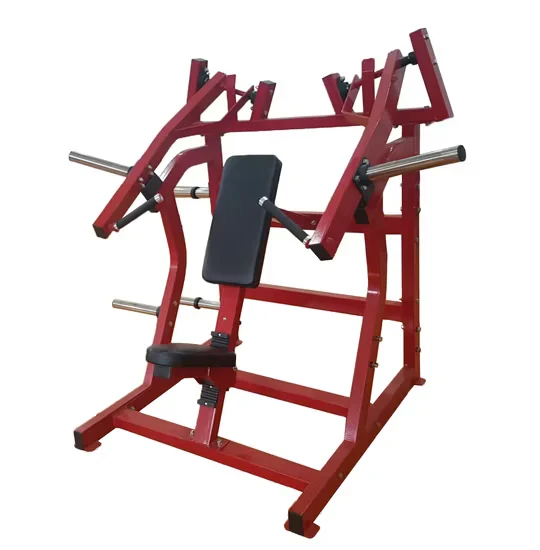
OS-H5018 Plate Loaded Incline Chest Press, 3×3 Inch Frame, 139kg Net Weight — built on 11-gauge Q235 steel with robotic MIG continuous welds eliminating spot-weld fatigue, sealed industrial bearings ensuring zero-play operation under heavy daily loads, and 200μm scratch-resistant powder coating over sandblast pre-treatment. Every unit undergoes individual load testing before shipment with full 10-year frame warranty and mill-certified steel traceability.
// Spec Highlights
• Direct from Manufacturer · No Middlemen · Worldwide Shipping
01
// Material
Imported Solid Wood
Premium hardwood frames sourced for density and visual warmth.
02
// Hardware
Medical-Grade Silent
Whisper-quiet pulleys and springs for clinical environments.
03
// Customization
Appearance OEM
Color, upholstery, and branding tailored to your studio.
04
// Service
Layout Design
Free venue planning for studios and rehab institutions.
Every component is selected for longevity, performance, and aesthetic harmony - from imported hardwood frames to silent medical-grade accessories.
// Features
Mill-Traceable Frame Steel — OS-H5018 built on 11-gauge Q235 steel with coil-level certification, resisting deformation under repeated heavy incline pressing loads.
| Parameter | Value |
|---|---|
| Designation | OS-H5018 |
| Product Type | Plate Loaded Incline Chest Press |
| Frame Tube Size | 3×3 inch |
| Steel Grade | Q235 |
| Frame Steel Gauge | 11-gauge |
| Welding Type | Robotic MIG continuous weld |
| Loading Type | Plate loaded |
| Bearing Type | Sealed industrial bearings |
| Powder Coating | 200μm scratch-resistant |
| Product Dimensions | 1435×1666×1978mm |
| Net Weight | 139kg |
| Main Frame Color | According to customer requirements |
| Cushion Color | According to customer requirements |
| Certification | ISO 9001:2015, CE |
| Warranty | 10-year frame warranty |
| Facility Type | Typical Use |
|---|---|
| Commercial gym strength floor | Primary incline pressing station in high-traffic plate loaded zones |
| Hotel fitness center | Heavy-duty chest press for guest and event use |
| University strength and conditioning room | Athletic department incline press for upper body power development |
| Professional fitness facility | Dedicated incline press for advanced lifters and personal training |
Thicker tube walls resist permanent deformation where the carriage meets the frame at full extension.
When gym owners receive equipment labeled "commercial grade" without verifiable steel documentation, they accept hidden risk. The incline chest press concentrates force at the pivot axis and lower frame junction — exactly where thin-walled tubes begin to flex after months of repeated heavy loading. Without mill-certified steel traceable to the coil, there is no way to confirm whether the frame will hold its geometry or slowly develop play that compromises the pressing path [NEED_CITE: structural requirements for stationary training equipment under heavy cyclic loading].
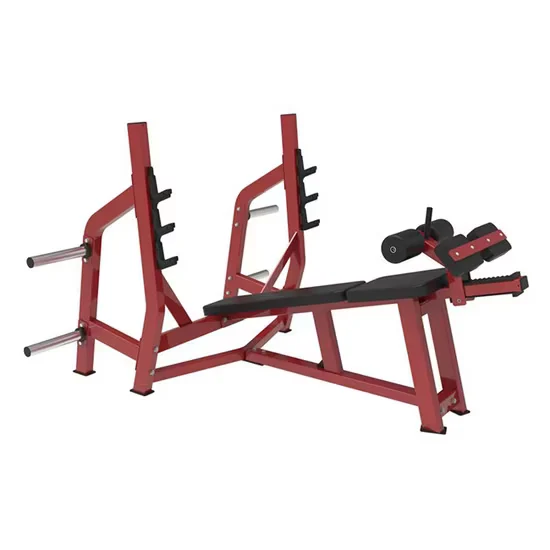
The OS-H5018 targets the upper pectoral and anterior deltoid through a converging iso-lateral pressing arc, complementing flat and decline plate loaded stations already on the floor. In a commercial gym strength zone, this unit occupies a dedicated footprint where lifters expect plate loaded chest work without waiting for selectorized machines. Its frame height and loading horn position accommodate users across a broad range of statures, and the iso-lateral arm design allows unilateral work for athletes addressing imbalances. Placing the commercial plate loaded incline chest press adjacent to flat bench stations creates a logical chest training cluster that reduces cross-floor traffic.
Each repetition on an incline press generates both compressive force through the main upright and eccentric shear at the pivot bearing when the user controls the descent. In a high-traffic commercial gym, a single station may see hundreds of loading cycles daily, with uneven plate distribution introducing off-axis torque on the carriage arm. Sealed industrial bearings at the pivot point prevent contamination from chalk dust and sweat that would otherwise accelerate wear in open bushing designs. The continuous weld lines along the base gussets distribute stress across a broader zone rather than concentrating it at discrete spot weld points [NEED_CITE: weld classification and fatigue performance in structural steel frames]. Powder coating at contact edges must withstand repeated plate loading and unloading without chipping down to bare metal.
The 3×3 inch frame tube cross-section provides a wide moment of inertia that limits deflection when heavy plates are loaded on the horns. Combined with 11-gauge wall thickness, this tube profile maintains alignment between the pivot axis and the grip handles throughout the full pressing range. Robotic MIG welding produces a continuous bead along each joint, eliminating the intermittent fusion zones inherent in manual spot welding where crack propagation begins under cyclic loading. Sealed bearings at the pivot maintain consistent rotational resistance without the periodic lubrication that open bushings demand in humid gym environments. The 200μm powder coating, applied over sandblast pre-treatment, bonds to the steel surface at a thickness that absorbs impact from dropped plates without exposing the substrate. Upholstery available in standard or high-density options allows facility operators to match cushion longevity to their expected daily user volume.
Downsizing tube walls from 11-gauge to lighter sections may reduce per-unit weight and shipping cost, but the frame absorbs heavy eccentric loads with progressively more flex until the deformation becomes visible at the weld junctions. Spot welds on high-stress pivot joints can appear sound at visual inspection yet fail internally after months of cyclic loading, creating liability exposure for the facility operator. Unsealed bearings in chalk-heavy environments develop rotational play that users notice as a grinding sensation, triggering maintenance calls and eventual replacement. Coating applied without proper sandblast pre-treatment chips at plate contact edges, leaving exposed steel vulnerable to sweat-driven corrosion that spreads beneath the remaining film.
The 11-gauge Q235 frame with mill-certified steel traceability ensures that every OS-H5018 leaving the production line carries verifiable structural documentation. Robotic MIG continuous welding along all primary joints eliminates the spot weld fatigue points that plague incline presses subjected to uneven plate loading. Each unit undergoes individual load testing before shipment rather than relying on batch sampling. The 200μm industrial powder coating with sandblast pre-treatment protects high-contact zones around the loading horns and base feet. Floor planning support includes 2D-3D CAD layouts that account for the OS-H5018 footprint and safe plate loading clearance on either side, preventing the unusable gaps that appear when equipment is placed without dimensional coordination. The 10-year frame warranty backs the structural specification with long-term accountability.
Provide your strength floor dimensions and existing equipment list to receive a 2D-3D layout that integrates the OS-H5018 with safe spacing for plate handling traffic. Specify your expected daily user volume so we can confirm the appropriate upholstery density and structural grade. Share your target user demographic to verify that the fixed incline angle and grip positions match your membership profile. Communicate any custom frame color or cushion requirements early in the ordering process to align with your facility branding.
Q: How can I verify that a commercial plate loaded incline chest press uses genuine 11-gauge steel?
A: Request the steel mill certification that traces the frame material back to the coil number. Reputable manufacturers provide this documentation alongside the product. Visual inspection alone cannot distinguish gauge thickness once the frame is powder coated, and marketing terms like "commercial grade" without supporting paperwork leave buyers unable to confirm the actual tube wall specification they received.
Q: What is the relationship between frame tube gauge and load capacity on a plate loaded incline press?
A: Thicker tube walls increase the cross-sectional area that resists bending under load, directly raising the point at which permanent deformation begins. An 11-gauge 3×3 inch tube provides substantially more resistance to deflection than lighter gauges, meaning the frame maintains its geometry longer under heavy daily use. Load capacity depends on the combination of gauge, tube size, and weld integrity working together.
Q: How does plate loaded compare to selectorized for a high-traffic gym chest station?
A: Plate loaded incline presses like the OS-H5018 suit environments where users prefer loading their own plates and value iso-lateral arm movement. Selectorized machines offer faster weight changes between users but introduce cable and pulley systems requiring additional maintenance. High-traffic strength floors often deploy both types, with plate loaded units positioned for serious lifters and selectorized stations for circuit-style traffic patterns.
Q: What spacing is needed around a plate loaded incline press for safe operation?
A: Allow sufficient clearance on both sides for users to load and unload plates without obstructing adjacent equipment traffic lanes. The OS-H5018 dimensions of 1435×1666×1978mm define the equipment envelope, but safe operation requires additional working space factoring in plate diameter and user movement. Providing your floor plan allows precise spacing calculations that prevent congestion during peak hours.
Q: What bearing maintenance schedule should a high-traffic facility follow for plate loaded equipment?
A: Sealed industrial bearings require less routine attention than open bushings, but periodic visual checks for chalk dust accumulation and unusual rotational resistance remain important. Facilities with heavy daily use should inspect pivot bearings quarterly, while lower-traffic installations can extend this interval. Replacement bearings are straightforward to install when wear does eventually occur, keeping downtime minimal compared to full unit removal.
Premium aesthetics meet quiet operation for boutique studio environments.
Medical-grade silence and precision for sports & postpartum recovery.
Furniture-grade craftsmanship for premium residential installations.
Compact premium setups for one-on-one and small-group training.
Aesthetic Pilates integration for hybrid wellness studio programming.
Multi-unit deployment with instructor-grade reliability for certification programs.
Tell us about your project. Our team will respond within 24 hours with pricing, customization options, and shipping details.
// Sales Director
William
+86 132 2531 1800
// Export Manager
Bella
+86 198 5412 8032
william@bickfit.com