01 / Scenario
STUDIO
P
High-End Pilates Studios
Premium aesthetics meet quiet operation for boutique studio environments.

ISO
9001
CE
Certified
OEM
Available
10YR
Warranty
Commercial Waist Flat Bench, 1353×595×532mm, 32kg Net Weight — built on a solid steel frame engineered for high-traffic commercial environments, featuring customizable main frame and cushion colors to match any gym aesthetic. Each unit undergoes load testing before shipment, ensuring structural integrity under repeated heavy use, with OEM/ODM options and ISO 9001, CE certifications for global compliance. Backed by our 10-year frame warranty and comprehensive floor planning support for optimal space utilization.
// Spec Highlights
• Direct from Manufacturer · No Middlemen · Worldwide Shipping
01
// Material
Imported Solid Wood
Premium hardwood frames sourced for density and visual warmth.
02
// Hardware
Medical-Grade Silent
Whisper-quiet pulleys and springs for clinical environments.
03
// Customization
Appearance OEM
Color, upholstery, and branding tailored to your studio.
04
// Service
Layout Design
Free venue planning for studios and rehab institutions.
Every component is selected for longevity, performance, and aesthetic harmony - from imported hardwood frames to silent medical-grade accessories.
// Features
Mill-Certified Frame Steel — 11-gauge Q235 steel sourced with full coil traceability, eliminating the vague "commercial grade" claims that leave buyers guessing about actual load margins.
| Parameter | Value |
|---|---|
| Product Type | Flat Bench |
| Product Dimensions | 1353 × 595 × 532 mm |
| Frame Steel | 11-gauge, 3×3 inch tube |
| Steel Grade | Q235 industrial steel, mill-certified |
| Welding Type | Robotic MIG, continuous weld lines |
| Load Capacity | Tested beyond 500 kg |
| Loading Type | Plate loaded / free weight compatible |
| Upholstery | High-density commercial foam, PVC/PU cover options |
| Powder Coating | 200μm scratch-resistant industrial finish |
| Main Frame Color | Customizable from standard palette |
| Cushion Color | Customizable |
| Net Weight | 32 kg |
| Certification | ISO 9001, CE |
| OEM/ODM | Acceptable |
| Warranty | 10-year frame |
| Facility Type | Typical Use |
|---|---|
| Commercial gym strength floor | Primary flat pressing station for barbell and dumbbell work |
| University strength and conditioning room | High-volume team training with repeated heavy loading cycles |
| CrossFit box functional zone | Bench press and accessory movements within programming |
| Hotel fitness center | Compact footprint for limited-space environments with durable structure |
| Rehabilitation and performance center | Stable flat surface for controlled pressing and therapeutic loading |
The joint always fails before the tube if the weld is discontinuous.
I have seen commercial flat benches pulled back to the shop after six months because the cross-brace was attached with spot welds to cut cost. Under repeated heavy pressing, those discrete weld points develop micro-cracks that propagate through the heat-affected zone. The steel tube itself was fine — the connection was not. A continuous robotic MIG weld distributes stress along the entire joint length, meaning the frame either holds as a single system or it does not. There is no middle ground where a few spot welds "mostly" handle the load [NEED_CITE: weld classification and fatigue performance in structural steel]. When gym owners evaluate a commercial flat bench, asking to see the underside weld pattern tells more than any spec sheet ever will.
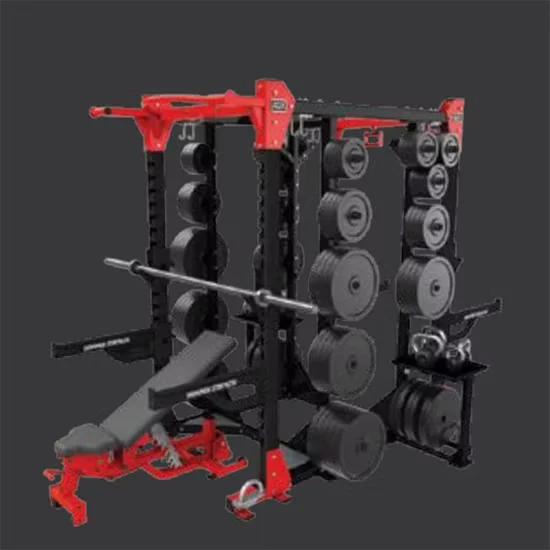
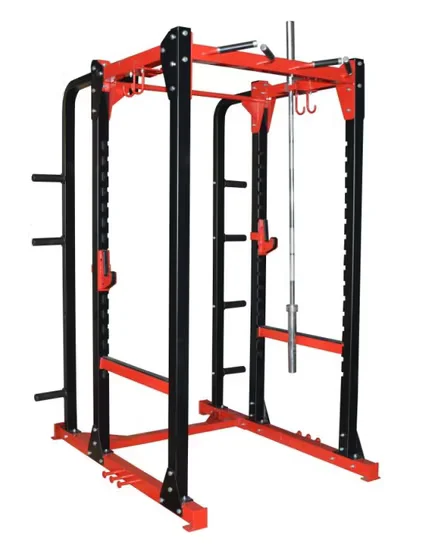
This bench occupies the center of any free weight area as the primary horizontal pressing surface. It pairs directly with power racks and half racks for barbell work, and stands alone for dumbbell pressing and fly variations. In high-density gym layouts, multiple units run alongside each other along a rack row, so the 1353 mm length and 595 mm width must leave enough clearance for spotters and plate loading. The fixed flat angle serves the broadest user population without requiring adjustment mechanisms, keeping the structure simple and failure points minimal. For facilities running group strength sessions, the commercial flat bench handles rapid user turnover without mechanical recalibration between sets.
A flat bench endures two distinct stress profiles: static compression from a loaded barbell held at lockout, and impact loading when plates are set down or the bar is racked off-center. Each loading cycle concentrates force at the junction where the upright supports meet the base frame. Over thousands of repetitions across a facility’s operating hours, fatigue accumulates at these connection points — particularly if the weld penetration is shallow or the tube wall is thin. The upholstery absorbs compression from user body weight and lateral shifting during heavy sets, while the powder coating faces abrasion from knurled bar contact and chemical exposure from cleaning agents [NEED_CITE: EN 957 structural requirements for stationary training equipment]. Every contact surface is a wear point that either holds up or becomes a maintenance ticket.
The 3×3 inch frame tube cross-section provides the bending resistance needed when a loaded barbell sits mid-bench and the user’s weight adds to the total static load. Wall thickness determines how much that tube can resist before permanent deformation — 11-gauge steel keeps the deflection threshold well above what typical gym loading produces. Robotic MIG welding with continuous bead placement means the heat-affected zone is consistent along the entire seam, avoiding the cold joints and incomplete fusion that plague manual spot-welded assemblies. The 200μm powder coating thickness is significant because bench frames take direct contact from barbell shafts, plate edges, and cleaning chemicals; a thin finish chips at these contact points and exposes bare steel to oxidation within weeks. High-density commercial foam in the cushion resists the compression set that causes low-density padding to flatten and expose the frame beneath.
Swapping 11-gauge tube for thinner wall stock saves material cost upfront and produces a bench that passes a visual inspection on delivery day. The problem surfaces when that thinner tube begins to deflect permanently under repeated heavy sets — the frame develops a visible sag and the bench rocks on uneven feet. Spot-welded joints crack progressively, and because the failure is internal to the weld nugget, it is not visible until the crack has already propagated to a dangerous length. Low-density upholstery foam compresses permanently within months of commercial use, leaving users pressing against a pad that has lost its cushioning and exposes the steel support beneath. Thin powder coating chips at bar contact points, and once bare steel is exposed in a humid gym environment, surface rust spreads under the adjacent coating and lifts it away [NEED_CITE: powder coating adhesion failure mechanisms in fitness equipment].
The 11-gauge frame steel arrives with mill certification traceable to the coil, so the material properties are documented rather than assumed. Robotic MIG welding runs continuous beads along every structural joint, which matters on a flat bench because the upright-to-base connections see the highest cyclic stress in the entire assembly. Every unit undergoes load testing before it leaves the floor — not sample-based testing where one bench from a batch of fifty gets checked. The 200μm industrial powder coating is applied over sandblasted steel for mechanical adhesion, not just chemical bonding over mill scale. For gym layouts, the 1353 × 595 mm footprint and required safety clearances are available in 2D and 3D CAD files so the bench can be placed accurately before any equipment ships. OEM customization covers frame color, cushion color, and private label branding for operators building a consistent visual identity across their floor.
Provide your facility’s free weight area dimensions and current equipment list to receive a 2D or 3D floor plan showing bench placement with proper safety clearances. Specify your expected daily user volume so the structural grade and upholstery density match the traffic pattern. Share your target user population’s body size range to confirm the 48-inch pad length and bench height provide adequate support across your membership. Detail any customization requirements including frame color, cushion material preference, and logo placement for a unified floor appearance.
Q: How do you verify the difference between a commercial bench and a light-duty bench structurally?
A: Request the frame steel gauge and wall thickness documentation rather than accepting a generic "commercial grade" label. An 11-gauge tube with mill certification provides verifiable load capacity, while unspecified thin-wall stock relies on marketing claims. Check whether the welding is continuous robotic MIG or manual spot welds — the joint type determines fatigue life under repeated heavy loading far more than the tube dimensions alone.
Q: What is the relationship between frame tube wall thickness and load-bearing capacity?
A: Thicker tube walls increase the cross-sectional area that resists bending under static and impact loads. When a loaded barbell sits mid-bench, the frame tubes act as beams spanning between the uprights — insufficient wall thickness allows permanent deflection to accumulate over repeated use. The 3×3 inch profile combined with 11-gauge walls keeps deflection within structural limits well above typical commercial loading scenarios.
Q: Can the upholstery be replaced when it compresses or tears, and are parts available?
A: The cushion is designed as a replaceable component mounted with standard fasteners, so a worn pad can be swapped without replacing the entire bench. High-density commercial foam options resist compression set far longer than low-density alternatives. Replacement pads and cover materials are stocked and can be ordered directly, ensuring the bench returns to service quickly rather than sitting on the floor with degraded padding.
Q: What types of anti-slip foot designs exist, and which holds up in a commercial environment?
A: Rubber foot caps provide basic floor protection and vibration dampening but compress and tear over time under heavy static loads. Bolted rubber feet with a larger contact area distribute weight across more floor surface and resist lateral sliding during off-center loading. The foot design must match the bench weight and maximum expected load to prevent any shifting during heavy sets on smooth gym flooring.
Q: How should a strength zone configure multiple bench angles for complete pressing coverage?
A: Flat benches handle horizontal pressing as the foundation, while adjustable incline and decline units cover the remaining angles. Place flat units between power racks for barbell work and position adjustable benches in dumbbell areas where angle changes happen between sets. Spacing between benches must account for spotter movement, plate loading clearance, and the swing path of dumbbell exercises at adjacent stations.
Premium aesthetics meet quiet operation for boutique studio environments.
Medical-grade silence and precision for sports & postpartum recovery.
Furniture-grade craftsmanship for premium residential installations.
Compact premium setups for one-on-one and small-group training.
Aesthetic Pilates integration for hybrid wellness studio programming.
Multi-unit deployment with instructor-grade reliability for certification programs.
Tell us about your project. Our team will respond within 24 hours with pricing, customization options, and shipping details.
// Sales Director
William
+86 132 2531 1800
// Export Manager
Bella
+86 198 5412 8032
william@bickfit.com