01 / Scenario
STUDIO
P
High-End Pilates Studios
Premium aesthetics meet quiet operation for boutique studio environments.
ISO
9001
CE
Certified
OEM
Available
10YR
Warranty
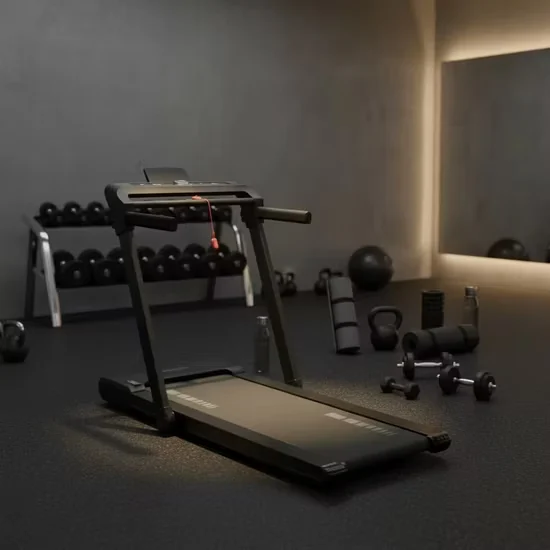
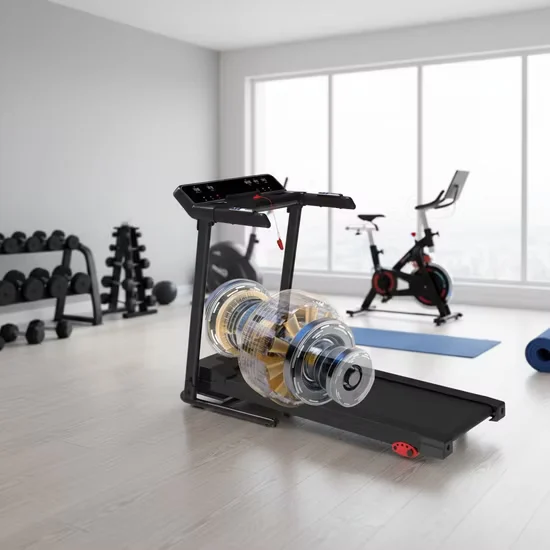
Motorized Treadmill with Transport Wheels, 1.5/DC2.0HP Motor, 1200×420mm Running Deck — engineered with DC motor platform delivering 1-12 km/h speed range and 12 preset programs for structured cardio sessions. Foldable frame with integrated transport wheels enables space-efficient deployment across home and light commercial environments, while multi-parameter LCD console provides real-time feedback on speed, distance, time, calories, and pulse. Each unit undergoes three-stage inspection with load testing before shipment, backed by CE and RoHS certification compliance.
// Spec Highlights
• Direct from Manufacturer · No Middlemen · Worldwide Shipping
01
// Material
Imported Solid Wood
Premium hardwood frames sourced for density and visual warmth.
02
// Hardware
Medical-Grade Silent
Whisper-quiet pulleys and springs for clinical environments.
03
// Customization
Appearance OEM
Color, upholstery, and branding tailored to your studio.
04
// Service
Layout Design
Free venue planning for studios and rehab institutions.
Every component is selected for longevity, performance, and aesthetic harmony - from imported hardwood frames to silent medical-grade accessories.
// Features
Motorized cardio platform engineered for sustained daily operation — The DC motor unit delivers continuous duty performance across a 1200×420mm running deck, paired with a foldable frame and integrated transport wheels for flexible placement in space-constrained environments.
| Parameter | Value |
|---|---|
| Product Type | Motorized Treadmill |
| Model | MT23B |
| Motor Power | 1.5/DC2.0HP |
| Maximum Speed | 1-12 km/h |
| Running Surface | 1200×420mm |
| Incline Type | Manual |
| Programs | 12 preset programs |
| Console Display | LCD (Speed / Distance / Time / Calories / Pulse) |
| Foldable Frame | Yes |
| Transport Wheels | Yes |
| Net Weight | 37 kg |
| Product Dimensions (Unfolded) | 1490×720×1100mm |
| Certification | CE, RoHS |
| Condition | New |
| Facility Type | Typical Use |
|---|---|
| Home fitness rooms | Daily cardiovascular training for individual household users |
| Boutique hotel fitness centers | Guest-accessible cardio station with compact folded storage |
| Apartment complex gyms | Shared amenity equipment for residential building residents |
| Light commercial gyms | Supplementary cardio unit in space-limited studio environments |
Many budget treadmills advertise motor output using peak HP figures that cannot be sustained beyond short intervals — the result is thermal shutdown, belt slip, and premature controller failure under regular use. The 1.5/DC2.0HP rating on this motorized treadmill with transport wheels manual incline reflects a DC motor platform designed for repeated daily sessions without overheating.
Manufacturers who inflate peak claims while omitting duty cycle data leave buyers unable to assess whether the motor can handle back-to-back users in a shared facility. Without thermal protection specs and continuous duty verification, the motor controller becomes the first component to fail — often within months of commercial-level traffic [NEED_CITE: motor thermal classification standards for stationary cardio equipment].
This motorized treadmill with transport wheels manual incline occupies the entry-level cardio tier — suitable for users seeking steady-state running or walking without the footprint of a full commercial unit. The 1200×420mm running surface accommodates users up to approximately 180cm in height, providing adequate stride length for moderate-paced sessions. In a mixed-use facility, it complements higher-specification cardio units by serving warm-up cool-down traffic or overflow demand during peak hours. The foldable frame allows the unit to be stored against a wall when not in active use, preserving floor space for strength or functional zones.
The fold mechanism on a motorized treadmill with transport wheels manual incline introduces a hinge point that experiences cyclic loading every time the deck is raised or lowered. Over hundreds of folding cycles, hinge pins and latch components are subject to wear — particularly if the folding action is performed under load rather than in a fully unweighted state. The transport wheels, while reducing floor drag during repositioning, concentrate point loads on the wheel axle mounts. Continuous vibration from motor operation at higher speeds can gradually loosen fasteners at the wheel bracket junction if periodic torque checks are neglected [NEED_CITE: fatigue performance of folding hinge mechanisms in consumer fitness equipment].
The 1200×420mm running deck dimensions directly determine stride comfort and lateral stability — a deck narrower than 400mm forces users to shorten their natural gait, increasing the risk of foot contact with the side rails. The 1.5/DC2.0HP DC motor specification should be evaluated against the intended user weight range; DC motors in this power class are engineered for users typically under 100kg, with performance degrading as user mass approaches the upper threshold. The manual incline mechanism eliminates the complexity and failure points of an incline motor, but requires the user to adjust the deck angle before beginning a session. The 12-program console with pulse feedback provides structured session variety, though console longevity depends on the quality of the membrane switches and LCD panel behind the interface.
When manufacturers reduce costs on a motorized treadmill with transport wheels manual incline, the first compromises appear in the running deck thickness and cushioning layer — a thin deck transmits impact directly to the user’s joints and accelerates belt wear from excessive friction. Non-sealed roller bearings at the front and rear allow dust and moisture ingress, leading to premature bearing noise and eventual seizure. The transport wheel mounts, if welded with spot joints rather than continuous seams, can crack under repeated repositioning on uneven floors. Low-density foam cushioning beneath the belt compresses permanently within months, eliminating shock absorption and requiring a full deck replacement rather than a simple belt swap [NEED_CITE: running deck material specifications and impact attenuation in treadmill design].
The foldable frame and transport wheels on this motorized treadmill with transport wheels manual incline make it suitable for facilities where cardio equipment must share space with other functional zones. The 1490×720×1100mm unfolded footprint requires adequate clearance on all sides for safe mounting and dismounting — we recommend a minimum 600mm rear clearance and 300mm side clearance in your layout planning. Our 2D-3D CAD floor planning service accounts for these clearance requirements alongside your complete equipment list, ensuring the cardio zone integrates logically with strength and functional areas. The CE and RoHS certifications confirm compliance for deployment across European and international markets, while OEM private label options allow branding alignment with your facility identity.
Share your available floor area and target equipment list to receive a 2D-3D layout plan that positions this motorized treadmill with transport wheels manual incline alongside complementary units. Indicate your expected daily user volume so we can confirm whether this motor class matches your traffic demands or if a higher-duty model is warranted. Specify your target user height range to verify the 1200×420mm deck provides adequate stride length for your demographic.
Q: How should I evaluate the 1.5/DC2.0HP motor rating against my facility’s daily usage demands?
A: The 1.5HP figure represents the continuous duty output while 2.0HP indicates peak capacity under short-term load. For home or light commercial settings with individual users or low daily traffic, this motor class delivers adequate performance across the full 1-12 km/h speed range. Facilities expecting multiple sequential users per hour should assess whether the motor’s thermal management supports sustained operation without cooldown intervals between sessions.
Q: Is the 1200×420mm running surface sufficient for taller users?
A: Users up to approximately 180cm in height will find the 1200mm length accommodates a natural running stride without feeling constrained. The 420mm width provides adequate lateral margin for most users, though individuals with a wider gait may prefer a deck exceeding 450mm. Taller users or those with longer stride lengths should test the deck at their intended running speed before committing to facility-wide deployment.
Q: What structural trade-offs come with a foldable treadmill frame compared to fixed commercial units?
A: The folding mechanism introduces a hinge joint that experiences cyclic stress with every deployment and storage cycle. Over extended use, hinge components may develop play if not periodically inspected and tightened. Fixed-frame commercial treadmills eliminate this variable but require permanent floor space allocation. The foldable design suits environments where floor area must serve multiple functions throughout the day.
Q: How does manual incline compare to motorized incline in terms of maintenance requirements?
A: Manual incline mechanisms eliminate the incline motor, lift actuator, and associated wiring — removing several potential failure points from the system. The trade-off is that users must stop and adjust the deck angle physically rather than changing incline during a running session. For facilities prioritizing equipment uptime and reduced service calls, manual incline offers a simpler maintenance profile with fewer electronic components requiring replacement.
Q: What floor clearance and loading considerations apply when placing this treadmill in a shared facility?
A: The unfolded dimensions of 1490×720×1100mm require a dedicated zone with at least 600mm clearance behind the unit for safe mounting and 300mm on each side. The floor must support the 37kg unit weight plus dynamic loading from a user in motion — typically totaling 130-150kg at the contact points. Ensure the surface is level and non-slip, and position the unit away from high-traffic walkways to prevent accidental contact during operation.
Premium aesthetics meet quiet operation for boutique studio environments.
Medical-grade silence and precision for sports & postpartum recovery.
Furniture-grade craftsmanship for premium residential installations.
Compact premium setups for one-on-one and small-group training.
Aesthetic Pilates integration for hybrid wellness studio programming.
Multi-unit deployment with instructor-grade reliability for certification programs.
Tell us about your project. Our team will respond within 24 hours with pricing, customization options, and shipping details.
// Sales Director
William
+86 132 2531 1800
// Export Manager
Bella
+86 198 5412 8032
william@bickfit.com