01 / Scenario
STUDIO
P
High-End Pilates Studios
Premium aesthetics meet quiet operation for boutique studio environments.
ISO
9001
CE
Certified
OEM
Available
10YR
Warranty
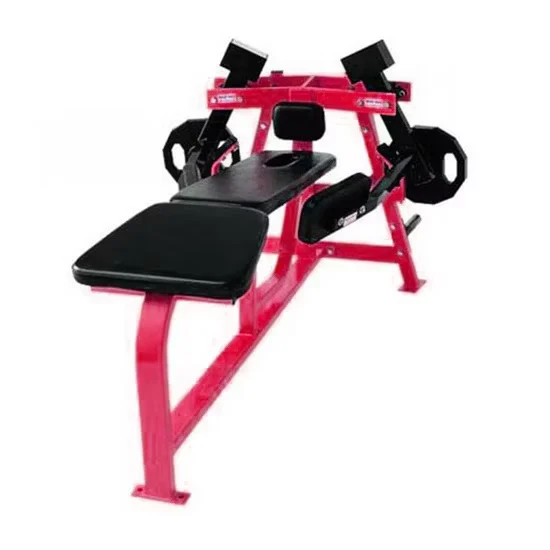
Plate Loaded Rear Deltoid Machine, 3×3 Inch Frame, 83kg Net Weight — built on 11-gauge Q235/Q345 steel with robotic MIG continuous welding for structural rigidity under heavy plate loading. Sealed industrial bearings ensure smooth iso-lateral arm rotation without play development in high-traffic commercial environments. Every unit undergoes three-stage QC with load testing before shipment, backed by a 10-year frame warranty.
// Spec Highlights
• Direct from Manufacturer · No Middlemen · Worldwide Shipping
01
// Material
Imported Solid Wood
Premium hardwood frames sourced for density and visual warmth.
02
// Hardware
Medical-Grade Silent
Whisper-quiet pulleys and springs for clinical environments.
03
// Customization
Appearance OEM
Color, upholstery, and branding tailored to your studio.
04
// Service
Layout Design
Free venue planning for studios and rehab institutions.
Every component is selected for longevity, performance, and aesthetic harmony - from imported hardwood frames to silent medical-grade accessories.
// Features
Mill-Traceable Steel — Every frame tube is cut from Q235/Q345 coil with certification documents tied to the heat number, so you can verify what holds your members under load.
| Parameter | Value |
|---|---|
| Product Type | Plate Loaded Rear Deltoid Machine |
| Frame Tube Size | 3×3 inch |
| Steel Grade | Q235 / Q345 industrial steel, mill-certified |
| Frame Steel Gauge | 11-gauge |
| Welding Type | Robotic MIG, continuous weld lines |
| Loading Type | Plate loaded |
| Bearing Type | Sealed industrial bearings |
| Powder Coating | 200μm scratch-resistant, sandblast pre-treatment |
| Product Dimensions | 1982 × 1003 × 925 mm |
| Net Weight | 83 kg |
| Certification | ISO 9001, CE |
| Warranty | 10-year frame |
| Facility Type | Typical Use |
|---|---|
| Commercial gym strength floor | Rear deltoid isolation station between cable and plate-loaded rows |
| CrossFit box functional zone | Accessory strength station for overhead athletes |
| Hotel fitness center | Compact plate-loaded station for limited footprint layouts |
| University strength and conditioning room | Posterior shoulder development for throwers and swimmers |
Vague "commercial grade" claims collapse the moment plates stack up and members pull off-axis.
I have seen facilities in Dubai and Riyadh replace rear delt machines within a year because the frame steel was too thin to resist flex under repeated eccentric loading. When a gym owner sources equipment based on brochure weight alone, the frame tube wall thickness remains a guess. The difference between an unspecified tube and an 11-gauge section becomes obvious when a 120 kg member loads the horns unevenly and the arm assembly starts to wobble mid-rep. [NEED_CITE: EN 957 structural requirements for stationary training equipment]
This machine targets horizontal abduction of the posterior deltoid and mid-trap through a converging iso-lateral arc. On a commercial strength floor, it pairs naturally with plate-loaded high rows and seated cable rows, filling the horizontal pull plane that most members underserve. Facilities running high-density layouts benefit from its sub-two-meter footprint, which fits between rack bays without compressing traffic lanes. The seat geometry accommodates users from roughly the 5th to 95th percentile, and the iso-lateral arms allow members with shoulder asymmetries to train each side independently. A commercial plate loaded rear deltoid machine earns its floor space when it complements, rather than duplicates, existing rowing stations.
The loading profile on this unit is predominantly eccentric: members decelerate the arm at end-range, creating reverse torque through the pivot bolt and into the mainframe upright. Over hundreds of daily reps across multiple users, this cyclic stress concentrates at the weld junction where the pivot bracket meets the vertical tube. Unsealed bushings in comparable machines develop radial play within the first year of high-traffic use, shifting the arm path and forcing compensatory movement patterns. The sealed industrial bearings on this unit prevent dust and sweat ingress, maintaining rotational smoothness without scheduled re-greasing. [NEED_CITE: weld classification and fatigue performance in structural steel]
The 3×3 inch frame tube at 11-gauge wall thickness provides a section modulus that resists bending under off-center plate loads — when a member stacks plates on one horn only, the lateral torsional resistance of the upright prevents visible deflection. Robotic MIG welding produces continuous weld beads along the full joint perimeter, eliminating the cold-start porosity common in manual spot-weld sequences. The sandblast pre-treatment strips mill scale before the 200μm powder coat is applied, which means the coating bonds to bare steel rather than sitting over surface contamination. Sealed industrial bearings carry both radial and axial loads at the pivot, a meaningful upgrade over simple bushings that rely on lubricant films degrading under sweat exposure.
Thin-wall tubing on rear delt machines may pass initial inspection but develops permanent set after months of heavy plate loading, leaving the arm assembly slightly tilted at rest. Spot-welded pivot brackets crack along the toe of the weld under cyclic reverse loading, creating a liability event mid-session. Non-sealed bearings and low-density upholstery pads compound the problem: bearing play triggers maintenance callouts every few months, while vinyl splits along the stitch line under daily commercial use, forcing full pad replacement rather than a simple cover swap. [NEED_CITE: commercial gym equipment total cost of ownership over five years]
The 11-gauge Q235/Q345 steel arrives with mill certification traceable to the coil number, so procurement teams can audit material origin without relying on supplier claims. Robotic MIG continuous welding is documented per unit, not sampled from a batch. Each machine undergoes three-stage QC with load testing before crating, meaning the unit arriving on your dock has already been stress-verified. The 200μm powder coating withstands daily cleaning chemicals and member contact abrasion. A 10-year frame warranty backs the structural package. For facility planning, the 1982 × 1003 mm footprint feeds directly into 2D-3D CAD layouts, ensuring safe clearance between this station and adjacent plate-loaded or selectorized units. OEM color and logo customization is available for branded chains.
Provide your strength floor square footage and current equipment list so we can generate a 2D-3D layout placing this rear delt station with proper traffic clearances. Specify expected daily user volume to confirm the structural tier matches your throughput. Indicate your target member demographic so we can verify the seat and chest pad adjustment range covers your population. Note any branding requirements — custom frame colors, logo plates, or upholstery materials — for OEM integration.
Q: How do I verify the steel specification beyond "commercial grade" marketing claims?
A: Request the mill certificate tied to the coil heat number. A genuine commercial plate loaded rear deltoid machine should ship with documentation showing steel grade, wall thickness, and yield data from the rolling mill. Suppliers unable to provide traceable paperwork are typically sourcing from spot-market tube dealers where batch consistency is unverified.
Q: Why choose plate loaded over selectorized for rear deltoid work?
A: Plate loaded units eliminate weight stack guide rod friction and cable wear, reducing maintenance in high-traffic environments. Members who load their own plates also self-regulate intensity more carefully than those dropping a pin, which tends to extend equipment lifespan on isolation movements.
Q: What maintenance do sealed industrial bearings require versus bushings?
A: Sealed bearings require essentially zero scheduled maintenance because the seal prevents sweat, chalk dust, and cleaning solution ingress. Bushings rely on periodic lubrication and develop radial play as the polymer liner wears, triggering service calls that add up across a full gym floor.
Q: How does equipment spacing affect safety on a commercial strength floor?
A: Each station needs clearance for loading plates, member entry and exit, and emergency passage. A 2D-3D floor plan ensures this machine fits without creating pinch points between adjacent racks or cable towers, preventing trip hazards and ensuring ADA-compliant pathways.
Premium aesthetics meet quiet operation for boutique studio environments.
Medical-grade silence and precision for sports & postpartum recovery.
Furniture-grade craftsmanship for premium residential installations.
Compact premium setups for one-on-one and small-group training.
Aesthetic Pilates integration for hybrid wellness studio programming.
Multi-unit deployment with instructor-grade reliability for certification programs.
Tell us about your project. Our team will respond within 24 hours with pricing, customization options, and shipping details.
// Sales Director
William
+86 132 2531 1800
// Export Manager
Bella
+86 198 5412 8032
william@bickfit.com