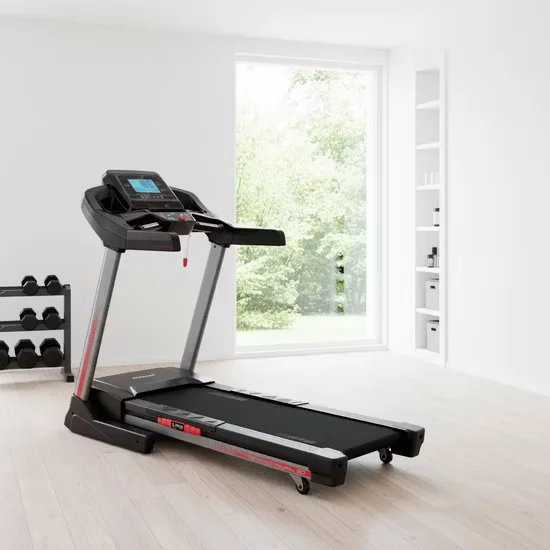
01 / Scenario
STUDIO
P
High-End Pilates Studios
Premium aesthetics meet quiet operation for boutique studio environments.
ISO
9001
CE
Certified
OEM
Available
10YR
Warranty
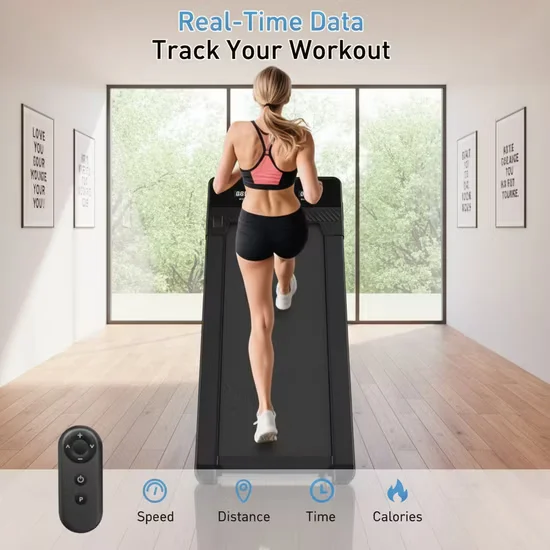
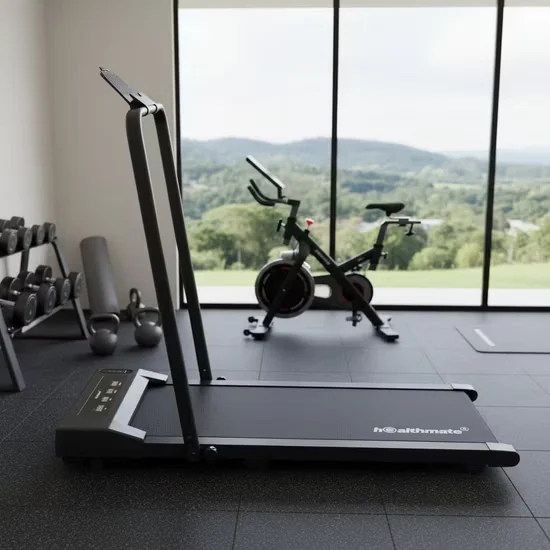
Motorized Walking Treadmill, 1-12 km/h Speed Range, 1000×400mm Runway — foldable frame with reinforced hinge mechanism ensures structural rigidity during operation, while multi-layer composite belt minimizes stretch deformation under repeated use. LED console delivers real-time feedback on speed, distance, time, and calories, with remote control enabling seamless adjustments. CE and RoHS certified, each unit undergoes continuous motor temperature rise validation before shipment.
// Spec Highlights
• Direct from Manufacturer · No Middlemen · Worldwide Shipping
01
// Material
Imported Solid Wood
Premium hardwood frames sourced for density and visual warmth.
02
// Hardware
Medical-Grade Silent
Whisper-quiet pulleys and springs for clinical environments.
03
// Customization
Appearance OEM
Color, upholstery, and branding tailored to your studio.
04
// Service
Layout Design
Free venue planning for studios and rehab institutions.
Every component is selected for longevity, performance, and aesthetic harmony - from imported hardwood frames to silent medical-grade accessories.
// Features
Foldable Frame Integrity Under Repeated Use — The folding hinge mechanism on this motorized folding treadmill with handle and remote control uses reinforced pivot pins and locking bolts to maintain structural rigidity when deployed, preventing lateral sway during running.
| Parameter | Value |
|---|---|
| Product Type | Motorized Walking Treadmill |
| Speed Range | 1–12 km/h |
| Maximum Speed | <15 km/h |
| Runway Size | 1000 × 400 mm |
| Product Dimensions | 1250 × 590 × 1080 mm |
| Weight | 100–160 kg |
| Display | LED (Speed / Distance / Time / Calories) |
| Programs | 6 preset programs |
| Folding | Yes |
| Certification | CE, RoHS |
| Customization | Available |
| Production Capacity | 3000 units / month |
| Facility Type | Typical Use |
|---|---|
| Home fitness space | Daily walking and light jogging in limited square footage |
| Hotel fitness center | Guest-use cardio in compact wellness rooms |
| Apartment gym | Shared residential cardio zone with space constraints |
| Light commercial gym | Supplementary warm-up or cool-down station |
A treadmill that folds must first survive its own hinge. Repeated folding cycles concentrate stress at the pivot joint — a point where thin-gauge steel and spot-welded brackets can develop play long before the motor shows wear. On a motorized folding treadmill with handle and remote control, the folding mechanism must resist lateral deflection under dynamic footstrike loads, not just support static weight when locked open.
Operators who have deployed folding treadmills in high-traffic environments report hinge loosening within months, accompanied by audible clunking at each stride. The root cause is rarely the motor — it is the structural joint that was never rated for cyclic loading. [NEED_CITE: structural fatigue performance of hinged steel frames under repeated loading]
This motorized folding treadmill with handle and remote control occupies a 1250 × 590 mm footprint when deployed, placing it in the light-duty cardio category suited for walking and low-speed jogging up to 12 km/h. The 1000 × 400 mm running surface accommodates average-stride walking patterns and is appropriate for users of moderate height. In a multi-station layout, it pairs with higher-duty treadmills or cross-trainers to create a tiered cardio zone where space-constrained areas still receive functional equipment. The folded state reduces depth significantly, allowing corridor or wall-adjacent storage between use windows.
Folding treadmills experience a unique stress profile: the frame must endure both the impact loading of footstrike and the cyclic bending moments introduced each time the unit is folded and unfolded. The hinge area bears concentrated shear forces that fixed-frame treadmills simply do not encounter. Over hundreds of folding cycles, inadequate pivot pin diameter or insufficient bracket thickness leads to measurable play at the joint. The motor mount, typically positioned near the front roller, also experiences vibration transfer that can loosen fasteners if torque specifications are not maintained. Bearing seals at the front and rear rollers face contamination from floor dust and sweat drip, making sealed cartridge bearings essential for sustained smooth operation. [NEED_CITE: bearing seal effectiveness in high-humidity indoor fitness environments]
The 1000 × 400 mm running surface defines the usable stride envelope — a dimension that directly affects user comfort and gait naturalness. At 1–12 km/h, the speed range covers walking through light jogging, which determines the motor’s continuous duty rating requirement. The 1250 × 590 × 1080 mm deployed footprint sets the minimum floor allocation including side clearance for safe mounting and dismounting. The 100–160 kg unit weight range reflects variance in frame gauge and motor sizing across configurations — heavier units generally indicate thicker gauge steel in the main frame rails. The 6-program console with LED readout provides basic feedback without the thermal load of large touchscreen modules, reducing electronic failure points in humid environments.
Thin-wall frame tubing may pass visual inspection but deflects visibly under a 90 kg user at 10 km/h, creating a perceptible bounce that accelerates belt wear and compromises user confidence. Non-sealed bearings in the roller assembly draw in dust and moisture, developing rotational resistance within months — a maintenance burden that scales with fleet size. Low-density foam padding on the handrail grips compresses permanently under grip pressure, exposing the underlying metal within a single commercial quarter. Powder coating applied below industrial thickness standards chips at fold-contact points, leaving bare steel exposed to sweat corrosion. When proprietary fasteners are used in the hinge assembly, replacement parts become unavailable after the manufacturer discontinues the model, forcing full unit retirement over a single failed joint. [NEED_CITE: powder coating adhesion standards for fitness equipment steel surfaces]
The motorized folding treadmill with handle and remote control is produced in a vertically integrated facility where frame steel grade is traceable to the mill coil, ensuring consistent material properties across production batches. Robotic MIG welding produces continuous weld seams at the hinge brackets and motor mount — eliminating the spot-weld failure mode that compromises folding mechanisms. Each unit undergoes load testing before shipment, verifying that the folding lock engages fully and the frame resists deflection under rated weight. The 200μm powder coating provides scratch and corrosion resistance at contact points where folding action creates repeated surface friction. For facility planners, 2D-3D CAD layout support ensures this treadmill’s deployed and folded footprints integrate with safe clearance zones and traffic flow patterns. OEM customization allows color and branding alignment with existing facility design standards.
Provide your cardio zone floor area and adjacent equipment list to receive a 2D-3D layout showing deployed and folded clearance for this motorized folding treadmill with handle and remote control. Specify expected daily user volume to confirm whether the light-commercial duty rating matches your traffic pattern. Indicate target user height range to verify the 1000 × 400 mm running surface accommodates your demographic. Custom color, logo placement, and console language options are available upon request.
Q: How does the folding mechanism affect long-term frame rigidity compared to a fixed-frame treadmill?
A: The folding hinge is the primary structural differentiator. On this motorized folding treadmill with handle and remote control, reinforced pivot pins and positive-locking bolts maintain joint rigidity when deployed. Fixed-frame treadmills eliminate this joint entirely, offering inherently higher torsional stiffness. For walking and light jogging at speeds below 12 km/h, the folding design provides adequate rigidity when the locking mechanism is fully engaged and maintained. Periodic inspection of the hinge for play is recommended to sustain performance over the equipment’s service life.
Q: What determines whether the motor can sustain daily use without overheating?
A: Motor thermal capacity depends on continuous duty rating, ventilation path design, and ambient temperature. The 1–12 km/h speed range on this unit requires a motor sized for sustained operation at moderate loads rather than peak sprint demands. Adequate airflow around the motor compartment prevents heat buildup during extended sessions. In environments with elevated ambient temperature or humidity, ensuring clear ventilation openings and avoiding continuous maximum-speed operation extends motor service life. Thermal overload protection provides a safety cutoff if operating limits are exceeded.
Q: How should the running belt and deck be maintained to extend their service life?
A: Belt longevity depends on proper tension, deck lubrication, and surface cleanliness. On this motorized folding treadmill with handle and remote control, the 1000 × 400 mm belt should be inspected monthly for edge fraying, surface cracking, or tracking drift. Deck lubrication at manufacturer-specified intervals reduces friction between belt and board, preventing premature wear on both components. Keeping the belt surface free of debris and moisture prevents abrasive damage. Belt replacement is warranted when tracking adjustment can no longer correct drift or when surface wear exposes the underlying substrate layer.
Q: What maintenance schedule is recommended for the folding mechanism?
A: The folding hinge and locking hardware should be inspected at 90-day intervals for looseness, wear marks, or deformation at pivot points. Pivot pins require periodic lubrication with a light machine oil to prevent dry operation that accelerates bushing wear. Locking bolts must engage fully with no residual play when the frame is in the deployed position. If any component shows measurable deflection or audible clicking during use, the hinge assembly should be serviced before continued operation to prevent progressive joint degradation.
Premium aesthetics meet quiet operation for boutique studio environments.
Medical-grade silence and precision for sports & postpartum recovery.
Furniture-grade craftsmanship for premium residential installations.
Compact premium setups for one-on-one and small-group training.
Aesthetic Pilates integration for hybrid wellness studio programming.
Multi-unit deployment with instructor-grade reliability for certification programs.
Tell us about your project. Our team will respond within 24 hours with pricing, customization options, and shipping details.
// Sales Director
William
+86 132 2531 1800
// Export Manager
Bella
+86 198 5412 8032
william@bickfit.com