01 / Scenario
STUDIO
P
High-End Pilates Studios
Premium aesthetics meet quiet operation for boutique studio environments.
ISO
9001
CE
Certified
OEM
Available
10YR
Warranty
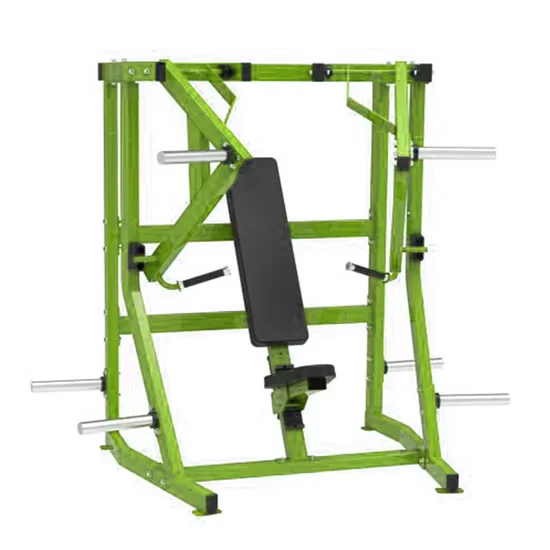
Plate Loaded ISO Lateral Decline Bench, 1300×1150×1750mm, 141kg Net Weight — engineered with 3×3 inch frame steel and robotic MIG continuous welding to eliminate spot-weld fatigue under heavy plate loading. Sealed industrial bearings at pivot points ensure smooth iso-lateral converging press paths without play, maintaining precision through high-repetition commercial use. Every unit undergoes per-unit load testing before shipment, backed by a 10-year frame warranty and factory-direct floor planning support.
// Spec Highlights
• Direct from Manufacturer · No Middlemen · Worldwide Shipping
01
// Material
Imported Solid Wood
Premium hardwood frames sourced for density and visual warmth.
02
// Hardware
Medical-Grade Silent
Whisper-quiet pulleys and springs for clinical environments.
03
// Customization
Appearance OEM
Color, upholstery, and branding tailored to your studio.
04
// Service
Layout Design
Free venue planning for studios and rehab institutions.
Every component is selected for longevity, performance, and aesthetic harmony - from imported hardwood frames to silent medical-grade accessories.
// Features
11-Gauge Traceable Steel — Every frame tube on this decline press originates from a certified coil with verifiable mill documentation, ensuring the steel under your users’ max-effort reps is the same steel specified at the engineering stage.
| Parameter | Value |
|---|---|
| Product Type | Plate Loaded Chest Press Machine |
| Frame Steel | 11-gauge, 3×3 inch tube |
| Steel Grade | Q235 / Q345 industrial steel, mill-certified |
| Welding Type | Robotic MIG, continuous weld seams |
| Loading Type | Plate Loaded |
| Bearing Type | Sealed industrial bearings at pivot points |
| Exercise Part | Chest (decline iso-lateral converging press path) |
| Product Dimensions | 1300×1150×1750mm |
| Net Weight | 141kg |
| Powder Coating | Sandblast pre-treatment plus 200μm scratch-resistant coating |
| Upholstery | Commercial-grade, replacement panels available |
| Certification | ISO 9001, CE |
| Warranty | 10-year frame |
| Facility Type | Typical Use |
|---|---|
| Commercial gym plate-loaded strength zone | Primary decline press station for general membership and heavy-use members |
| University strength and conditioning room | Athletic department chest pressing for field and court sport athletes |
| Hotel and resort fitness center strength area | Durable decline press for transient guests and long-stay fitness users |
| CrossFit box functional strength corner | Plate loaded decline pressing in hybrid programming environments |
| Institutional athletic weight room | High-school and collegiate sports team strength floors |
The joint fails long before the steel does, and that is where most commercial plate loaded benches quietly lose their structural integrity.
When gym owners spec a commercial plate loaded iso lateral decline bench press, they often see "commercial grade" on the brochure with no actual gauge number or mill certificate behind it. The problem shows up eight months later: hairline cracks radiating from spot-welded joints on the loading horns or pivot brackets, right where repetitive off-axis plate loading creates cyclic stress. Spot welds pass a visual inspection on day one but lack the penetration depth to survive thousands of heavy decline press cycles [NEED_CITE: weld classification and fatigue performance in structural steel]. I have seen entire batches pulled off the floor because the cost savings on welding were wiped out in replacement labor and member complaints.
This unit targets the lower sternal and costal fibers of the pectoralis major through a converging iso-lateral press path, complementing flat and incline plate loaded stations already on the floor. The decline angle and independent arm travel suit a wide range of torso lengths, making it practical for both general membership and athletic populations in a commercial plate loaded iso lateral decline bench press station that sees rotation throughout the day. Facilities running high-density plate loaded zones benefit from the compact footprint relative to selectorized alternatives.
Decline pressing generates a different stress profile than flat or incline work: the load vector pushes the seat carriage and main upright in opposing directions under heavy plates, creating a shear moment at the lower crossmember junction. At commercial traffic levels, that junction endures thousands of eccentric and concentric cycles per week, and every cycle transmits force through the weld seams and pivot bearings [NEED_CITE: EN 957 structural requirements for stationary training equipment]. Sealed bearings at the arm pivots prevent sweat and chalk dust from migrating into the race, which is where unsealed bushings develop play and start knocking. The powder coating on the load horns takes direct impact from plates being slid on and off, and anything under industrial thickness chips down to bare steel within months.
The 3×3 inch 11-gauge tube provides a deformation threshold that keeps the main upright from flexing during max-effort sets, which matters when a loaded commercial plate loaded iso lateral decline bench press sees users pushing beyond the test weight. Robotic MIG welding produces continuous full-penetration seams along every structural joint rather than intermittent tacks, distributing cyclic stress across a broader area and delaying fatigue crack initiation. The 200μm powder coating, applied over a sandblasted surface, bonds mechanically to the steel rather than sitting on top of mill scale, so it stays intact at the contact points where plates and feet repeatedly strike. Sealed industrial bearings at the pivot keep the iso-lateral arms rotating on a consistent axis, preventing the uneven wear that turns smooth presses into grinding ones.
A thinner-walled tube on a decline press does not just flex under load — it accelerates fatigue at every welded bracket because the flex transfers additional bending stress into the joints. Non-sealed bearings develop radial play as chalk and humidity penetrate the race, and that play turns into audible knocking that members notice and report. Low-density upholstery compresses permanently within the first year of commercial traffic, forcing the gym to either re-upholster at significant cost or leave torn pads on the floor. Thin powder coating chips at the load horns, exposing bare steel that rusts from sweat and cleaning chemicals, creating a unit that looks neglected even when mechanically sound [NEED_CITE: powder coating durability standards for commercial fitness equipment].
The 11-gauge frame steel on this plate loaded decline press is traceable to the coil, so the gauge claimed in the spec sheet is the gauge actually in the frame. Robotic MIG welding runs continuous seams at every structural joint on this unit, not selective tacking on visible surfaces only. Every unit undergoes individual load testing before crating, with records tied to the serial number. The 200μm industrial powder coating on the load horns and upright protects against the plate-on-steel contact that strips lesser finishes. The 10-year frame warranty backs the structural claims, and our 2D-3D CAD floor planning service ensures this station is placed with correct plate-loading clearance on both sides, eliminating the unsafe gaps that appear when machines are sized without coordination.
Provide your plate loaded zone dimensions and current machine list so we can generate a 2D-3D layout with proper clearance around this decline press. Share your estimated daily user count so we can confirm the structural rating matches your traffic. Let us know your target user population to verify the seat and pad geometry fits your membership. Specify any color, logo, or upholstery requirements for OEM alignment with your brand.
Q: How do I tell a true commercial plate loaded bench from a light-commercial one based on specs?
A: Request the actual frame steel gauge and tube dimensions rather than accepting "commercial grade" as a description. Ask for mill-certified steel documentation traceable to the coil. Verify the welding method — continuous robotic MIG seams indicate a different structural standard than spot-welded joints. Light-commercial units typically use thinner wall tubing and skip sealed bearings at pivot points.
Q: What steel gauge and tube size should a decline press have for heavy plate loading?
A: An 11-gauge frame in a 3×3 inch tube section provides the deformation resistance needed for repeated heavy decline pressing in a commercial environment. Thinner gauges flex under load, transferring additional stress into welded joints and accelerating fatigue. The tube cross-section matters as much as the wall thickness, because both dimensions define how the upright resists bending under asymmetric plate loads.
Q: How does an iso-lateral converging press path differ from a fixed-bar decline bench?
A: Iso-lateral arms move independently, so each side of the chest works through its own range without the dominant side compensating. The converging path brings the handles closer together at the top of the press, aligning with natural pectoral fiber shortening. A fixed-bar path locks both hands into one plane, which can place uneven stress on the shoulder joint when left and right strength levels differ.
Q: What clearance is needed around a plate loaded decline press for safe operation?
A: You need lateral space on both sides for users to load and unload plates without stepping into adjacent equipment zones, plus rear clearance for the seat entry path. Exact spacing depends on your plate diameter and adjacent station types. A proper 2D-3D CAD floor plan accounts for the loaded horn reach and user movement patterns rather than relying on minimum machine footprint alone.
Q: How often does upholstery on a commercial decline press need replacement?
A: In high-traffic commercial environments, upholstery on decline press pads typically requires assessment within the first couple of years. Commercial-grade pads with proper density resist compression longer, and having replacement panels available from the manufacturer avoids full re-upholstery costs. The replacement cycle shortens when low-density foam is used to reduce initial equipment cost.
Premium aesthetics meet quiet operation for boutique studio environments.
Medical-grade silence and precision for sports & postpartum recovery.
Furniture-grade craftsmanship for premium residential installations.
Compact premium setups for one-on-one and small-group training.
Aesthetic Pilates integration for hybrid wellness studio programming.
Multi-unit deployment with instructor-grade reliability for certification programs.
Tell us about your project. Our team will respond within 24 hours with pricing, customization options, and shipping details.
// Sales Director
William
+86 132 2531 1800
// Export Manager
Bella
+86 198 5412 8032
william@bickfit.com