01 / Scenario
STUDIO
P
High-End Pilates Studios
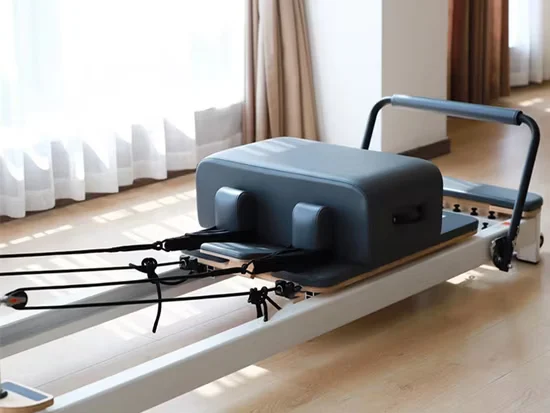
Premium aesthetics meet quiet operation for boutique studio environments.
ISO
9001
CE
Certified
OEM
Available
10YR
Warranty
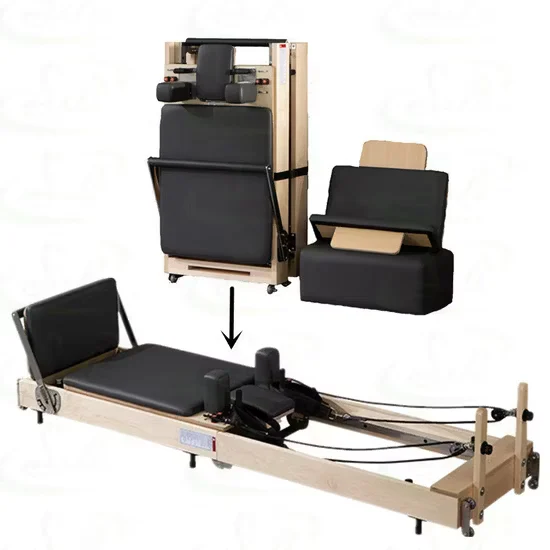
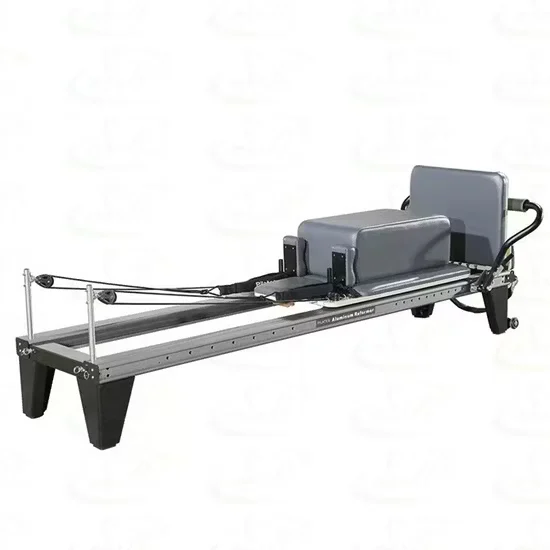
SRY-12 Pilates Reformer Machine, Aluminium Alloy Frame, 90kg Net Weight — corrosion-resistant construction eliminates rust in humid studio environments while maintaining rigidity across full carriage travel. Sealed bearing rail system minimizes maintenance, and integrated Long Box, Jump Board, and Platform attachment points require no aftermarket modifications. CE certified with 3-year warranty and customizable logo options. Every unit undergoes 32-point inspection and 100% load testing before shipment.
// Spec Highlights
• Direct from Manufacturer · No Middlemen · Worldwide Shipping
01
// Material
Imported Solid Wood
Premium hardwood frames sourced for density and visual warmth.
02
// Hardware
Medical-Grade Silent
Whisper-quiet pulleys and springs for clinical environments.
03
// Customization
Appearance OEM
Color, upholstery, and branding tailored to your studio.
04
// Service
Layout Design
Free venue planning for studios and rehab institutions.
Every component is selected for longevity, performance, and aesthetic harmony - from imported hardwood frames to silent medical-grade accessories.
// Features
Mill-Traceable Aluminium Frame — SRY-12 uses certified aluminium alloy extrusions with full material traceability from raw billet to finished rail, eliminating the guesswork in studio equipment procurement.
| Parameter | Value |
|---|---|
| Designation | SRY-12 |
| Product Type | Pilates Reformer Machine |
| Frame Material | Aluminium Alloy |
| Product Dimensions | 2570×730×270mm |
| Net Weight | 90kgs |
| Color | White |
| Accessories Included | Long Box / Jump Board / Platform |
| Logo | Customized Is Allowed |
| Certification | CE |
| Warranty | 3 Years |
| Age Group | Adult |
| Gender | Unisex |
| Facility Type | Typical Use |
|---|---|
| Boutique Pilates Studio | Daily group reformer classes with high equipment rotation |
| Yoga Studio | Complementary resistance work alongside mat-based sessions |
| Rehabilitation & Physiotherapy Center | Controlled spring-loaded resistance for injury recovery protocols |
| Hotel & Resort Wellness Facility | Premium guest-facing equipment matching interior aesthetics |
| Boutique Fitness Studio | Small-group functional training incorporating reformer circuits |
Aluminium alloy framing eliminates the two most common reformer failure modes: steel corrosion in humid studios and wooden carriage warping under seasonal moisture swings.
Most studio operators have encountered reformers where steel frames develop surface rust within months, particularly in spaces with hot yoga or high-humidity HVAC conditions. Powder-coated steel looks acceptable at delivery, but contact points where the carriage meets the rail chip quickly, exposing bare metal to sweat and cleaning chemicals. Wooden carriages on budget units absorb ambient moisture unevenly, introducing drag and lateral play that instructors notice during precision work [NEED_CITE: material degradation in high-humidity fitness environments]. The SRY-12 commercial aluminium alloy pilates reformer machine sidesteps both issues by using aluminium alloy throughout the primary frame structure, which naturally forms a protective oxide layer without relying on surface coatings that degrade with daily contact.
The SRY-12 addresses the full sagittal plane through spring-resisted carriage travel, targeting core stabilization, hip flexion and extension, and spinal articulation sequences. In a studio layout, this commercial aluminium alloy pilates reformer machine pairs naturally with Cadillac or tower units for clients progressing from supine to standing work, and with mat zones for warm-up and cool-down transitions. The 2570mm length accommodates users across a wide height range without requiring frame extensions. Studios running four to six daily group sessions benefit from the 90kg net weight, which keeps the unit stable during loaded carriage movement without permanent floor anchoring, allowing layout reconfiguration between class formats.
Reformer loading is predominantly cyclic and eccentric: springs compress and release thousands of times per day, carriage wheels bear dynamic lateral forces during single-leg work, and attachment points on the Long Box and Jump Board endure repeated impact cycles. The aluminium frame experiences stress concentration at the rail-to-base junction and at accessory mounting bosses, making weld quality at these nodes critical [NEED_CITE: fatigue behavior of aluminium alloy welds in cyclic loading applications]. Sealed bearings in the carriage wheel assembly resist ingress from sweat, cleaning solution residue, and ambient dust that accumulates in studio environments. The spring resistance system undergoes continuous compression fatigue, and spring anchoring hardware must maintain grip without deforming the aluminium rail slot over months of use.
The aluminium alloy frame choice directly affects three structural behaviors: corrosion resistance without coating dependency, weight-to-rigidity ratio for repositioning, and vibration damping during dynamic exercises like Jump Board sequences. A 90kg net weight provides sufficient mass to resist walking during aggressive carriage returns while remaining movable by a single technician for floor cleaning or layout changes. The 2570×730mm footprint establishes minimum spacing requirements — studios planning group classes need to account for carriage overtravel and instructor circulation paths between units. Spring configuration determines the resistance curve available to clients, and multi-spring setups allow progressive loading without component swaps. The integrated accessory mounting points for the Long Box, Jump Board, and Platform mean attachment hardware interfaces directly with the frame structure rather than relying on clamped adapters that introduce wobble over time [NEED_CITE: structural interface standards for modular fitness attachments].
Studio operators who select reformers based on price alone often encounter compounding costs within the first year. Budget aluminium extrusions with insufficient wall thickness deflect under loaded carriage travel, creating uneven rail wear that accelerates wheel degradation. Non-sealed bushings or open bearings allow sweat and cleaning chemical ingress, developing lateral play that instructors identify as a vague, imprecise carriage feel during controlled eccentric work. When rail straightness tolerance is not verified at manufacture, carriage wheels track inconsistently, producing noise and vibration that worsen progressively. Spring anchors on thin-gauge aluminium deform under high-resistance configurations, eventually requiring full rail section replacement rather than simple spring swaps. These failures rarely appear during a showroom test; they surface after months of eight-class-per-day rotation [NEED_CITE: maintenance cost escalation in commercial studio equipment with substandard bearing specifications].
The 11-gauge steel framing philosophy from our commercial strength lines applies directly to reformer specification: structural materials must be traceable to the mill certificate, not described vaguely as commercial grade. Robotic MIG welding on our strength equipment translates to TIG welding quality control on aluminium reformer joints, with continuous weld lines at stress-concentrated mounting bosses rather than intermittent tack welds. Every unit undergoes load testing before shipment — for reformers, this means verifying carriage travel smoothness under maximum spring resistance and confirming accessory attachment rigidity under Jump Board impact. The 200μm industrial powder coating standard from our strength equipment carries over to any coated components, ensuring resistance to cleaning chemical exposure. Our facility planning team provides 2D-3D CAD layouts that account for reformer footprint, carriage overtravel clearance, instructor circulation space, and emergency egress paths specific to studio dimensions.
Provide your studio floor dimensions and planned reformer count to receive a 2D-3D placement plan that accounts for carriage clearance, circulation paths, and ADA compliance zones. Specify your expected daily class volume so we can confirm spring system durability matches your throughput. Indicate any customization requirements including logo placement, color preferences, or accessory package modifications for your programming format.
Q: Aluminium alloy vs. steel frame — which holds up better in a commercial Pilates studio?
A: Aluminium alloy naturally resists corrosion without relying on powder coating integrity, making it better suited for studios with humidity from hot yoga or frequent wet cleaning. Steel frames depend entirely on coating adhesion at contact points, and once chipped, rust spreads beneath adjacent coating. Aluminium also reduces unit weight for layout reconfiguration between class formats.
Q: How do I evaluate carriage smoothness and rail quality before committing to a purchase order?
A: Request a rail straightness tolerance report and load the carriage to maximum user weight plus spring resistance, then observe tracking across full travel. Lateral play or binding at any point indicates rail misalignment or bearing specification issues. Ask for bearing seal type documentation, as open bushings develop noise and drag within months of commercial rotation.
Q: What is the realistic spring replacement interval under daily group class scheduling?
A: Spring fatigue life depends on compression cycles per day and maximum resistance configurations used. Studios running six or more daily classes with advanced programming will see spring degradation sooner than those running introductory sessions. Request spring fatigue testing documentation showing resistance tolerance retention over rated compression cycles, and budget for inspection every six months.
Q: How should reformer spacing be planned in a group class studio layout?
A: Account for the 2570mm base length plus carriage overtravel at both ends, plus minimum instructor walking clearance between units. Long Box and Jump Board use extends the functional footprint beyond the frame dimensions. A proper 2D layout prevents unsafe congestion during transitions and ensures emergency egress paths remain unobstructed during full-capacity sessions.
Premium aesthetics meet quiet operation for boutique studio environments.
Medical-grade silence and precision for sports & postpartum recovery.
Furniture-grade craftsmanship for premium residential installations.
Compact premium setups for one-on-one and small-group training.
Aesthetic Pilates integration for hybrid wellness studio programming.
Multi-unit deployment with instructor-grade reliability for certification programs.
Tell us about your project. Our team will respond within 24 hours with pricing, customization options, and shipping details.
// Sales Director
William
+86 132 2531 1800
// Export Manager
Bella
+86 198 5412 8032
william@bickfit.com