01 / Scenario
STUDIO
P
High-End Pilates Studios
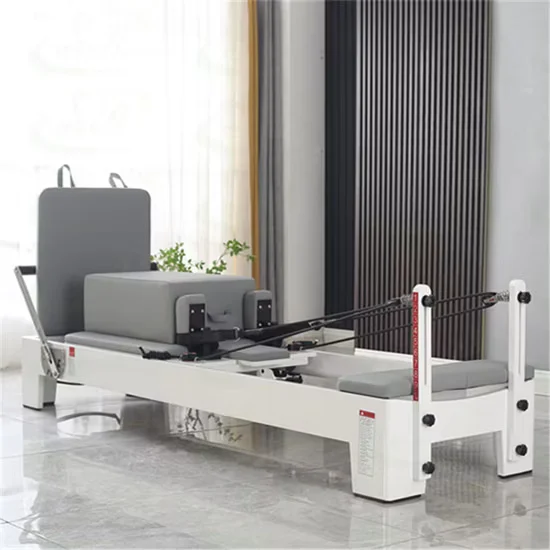
Premium aesthetics meet quiet operation for boutique studio environments.
ISO
9001
CE
Certified
OEM
Available
10YR
Warranty
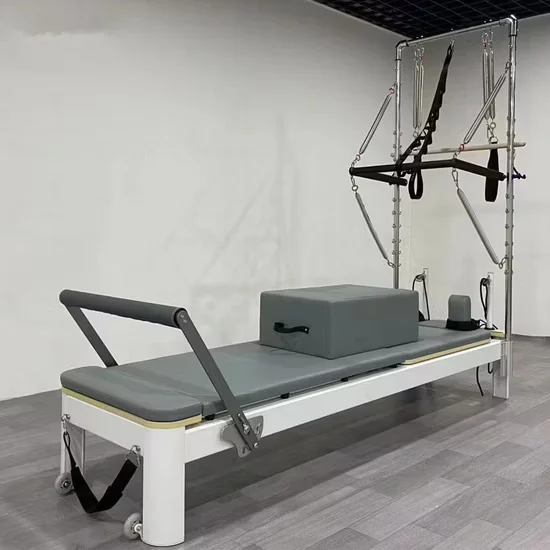
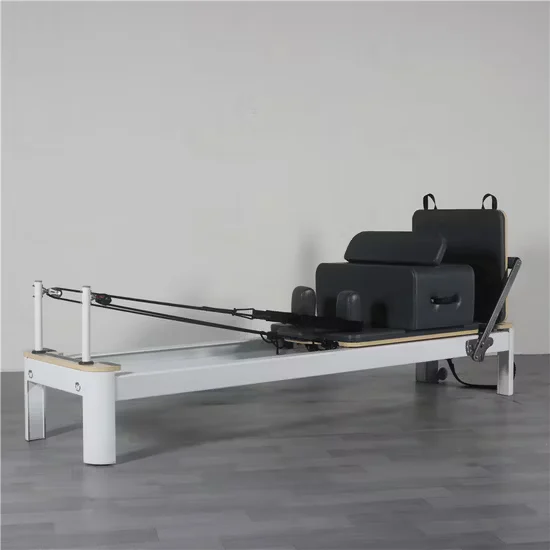
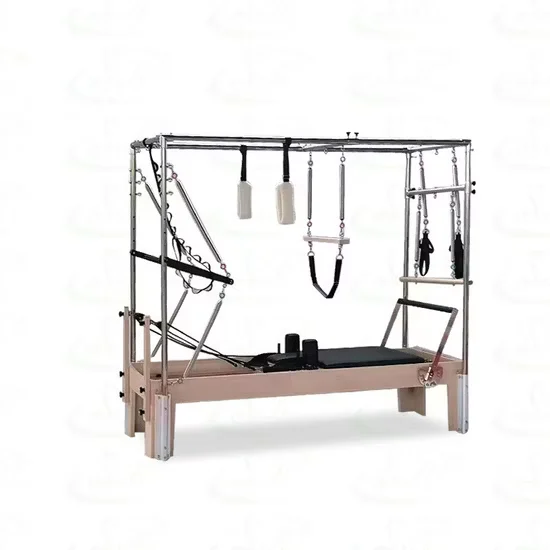
Adjustable Pilates Reformer, 2460×730×680mm, 100kg Net Weight — engineered with reinforced frame structure and industrial-grade carriage system for smooth, quiet operation under continuous studio traffic. Includes long box, jump board, and platform for full-range training versatility. Backed by 3-year warranty and custom logo options for brand alignment.
// Spec Highlights
• Direct from Manufacturer · No Middlemen · Worldwide Shipping
01
// Material
Imported Solid Wood
Premium hardwood frames sourced for density and visual warmth.
02
// Hardware
Medical-Grade Silent
Whisper-quiet pulleys and springs for clinical environments.
03
// Customization
Appearance OEM
Color, upholstery, and branding tailored to your studio.
04
// Service
Layout Design
Free venue planning for studios and rehab institutions.
Every component is selected for longevity, performance, and aesthetic harmony - from imported hardwood frames to silent medical-grade accessories.
// Features
Traceable Oak Frame — Each reformer’s oak structure is sourced with mill-level documentation to verify grain density and load-bearing consistency under studio conditions.
| Parameter | Value |
|---|---|
| Product Type | Pilates Reformer |
| Model NO. | SRY-02 |
| Frame Material | Oak Wood with White Coating |
| Specification | 2460×730×680mm |
| Net Weight | 100kg |
| Included Accessories | Long Box, Jump Board, Platform |
| Color | White |
| Logo | Customized Is Allowed |
| Warranty | 3 Years |
| Production Capacity | 80 Pieces/Month |
| Facility Type | Typical Use |
|---|---|
| Pilates Studio | Daily group and private reformer classes with accessory-driven programming |
| Yoga Studio | Complementary strength and flexibility sessions using the reformer platform |
| Rehabilitation Center | Low-impact controlled resistance work for musculoskeletal recovery protocols |
| Home Studio | Dedicated personal practice space with full accessory coverage |
The carriage rail system determines whether the frame outlasts its moving parts.
Most reformers marketed for studio use present an attractive exterior — clean oak, smooth white finish, polished hardware. The structural question buyers rarely ask is what happens at the carriage-to-rail interface after months of eccentric loading cycles. Unsealed wheel bearings accumulate chalk dust and sweat residue, developing lateral play that transfers shear stress into the wooden rail grooves. Once the rail surface scores, the carriage develops wobble and the reformer requires a full rail replacement rather than a simple bearing swap [NEED_CITE: bearing wear patterns in repetitive linear motion equipment]. The commercial adjustable pilates reformer for yoga studio environments must address this interface first, because a warped rail renders an otherwise sound oak frame unusable.
A reformer occupies the center of most studio floor plans, anchoring the primary movement zone where clients perform supine, prone, and seated exercises across multiple resistance vectors. The commercial adjustable pilates reformer for yoga studio configuration pairs with mat zones and small apparatus stations — jump boards extend cardiovascular demand, while long boxes enable side-lying and seated work that the flat carriage cannot support. Facilities running back-to-back classes need clearance on all four sides for instructor access and safe mounting. The 2460×730mm footprint fits standard studio grids where reformer rows are spaced to allow unhindered movement between units.
Reformer carriages endure a specific fatigue profile: repetitive linear travel under variable spring tension, with lateral forces introduced during single-leg work and jump board landings. Each session generates eccentric deceleration loads at the rail endpoints, concentrating stress at the rail mounting brackets and the oak frame’s cross-member joints. In studios running six or more classes daily, these cycles accumulate into measurable rail wear and hardware loosening within the first operational year [NEED_CITE: fatigue loading on wood-metal junctions in fitness equipment]. Sealed wheel bearings and reinforced bracket fasteners resist this degradation far longer than open bushings and standard wood screws, which develop play and require frequent torque checks.
Oak’s grain structure provides dimensional stability that softwoods and engineered boards cannot match under cyclic loading — the interlocking grain pattern resists splitting at fastener points where carriage rails bolt into the frame. The white coating serves as both aesthetic finish and moisture barrier, preventing sweat and cleaning solutions from penetrating the wood surface and causing grain raise or delamination over time. Spring resistance calibration directly affects user experience: inconsistent tension between springs of the same rated weight forces instructors to compensate with verbal cues rather than relying on predictable resistance curves. Platform and long box accessories extend the reformer’s exercise catalog by providing stable elevated surfaces for exercises that demand a fixed base, rather than a sliding carriage.
Reformers built with thin-section pine or MDF-composite frames appear identical in product photos but develop fastener pull-through at the rail mounting points under sustained commercial loading. Open bushings in the carriage wheels require mon*ores the rail channel, turning a minor maintenance task into a full carriage rebuild. Thin white coatings on the oak surface chip at contact edges, exposing raw wood to moisture absorption and eventual swelling that alters rail geometry. When non-standard hardware is used throughout the assembly, replacement parts become unavailable within a year, forcing entire unit replacement rather than component-level repair [NEED_CITE: total cost of ownership for commercial fitness equipment with proprietary hardware].
The oak frame’s grain orientation and section thickness determine whether rail mounting points hold under years of carriage travel without splitting. Every unit undergoes load testing before shipment to verify carriage smoothness and frame rigidity under working conditions, not just static weight. The white coating is applied at sufficient thickness to resist chipping at high-contact edges and withstand daily cleaning with commercial disinfectants. A three-year warranty covers structural and mechanical components, reflecting confidence in the frame’s fatigue life. Studio operators receive layout planning support to ensure reformer spacing accommodates full accessory use — including jump board clearance — without creating unsafe traffic patterns between units.
Provide your studio’s square footage and planned reformer count to receive a 2D or 3D layout that accounts for accessory use zones and safe traffic flow. Specify your expected daily class volume so the structural grade and spring configuration match your operational intensity. Indicate any branding requirements — custom logo placement or color coordination — to align the reformers with your studio’s visual identity.
Q: How do I distinguish a true commercial reformer from a home-grade model?
A: Commercial reformers use solid hardwood frames with reinforced rail mounting brackets, sealed carriage bearings, and springs calibrated for thousands of cycles. Home models typically feature lighter materials, open bushings, and thinner finishes that degrade quickly under group class frequencies. Request documentation on frame material grade, bearing type, and load testing procedures to verify commercial readiness.
Q: What frame specifications matter most for long-term studio durability?
A: The wood species, grain orientation at fastener points, and rail mounting bracket design determine whether the frame survives years of carriage travel without splitting or warping. Oak provides superior fastener retention compared to softer woods. Ask for material certificates and load test records that confirm each unit’s frame has been verified under working conditions before shipment.
Q: Sealed bearings versus bushings — which is better for high-traffic studios?
A: Sealed bearings prevent chalk dust, sweat, and cleaning residue from entering the wheel assembly, maintaining smooth carriage travel with minimal maintenance. Open bushings require regular lubrication and still develop lateral play that scores the rail surface over time. For studios running multiple classes daily, sealed bearings reduce long-term maintenance costs and prevent rail damage that would require expensive replacement.
Q: How should I plan studio layout around reformer spacing?
A: Each reformer needs clearance on all sides for safe client mounting, instructor access during exercises, and full accessory deployment including jump board travel. Provide your room dimensions and planned unit count to receive a floor plan that positions reformers with adequate safety zones while maximizing class capacity and maintaining clear traffic paths between stations.
Premium aesthetics meet quiet operation for boutique studio environments.
Medical-grade silence and precision for sports & postpartum recovery.
Furniture-grade craftsmanship for premium residential installations.
Compact premium setups for one-on-one and small-group training.
Aesthetic Pilates integration for hybrid wellness studio programming.
Multi-unit deployment with instructor-grade reliability for certification programs.
Tell us about your project. Our team will respond within 24 hours with pricing, customization options, and shipping details.
// Sales Director
William
+86 132 2531 1800
// Export Manager
Bella
+86 198 5412 8032
william@bickfit.com