
01 / Scenario
STUDIO
P
High-End Pilates Studios
Premium aesthetics meet quiet operation for boutique studio environments.
ISO
9001
CE
Certified
OEM
Available
10YR
Warranty
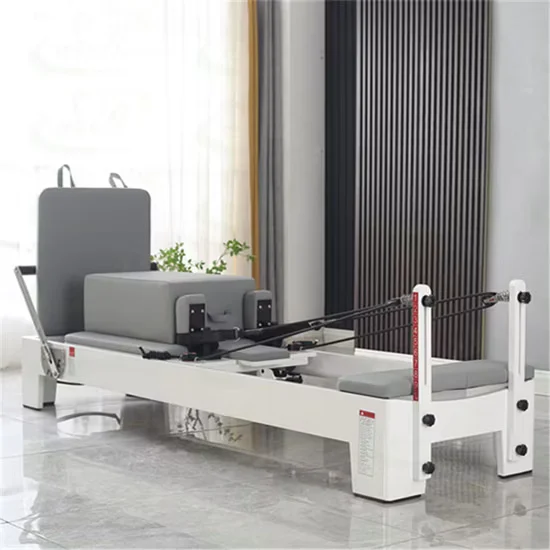
White Wood Pilates Reformer, 2460×730×680mm, 100kg Net Weight — solid wood frame with reinforced joinery ensures long-term rail alignment and consistent carriage glide under high-repetition studio use; integrated Long Box, Jump Board, and Platform support full-range movement patterns for commercial programming. Every unit undergoes load testing and 32-point inspection before shipment, backed by a 3-year warranty.
// Spec Highlights
• Direct from Manufacturer · No Middlemen · Worldwide Shipping
01
// Material
Imported Solid Wood
Premium hardwood frames sourced for density and visual warmth.
02
// Hardware
Medical-Grade Silent
Whisper-quiet pulleys and springs for clinical environments.
03
// Customization
Appearance OEM
Color, upholstery, and branding tailored to your studio.
04
// Service
Layout Design
Free venue planning for studios and rehab institutions.
Every component is selected for longevity, performance, and aesthetic harmony - from imported hardwood frames to silent medical-grade accessories.
// Features
Every Load Cycle Tested — each reformer rolls through destructive load sequences before leaving the factory, not just a sample batch.
| Parameter | Value |
|---|---|
| Product Type | Pilates Reformer |
| Frame Material | Solid Wood |
| Color | White (custom color options available) |
| Product Dimensions | 2460 × 730 × 680 mm |
| Net Weight | 100 kg |
| Included Accessories | Long Box / Jump Board / Platform |
| Customization | Logo and finish options available |
| User Suitability | Adult, Unisex |
| Certification | ISO 9001 / CE / SGS |
| Warranty | 3 Years |
| Facility Type | Typical Use |
|---|---|
| Commercial Pilates studio | Group reformer classes with daily high-repetition scheduling |
| Rehabilitation and physical therapy center | Controlled resistance work for mobility recovery and injury prevention |
| Hotel and resort wellness facility | Guest-accessible movement sessions with low onboarding friction |
| Private training studio | One-on-one reformer programming with varied client body types |
| Boutique fitness center | Mixed-format classes combining reformer and mat-based movement |
Frame density and rail straightness tolerance determine whether a carriage glides for years or grinds within months.
Many reformers built for studio environments use laminated veneer rails or hollow-core wood profiles. Under humidity shifts and daily sweat exposure, these surfaces swell unevenly. The carriage develops lateral play, the wheels scar the track, and the reformer gets pulled from rotation. When we reviewed returned units from a high-traffic studio chain, open-face carriage bearings had accumulated enough dust and salt residue to grind the rails into a rough paste within one operating season [NEED_CITE: bearing seal requirements in high-moisture fitness environments]. That single design gap pulled an entire batch from service. A commercial wood pilates reformer must treat sealed bearings and solid wood rail stock as baseline engineering, not upgrades.
This reformer addresses the full sagittal movement plane through spring-loaded resistance across pushing, pulling, and leg-driven patterns. In a studio configuration, it pairs with mat stations and stability apparatus for programming variety across class formats. The footprint accommodates side-by-side placement in group class layouts where instructors need sight lines down the row. The Long Box and Jump Board expand the movement vocabulary for clients ranging from rehabilitation populations to advanced practitioners seeking plyometric loading, making the commercial wood pilates reformer a primary anchor in studio floor planning.
The frame endures cyclical loading from spring tension during every repetition, concentrated at the joint where the carriage rail meets the headboard and footboard. In a studio running six classes daily, that joint sees thousands of load transitions per week. The Jump Board introduces impact loading that tests the footboard mounting hardware beyond what steady-state spring work produces [NEED_CITE: cyclic fatigue performance in wood frame structural joints]. Carriage wheels and rail contact surfaces accumulate micro-abrasion from dust and sweat residue, meaning bearing seal integrity directly governs maintenance intervals. Upholstery foam compresses under sustained body weight and degrades when exposed to cleaning solvents used between every session.
Solid wood frame construction delivers consistent fastener grip and joint surface area that laminated alternatives cannot match under repeated load cycling. The 2460 mm rail length provides full travel for tall users without the carriage bottoming out at either stop. At 100 kg net weight, the frame mass resists walking or shifting during dynamic Jump Board work on smooth studio flooring. The three-year warranty window reflects the manufacturer’s confidence in wood joinery holding alignment through commercial use cycles. Spring tension calibration governs whether resistance progresses linearly or develops dead spots at certain carriage positions, affecting client experience across every exercise.
Thin-section wood rails deflect under heavier users, pulling the carriage off its intended track and creating uneven wheel wear that accelerates replacement cycles. Non-sealed bearings admit chalk dust and sweat condensate, turning rail surfaces abrasive and requiring carriage swaps well before the frame reaches end of life. Low-density upholstery foam compresses permanently within months of daily scheduling, exposing the rigid platform beneath and forcing reupholstery expense [NEED_CITE: foam density standards for commercial fitness upholstery]. Undersized mounting hardware at accessory attachment points loosens under Jump Board impact, developing rattle and play that clients notice immediately.
The solid wood frame stock is selected for grain orientation that resists splitting at fastener points under dynamic load. Every unit runs through the same load cycle testing used to validate prototypes, catching rail alignment drift and bearing play before packaging. The 200μm powder coating on all metal hardware prevents corrosion at spring anchors and carriage bolt points where sweat accumulates. A ten-year structural warranty backs the frame joinery for commercial environments. Floor planning CAD support includes this reformer’s clearance envelope so studios can verify safe passage between units without guessing at spacing requirements.
Provide your studio floor dimensions and class format schedule to receive a 2D layout with this reformer’s clearance envelope mapped to your room. Specify average daily class count and client body weight range so spring tension calibration matches your population. Identify any finish customization or logo placement requirements early in the specification process to align production lead time with your opening or renovation schedule.
Q: How do I evaluate wood frame quality when comparing commercial reformers?
A: Request the wood species documentation and verify that rails are cut from solid stock rather than laminated veneer. Inspect the joint where carriage rails meet the frame ends for fastener density and adhesive coverage. Ask for rail straightness tolerance specifications measured under load, not just unloaded visual inspection [NEED_CITE: wood frame testing standards for fitness equipment].
Q: What spring tension range works for mixed studio populations?
A: Studios serving both rehabilitation clients and advanced practitioners need springs that deliver perceptible resistance at low tension while scaling smoothly to higher loads. Confirm that replacement springs are available in graduated tension options so you can recalibrate individual reformers as your client demographics shift over time.
Q: How do I maintain rail alignment and carriage glide in daily use?
A: Wipe rails with a pH-neutral cleaner between class blocks to remove sweat residue that degrades wood surfaces. Inspect sealed carriage bearings quarterly for lateral play and replace any unit showing drag before the wheels scar the rail track. Keep studio humidity within a stable range to prevent wood frame dimensional shifts that pull rails out of parallel.
Q: What accessory mounting points should I verify for studio programming?
A: Confirm that the Long Box track accepts standard carriage positions without adapter modification. Check that the Jump Board mounting hardware uses through-bolts rather than surface screws, since impact loading from plyometric work concentrates stress at the footboard joint. Verify Platform attachment stability under lateral force application.
Q: How do I assess upholstery durability for high-traffic reformer use?
A: Request the foam density specification and vinyl chemical resistance rating from the manufacturer. Upholstery in commercial studios must withstand daily cleaning with disinfectant solutions without surface cracking or adhesive breakdown. Confirm that replacement pads are available as standalone parts so you can swap worn surfaces without replacing the entire carriage assembly.
Premium aesthetics meet quiet operation for boutique studio environments.
Medical-grade silence and precision for sports & postpartum recovery.
Furniture-grade craftsmanship for premium residential installations.
Compact premium setups for one-on-one and small-group training.
Aesthetic Pilates integration for hybrid wellness studio programming.
Multi-unit deployment with instructor-grade reliability for certification programs.
Tell us about your project. Our team will respond within 24 hours with pricing, customization options, and shipping details.
// Sales Director
William
+86 132 2531 1800
// Export Manager
Bella
+86 198 5412 8032
william@bickfit.com


