01 / Scenario
STUDIO
P
High-End Pilates Studios
Premium aesthetics meet quiet operation for boutique studio environments.

ISO
9001
CE
Certified
OEM
Available
10YR
Warranty
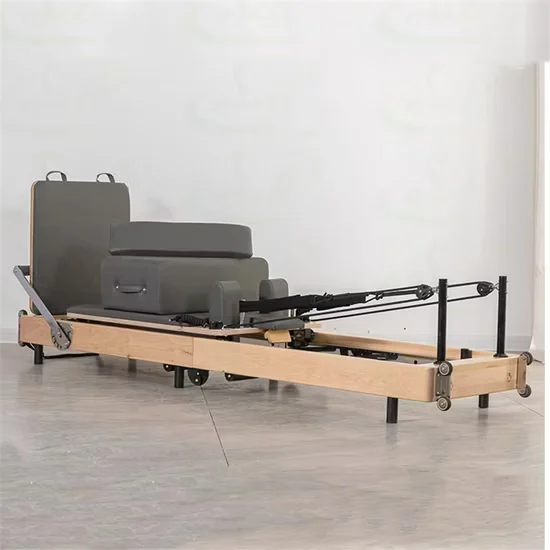
Wood Pilates Reformer Machine, Solid Wood Frame, 2400×770mm Dimensions, 150kg Net Weight — engineered with solid wood construction and full accessory kit including long box, jump board, and platform for comprehensive studio programming. Carriage system and spring configuration designed for consistent resistance curves across high-traffic commercial use. Backed by 3-year warranty and complete customization options for logo branding.
Every unit undergoes 32-point inspection and 100% load testing before shipment, ensuring commercial-grade reliability for boutique studios and rehabilitation centers.
// Spec Highlights
• Direct from Manufacturer · No Middlemen · Worldwide Shipping
01
// Material
Imported Solid Wood
Premium hardwood frames sourced for density and visual warmth.
02
// Hardware
Medical-Grade Silent
Whisper-quiet pulleys and springs for clinical environments.
03
// Customization
Appearance OEM
Color, upholstery, and branding tailored to your studio.
04
// Service
Layout Design
Free venue planning for studios and rehab institutions.
Every component is selected for longevity, performance, and aesthetic harmony - from imported hardwood frames to silent medical-grade accessories.
// Features
Wood Frame Integrity — Solid wood species and precision joinery verified through moisture content and cyclic spring load testing before assembly.
| Parameter | Value |
|---|---|
| Product Type | Wood Pilates Reformer |
| Material | Wood |
| Product Dimensions | 2400×770×2160mm |
| Net Weight | 150kgs |
| Accessory | Long Box / Jump Board / Platform |
| Warranty | 3 Years |
| Color Options | Solid Color |
| Customization | Available (Logo Customized) |
| Age | Adult |
| Gender | Unisex |
| Production Capacity | 80 Pieces/Month |
| Facility Type | Typical Use |
|---|---|
| Boutique pilates studio | Group reformer classes with accessory swaps between formats |
| Rehabilitation and physical therapy center | Controlled resistance progression for recovery protocols |
| Home studio installation | Dedicated personal training space with full accessory ecosystem |
| Boutique fitness facility | Cross-training reformer sessions alongside functional programming |
The frame species and joinery method determine whether the reformer stays dimensionally true after thousands of loaded carriage cycles.
Many reformers labeled "premium wood" use laminated plywood or softwood composites that look convincing on day one. The problem surfaces in month six: humidity shifts cause the carriage rail to pull slightly out of parallel, the spring anchor points develop hairline separation at the mortise, and the glide you paid for turns into a maintenance call. I have seen studio owners discover this during peak booking season, when pulling a reformer out of rotation means losing class revenue. [NEED_CITE: EN 957 structural requirements for stationary training equipment]
A commercial wood pilates reformer machine anchors the spring-resistance zone of a dedicated pilates floor. It pairs with mat stations for warm-up sequences and pairs with cadillac or tower units for advanced programming. The 2400mm footprint suits high-density studio layouts where instructors need clear sightlines across multiple reformers during group sessions. The long box, jump board, and platform accessories let operators run varied class formats without requiring separate equipment purchases. The 150kg net weight keeps the unit planted during jump board sequences while remaining movable for floor plan reconfigurations.
The spring system generates repeated tension cycles that concentrate stress at the frame anchor points and the carriage return mechanism. Each session loads the wood-to-hardware interface hundreds of times, and in a commercial studio running six classes daily, those cycles compound quickly. [NEED_CITE: fatigue performance in structural materials under cyclic loading] The rail surface endures constant carriage wheel contact, meaning surface hardness and finish consistency directly determine how long the glide remains smooth. Accessory mounting points — where the long box locks in and the jump board attac*that test the durability of the receiving hardware.
The wood species defines the reformer’s dimensional stability. Hardwoods with tight grain structures resist the gradual deformation that spring tension and humidity changes impose over time. The frame joinery method matters equally — mortise-and-tenon or doweled connections distribute load across larger surface areas compared to simple butt joints fastened with screws. Spring grade determines the consistency of the resistance curve; lower-grade springs lose tension calibration faster, forcing studio operators into premature replacement cycles. The carriage wheel and rail material pairing controls glide quality: polymer wheels on hardwood rails require different maintenance intervals than metal-on-metal configurations.
Thin laminated frames may pass a visual inspection but develop rail misalignment as the layers delaminate under humidity and spring load. Low-grade springs require replacement well before a studio expects it, creating parts cost and scheduling downtime. [NEED_CITE: maintenance intervals and component lifecycle in commercial fitness equipment] Non-standard hardware at accessory mounting points means replacement parts are unavailable from generic suppliers, locking the operator into single-source purchasing. Inadequate wood treatment leaves the frame vulnerable to moisture absorption in studios where humidity fluctuates seasonally.
Every wood frame is checked for species certification and moisture content before joinery begins, ensuring the material is stable enough for cyclic spring loading. Each unit undergoes load testing before shipment — not sample-based testing from a production run, but individual verification. Accessory compatibility is confirmed by physically mounting and removing the long box, jump board, and platform repeatedly to validate the hardware interface. The three-year warranty reflects the structural confidence behind the build. Facility planning support includes footprint specifications for safe spacing between reformers in group class layouts. OEM customization, including logo placement, is available for studios building a branded environment.
Provide your studio floor dimensions and target class capacity so we can supply a layout plan showing reformer spacing and instructor circulation paths. Specify your daily class schedule and expected user volume so we can confirm the structural grade matches your usage intensity. Indicate whether logo customization or specific color finishes are needed for your studio branding requirements.
Q: How can I confirm the reformer uses solid wood rather than laminated composite?
A: Request the wood species certification and moisture content documentation. Solid hardwood shows continuous grain through any cross-section, while laminated products reveal layered edges at joint points. Inspect the frame ends and joint areas where the grain pattern is visible. Ask the supplier to specify the exact wood species rather than accepting generic "premium wood" descriptions that hide composite construction beneath a veneer surface.
Q: What does spring grade indicate for long-term studio use?
A: Spring grade determines how consistently the resistance curve holds over repeated loading cycles. Lower-grade springs lose their calibrated tension sooner, creating uneven resistance that instructors notice during class. Ask the supplier for fatigue cycle testing documentation that shows how many cycles the springs are rated for before recalibration or replacement becomes necessary, and confirm replacement spring availability and lead times.
Q: How do rail and wheel materials affect ongoing maintenance requirements?
A: The material pairing between carriage wheels and rail surface determines glide smoothness and service intervals. Harder rail surfaces resist wear grooves but may require specific wheel compositions to prevent noise. Softer wood rails offer quiet operation but can develop wear patterns faster under heavy commercial use. Ask the supplier to specify the exact wheel bearing type and rail finish treatment, and confirm whether rails can be refinished in place.
Q: Which accessories are essential versus optional for studio programming?
A: The long box enables seated and supine exercises that form a significant portion of reformer class programming. The jump board adds cardio and plyometric sequences that diversify class formats. The platform extends the working surface for standing exercises and advanced balance work. A studio offering comprehensive reformer classes will use all three regularly, making a bundled kit more practical than purchasing components separately over time.
Q: How do I verify the wood treatment handles studio humidity conditions?
A: Commercial studios experience humidity fluctuations from HVAC cycling, occupant perspiration, and seasonal weather changes. Ask the supplier for the specific finish type and application method used on the frame. Proper treatment penetrates the wood grain rather than sitting only on the surface, providing protection against moisture absorption that causes swelling and dimensional change at critical joint and rail areas.
Premium aesthetics meet quiet operation for boutique studio environments.
Medical-grade silence and precision for sports & postpartum recovery.
Furniture-grade craftsmanship for premium residential installations.
Compact premium setups for one-on-one and small-group training.
Aesthetic Pilates integration for hybrid wellness studio programming.
Multi-unit deployment with instructor-grade reliability for certification programs.
Tell us about your project. Our team will respond within 24 hours with pricing, customization options, and shipping details.
// Sales Director
William
+86 132 2531 1800
// Export Manager
Bella
+86 198 5412 8032
william@bickfit.com