01 / Scenario
STUDIO
P
High-End Pilates Studios
Premium aesthetics meet quiet operation for boutique studio environments.

ISO
9001
CE
Certified
OEM
Available
10YR
Warranty
// Spec Highlights
• Direct from Manufacturer · No Middlemen · Worldwide Shipping
01
// Material
Imported Solid Wood
Premium hardwood frames sourced for density and visual warmth.
02
// Hardware
Medical-Grade Silent
Whisper-quiet pulleys and springs for clinical environments.
03
// Customization
Appearance OEM
Color, upholstery, and branding tailored to your studio.
04
// Service
Layout Design
Free venue planning for studios and rehab institutions.
Every component is selected for longevity, performance, and aesthetic harmony - from imported hardwood frames to silent medical-grade accessories.
// Features
Every Unit Load-Tested Before Crating — the SRY-03 carriage and ladder barrel assembly is cycled under spring tension and inspected for joint deflection before it leaves the floor.
| Parameter | Value |
|---|---|
| Designation | SRY-03 |
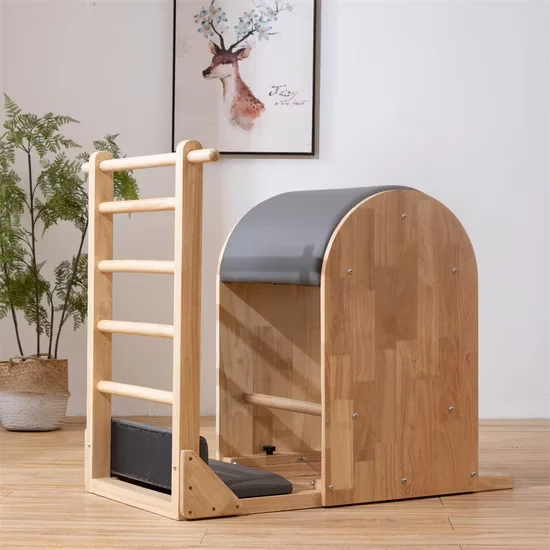
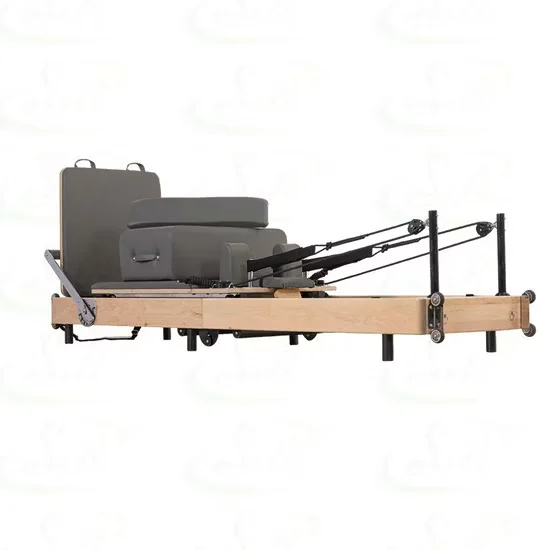
| Product Type | Pilates Reformer with Ladder Barrel |
| Product Dimensions | 1100 × 770 × 980 mm |
| Net Weight | 50 kg |
| Carriage Frame | Solid wood |
| Ladder Barrel Structure | Steel frame with wooden barrel curve |
| Spring System | Sealed housing, tension-rated |
| Included Accessories | Long box, jump board, platform |
| Color | Solid color options available |
| Logo | Customized allowed |
| User Profile | Adult, unisex |
| Warranty | 3 years |
| Facility Type | Typical Use |
|---|---|
| Home gym Pilates space | Daily reformer and barrel routines for personal training |
| Boutique Pilates studio | Group or semi-private classes with high session turnover |
| Rehabilitation and physiotherapy center | Controlled movement correction and post-injury conditioning |
Solid wood carriage density and grain orientation determine whether the frame or the hardware fails first.
Most Pilates reformers marketed for studio use cut costs with thin plywood carriages. Under repeated spring tension cycles, plywood layers delaminate at the mounting points — the pulley anchors loosen, the carriage develops lateral play, and the whole unit feels unstable within months of daily classes [NEED_CITE: structural fatigue in laminated wood under cyclic tension]. The SRY-03 uses a solid wood carriage where the grain runs continuously through the stress zones, maintaining rigidity across the full spring extension range. The ladder barrel integrates a steel ladder frame with a wooden barrel curve, and the joint between them is reinforced to prevent separation during loaded spinal extension work.
This commercial Pilates reformer with ladder barrel covers the full spectrum of reformer-based movements — supine, prone, seated, and standing — while the ladder barrel adds spinal articulation, lateral flexion, and hip extension work that a reformer alone cannot address. In a boutique studio layout, pairing this unit with a dedicated mat zone and a Cadillac creates a complete apparatus floor without dead space. The footprint accommodates studios running semi-private sessions with moderate daily throughput. User body-type range is broad: the carriage travel and spring anchor points handle both smaller-framed clients doing footwork and taller users performing long-stretch sequences.
Every reformer session loads the carriage frame through the spring anchors — static holds, eccentric returns, and jump board impacts all transmit force through the same mounting points. Over hundreds of weekly sessions, these cyclic loads concentrate stress at the wood-to-hardware interface. The sealed spring housing on the SRY-03 reduces dust and moisture ingress that accelerates spring corrosion and tension drift. The ladder barrel joint, where the steel ladder meets the wooden barrel curve, faces peak stress during loaded extension exercises; reinforcement at this junction prevents the separation that plagues lighter-duty units [NEED_CITE: cyclic loading effects on wood-to-metal joints in fitness equipment]. Upholstery contact points on the barrel and long box endure daily friction and sweat exposure, making material density and cover tension critical to avoiding compression hollows.
Solid wood versus plywood is not an aesthetic choice — it is a structural one. Solid wood maintains consistent density through its cross-section, so spring anchor bolts grip uniform material rather than alternating between hard face veneer and soft inner plies. The steel ladder frame provides a rigid spine that plywood or plastic ladder barrels cannot match under loaded extension. Spring gauge and tension rating define the resistance progression range available to clients at different training levels, and sealed housings keep the spring coils free of debris that causes uneven recoil. The accessory mounting points for the long box, jump board, and platform use load-rated hardware rather than friction-fit slots, meaning accessories stay locked during dynamic exercises.
A plywood carriage may look identical to solid wood in showroom lighting, but the delamination clock starts the first week of studio use. When spring anchor bolts pull through compromised layers, the repair requires full carriage replacement — not a simple hardware swap. Non-sealed springs accumulate chalk dust and humidity, losing tension consistency and forcing instructors to compensate with verbal cues rather than reliable resistance. Ladder barrel joints without reinforcement develop visible gaps under extension load, creating both a safety concern and a liability issue for studio operators [NEED_CITE: equipment failure liability in commercial fitness environments]. Thin upholstery on the barrel compresses within months, leaving clients lying on hard substrate and generating complaints that drive member churn.
The SRY-03 is built within a vertically integrated manufacturing operation that traces its steel from mill-certified coils — the ladder barrel frame uses the same sourcing discipline applied to heavy-duty strength equipment. Robotic MIG welding produces continuous weld lines on the steel ladder structure, eliminating the spot-weld weak points that crack under cyclic studio loading. Every unit undergoes load testing before shipment, not sample-based inspection on a random batch. The 200μm industrial powder coating on the steel components resists chipping from accessory changes and cleaning chemicals. A three-year warranty backs the frame. Facility operators can request 2D-3D CAD layout support to confirm this reformer’s footprint, safe clearance around the ladder barrel swing radius, and optimal spacing between adjacent units in a studio floor plan.
Provide your Pilates zone dimensions and current apparatus list to receive a 2D-3D layout showing the SRY-03 positioned with correct clearances for ladder barrel exercises and reformer carriage travel. Specify your average daily session count so we can confirm the spring system and carriage construction match your throughput. Share your target client demographics — age range, average height, rehabilitation versus fitness focus — to verify the accessory configuration fits your programming. Custom color and logo options are available for studios requiring brand consistency across their apparatus floor.
Q: How do I tell a studio-grade Pilates reformer from a light-use one?
A: Check the carriage material — solid wood or thick-gauge steel outlasts plywood under daily class schedules. Inspect the spring housing for seals that block dust and moisture. Verify that accessory mounting points use bolted hardware rather than friction-fit slots. Ask for load test documentation on the specific unit, not just a general product line claim.
Q: Does solid wood really make a difference compared to plywood for the carriage?
A: Yes. Solid wood provides uniform density around spring anchor bolt holes, preventing the pull-through failures common in layered plywood. The continuous grain structure resists the cyclic tension from hundreds of weekly spring extensions. Plywood alternates between hard veneer and soft core layers, creating uneven grip that loosens hardware over time.
Q: How should I choose spring tension for different client levels in my studio?
A: Stock a range of spring gauges so instructors can match resistance to individual client strength and rehabilitation stage. Lighter springs suit beginners learning control patterns and post-injury clients rebuilding tolerance. Heavier springs challenge advanced users during power and stability work. Confirm that replacement springs in all gauges remain available from your supplier long-term.
Q: What maintenance does the ladder barrel joint require?
A: Inspect the connection between the steel ladder frame and wooden barrel curve quarterly for any visible gap formation or fastener loosening. Tighten all joint bolts to specified torque after the first month of use, as initial seating may cause minor relaxation. Wipe the wooden barrel surface with a damp cloth to prevent sweat salt buildup from degrading the finish.
Q: Are replacement parts available for springs, pulleys, and upholstery?
A: Confirm with your supplier that springs in all tension ratings, pulley wheels, and replacement upholstery covers are stocked as ongoing spare parts rather than one-time inclusions. A three-year frame warranty indicates the manufacturer supports the product beyond the initial sale. Ask for a spare parts list with part numbers before placing your order.
Premium aesthetics meet quiet operation for boutique studio environments.
Medical-grade silence and precision for sports & postpartum recovery.
Furniture-grade craftsmanship for premium residential installations.
Compact premium setups for one-on-one and small-group training.
Aesthetic Pilates integration for hybrid wellness studio programming.
Multi-unit deployment with instructor-grade reliability for certification programs.
Tell us about your project. Our team will respond within 24 hours with pricing, customization options, and shipping details.
// Sales Director
William
+86 132 2531 1800
// Export Manager
Bella
+86 198 5412 8032
william@bickfit.com