Prone Leg Curl for Commercial Gym Setup | OEM Manufacturer
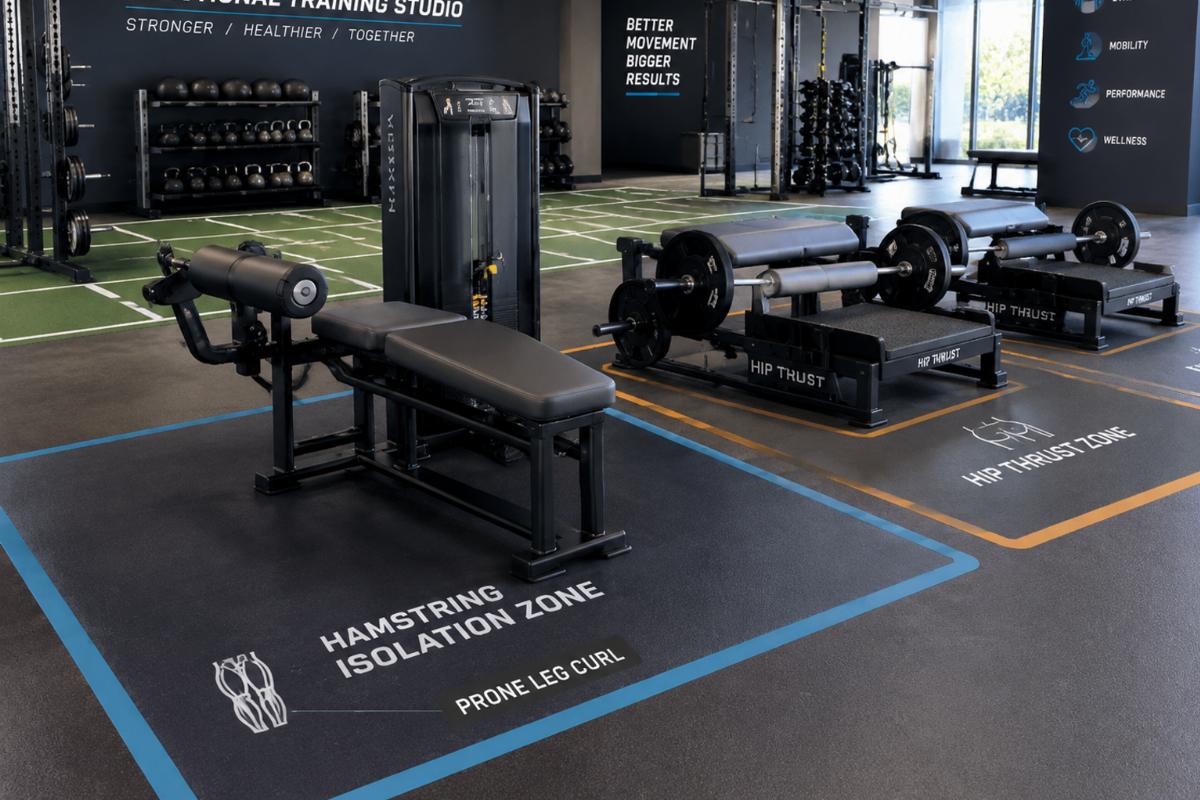
Most buyers think the prone leg curl is a niche machine. In functional training studios, it consistently ranks among the top three most used pieces in the hamstring isolation zone.
A functional training studio equipment package must be sized, spec’d, and bundled around real user profiles and floor plans — not just pulled from a price list. The right prone leg curl package anchors the leg-day circuit, drives repeat usage, and directly shapes member retention in boutique studio environments.
I still remember a shipment that went to a boutique fitness chain in the Middle East. The container arrived on schedule, the machines rolled onto the floor, and within days the studio owner sent photos back: members with larger builds simply could not fit between the thigh pads. The roller spacing was too narrow, the seat density was wrong for prolonged use in a hot climate, and the adjustment range fell short of what the local user profile demanded. We had spec’d the machine against a generic catalog, not against the people who would actually lie face-down on it every single day. That mistake cost us a reorder cycle and a damaged relationship. From that point forward, every prone leg curl package I touch starts with one question: who is lying on this pad, how heavy are they, and how many times a day will they do it? [NEED_CITE: user-profile-driven equipment selection methodology in commercial fitness facility planning]

Let me walk you through how a properly scoped prone leg curl package actually gets built — from user profile to container loading.
Why Functional Training Studios Need a Prone Leg Curl in Their Setup?
The prone leg curl fills the single largest gap in a functional studio’s hamstring training arsenal: isolated, controlled, high-repetition posterior chain work that cables and Romanian deadlifts simply cannot replicate at scale.
Functional training studios have spent the past several years shifting away from pure free-weight layouts toward hybrid zones that blend strength, conditioning, and recovery. In that evolution, the hamstring has been consistently underserved. Most studios offer a single cable station with a leg-curl attachment, one or two Nordic hamstring boards, and maybe a glute-ham developer. The problem is throughput. During peak hours, the cable station becomes a bottleneck, the Nordic board only serves one athlete at a time, and the glute-ham developer demands a level of eccentric control that newer members cannot yet manage. [NEED_CITE: hamstring training equipment utilization patterns in boutique fitness environments]
A dedicated prone leg curl changes that dynamic entirely. It allows simultaneous use by one member with minimal coaching overhead, supports both bilateral and unilateral loading through simple pad adjustments, and integrates cleanly into superset circuits alongside hip thrusts and calf work. In studios I have equipped across multiple regions, the prone leg curl consistently records some of the highest daily touch rates in the isolated machine category — often rivaling the cable crossover for per-square-meter productivity.
The misconception that this is a "bodybuilding-only" machine ignores how modern programming has evolved. Functional trainers now prescribe prone leg curls for injury-prevention protocols, return-to-sport hamstring loading, and eccentric overload work that directly reduces sprint-related strain risk. [NEED_CITE: eccentric hamstring loading protocols and injury prevention in athletic populations] A studio that lacks this tool forces coaches to improvise with suboptimal alternatives, which hurts both member outcomes and retention.
How to Choose the Right Prone Leg Curl for Your Studio’s User Profile?
Selection must be reverse-engineered from end-user body dimensions, training intensity, and daily usage duration — never copied from a product catalog.
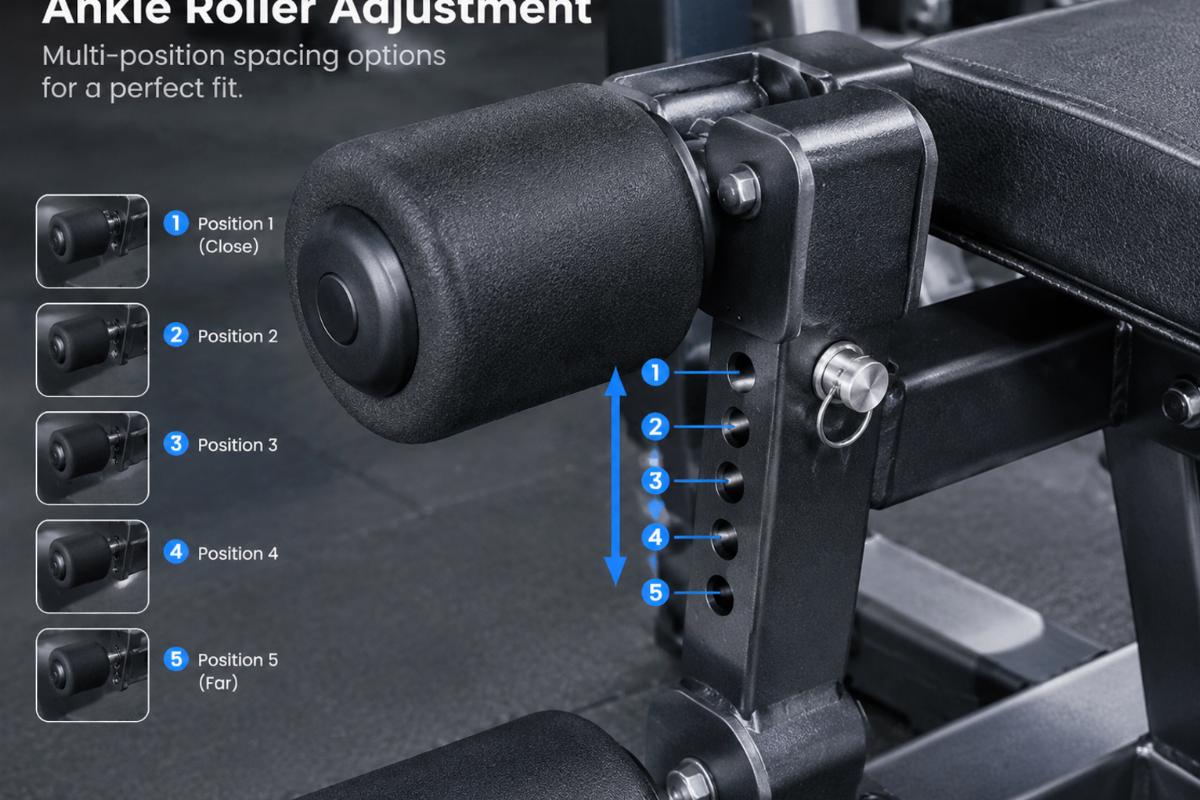
The first variable is user anthropometry. In the Middle East project I mentioned earlier, the average male member weighed substantially more and carried broader hip measurements than the generic "standard user" assumptions baked into many catalog spec sheets. Roller spacing needs to accommodate a wide range of femur lengths, and the ankle pad must adjust vertically without bottoming out. If your studio serves a population with larger average builds, the minimum roller gap and maximum pad height become non-negotiable parameters. [NEED_CITE: anthropometric variation considerations in commercial gym equipment specification]
The second variable is usage intensity. A studio running small-group sessions with back-to-back classes will put far more cycles on a prone leg curl than a traditional commercial gym where members self-select their timing. High-frequency environments demand heavier-gauge frame tubing, reinforced pivot bearings, and upholstery rated for extended daily contact with sweat and cleaning chemicals. The difference between a machine that holds up for years and one that develops wobble within months often comes down to frame wall thickness and weld continuity — details that rarely appear in marketing brochures but become painfully obvious after heavy use.
The third variable is pad and roller construction. Seat cushion density affects both comfort and stability. Too soft, and heavier users sink in, losing proper alignment and reducing hamstring engagement. Too firm, and members in hot climates experience discomfort that shortens their sessions and generates complaints. Roller surface material matters equally — vinyl-coated rollers that degrade under UV exposure or repeated disinfectant wiping will look worn within months, signaling poor maintenance to members even when the machine itself is structurally sound.
| Selection Factor | Light-Use Studio | High-Traffic Functional Studio |
|---|---|---|
| Frame Tubing | Basic gauge | Heavy-duty reinforced |
| Bearing Grade | Standard | Commercial-grade sealed |
| Upholstery | Basic vinyl | Sweat-chemical resistant |
| Pad Density | Standard | High-density contoured |
| Roller Adjustability | Limited range | Multi-position wide range |
A Southeast Asian studio chain I worked with initially ordered a single-spec machine for all locations. Their urban flagship studio with high member turnover went through ankle pad covers at a noticeably faster rate than their suburban branches. Once we shifted to a tiered spec — heavier-duty upholstery and reinforced pivot points for high-traffic locations, standard spec for lower-volume sites — warranty claims dropped substantially across the network. [NEED_CITE: equipment durability correlation with usage frequency in multi-site fitness operations]
What Does a Complete Functional Studio Equipment Package Include?
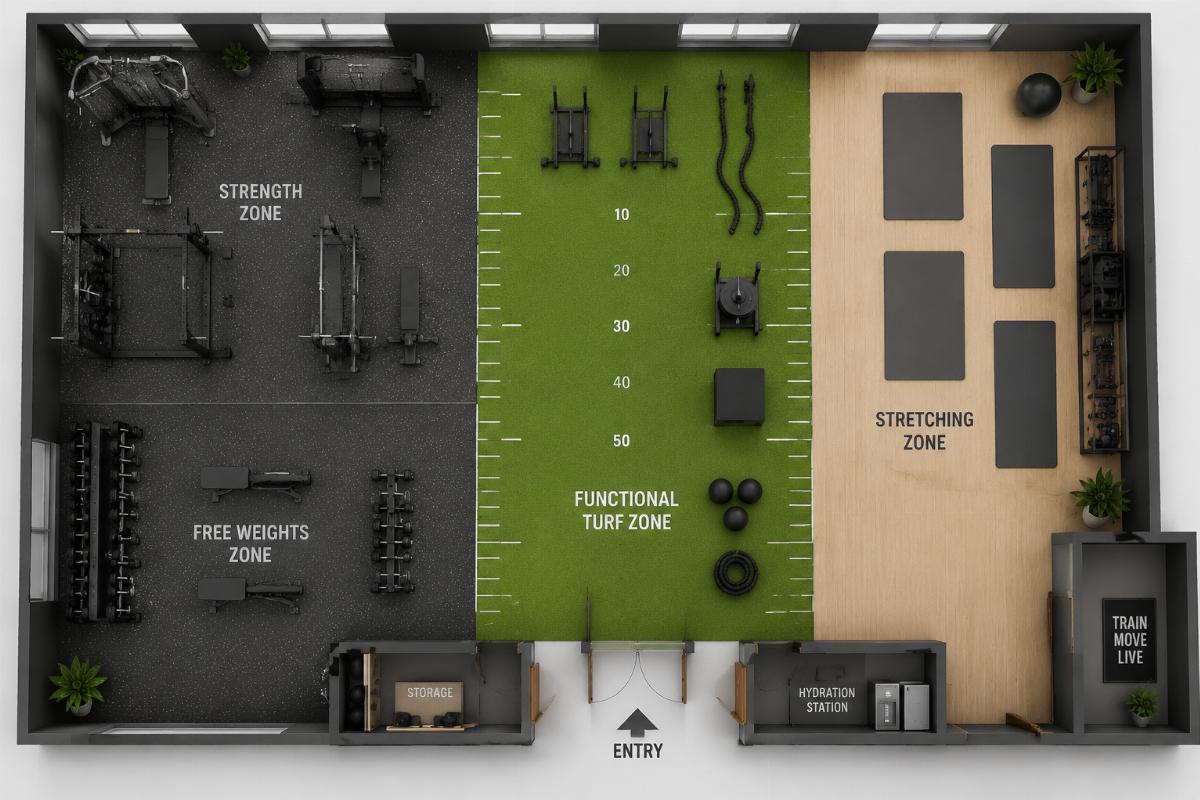
A turnkey functional studio equipment package extends well beyond strength machines and cardio units — it must cover the functional training zone, free-weight area, flooring systems, and accessories as a complete operational ecosystem.
The mistake many first-time studio buyers make is treating equipment procurement as a list of individual machines. They select a prone leg curl, a cable machine, a set of dumbbells, and a few rigs, then wonder why the space does not flow, why members cluster in certain areas, and why peak-hour congestion creates safety hazards. A properly designed functional training studio equipment package starts with the floor plan and works backward to equipment selection.
The functional training zone itself requires artificial turf strips for sled pushes and carries, plyometric boxes in graduated heights, battle ropes with ceiling or wall anchors, and medicine ball storage positioned for circuit flow. The free-weight zone needs dumbbell racks scaled to the studio’s strength profile — not just a generic set from light to heavy — along with adjustable benches, barbell storage, and plate-loaded stations. The strength zone houses machines like the prone leg curl, hip thrust, cable crossover, and Smith machine, positioned to allow simultaneous use without traffic collision.
A studio owner in Europe once asked me to quote a small private training space. They wanted one prone leg curl, one hip thrust, a power rack, and a set of dumbbells. When we mapped their member profile — mostly post-rehab clients and amateur athletes — we identified that the space actually needed two hamstring-focused stations because their programming allocated significant volume to posterior chain work. Adding a second prone leg curl variant with different resistance characteristics changed the session flow entirely and reduced wait times during peak hours. [NEED_CITE: equipment zoning and traffic flow optimization in boutique fitness facility design]
The turnkey approach also covers what many buyers overlook: flooring, mirrors, storage systems, signage, and even the small accessories like band pegs, foam rollers, and stretching stations that complete the member experience. A factory that supplies the full ecosystem can coordinate container loading so that heavy machines, boxed accessories, and rolled flooring share the same shipment efficiently — something that becomes a significant cost factor when sourcing from multiple vendors.
How to Optimize Your Studio Package for Cost and Lead Time?
Container consolidation, flexible minimum order quantities, and pre-positioned spare parts are the primary levers for controlling total procurement cost on a full studio package.
The instinctive move for cost-conscious buyers is to source each machine category from the cheapest available supplier. A prone leg curl from one factory, dumbbells from another, turf from a third, and rigs from a fourth. On paper, this looks like optimization. In practice, it creates a coordination nightmare: mismatched lead times, multiple freight forwarders, inconsistent quality standards, and zero accountability when something arrives damaged or missing.
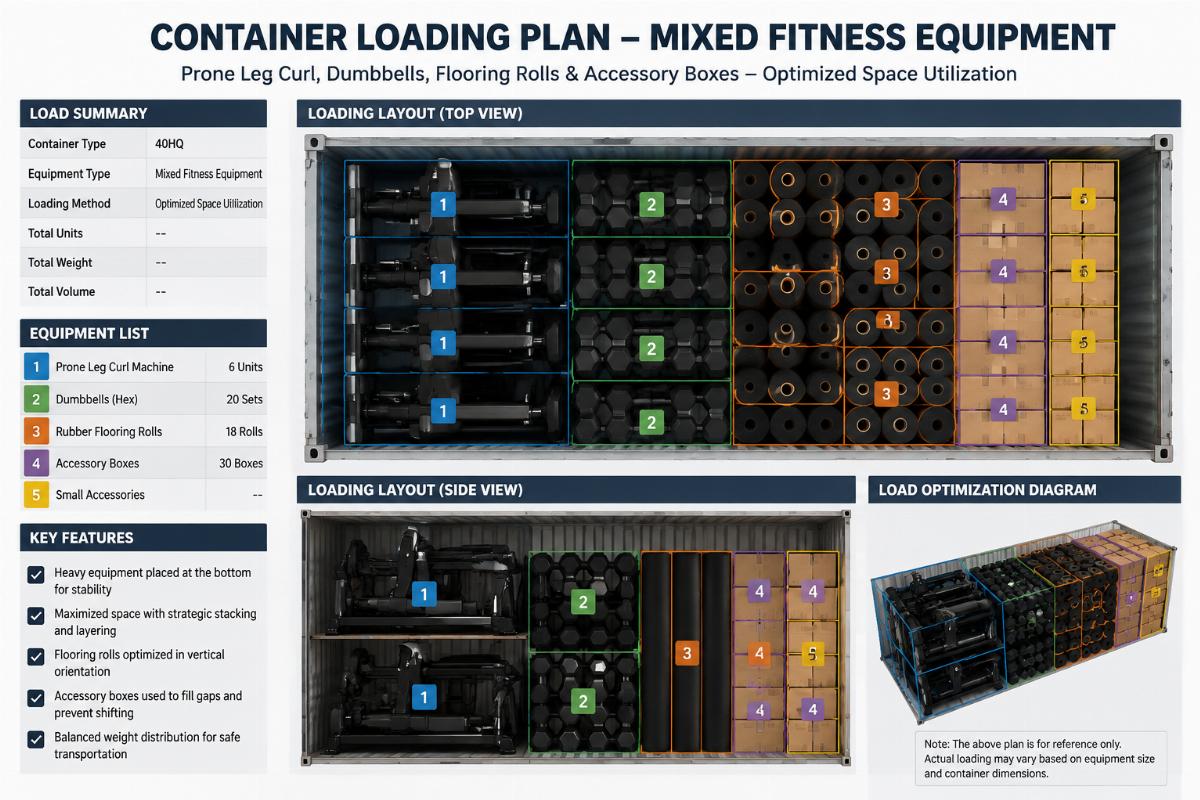
A single-source functional training studio equipment package eliminates these friction points. When one factory handles the entire order, container loading can be planned holistically. Heavy plate-loaded machines occupy the floor level, boxed accessory items fill the voids around them, rolled turf and rubber flooring stack efficiently above, and small items like resistance bands and foam rollers tuck into every remaining gap. The result is a fully loaded container with no wasted space — and shipping cost per piece of equipment drops substantially compared to multiple less-than-container-load shipments. [NEED_CITE: container load optimization strategies for multi-category fitness equipment procurement]
Lead time coordination is equally critical. If the prone leg curl ships in eight weeks but the flooring takes twelve and the dumbbells arrive in six, the studio opening gets delayed by the slowest component. A unified production facility can synchronize manufacturing schedules so that all categories ship together, hitting the studio’s opening timeline precisely.
Spare parts strategy is the hidden cost trap. Buyers focused on unit price often skip the spare parts conversation entirely. Six months later, when a cable frays or a pad cover tears, they discover that sourcing replacement parts from a different country involves small-quantity shipping fees, customs paperwork, and weeks of downtime. Including a spare parts package — extra cables, pad covers, adjustment pins, bearing assemblies — in the original container adds minimal cost but prevents months of operational disruption. [NEED_CITE: spare parts provisioning and equipment downtime reduction in commercial fitness operations]
What Should You Verify Before Placing a Full Studio Order?
CE certification, warranty terms, spare parts supply commitments, and after-sales technical support availability are non-negotiable baseline checks before committing to a full studio package.
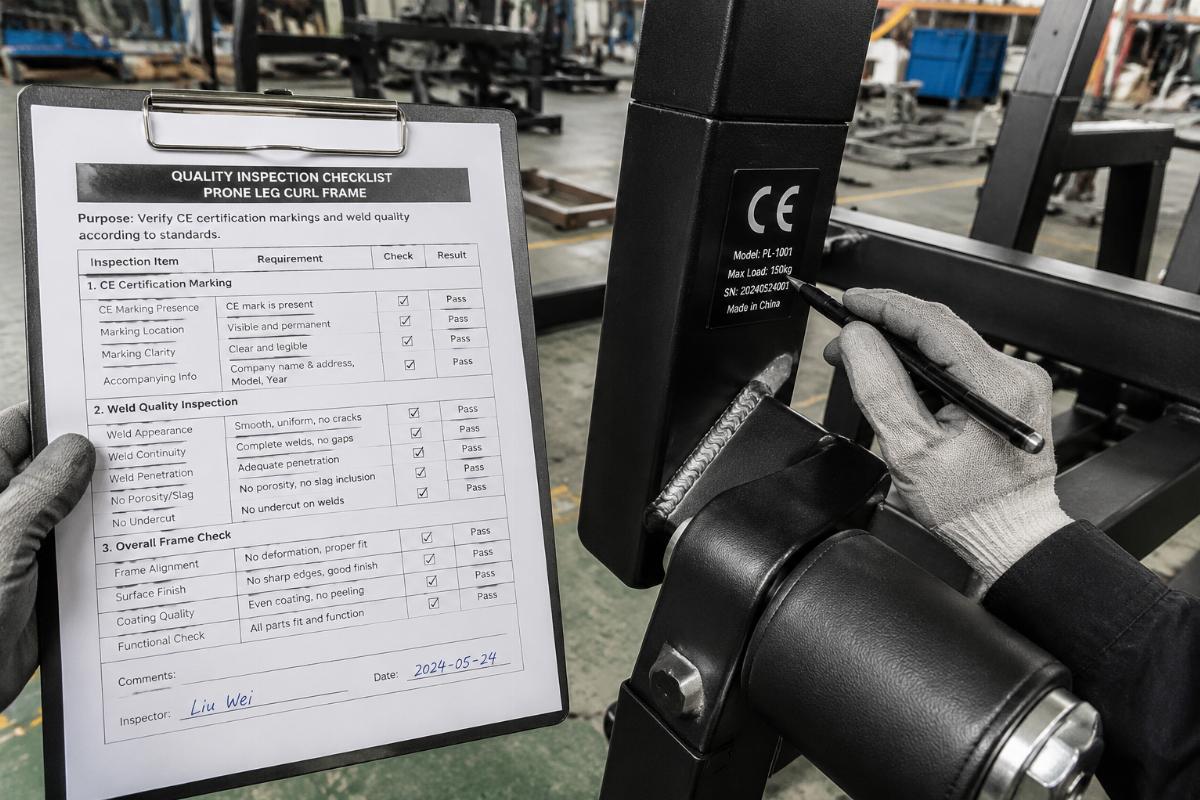
Certification is the first gate. Equipment destined for European markets must carry CE marking that covers the relevant machinery safety directives. Equipment entering Middle Eastern or African markets may require additional conformity assessments depending on the importing country’s regulations. A supplier who cannot produce valid, current certification documentation for the specific machine categories in your order is introducing compliance risk that could result in customs holds or outright rejection at the port. [NEED_CITE: CE marking requirements and conformity assessment for commercial fitness equipment exported to regulated markets]
Warranty structure tells you more about a supplier’s confidence in their product than any marketing claim. The critical questions are: what components are covered, what is the coverage duration, and how are warranty claims actually fulfilled? A warranty that covers "the frame" but excludes bearings, cables, and upholstery is far less valuable than it sounds. Similarly, a warranty that requires the buyer to ship defective components back to the factory for inspection before receiving replacements creates delays that no commercial studio can absorb.
Technical support accessibility matters enormously for studios operating across time zones. When a machine goes down during a peak session, the studio owner needs a contact who responds within hours, not days, and who can diagnose issues remotely or dispatch local technicians where available. Suppliers who invest in multilingual support teams and remote diagnostic capabilities dramatically reduce the operational impact of equipment issues.
Finally, request references from comparable projects. A supplier who has delivered complete functional training studio equipment packages to similar venues — similar size, similar user profile, similar geographic market — can provide insight that no spec sheet will ever convey. Ask about lead time accuracy, packaging quality on arrival, and how post-sale issues were handled. These conversations reveal more about the real partnership experience than any promotional material.
Conclusion
A prone leg curl is never just a machine — it is a signal of how thoroughly a studio has thought about its members’ training needs. Build the functional training studio equipment package from the user outward, not the catalog inward. Match frame spec to usage intensity, coordinate container loading to protect margins, and lock in spare parts and support before the first rep is ever performed.