24-Hour Gyms Vertical Climber Retrofit OEM Manufacturer
Most operators assume 24-hour facilities need high-tech, screen-heavy cardio to retain members.
The reality is that mechanical simplicity drives profitability in unstaffed environments. Vertical climbers offer the optimal balance of low maintenance requirements, compact footprint, and high-calorie burn, making them the superior choice for retrofitting space-constrained or unsupervised gym floors where equipment failure directly impacts revenue.
When a gym operates without staff overnight, every moving part becomes a liability. I have seen complex elliptical trainers sit idle for weeks because a sensor failed at 3 AM, triggering an error code that only a technician could reset. In contrast, a well-built vertical climber relies on fundamental mechanical principles rather than fragile electronics. This shift in design philosophy addresses the core operational pain points of modern fitness centers: reducing repair frequency while maximizing member engagement during off-peak hours. [NEED_CITE: correlation between equipment complexity and maintenance frequency in unstaffed facilities]
Transitioning to this equipment type requires understanding not just the hardware, but the logistical and structural implications of adding it to an existing layout. The following analysis breaks down why this specific machinery fits the 24-hour model, how it reduces operational overhead, and what buyers must verify during sourcing to ensure long-term reliability.
Why Are Vertical Climbers Ideal for 24-Hour Gym Retrofits?
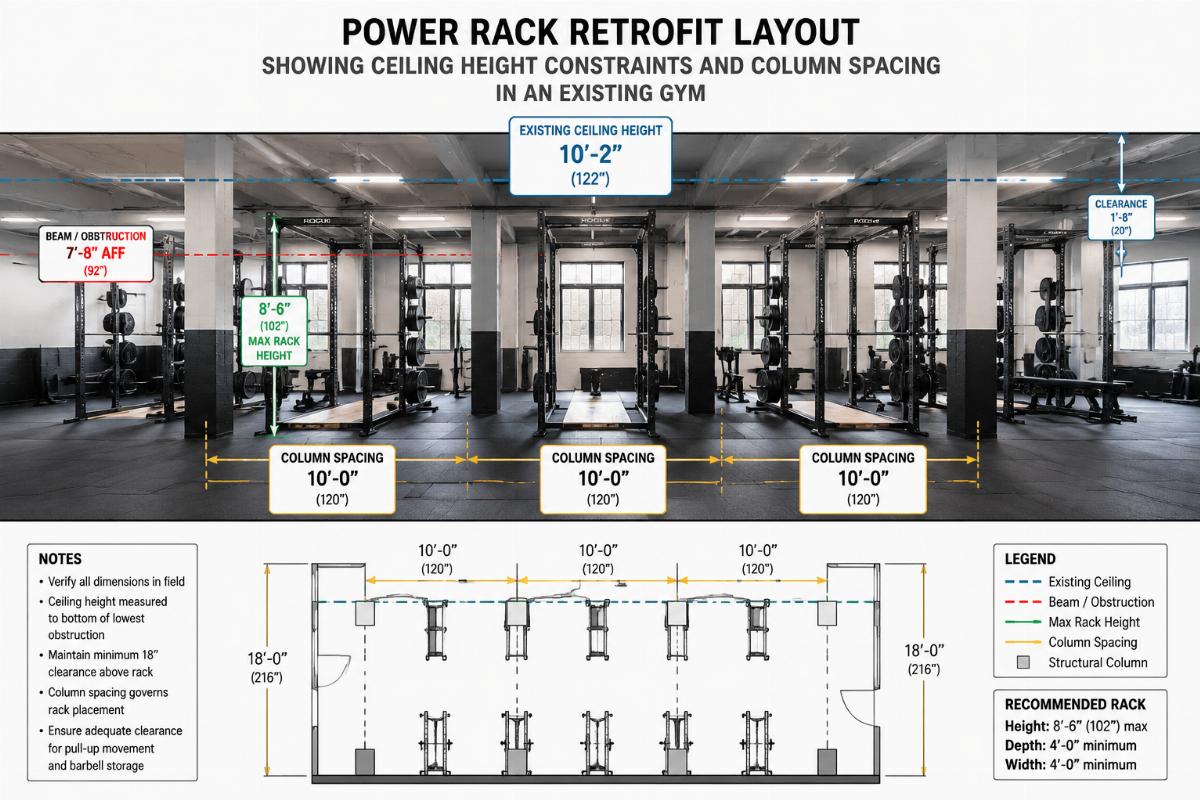
The primary challenge in retrofitting an existing facility for 24-hour access is not just adding equipment, but optimizing the available square footage for users who value time efficiency. Traditional cardio machines like treadmills require significant floor space and substantial electrical infrastructure. A standard commercial treadmill occupies nearly two square meters and often requires dedicated circuitry to handle motor load spikes.
Vertical climbers disrupt this spatial equation. Their vertical orientation allows for a significantly smaller footprint per user capacity. In a recent project involving a boutique studio in Europe that added night-access capability, the owner replaced three large ellipticals with two vertical climbers in a previously underutilized corner. This change did not just save space; it altered the traffic flow. Members could perform a high-intensity session in ten minutes, freeing up the machine for the next user much faster than a steady-state jog on a treadmill. [NEED_CITE: space efficiency metrics of vertical climbing vs traditional cardio equipment]
Furthermore, the absence of a motor eliminates one of the most common failure points in unstaffed gyms. Without a motor to overheat or a belt to slip, the machine remains operational regardless of usage intensity. This reliability is critical when no staff is present to troubleshoot minor issues. The mechanical nature of the movement also means that the equipment does not require a power outlet, allowing placement in areas where electrical retrofitting would be costly or structurally difficult.
What Operational Costs Do Vertical Climbers Reduce?
Operational costs in fitness centers are often hidden in the frequency of service calls and the lifespan of wearable components. Motorized cardio equipment involves a complex interplay of electronics, motors, belts, and rollers. Each of these components has a finite lifespan and is susceptible to wear from high-volume use. In a 24-hour facility, where usage patterns are unpredictable and often intense, these components degrade faster.
Vertical climbers simplify this mechanical landscape. The primary moving parts are typically bearings and cables or chains, depending on the resistance mechanism. High-quality units use sealed industrial bearings that resist dust and sweat corrosion, significantly extending service intervals. I recall a franchise gym in Latin America that standardized its equipment across five new locations. By choosing vertical climbers for their high-traffic zones, they noticed a marked reduction in monthly maintenance calls compared to their previous fleet of mixed cardio machines. The simplicity of the design meant that local staff could handle basic inspections without needing specialized technical support. [NEED_CITE: maintenance lifecycle comparison between motorized and non-motorized cardio equipment]
Additionally, the lack of electronic consoles reduces the risk of software glitches or screen failures. In an unstaffed environment, a black screen can render a machine unusable, even if the mechanical parts are functional. Mechanical resistance systems, such as air or magnetic resistance controlled by manual levers, do not suffer from these digital failures. This reliability translates to higher uptime and lower repair costs over the equipment’s lifecycle.
How Does Member Engagement Compare to Traditional Cardio?
A common misconception is that vertical climbers are niche products for elite athletes. In reality, they appeal to a broad demographic of time-poor individuals who seek maximum physiological return on minimal time investment. The full-body nature of the climbing motion engages both upper and lower body muscle groups simultaneously, resulting in a higher calorie burn per minute compared to isolated lower-body exercises like cycling or running. [NEED_CITE: metabolic equivalent values for vertical climbing vs treadmill running]
For 24-hour gyms, this efficiency is a major selling point. Members who visit during late-night or early-morning hours often have limited time before work or other commitments. A twenty-minute session on a vertical climber can provide a comprehensive workout that satisfies their fitness goals without requiring an hour on the gym floor. This time efficiency increases member satisfaction and retention, particularly among professionals who prioritize convenience.
Moreover, the novelty factor of vertical climbing can re-engage members who have become bored with traditional cardio routines. The varied movement pattern challenges coordination and balance, offering a functional fitness benefit that stationary bikes or treadmills cannot match. This diversity in workout options helps gyms differentiate themselves in a crowded market, attracting users who might otherwise cancel their memberships due to monotony.
What Should You Check When Sourcing Commercial Vertical Climbers?
Sourcing equipment for commercial use requires rigorous verification of build quality and compliance standards. Not all vertical climbers are created equal, and units designed for home use will fail rapidly in a gym environment. Buyers must focus on frame construction, resistance mechanism durability, and certification compliance.
First, inspect the frame welds and steel gauge. Commercial units should use heavy-gauge steel with reinforced welding at stress points. Thin tubing may look similar in photos but will flex and fatigue under continuous heavy use. Second, evaluate the resistance system. If the unit uses cables, check the coating and tensile strength. If it uses air resistance, examine the fan blade construction and bearing housing. Both systems must withstand thousands of cycles without significant degradation. [NEED_CITE: EN ISO 20957 safety standards for strength training equipment]
Certification is non-negotiable for international shipments. CE certification ensures that the equipment meets European safety and health requirements, which are often accepted as a baseline for quality in other regions as well. Without proper documentation, customs clearance can be delayed, leading to storage fees and project setbacks. I have seen shipments held at ports for days due to mismatched certification numbers, costing clients significantly in demurrage charges. Ensuring that the manufacturer provides accurate, verifiable documentation is as important as the physical product itself.
Finally, consider the supply chain logistics. Consolidating vertical climbers with other equipment in mixed containers can reduce shipping costs per unit. However, this requires precise planning to ensure that packaging protects the units during transit and that weight distribution complies with container limits. Working with a manufacturer experienced in export logistics minimizes these risks and ensures smooth delivery to remote destinations.
Conclusion
Vertical climbers represent a strategic upgrade for 24-hour gyms seeking to balance operational efficiency with member satisfaction.
By prioritizing mechanical simplicity and spatial efficiency, these machines reduce maintenance burdens and increase equipment uptime in unstaffed environments. Their ability to deliver high-intensity, full-body workouts in a compact footprint makes them an ideal solution for retrofitting existing facilities or expanding new ones. Sourcing requires careful attention to build quality and compliance documentation to ensure long-term reliability and smooth logistics.