Adjustable Bench Assembly Guide: OEM Manufacturer for Bulk Orders
Detailed text manuals often cause more errors than they prevent.
For bulk orders of adjustable benches, the most effective assembly strategy relies on visual-first, step-by-step diagrams with standardized part numbering and pre-kitted hardware, rather than dense textual instructions. This approach minimizes installation time from hours to minutes per unit, prevents structural instability caused by bolt mismatches, and significantly reduces post-installation support requests.
The difference between a smooth gym opening and a logistical nightmare often lies in the clarity of the assembly documentation. I recall standing in a humid warehouse in Dubai, watching a team of skilled technicians struggle with a batch of adjustable benches destined for a new chain location. The manufacturer had provided a comprehensive text-heavy manual, but the bolts were mislabeled, and the washer sequence was illustrated incorrectly. What should have been a twenty-minute task stretched into over three hours per unit as workers disassembled and reassembled frames to correct wobbles. The entire order was eventually returned, resulting in substantial financial loss and reputational damage for all parties involved. That incident highlighted a critical gap in the supply chain: the disconnect between factory production efficiency and on-site installation reality. [NEED_CITE: impact of unclear assembly instructions on commercial fitness equipment return rates]
Transitioning from the buyer’s side to the manufacturing perspective allowed for a deeper understanding of these pain points. It became evident that standard operating procedures within factories often overlook the end-user experience during unboxing and setup. By focusing on precision in labeling, torque specifications, and sequential logic, manufacturers can transform the assembly process from a burden into a seamless experience for commercial buyers.
Why Does Assembly Clarity Matter for Bulk Orders?
Poor assembly instructions directly correlate with increased labor costs and customer dissatisfaction in commercial settings.
When procuring fitness equipment for multiple locations, the cumulative effect of inefficient assembly is substantial. A single hour of delay per unit across a full container load translates into days of lost productivity for facility managers and installers. More critically, incorrect assembly poses safety risks. Adjustable benches bear significant dynamic loads during use; if the adjustment mechanism or base frame is not secured with the correct torque and sequence, structural integrity is compromised. [NEED_CITE: safety standards for commercial strength equipment assembly EN ISO 20957]
In a European hotel project, confusion arising from ambiguous diagram sequences led to instability in several units. Guests reported unusual noises and slight movements during use, prompting immediate removal of the equipment for inspection. The root cause was not a manufacturing defect, but an installation error where bolts were tightened in the wrong order, causing uneven stress distribution. This scenario underscores the necessity of clear, validated assembly instructions that bridge the gap between production and operation.
For bulk orders, consistency is key. Every unit must be assembled identically to ensure uniform performance and aesthetic appeal across the facility. Inconsistent assembly due to poor guidance can lead to a fragmented user experience, where some benches feel solid while others appear loose. This variability erodes trust in the brand and the facility. Therefore, investing in high-quality assembly guides is not merely an administrative task but a critical component of product quality assurance.
What Are the Critical Pre-Assembly Checks?
Verifying part kits against the packing list and inspecting for shipping damage are essential first steps before beginning assembly.
Before any tools are picked up, a systematic verification process ensures that all components are present and undamaged. Missing or damaged parts discovered mid-assembly cause significant delays and frustration. A standardized part numbering system facilitates quick identification and cross-referencing with the packing list. This system should be intuitive, linking each physical component to its corresponding label in the manual.
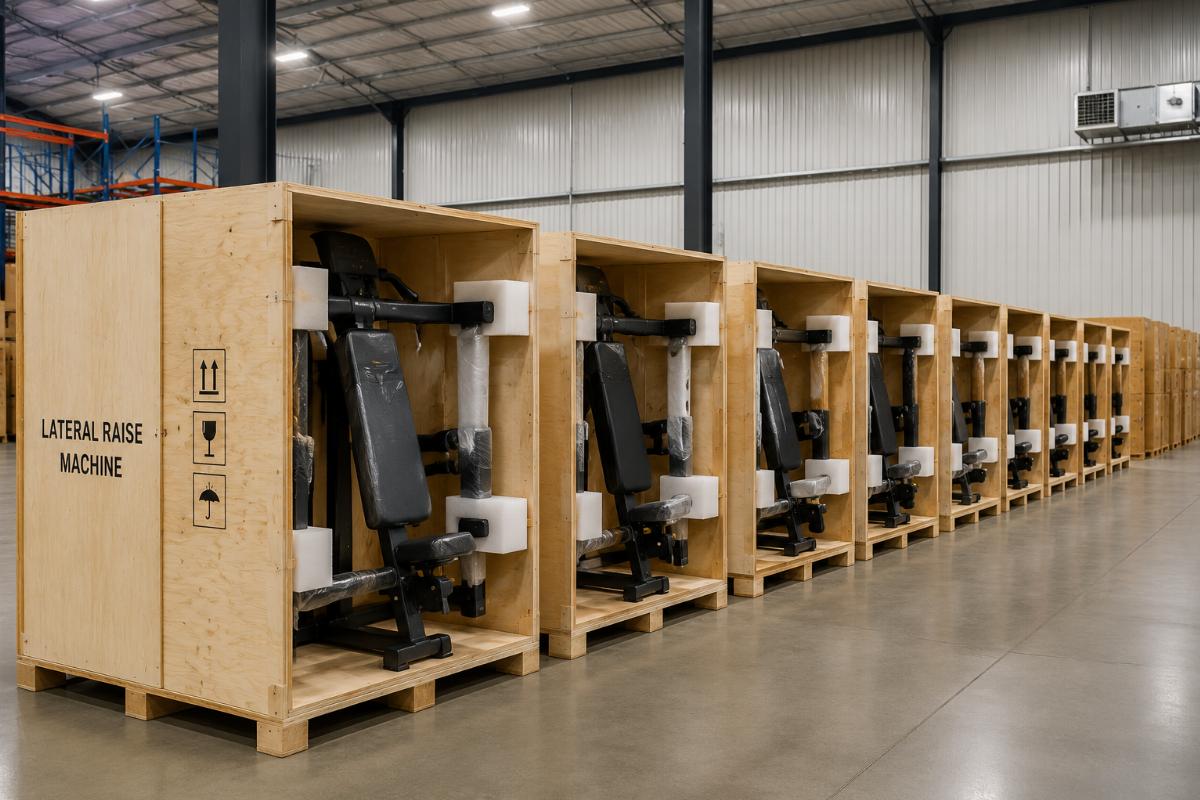
In Southeast Asia, a distributor faced challenges with mixed parts in bulk containers. Units intended for different models were inadvertently combined, leading to confusion during setup. By implementing pre-kitting and color-coded hardware packs, the manufacturer improved unpacking efficiency noticeably. Each kit contained exactly the hardware needed for one specific bench model, eliminating the need to sort through large bins of assorted bolts and washers. This simple change reduced the time spent on part identification by a significant margin.
Inspection for shipping damage is equally important. Heavy steel frames can shift during transit, potentially causing minor deformations or scratches. Identifying these issues early allows for immediate replacement or repair, preventing the assembly of compromised units. Checkpoints should include verifying the integrity of welds, the condition of padding, and the functionality of adjustment pins. Any discrepancies should be documented and reported to the supplier immediately to facilitate swift resolution.
How to Follow the Step-by-Step Assembly Process?
Adhering to a logical sequence of base frame, adjustment mechanism, and padding ensures structural stability and operational smoothness.
The assembly of an adjustable bench follows a specific architectural logic. Starting with the base frame provides a stable foundation for subsequent components. Rushing this stage or skipping alignment checks can lead to cumulative errors that manifest as wobbles or misalignments later. Once the base is secure, the adjustment mechanism is installed. This component requires precise alignment to ensure smooth transitions between angles. Finally, the padding and upholstery are attached, completing the unit.
Bick’s OEM service includes customized, clear assembly manuals and video support to ensure seamless setup for large-scale projects. These resources emphasize visual cues over text, using exploded views and arrow indicators to guide the installer. Torque specifications are clearly marked for key structural joints, ensuring that bolts are tightened to the appropriate level without over-torquing, which can strip threads or damage components. [NEED_CITE: recommended torque values for structural steel joints in fitness equipment]
A common mistake is assuming all bolts are interchangeable. In reality, specific grade and length mismatches can cause structural wobble and safety risks. Using a shorter bolt in a deep thread hole may not engage sufficiently, while a longer bolt may bottom out before securing the joint. The assembly guide must explicitly specify which bolt goes where, ideally using visual distinctions such as color coding or distinct head shapes. This attention to detail prevents the kind of rework seen in the Dubai case, where mislabeled bolts led to hours of wasted effort.
How to Troubleshoot Common Installation Issues?
Addressing wobbling, loose knobs, and misaligned pins promptly prevents long-term equipment failure and user dissatisfaction.
Even with careful assembly, issues may arise. Wobbling is often caused by uneven floor surfaces or improperly tightened base feet. Checking the level of the floor and adjusting the feet accordingly can resolve this. If the wobble persists, inspect the base frame joints for proper tightness and alignment. Loose knobs typically result from worn threads or insufficient friction. Replacing the knob or applying a thread-locking compound can restore functionality.
Misaligned pins in the adjustment mechanism can prevent the bench from locking securely at desired angles. This issue usually stems from minor deformations during shipping or assembly misalignment. Gently realigning the holes using a suitable tool, such as a punch or alignment pin, can correct the problem. Forcing the pin should be avoided, as this can exacerbate the misalignment or damage the mechanism.
In cases where issues persist despite troubleshooting, contacting the supplier for technical support is advisable. Providing detailed photos and descriptions of the problem helps engineers diagnose the issue remotely and offer specific solutions. Having access to spare parts, such as replacement bolts, knobs, or pins, ensures that minor repairs can be completed quickly without waiting for new shipments. This proactive approach minimizes downtime and maintains the operational readiness of the facility.
Conclusion
Clear, validated assembly instructions are indispensable for the efficient setup of bulk adjustable bench orders.
By prioritizing visual guides, standardized part numbering, and pre-kitted hardware, manufacturers and buyers can avoid costly rework and ensure a smooth installation process. Attention to detail in pre-assembly checks, sequential assembly, and troubleshooting empowers facility managers to maintain high standards of safety and performance. This structured approach transforms potential logistical challenges into streamlined operations, supporting the long-term success of commercial fitness environments.