BP-Bench Press Sub-Series vs Predecessor | Wholesale OEM Supplier
Most buyers assume sub-series upgrades are cosmetic — the real differences lie in frame steel gauge and weld reinforcement, not paint color.
BP bench press sub-series introduce measurable upgrades in frame structure, upholstery density, and load capacity over predecessor models. The generational gap shows up in tube wall thickness, pad foam grade, and adjustment mechanism range — parameters that directly determine whether a bench survives high-traffic commercial use or fails within a year. Choosing the wrong series means either over-spec’ing budget projects or under-spec’ing heavy-use gym floors.
I used to spend my days staring at packing lists and HS codes in a Ningbo forwarding office, cross-checking container loads before they rolled out. That’s where I learned how a single model-number mix-up can blow up a whole shipment. A gym buyer in Brisbane ordered what he thought was the BP-800 series bench — the proforma listed the predecessor code, and when the container cracked open at port, he got adjustable incline benches instead of flat power benches. Three weeks of emails, a partial air-freight rescue, and a client who nearly walked. That headache pushed me to the sales desk, where I could kill these problems before they ship. Now when buyers ask how the BP bench press sub-series stacks up against the older models, I don’t just pull spec sheets — I walk them through frame geometry, pad thickness, load ratings, the stuff that actually matters when you’re outfitting a commercial gym floor.
Let me break down what actually separates these generations — and how to match the right series to your facility type without wasting budget or risking equipment failure.
What Are the Key Structural Differences Between BP Sub-Series and Predecessors?
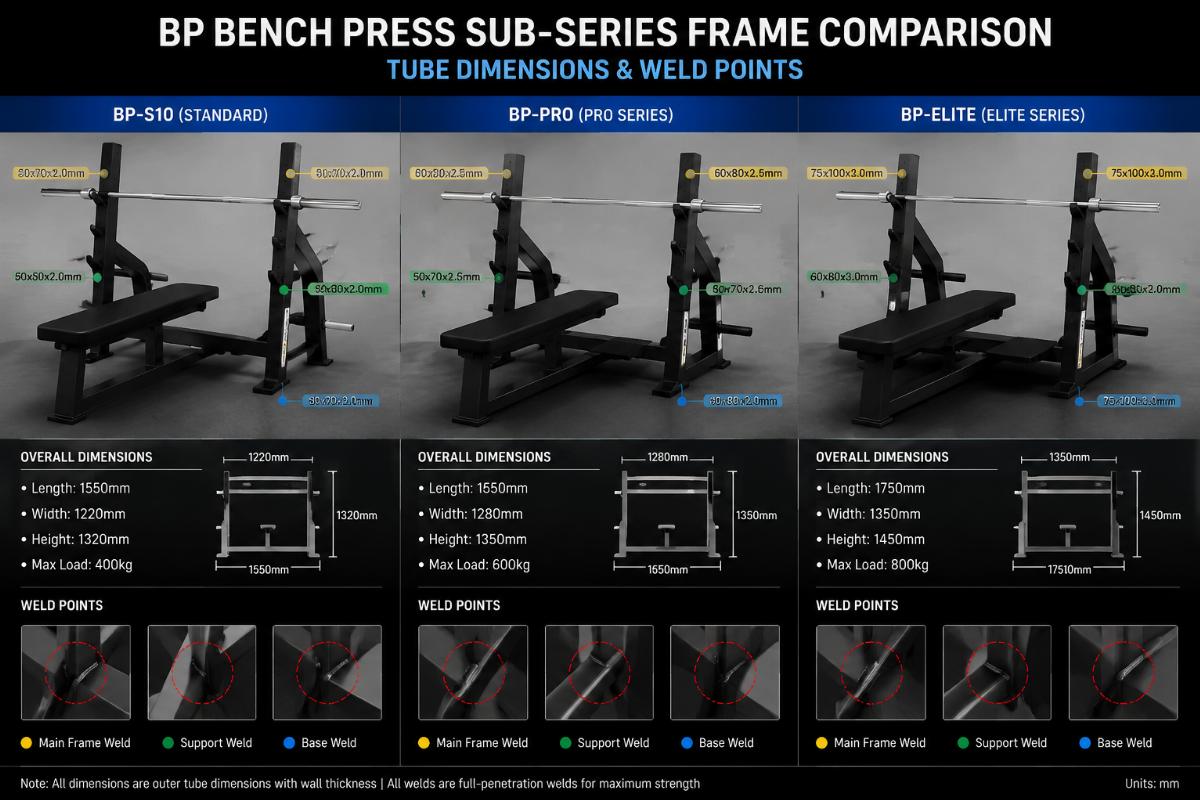
The generational gap lives in the steel, not the stickers. Frame tube dimensions and wall thickness define whether a bench handles repeated heavy loading or develops flex over time. Predecessor models typically use standard-gauge rectangular tubing with basic gusset reinforcement at high-stress joints. The newer BP bench press sub-series step up to thicker wall sections and add supplementary weld points at the base-to-upright connection — areas where fatigue cracks commonly initiate under commercial use conditions [NEED_CITE: fatigue failure patterns in commercial gym equipment frames].
The base footprint also shifts between generations. Predecessor designs prioritize compact shipping dimensions, which sometimes means a narrower stabilizer bar. The upgraded sub-series widen the base footprint noticeably, improving lateral stability during heavy pressing movements. This isn’t just a comfort issue — it’s a safety factor that matters when users load plates aggressively or perform dynamic movements on adjustable benches.
Weld quality standards differ as well. The newer BP bench press sub-series undergo more rigorous weld inspection protocols, with reinforced joints at load-bearing intersections. Predecessor models meet baseline structural requirements but lack the additional reinforcement that extends service life under continuous commercial cycling [NEED_CITE: commercial fitness equipment durability testing standards].
A distributor in the Middle East once ordered predecessor-coded benches for a mid-tier gym chain. The lighter-gauge frames couldn’t handle the traffic volume — within months, several units showed visible frame flex at the upright joints. The container rework and replacement shipment cost direction: multi-thousand USD range, plus damaged client relationships. That’s the kind of mistake that doesn’t show up on a spec sheet until equipment is already on the gym floor.

How Do Load Ratings and Pad Specs Compare Across Generations?
Weight capacity and upholstery upgrades directly impact commercial durability — and they’re often the first things buyers overlook. Max user weight ratings differ noticeably between BP bench press sub-series and their predecessors. The newer series carry higher load ratings, reflecting the upgraded frame structure and reinforced joints. Predecessor models handle standard commercial use adequately, but the sub-series provide additional headroom for facilities with heavier user demographics or high-intensity training protocols [NEED_CITE: load rating standards for commercial strength equipment].
Pad specifications tell a similar story. Predecessor benches typically use standard-density foam with basic vinyl upholstery. The BP bench press sub-series upgrade to higher-density foam that resists compression set over time — meaning the pad maintains its shape and support characteristics through extended use cycles. The vinyl grade also improves, with better resistance to cracking and wear from repeated cleaning chemicals used in commercial gym maintenance.
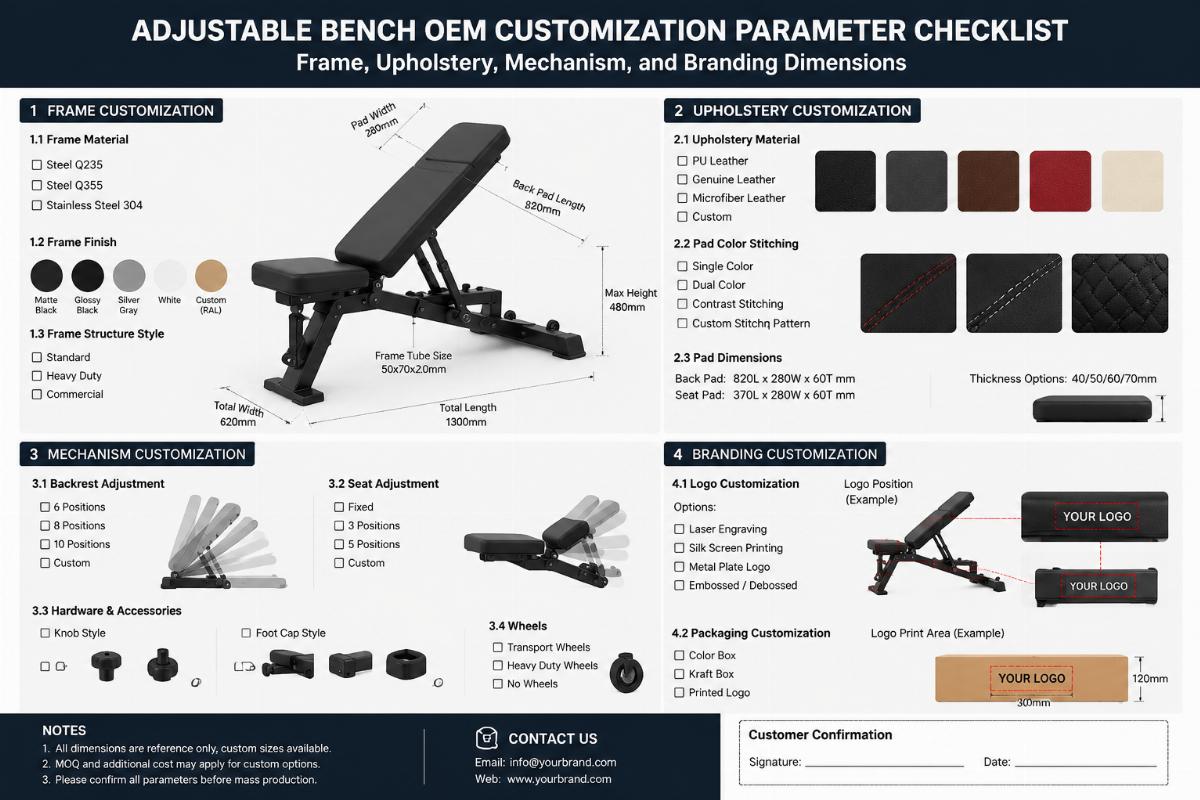
Adjustment mechanisms differ between generations as well. Predecessor models use basic pin-lock or ladder-style adjustment systems. The newer BP bench press sub-series feature smoother adjustment mechanisms with wider range settings, particularly on incline/decline models. This matters for facilities that cater to diverse training preferences — users notice when adjustment points feel gritty or limited.
A hotel fitness center once spec’d the top BP bench press sub-series when the predecessor would have sufficed for their traffic volume. They over-spent on load rating capacity direction: substantially above actual need. The predecessor models would have handled their guest usage patterns perfectly — the upgraded series was engineered for high-traffic commercial gyms, not boutique hotel installations. Matching series to actual usage intensity prevents budget waste without sacrificing durability.
| Parameter | Predecessor Series | BP Bench Press Sub-Series |
|---|---|---|
| Frame Tube Wall Thickness | Standard gauge | Upgraded thicker wall |
| Base Footprint | Compact shipping design | Widened stabilizer bar |
| Max User Weight Rating | Standard commercial | Higher capacity headroom |
| Pad Foam Density | Standard compression resistance | Enhanced compression set resistance |
| Vinyl Grade | Basic commercial | Improved chemical/abrasion resistance |
| Adjustment Mechanism | Basic pin-lock/ladder | Smooth operation, wider range |

Which Sub-Series Fits Which Facility Type?
Matching BP bench press sub-series to facility tier prevents over-spec or under-spec procurement — and that’s where budget discipline meets equipment longevity. Not every gym needs the top-tier sub-series, and not every budget project can safely use predecessor models. The key is understanding your facility’s usage intensity, user demographics, and maintenance capacity.
High-traffic commercial gyms with diverse membership bases benefit most from the upgraded BP bench press sub-series. These facilities see continuous equipment cycling throughout operating hours, with users of varying experience levels and body types. The heavier frame construction, higher load ratings, and enhanced pad durability justify the investment through extended service life and reduced replacement frequency [NEED_CITE: equipment lifecycle cost analysis for commercial fitness facilities].
Mid-tier gym chains and fitness centers with moderate traffic volumes can often use predecessor models effectively. These facilities typically have controlled access, member screening, and predictable usage patterns. The predecessor benches meet commercial durability requirements without the additional cost of upgraded sub-series features. A boutique studio buyer once confused adjustable vs. flat sub-series naming conventions — the delivery mismatch caused project delay direction: several weeks of lead-time impact while replacement units were sourced.
Hotel and apartment fitness centers often fall into an interesting middle ground. Traffic volumes are typically lower than commercial gyms, but equipment must maintain appearance and function despite limited on-site maintenance staff. Predecessor models work well here, provided the facility doesn’t cater to serious strength athletes who demand heavy-load capacity.
Functional training studios and CrossFit boxes need to evaluate their specific programming. If bench press work is supplementary to metabolic conditioning, predecessor models may suffice. But if pressing movements are core programming elements with heavy loading, the BP bench press sub-series provide the structural margin that prevents premature equipment failure.

What Common Ordering Mistakes Happen With BP Model Codes?
Naming confusion and code proximity cause shipment mismatches more often than buyers expect — and the consequences cascade through project timelines. Model numbers across BP bench press sub-series and predecessor generations often differ by only a digit or suffix letter. This proximity suggests interchangeability to buyers scanning spec sheets quickly, but pad thickness, adjustment mechanisms, and frame specs differ significantly between generations.
A European distributor once received a bulk order where the model codes on the proforma didn’t clearly distinguish between flat and incline sub-series variants. The buyer assumed they were ordering the same generation across all bench types, but the order mixed predecessor flat benches with sub-series incline models. The pad height and adjustment mechanism differences created an inconsistent user experience across the gym floor — and the client noticed immediately.
Another common mistake involves confusing OEM-branded variants with standard catalog models. The BP bench press sub-series may be produced under different model codes for private-label customers, but the underlying specs remain consistent within each generation. Buyers sometimes assume that different model numbers mean different quality tiers, when in reality they’re just branding variations of the same platform.
Documentation clarity matters here. Pre-shipment spec confirmation should include not just model numbers, but explicit parameter verification — frame tube dimensions, pad foam density, adjustment mechanism type. Relying solely on model codes without cross-referencing technical specs invites mismatch risk.
| Common Mistake | Root Cause | Consequence |
|---|---|---|
| Ordering wrong generation | Model code proximity | Frame/pad spec mismatch |
| Mixing flat/incline variants | Unclear sub-series naming | Inconsistent gym floor experience |
| Assuming model code = quality tier | OEM branding confusion | Unnecessary budget allocation |
| Skipping pre-shipment spec check | Over-reliance on model numbers | Shipment mismatch, project delay |

How to Verify You’re Getting the Right Sub-Series?
Documentation checks and pre-shipment spec confirmation protect your order from generational mix-ups — don’t skip these steps to save time. The first verification point is the technical data sheet. Request explicit parameter documentation for frame tube dimensions, wall thickness, pad foam density, and max user weight rating. Don’t accept vague language like "heavy-duty construction" — demand specific measurements that you can cross-reference against your facility requirements [NEED_CITE: commercial fitness equipment procurement documentation standards].
Pre-shipment inspection should include physical verification of key differentiators. Frame tube wall thickness can be measured with basic calipers. Pad foam density can be assessed through compression testing. Adjustment mechanism operation should be verified across the full range of motion. These checks catch generational mismatches before containers are sealed.
Photographic documentation during production provides another verification layer. Request images of frame weld points, base footprint dimensions, and pad construction. Visual comparison against known sub-series specifications reveals discrepancies that paperwork might miss.
For OEM-branded orders, confirm that private-label model codes map to the correct underlying platform generation. The BP bench press sub-series may carry different branding for various markets, but the technical specs should align with your order requirements regardless of the logo on the frame.
A buyer in Southeast Asia learned this lesson when their pre-shipment inspection revealed that pad foam density didn’t match the sub-series specification they’d ordered. The manufacturer had substituted predecessor-grade foam during production — a change that wouldn’t have been caught without physical inspection. The issue was corrected before shipment, avoiding a costly complaint and return process upon arrival.

Conclusion
BP bench press sub-series deliver measurable upgrades in frame structure, load capacity, and pad durability over predecessor models — but not every facility needs those upgrades. Matching the right generation to your facility’s traffic intensity and user demographics prevents both over-spending and under-spec’ing. Verify specs through documentation and physical inspection, not just model codes, to ensure your order matches your requirements.