
Commercial Fitness Equipment Manufacturer | Bick Factory Direct Wholesale
The fitness equipment price in Australia listed on local distributor websites is rarely the price you actually pay once the gear hits your gym floor.
For commercial buyers in Australia, the real fitness equipment price in Australia sits roughly double to two-and-a-half times the factory-direct cost from Shandong-based manufacturers, with the gap driven by brand markups, multi-tier distribution margins, and compliance overhead—not by any difference in steel quality or welding standards.
I still remember the first time a gym owner in Perth forwarded me a quote from a well-known local distributor for a full cardio and strength lineup. The numbers made my stomach drop. The same plate-loaded leg press we were shipping to a hotel project in Doha, with identical frame gauge and upholstery grade, was being quoted at nearly triple our factory price once it landed in Western Australia. That gap is where the real conversation about fitness equipment price in Australia begins. [NEED_CITE: Australian fitness equipment market distribution margin structure]
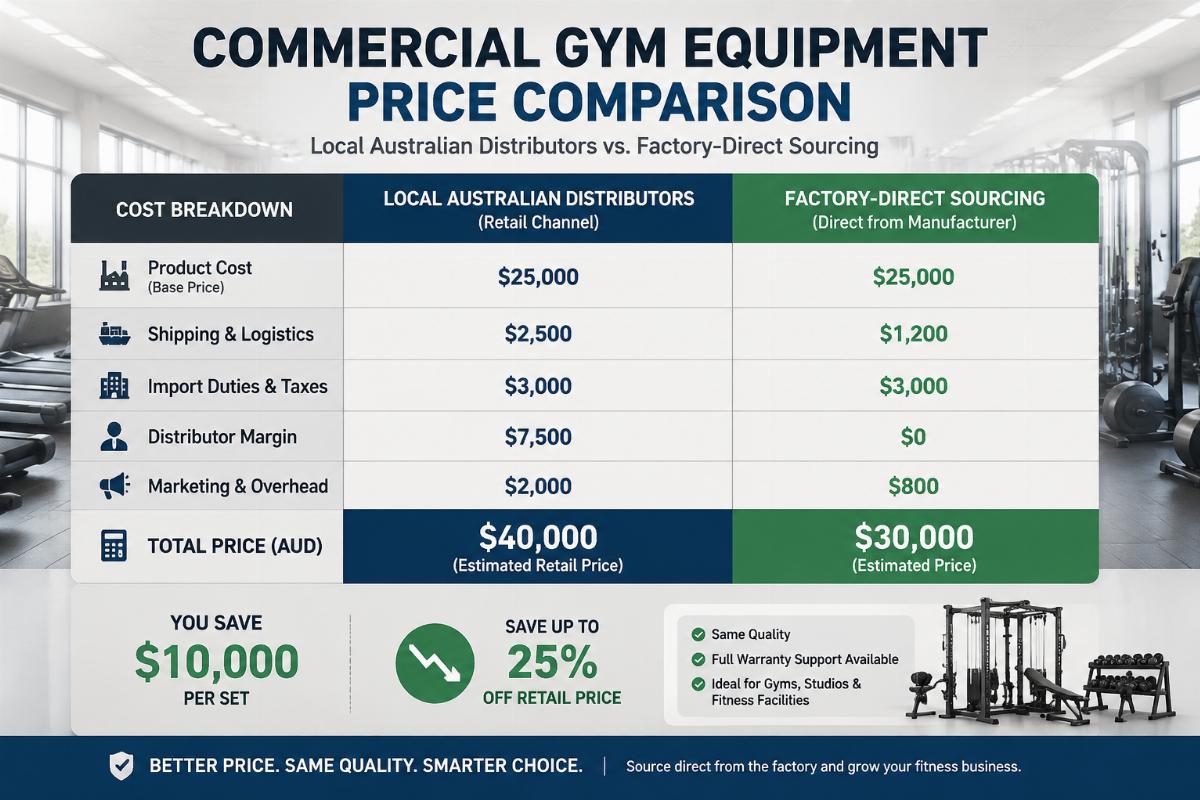
What most buyers miss is that the FOB invoice is just the opening move. Between the factory gate in Shandong and the loading dock of a 2,000-square-metre commercial gym in Melbourne, every layer—ocean freight, GST, port handling, inland transport, and certification paperwork—adds cost that local distributors bundle into a single inflated sticker price. Understanding this chain is the only way to evaluate whether the fitness equipment price in Australia you are being quoted actually makes commercial sense.
What Is the Average Fitness Equipment Price in Australia in 2026?
Local distributor pricing for commercial-grade fitness equipment in Australia typically runs two to two-and-a-half times higher than equivalent factory-direct pricing from Chinese manufacturers, with the markup covering brand licensing, warehousing, dealer margins, and compliance buffer rather than any meaningful upgrade in build quality.
When a gym owner in Sydney asks me what a complete commercial setup costs locally, I break it into three equipment families: cardio, selectorized and plate-loaded strength, and free weights with functional accessories. Cardio machines—commercial treadmills, ellipticals, and spin bikes—carry the heaviest per-unit price tag locally because of their electronics, motors, and console integration. A single commercial treadmill from an established Australian supplier can easily run into mid-five-figure territory in AUD. Selectorized strength machines follow, with cable crossovers and Smith machines forming the bulk of the budget. Free weights and benches, while cheaper per piece, multiply quickly across a full gym floor. [NEED_CITE: 2026 Australian commercial fitness equipment retail pricing benchmark by category]
| Equipment Category | Local Distributor Pricing Tier | Factory-Direct Pricing Tier | Primary Markup Driver |
|---|---|---|---|
| Commercial Cardio (treadmills, ellipticals, bikes) | Substantially higher | Noticeably lower | Brand premium, electronics import surcharge, local warranty reserve |
| Selectorized & Plate-Loaded Strength | Substantially higher | Noticeably lower | Multi-tier dealer margin, warehousing cost |
| Free Weights, Benches, Functional Gear | Moderately higher | Noticeably lower | Bulk freight weight, local steel price fluctuation |
| Complete Gym Packages | Substantially higher | Noticeably lower | Turnkey service fee, project management margin |
I ran this comparison for a hotel developer in Brisbane who was fitting out a compact gym across two boutique apartment sites. The local quote for a full cardio and strength package covering roughly a hundred square metres of floor space came in at a figure that, when I cross-referenced it against our factory pricing for equivalent commercial-grade units, represented a markup large enough to fund an entire second site’s equipment budget. [NEED_CITE: Australian fitness equipment import versus local retail price gap analysis]
The takeaway is straightforward: the fitness equipment price in Australia quoted by local channels is a finished-goods retail number, not a manufacturing cost number. Buyers who treat it as a benchmark for factory-direct sourcing will always overestimate what they should be paying.
How to Calculate Total Landed Cost When Importing Gym Equipment to Australia?
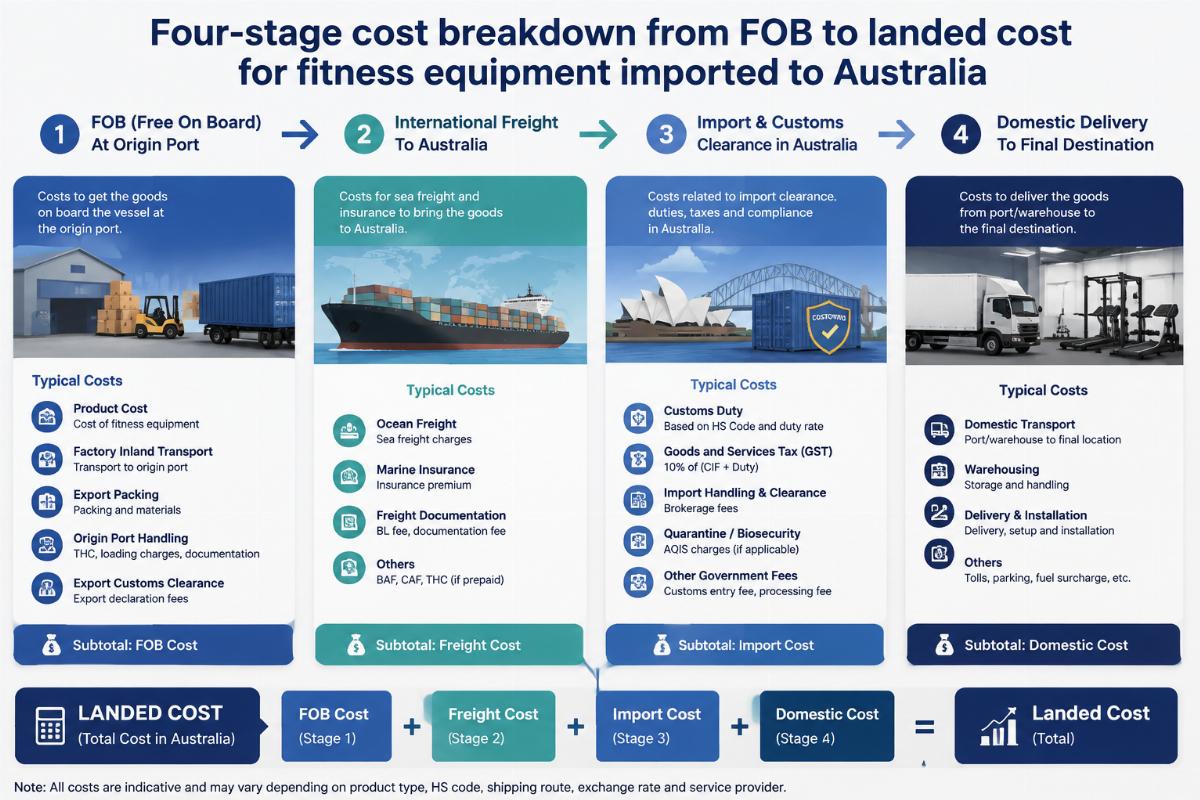
The FOB price on a proforma invoice is only the starting point; the true landed cost of fitness equipment price in Australia must layer in ocean freight, Australian GST at the standard rate, any applicable tariff duties, port clearance fees, and inland delivery to the final site.
I learned this the hard way on a project supplying a fitness chain in the Middle East, where the buyer fixated on the FOB number and completely ignored the freight and duty exposure. When the container reached the destination port, the additional charges nearly matched the original invoice. The same trap catches Australian buyers every week. [NEED_CITE: Australian Border Force commercial import duty and GST calculation framework]
Here is the cost chain I walk every client through, step by step:
- FOB Price — The factory gate cost covering manufacturing, standard export packaging, and loading at the origin port. This is the number on your proforma invoice and nothing more.
- Ocean Freight (CIF component) — Varies by container type and volume. A standard forty-foot high-cube container from a Chinese port to an Australian east-coast port carries a base freight rate, but oversized items like wide-grip Smith machines or full-length cable crossovers can force a flat-rack or open-top configuration, which multiplies the freight cost noticeably.
- Marine Insurance — Typically a modest percentage of the CIF value, non-negotiable for commercial shipments where a single container holds tens of thousands of dollars in equipment.
- Australian GST — Applied to the taxable import value, which is the sum of the customs value, freight, insurance, and duty. This is where many buyers miscalculate, because GST compounds on top of the other charges rather than just the goods value. [NEED_CITE: Australian Taxation Office GST on imported goods calculation method]
- Customs Duty — Most commercial fitness equipment enters Australia under tariff classifications that carry a standard duty rate, though free trade agreement provisions may apply depending on origin documentation.
- Port Handling and Clearance Fees — Terminal handling charges, customs broker fees, and quarantine inspection costs if any wooden packaging components trigger biosecurity scrutiny.
- Inland Transport — From the port to the gym floor. Heavy plate-loaded machines and loaded dumbbell sets concentrate weight in ways that can trigger overweight delivery surcharges.
A distributor in Melbourne once told me he switched from local sourcing to factory-direct after running this full calculation on a forty-foot container of mixed cardio and strength equipment. The landed cost per unit still came in substantially below what his previous local supplier was charging, even after every fee was tallied. That is the math that changes buying decisions. [NEED_CITE: Commercial fitness equipment landed cost breakdown Australia import case study]
Commercial vs Home Fitness Equipment: Which Price Tier Fits Your Facility?
Commercial-grade fitness equipment carries a per-unit price premium of roughly a third to a half over home-grade equivalents, but delivers a service life multiplier that makes it the only viable choice for any facility open to paying members, hotel guests, or residential tenants.
The distinction is not marketing. It is structural. Commercial frames use heavier-gauge steel, higher-load-rated bearings, industrial-grade cable systems, and upholstery rated for continuous daily use across hundreds of users. Home equipment is engineered for one or two users with moderate daily cycles. Put a home-grade treadmill in a twenty-four-hour commercial gym and you will see belt wear, motor stress, and console failures within a fraction of the expected commercial lifespan. [NEED_CITE: Commercial versus residential fitness equipment construction standard comparison]
| Construction Parameter | Commercial Grade | Home Grade | Facility Suitability |
|---|---|---|---|
| Frame Steel Gauge | Heavy-duty, high load capacity | Lighter gauge, lower continuous load threshold | Commercial for gyms and hotels; home for private use |
| Bearing and Pulley Rating | Industrial load rating | Consumer duty rating | Commercial for high-traffic floors |
| Cable System | Multi-strand, high tensile strength | Single-strand, moderate tensile strength | Commercial for selectorized and functional rigs |
| Upholstery | High-density, commercial wear resistant | Standard density, moderate wear resistance | Commercial for multi-user environments |
| Electronics and Console | Commercial firmware, usage tracking | Consumer firmware, basic display | Commercial for membership facilities |
| Certification | CE, EN standards compliance | Often limited or self-declared | Commercial required for insurance and compliance |
I supplied a thirty-room boutique hotel on the Gold Coast with a compact gym package. The developer initially wanted to cut costs by mixing in several home-grade cardio units. I showed him the warranty terms and the expected replacement cycle. The home units would have needed replacement within a few short seasons, while the commercial units would have run substantially longer with only routine maintenance. He went all commercial. The fitness equipment price in Australia for that hotel package looked higher on day one, but the total cost of ownership over a five-year window told a completely different story. [NEED_CITE: Total cost of ownership comparison commercial versus home fitness equipment hospitality sector]
The rule I give every buyer: if someone other than you and your family will use the equipment, buy commercial. The price gap narrows dramatically when you calculate it on a per-year, per-user basis.
How to Compare Fitness Equipment Suppliers and Avoid Hidden Costs?
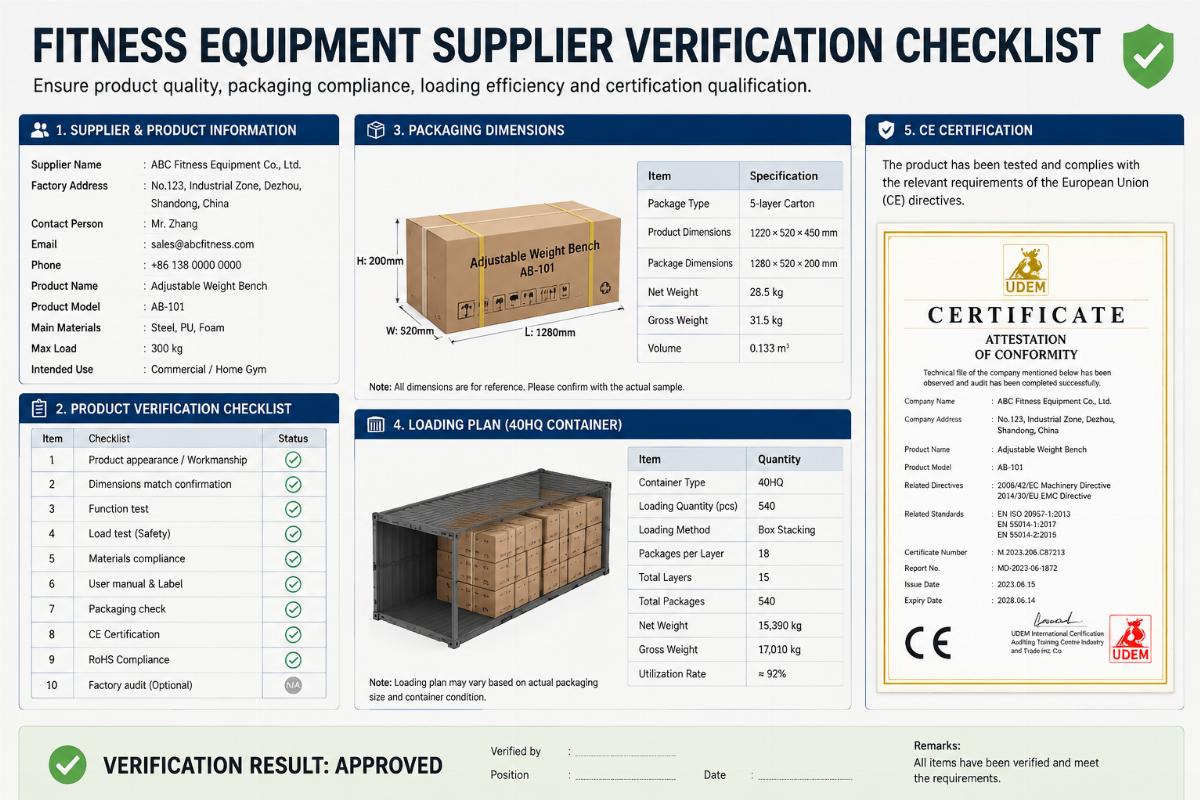
The most dangerous hidden costs in fitness equipment price in Australia are not in the unit price—they are in packaging dimensions, container loading inefficiency, and missing compliance documentation that triggers port delays or rejection.
I cannot stress this enough because I have watched buyers get burned by all three. A supplier in Qingdao once quoted a gym chain in Adelaide an attractive FOB price on a mixed container of strength and cardio equipment. What the buyer did not check was the packaging dimensions on the Smith machines and half-racks. Those units, fully assembled or even partially knocked down, exceeded the internal width of a standard dry container. The container had to be reconfigured as a flat-rack at the origin port, adding a surcharge that wiped out the price advantage the buyer thought they had secured. [NEED_CITE: Fitness equipment container loading optimization and oversized cargo surcharge impact]
Here is the verification checklist I run with every buyer before they commit to a supplier:
- Packaging dimension confirmation — Request the exact packed length, width, and height for every SKU. Do not accept "approximate" or "standard." Oversized items must be flagged before the loading plan is drawn.
- Container loading plan with three-dimensional layout — A credible supplier will provide a loading diagram showing how each piece fits into the container, including weight distribution. If they cannot produce this, walk away.
- CE certification and EN standard documentation — Australian customs and insurance assessors increasingly request proof of compliance. The supplier must provide verifiable test reports, not just a certificate logo on a brochure. [NEED_CITE: Australian import compliance requirements for fitness equipment CE and EN standards]
- Steel gauge and weld inspection reports — Commercial buyers should request mill certificates or third-party inspection reports confirming frame material thickness and weld quality. This is especially critical for load-bearing equipment like power racks and plate-loaded machines.
- Spare parts and warranty terms — Confirm what is included in the warranty, what the lead time is for replacement parts, and whether the supplier maintains a standing parts inventory for your specific model range.
A distributor in Perth learned this lesson when a shipment of cable crossover machines arrived without proper CE documentation. The container sat at the port for weeks while the broker tried to resolve the compliance gap. The demurrage charges alone were painful. The fitness equipment price in Australia for that order ended up far higher than the original invoice suggested, because the hidden costs were never priced in at the start. [NEED_CITE: Australian port demurrage charges due to import documentation non-compliance fitness equipment]
Where to Get the Best Factory-Direct Fitness Equipment Pricing for Australian Buyers?
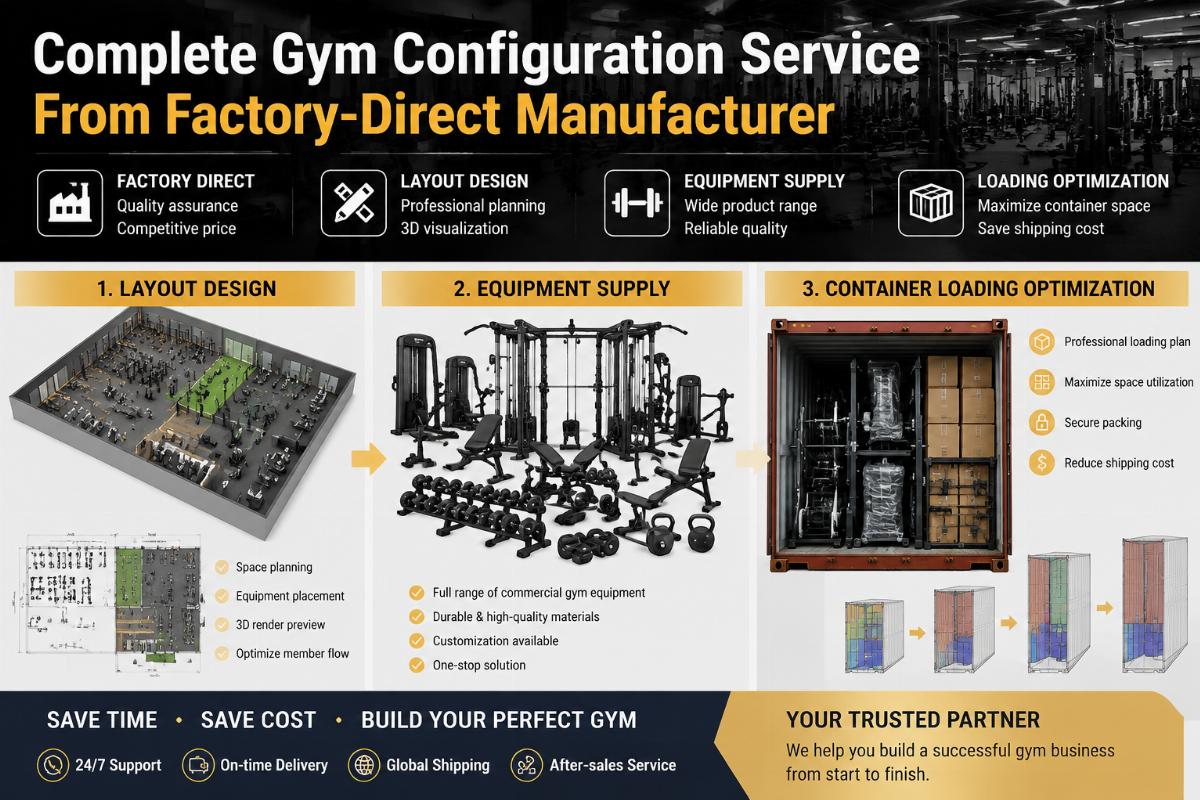
The most effective path to reducing fitness equipment price in Australia is sourcing directly from a Shandong-based manufacturer that offers complete gym configuration services, container consolidation expertise, CE-compliant documentation, and OEM branding flexibility—all in a single supply chain relationship.
Shandong Province, particularly the cities around Jining and Dezhou, has developed over the past two decades into one of the world’s densest clusters of commercial fitness equipment manufacturing. The supply chain here covers every component from steel tube bending and powder coating to console PCB assembly and upholstery stitching. This vertical integration is what allows a factory-direct model to deliver pricing that sits substantially below what even the most aggressive local Australian distributor can offer. [NEED_CITE: Shandong Province commercial fitness equipment manufacturing cluster supply chain analysis]
What separates a usable factory-direct partnership from a problematic one is the supplier’s ability to think beyond the single-unit invoice. A buyer outfitting a commercial gym needs a partner who can:
- Design a complete gym layout based on the buyer’s floor plan, traffic flow, and member demographic, then translate that layout into a precise equipment list with correct quantities and models.
- Optimize container loading across mixed SKUs, combining cardio, strength, free weights, and flooring into the fewest possible containers without triggering oversized cargo surcharges.
- Provide OEM branding including custom frame colours, logo placement on consoles and uprights, and retail-ready packaging for buyers who resell through local channels.
- Maintain certification readiness with current CE test reports, EN standard compliance files, and material inspection documentation that satisfies Australian import requirements on arrival.
- Support post-sale operations with spare parts supply, technical guidance, and warranty honouring across multiple continents and time zones.
I have worked with Australian gym owners, hotel developers, and equipment distributors who started by ordering a single container to test the market and scaled up to multi-container projects covering entire fitness chains. The common thread in every successful case is that the buyer treated the factory as a configuration partner, not just a price point. They shared their floor plans early, reviewed the loading plans carefully, and confirmed compliance documentation before production started. The fitness equipment price in Australia they achieved was consistently the lowest in their respective markets, because they eliminated every layer of cost that local distribution adds. [NEED_CITE: Factory-direct fitness equipment procurement model Australia buyer case study]
Conclusion
The fitness equipment price in Australia is a layered number, and the buyers who achieve the lowest total cost are those who look past the sticker price and manage the full chain from factory gate to gym floor. Factory-direct sourcing from Shandong manufacturers, combined with rigorous packaging verification, container loading optimization, and compliance documentation discipline, delivers the widest margin between what you pay and what a local distributor would charge. The equipment is the same grade of commercial steel. The difference is who controls the cost structure.


