
Commercial Fitness Equipment Supplier | China Factory Direct for Australia
Most buyers assume Chinese factory equipment is cheap because corners are cut. The reality is the opposite: the price gap comes from eliminating brand premiums and multi-tier distribution, not from reducing steel thickness or motor quality.
Australian commercial gym owners, hotel developers, and fitness importers can source CE-certified, commercial-grade equipment directly from Shandong factories at roughly half the cost of global brands—provided they verify quality through certification documents, production-line evidence, and real Australian client references rather than trusting a glossy website.
I still remember walking through a factory floor in Qingdao years ago, watching a batch of commercial treadmills being assembled. The frames were being welded with the same gauge steel I’d later see on machines carrying international brand stickers. The difference? One batch would ship under a recognizable logo at triple the price, while the other would go direct to a gym owner in Melbourne who’d saved enough to outfit an entire functional training zone with the money left over. That gap isn’t about quality—it’s about supply chain structure. [NEED_CITE: distribution margin structure in commercial fitness equipment industry]

If you’re evaluating a Fitness Equipment Supplier for Australia, the questions you ask upfront determine whether you receive commercial-grade durability or a costly lesson. Let’s walk through exactly what to verify, what specs matter most, and how the numbers actually work.
How Do You Verify a Chinese Fitness Equipment Factory’s Quality?
Three layers of verification separate a real manufacturer from a trading company pretending to be one: CE certification documents, production-line transparency, and traceable Australian client references.
Many overseas buyers get burned because they stop at the website. A trading company can build an impressive-looking site, list dozens of product categories, and quote competitive prices—yet they’ve never operated a single machine on a production line. Here’s how to drill down.
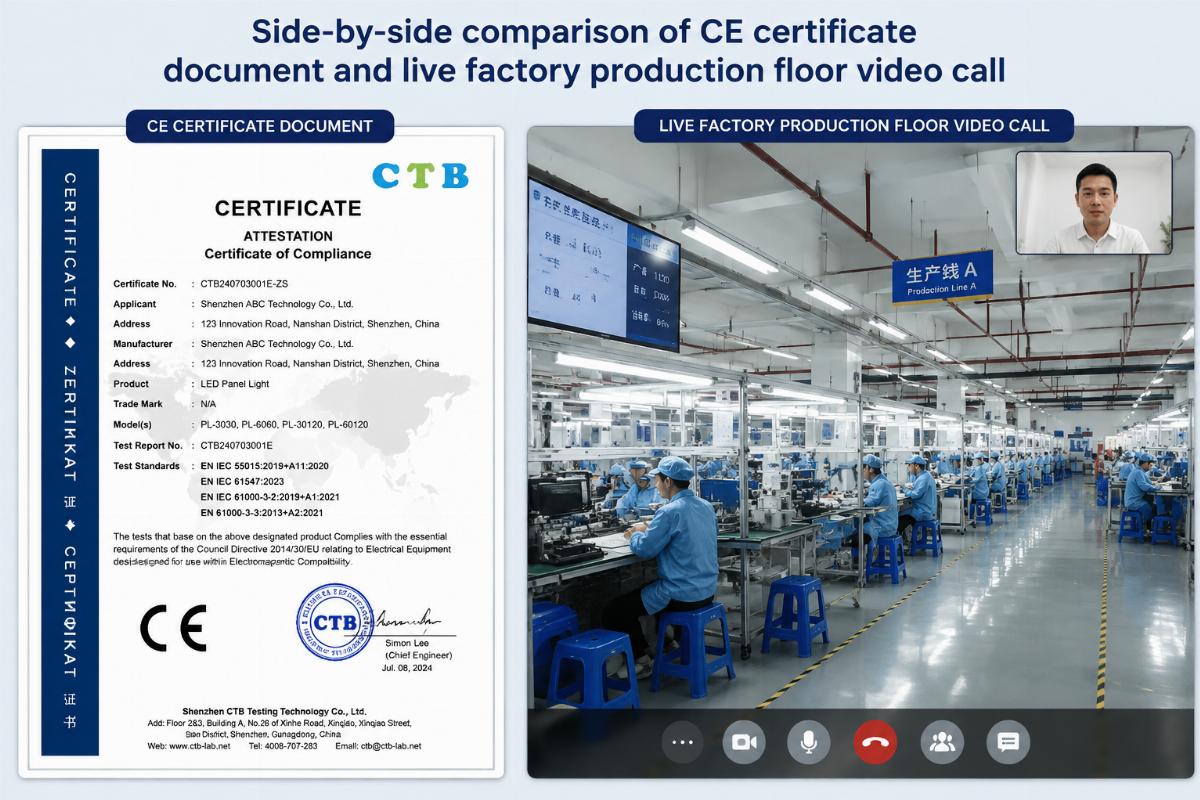
First, request the CE certificate and cross-check it. A legitimate CE certification for fitness equipment should cover EN 957 safety standards, and the certificate holder’s name should match the company you’re dealing with. If the certificate belongs to a different entity or the issuing body cannot be verified through the relevant notified body database, you’re likely looking at a borrowed document. [NEED_CITE: EN 957 safety standard requirements for commercial gym equipment]
Second, ask for a live video walkthrough of the production floor—not a pre-recorded marketing clip. A real factory will show you the welding stations, the motor testing rigs, the upholstery stitching area, and the finished-goods warehouse. I’ve arranged these walkthroughs for buyers who initially couldn’t travel, and the difference in their confidence afterward was immediate. You can tell a working factory from a staging area within the first thirty seconds of video.
Third, ask specifically for references from Australian clients. Not vague claims like "we export to Australia," but verifiable project types: a commercial gym in Sydney, a hotel fitness center in Brisbane, a dealer’s warehouse in Perth. A credible Fitness Equipment Supplier for Australia will have shipped enough containers to provide this without hesitation.
| Verification Layer | Real Factory | Trading Company Disguise |
|---|---|---|
| CE Certificate | Holder name matches, EN 957 covered, verifiable issuing body | Borrowed certificate, mismatched entity, unverifiable body |
| Production Access | Live video of welding, motor testing, assembly, warehouse | Pre-recorded clips only, refuses live walkthrough |
| Australian References | Names specific project types and cities | Vague "we export globally" claims |
A gym owner in Victoria once told me he’d been burned by a supplier who claimed factory-direct pricing but was actually a middleman adding a margin on top of another middleman’s margin. When he switched to verified factory-direct sourcing, his per-unit cost dropped noticeably—and the build quality actually improved because the factory was building to their own production standards rather than cutting specs to meet a trading company’s target price.
What Specs Should Australian Gym Owners Prioritize?
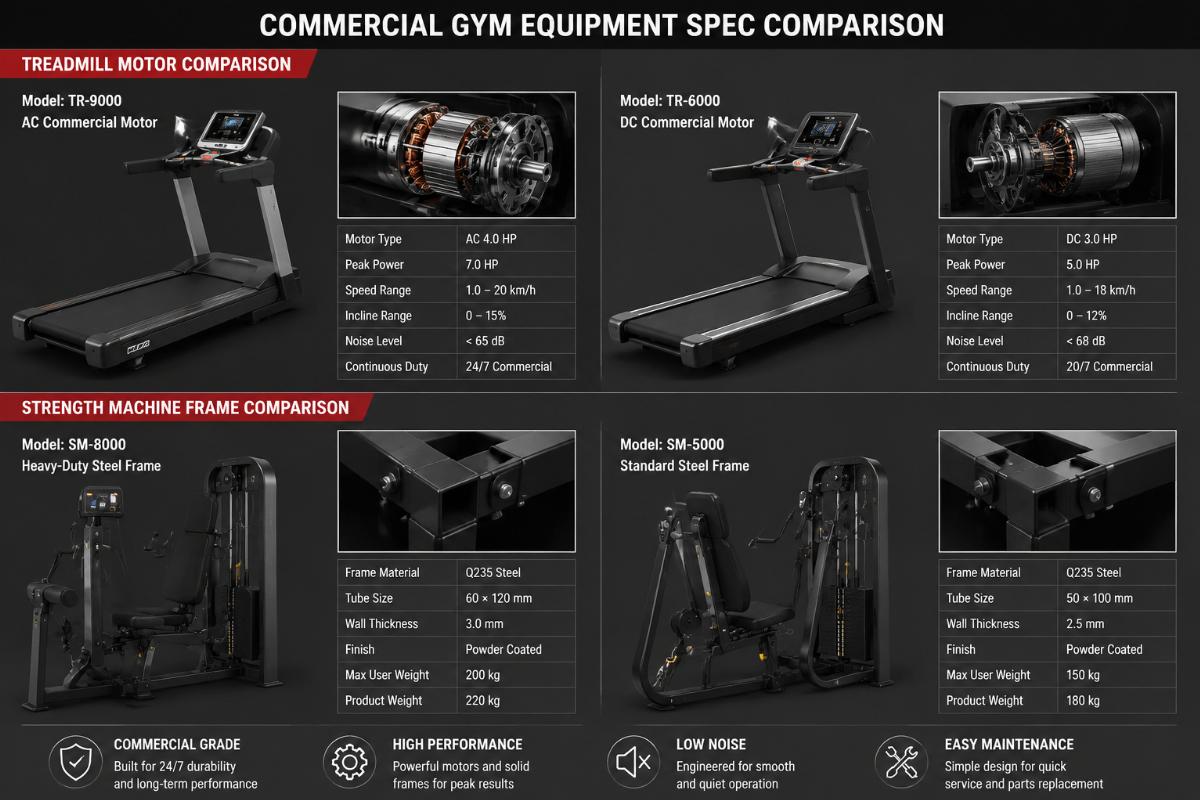
Commercial-grade heavy-duty frame construction, continuous-duty motor rating, and load-bearing capacity on strength equipment are the three non-negotiable spec categories that determine equipment lifespan under high-usage conditions.
When a gym operates twelve to sixteen hours daily, equipment failure isn’t an inconvenience—it’s a revenue leak. Every hour a treadmill is down for repair is a member complaint waiting to happen. Here’s what actually matters in the spec sheet.
For commercial treadmills, the critical parameter is the continuous-duty motor horsepower, not the peak rating. Many lower-tier machines advertise a peak figure that sounds impressive but tells you nothing about sustained performance. A proper commercial treadmill motor should deliver consistent output across long operating sessions without thermal throttling. The running deck thickness and the roller diameter also directly affect belt wear and user comfort. [NEED_CITE: commercial treadmill motor duty cycle and deck thickness specifications]
For strength equipment—Smith machines, power racks, cable crossovers, plate-loaded machines—the frame steel gauge and the load-bearing rating are what separate commercial from light commercial. The pulley system quality and cable specification matter enormously for smooth operation and long-term safety. A machine rated for heavy commercial use should handle repeated loading without frame flex or cable fraying.
| Spec Category | Commercial-Grade Indicator | Light-Commercial / Home Indicator |
|---|---|---|
| Treadmill Motor | Continuous-duty HP rated for extended sessions | Peak HP only, thermal throttling under sustained use |
| Frame Steel | Heavy-gauge welded construction | Thinner gauge, bolted assembly |
| Strength Load Rating | Rated for repeated heavy loading cycles | Lower cycle rating, frame flex under max load |
| Pulley & Cable | Sealed bearings, aircraft-grade cable | Open bearings, standard cable |
| Deck & Roller | Thick deck, large-diameter rollers | Thin deck, smaller rollers, faster belt wear |
A hotel developer in Queensland was outfitting a new resort fitness center and initially received quotes that looked similar on paper. When we broke down the specs side by side, the difference in motor duty rating and frame construction was stark. The cheaper option would have needed motor replacements within a couple of years given the expected daily usage. The commercial-grade option carried a modestly higher upfront cost but was projected to run substantially longer before any major component service.
How Much Can You Actually Save Compared to Life Fitness or Technogym?
Factory-direct pricing from a qualified Shandong manufacturer typically runs substantially below international premium brands, with comparable commercial-grade construction—the savings come from supply chain structure, not material downgrades.
This is the question every buyer asks, and it deserves a straight answer. The price gap between a globally branded commercial treadmill and its factory-direct equivalent from a certified Chinese manufacturer is significant. We’re not talking about a marginal discount—we’re talking about a structural cost difference that allows gym owners to outfit more floor space, buy more units, or invest the savings into flooring, mirrors, and layout design.
The reason is straightforward. International brands carry layered costs: brand licensing, regional distributor margins, local dealer margins, marketing overhead, and showrooms. A factory-direct Fitness Equipment Supplier for Australia eliminates most of these layers. The steel is the same grade. The motors meet the same duty requirements. The welding standards follow the same production protocols. What you’re not paying for is the logo and the distribution chain. [NEED_CITE: fitness equipment distribution margin structure analysis]
| Cost Component | International Brand | Factory-Direct |
|---|---|---|
| Manufacturing | Substantially similar | Substantially similar |
| Brand Premium | Significant | None |
| Distributor Margins | Multiple tiers | Eliminated |
| Local Dealer Markup | Noticeable | Eliminated |
| Marketing & Showroom | Built into price | Minimal |
| Final Price to Buyer | Substantially higher | Noticeably lower |
A mid-sized commercial gym in New South Wales was quoted a figure for a full cardio and strength package from a well-known international brand. When they sourced the equivalent spec package through factory-direct channels, the total came in at roughly half the branded quote. They used the savings to add an entire functional training zone with battle ropes, plyo boxes, and a full set of adjustable benches—equipment that would have been out of budget otherwise.
The key insight here is that "cheap" and "cost-effective" are not the same thing. A genuinely low-quality machine will cost you more in downtime, member complaints, and replacement cycles. But a commercially rated machine priced lower because of supply chain efficiency—that’s a structural advantage, not a compromise.

What Are the MOQ, Lead Time, and Shipping Options to Australia?
Mature factory-direct suppliers support flexible order quantities from single units to full-gym packages, with container-load consolidation services that optimize freight costs for Australian ports.
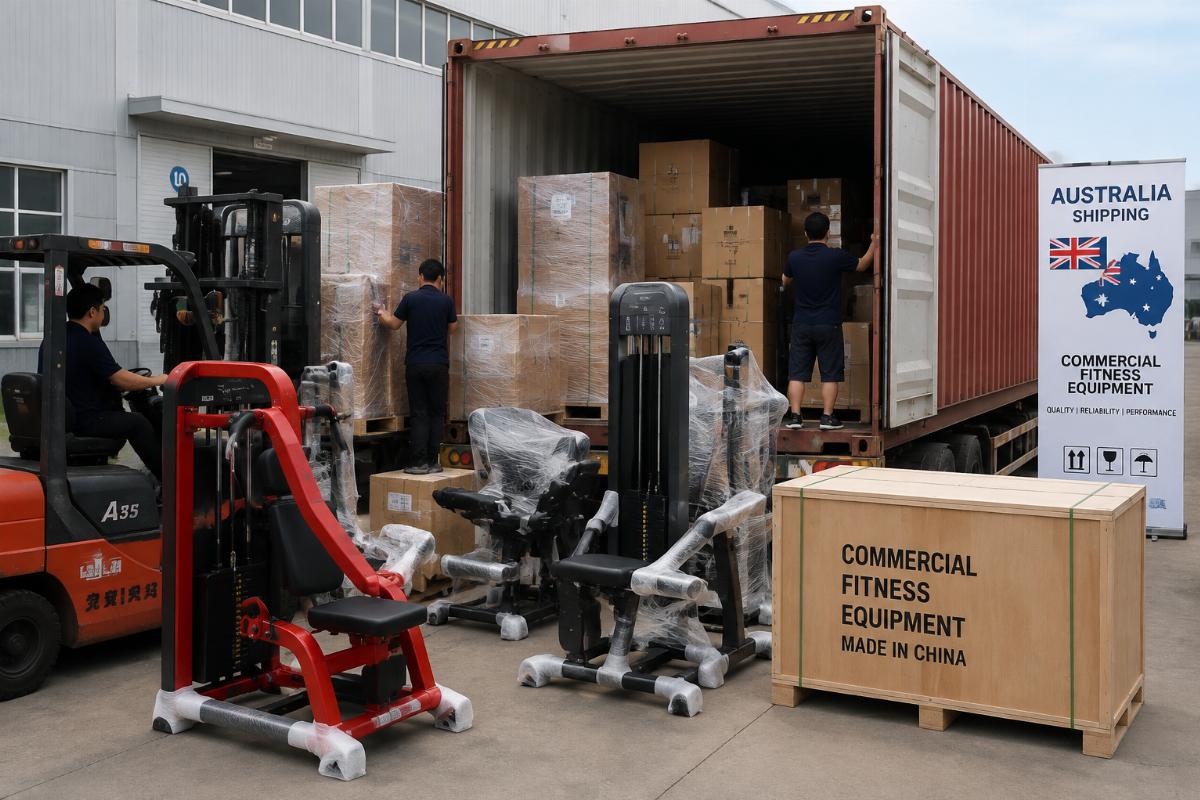
One of the most persistent myths in international fitness equipment sourcing is that you must order a full container of a single product. This simply isn’t true for established manufacturers. A credible Fitness Equipment Supplier for Australia will accommodate a mixed container—treadmills, ellipticals, a Smith machine, a cable crossover, a set of dumbbells, plates, and benches—all consolidated into one shipment.
For a new commercial gym, this means you can order the complete package in a single transaction rather than dealing with five different vendors. For a hotel or apartment developer, it means the fitness center can be spec’d and shipped as one coordinated project. For a local dealer building inventory, it means testing multiple product categories without committing to massive single-SKU quantities.
Lead time from order confirmation to production completion typically spans several weeks, depending on order complexity and current production scheduling. Ocean freight from Chinese ports to major Australian ports—Sydney, Melbourne, Brisbane—adds a transit period that is well-established and predictable. [NEED_CITE: ocean freight transit time China to major Australian ports]
| Order Type | Typical MOQ | Container Option |
|---|---|---|
| Single unit purchase | One unit accepted | LCL consolidation available |
| Boutique studio package | Full studio set | Shared or full container |
| Hotel / apartment fit-out | Complete project package | Full container with consolidation |
| Dealer inventory build | Flexible SKU mix | Full container, mixed products |
A fitness equipment distributor in Melbourne started with a single mixed container to test market response. The order included several cardio units, a selection of strength machines, and a comprehensive free-weight range. The container consolidation service meant everything arrived in one shipment, cleared through one customs process, and was delivered to one warehouse. The distributor then placed repeat orders on a regular cycle, adjusting the SKU mix based on what sold fastest.
The logistical advantage of working with a factory that handles consolidation in-house is that you avoid the coordination headaches of managing multiple suppliers, multiple shipping schedules, and multiple customs entries. Everything moves as one project.
How Do You Get OEM Branding and After-Sales Support?
Established factories provide full OEM and ODM branding services with flexible minimums, plus structured spare parts supply and technical support—critical for distributors building a long-term brand in the Australian market.
If you’re a dealer or distributor looking to build your own brand, OEM capability is non-negotiable. This means custom logos on equipment frames, branded console panels, custom color schemes, and branded packaging. A qualified Fitness Equipment Supplier for Australia will have a dedicated OEM workflow: design review, sample approval, pilot production, and then full-scale manufacturing.
The sample stage is where many relationships succeed or fail. A factory confident in its OEM process will produce a sample unit with your branding applied, ship it for your inspection, and only proceed to full production once you’ve approved. This step protects you from receiving a full container of equipment with misaligned logos or incorrect color matches. [NEED_CITE: OEM fitness equipment sample approval and production workflow]
After-sales support is equally critical. Equipment will need maintenance. Parts will wear. The question isn’t whether you’ll need spare parts—it’s when. A factory that supplies replacement parts from inventory, provides technical documentation, and offers remote troubleshooting support gives you the infrastructure to service your clients without extended downtime.
| OEM / After-Sales Element | What to Expect |
|---|---|
| Logo & branding placement | Custom on frame, console, packaging |
| Color customization | Full range, matched to your brand palette |
| Sample approval process | Physical sample shipped before production |
| Spare parts availability | Stocked inventory, shipped on demand |
| Technical documentation | Manuals, wiring diagrams, troubleshooting guides |
| Remote technical support | Direct factory engineer access |
A dealer in Western Australia built his entire brand around equipment sourced from a single factory-direct relationship. The OEM process started with a sample treadmill bearing his company logo and custom color scheme. After approval, the first production run went smoothly, and subsequent orders followed a predictable cycle. When a console board needed replacement a year later, the spare part was shipped within days, and the factory’s technical team walked his service technician through the swap via video call.
This is what a mature supplier relationship looks like. It’s not transactional—it’s infrastructural. The factory becomes your production arm, and you become their brand presence in the market.

Conclusion
Sourcing commercial fitness equipment from a verified Chinese factory delivers substantial cost savings without compromising commercial-grade quality—the key is rigorous supplier verification, spec-level comparison, and a long-term partnership mindset.
Australian gym owners, hotel developers, and equipment distributors who approach a Fitness Equipment Supplier for Australia with the right verification framework and spec priorities consistently secure equipment that performs at international standards while freeing up budget for additional floor coverage, expanded inventory, or enhanced facility design. The supply chain advantage is real, the quality is verifiable, and the partnership model scales from a first trial container to a full branded distribution operation.


