Discount for Repeat Gym Equipment Orders | Wholesale Supplier & Bulk OEM Pricing
Most buyers assume repeat gym equipment orders get cheaper simply because "volume equals discount." The real reason is far more mechanical: shared tooling amortization, consolidated QC workflows, and locked configurations that eliminate re-engineering costs.
Repeat gym equipment orders typically unlock meaningful unit cost reductions compared to first-time purchases, primarily because the factory reuses existing molds, skips prototype validation, and consolidates shipping logistics. However, these savings only materialize when specifications are formally locked and documented before the reorder is placed. Unverified configuration changes or mixed component batches can erase every penny of discount through air-freight补救 and on-site assembly failures.
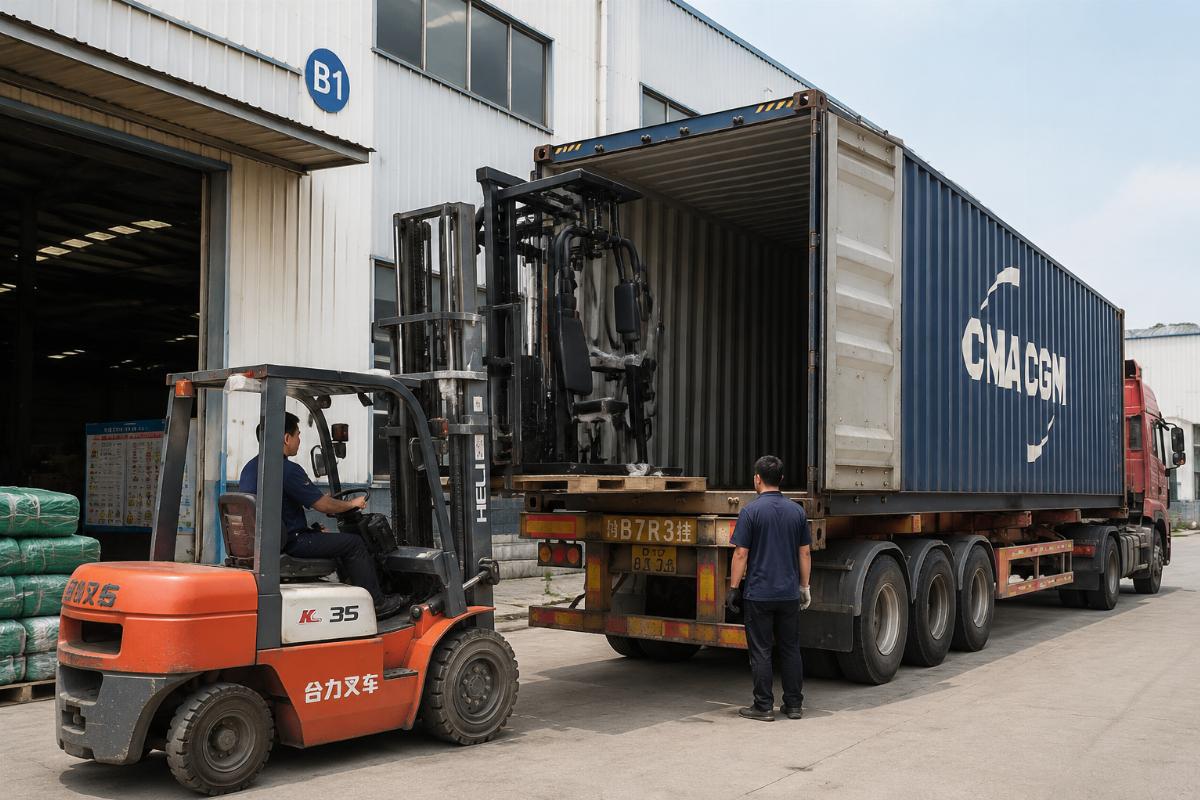
I still remember a full container of plate-loaded strength machines we shipped to a gym chain in the Middle East. The first order went smoothly. When the repeat gym equipment orders came in months later, the buyer casually asked us to "mix in some newer selectorized units" without confirming whether the weight stack interface matched the original series. We loaded the container. It arrived. Nothing fit. The pin-selectorized cables had a different diameter than the plate-loaded guide rods from the first batch. Air-shipping replacement connectors ended up consuming a chunk of profit that should have stayed in the buyer’s pocket [NEED_CITE: root cause analysis of mixed-configuration fitness equipment shipments per industry logistics reports]. That single oversight taught me to treat every repeat gym equipment orders with the same configuration rigor as a brand-new project.

Let’s walk through what actually drives pricing on repeat orders, where hidden costs lurk, and how to structure the paperwork so both sides stay protected.
What Discounts Can You Actually Expect on Repeat Orders?
Realistic unit cost reductions on repeat gym equipment orders fall within a moderate range, driven by tooling reuse and process simplification rather than arbitrary volume generosity.
When a distributor places a second container of the same Smith machine or cable crossover, the factory does not need to set up welding jigs from scratch, run first-article inspections on new tube bends, or validate powder-coat adhesion on an unfamiliar surface profile. Those setup costs were already absorbed into the first order. The second run simply rides on existing infrastructure [NEED_CITE: manufacturing cost structure breakdown for repetitive fitness equipment production runs].
Here is how the pricing logic typically layers across order stages:
| Cost Factor | First Order | Repeat Gym Equipment Orders | Annual Framework Agreement |
|---|---|---|---|
| Tooling Amortization | Full allocation per SKU | Reused, near-zero marginal cost | Fully amortized across SKUs |
| QC Protocol Setup | First-article inspection required | Streamlined checklist reuse | Standardized batch-level QC |
| Shipping Efficiency | Single-SKU or mixed pallets | Container consolidation available | Multi-SKU full-container optimization |
| Packaging Configuration | Custom mockup approval needed | Existing carton specs reused | Standardized across product families |
Notice that the discount does not come from the factory "feeling generous." It comes from eliminating real, measurable cost items. A Middle East distributor who locked his second-order specs saw his per-unit landed cost drop noticeably compared to the maiden shipment, and his production lead time shortened by roughly a couple of weeks because no prototype approval cycle was needed [NEED_CITE: lead time comparison between first-article and repeat production in commercial fitness equipment manufacturing].
The key takeaway: if your supplier quotes you a repeat gym equipment orders discount that seems too large without explaining which cost items were removed, ask for the breakdown. Legitimate savings are traceable to specific process eliminations.
Why Do Repeat Orders Sometimes Cost More Than the First?
Unverified specification changes and mixed configuration batches create hidden costs that can completely swallow any nominal discount on repeat gym equipment orders.
This is the counterintuitive part most procurement teams miss. They assume a reorder is autopilot. It is not. Every time a buyer requests even a minor tweak — a different upholstery color, a thicker gauge on the seat pad, a modified weight stack increment — the factory must re-validate that change against the existing bill of materials. If the change is not documented in a formal engineering change order, the production line may ship a hybrid batch where some units carry the old spec and others carry the new [NEED_CITE: impact of undocumented engineering changes on fitness equipment batch consistency].
I watched an African importer receive his second full container of functional trainers. He had asked the sales rep over a voice call to "upgrade the cable pulleys to the sealed bearing version." No written confirmation. No updated BOM. The factory interpreted this as applying only to the cable crossover models in the same container, not the functional trainers. Half the units arrived with open-face pulleys that began squeaking within weeks in a humid coastal gym environment. The replacement pulley kits cost several times more than the nominal discount he had received on the repeat gym equipment orders [NEED_CITE: failure modes of unsealed pulley bearings in high-humidity commercial gym environments].
The risk清单 for uncontrolled repeat orders includes:
- Mixed weight stack interface diameters across production batches
- Inconsistent powder-coat color lots when RAL codes are not reconfirmed
- Packaging markings that do not match the updated BOM revision
- Spare parts lists referencing superseded component part numbers
Each of these errors forces the buyer into reactive mode: sorting containers at the warehouse, air-shipping corrective parts, or fielding customer complaints. The financial damage is rarely visible on the invoice but shows up clearly in the margin analysis at quarter-end.
How Should You Lock Down Specs Before Reordering?
A written configuration checklist covering critical interfaces, finish specifications, and packaging markings is the single most effective tool for protecting repeat gym equipment orders savings.
Before any repeat gym equipment orders is released to production, both parties should sign off on a configuration lock document. This is not a casual email confirmation. It is a structured checklist that itemizes every parameter that could drift between production runs.
The checklist should cover at minimum:
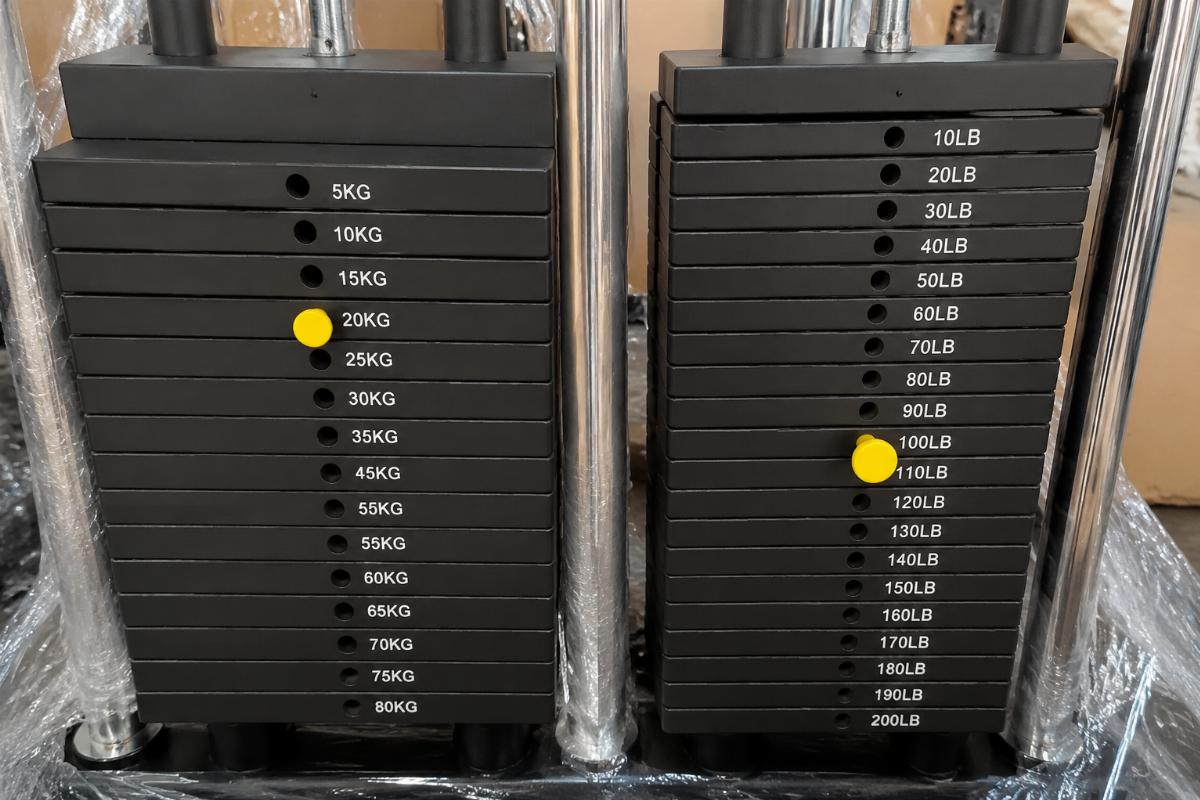
- Weight stack interface dimensions: Pin diameter, guide rod inner diameter, and selectorized cable routing path. These are the most common failure points when batches are mixed.
- Tube wall thickness and grade: Confirm whether the frame uses the same steel gauge and material certification as the original order. Substitutions without notification alter both structural performance and warranty exposure [NEED_CITE: structural integrity requirements per EN fitness equipment safety standards for frame tube specifications].
- Powder-coat RAL code and finish type: Matte, semi-gloss, or textured must be explicitly stated. Color perception under warehouse lighting differs from showroom lighting, so a physical sample approval is preferable to a digital swatch.
- Upholstery vinyl grade and stitch pattern: Commercial-grade vinyl thickness and seam construction should match the first-order sample exactly.
- Packaging carton dimensions and labeling: Box markings must correspond to the current BOM revision. A carton labeled "Selectorized Lat Pulldown" should not contain a plate-loaded variant with different assembly hardware.
At Bick, we walk every repeat client through this configuration lock process before releasing a reorder to the shop floor. It adds a day or two to the pre-production phase but prevents the multi-week disruptions that occur when a container arrives with mismatched components. One European OEM client who adopted this checklist protocol saw his post-delivery claim rate drop substantially within the first year of implementation [NEED_CITE: correlation between pre-shipment configuration audits and post-delivery claim reduction in fitness equipment distribution].

What Documentation Protects Both Buyer and Factory?
Signed bills of materials, photo-approved pre-shipment samples, and standardized packaging markings form the documentation triad that shields repeat gym equipment orders from disputes.
Paperwork is not glamorous, but it is the only thing standing between a smooth reorder and a container full of unresolvable ambiguity. The three documents that matter most are:
Signed BOM with revision control. Every repeat gym equipment orders should reference a specific BOM revision number. If the buyer requests any change, a new revision is issued, both parties sign it, and the old revision is archived. This prevents the factory from accidentally producing to an outdated spec while the buyer expects the updated version.
Pre-shipment photo approval. Before the container is sealed, the factory should photograph a fully assembled unit from multiple angles, including close-ups of weight stack interfaces, cable routing, and packaging labels. These photos are sent to the buyer for written approval. This step catches assembly errors and labeling mistakes while the goods are still accessible [NEED_CITE: best practices for pre-shipment inspection documentation in international fitness equipment trade].
Packaging markings aligned to BOM. Every carton should display the SKU, BOM revision, and configuration variant clearly on the exterior. When a container holds multiple SKUs or configuration variants, color-coded labels or numbered stickers help warehouse staff sort units correctly at destination.
An importer in Latin America learned this the hard way. His second order included three different bench models with similar frame structures but different seat adjustment mechanisms. The cartons were labeled only with generic "Adjustable Bench" text. At the warehouse, his team spent days opening boxes to identify which bench was which. The labor cost alone exceeded the discount he had negotiated on the repeat gym equipment orders.

When Does Consolidated Shipping Maximize Your Savings?
Combining repeat gym equipment orders with new SKU additions in a single container optimizes utilization and reduces per-unit freight costs more effectively than ordering repeats in isolation.
A common mistake among first-time importers is treating repeat orders as standalone shipments. They order the same Smith machines and cable crossovers as last time, fill half a container, and pay for underutilized space. The smarter approach is to use the repeat gym equipment orders as the baseline volume and layer additional SKUs on top to achieve full container load efficiency.
For example, a hotel fitness center developer who had previously ordered a container of cardio equipment placed a repeat gym equipment orders for the same treadmills and ellipticals, but added a selection of dumbbells, kettlebells, and flooring mats to fill the remaining cube. The per-unit freight cost dropped noticeably because the fixed container cost was spread across a higher total piece count [NEED_CITE: container utilization optimization strategies in commercial fitness equipment logistics].
Consolidation also works in reverse. If a distributor needs to reorder free weights but also wants to trial a new functional trainer model, combining both into one shipment allows the factory to share packaging materials, loading labor, and customs documentation. The marginal cost of adding the new SKU to an existing production schedule is substantially lower than launching it as a separate standalone order.
The logistics advantage compounds when the repeat gym equipment orders involve products with compatible stacking profiles. Plate-loaded machines and free weight racks, for instance, can be nested within the same container more efficiently than bulky cardio units, maximizing the weight-to-volume ratio and keeping freight cost per unit low.

Conclusion
Repeat gym equipment orders deliver genuine cost advantages, but only when configurations are locked, documentation is current, and shipping is consolidated strategically. The discount is real, but it is earned through process discipline, not simply requested through volume. Lock your specs, sign your BOM, approve your photos, and fill your container smartly.