Hex Dumbbell Set Wholesale Supplier for Egypt Bonded Warehouse
Bonded warehouses in Egypt are not a tax shelter—they are a holding zone with a countdown clock.
Importing hex dumbbell sets into Egypt via bonded warehouses requires precise ACID declaration, correct HS code classification, and weight verification to avoid costly port delays and storage penalties. The Nafeza platform locks your shipment data the moment an ACID is issued, and any mismatch between declared weight and actual cargo triggers an inspection that can freeze your container for weeks.
I learned this the hard way. A few years back, I coordinated a full container load of hex dumbbells heading to Sokhna Port. The ACID was filed, the cargo was on the water, and everything looked clean on paper. But when the container hit the bonded warehouse zone, customs flagged a discrepancy between the HS code declared on the Nafeza platform and the actual gross weight recorded at the port weighbridge. The hex dumbbell set wholesale supplier back in Shandong had shipped the goods with factory-weight labels, but the Egyptian importer’s forwarding agent had rounded the weight down during ACID registration. The result? The container sat in bonded storage for nearly three weeks. Demurrage climbed daily, the buyer called almost every other day, and someone had to cover the difference out of pocket before customs would release the shipment [NEED_CITE: Nafeza platform ACID modification requires importer re-application through CargoX].
That container was a hex dumbbell set—a product category where weight is the single most important variable in customs classification. Unlike treadmills or cable machines, dumbbells are pure mass. Every kilogram of under-declaration gets magnified at the weighbridge, and Egyptian customs officers know this.
Let me walk you through what actually matters when you are moving fitness iron into Egypt through bonded channels.
What Is a Bonded Warehouse and How Does It Apply to Egypt Imports?
A bonded warehouse in Egypt is a customs-supervised storage facility where imported goods can be held without immediate duty payment, but it is not a loophole for indefinite tax deferral.
Egyptian customs law permits bonded storage at designated ports—including Sokhna, Alexandria, and Damietta—but the system comes with strict time limits. Goods placed in a bonded warehouse must be cleared for entry, re-exported, or transferred to a free zone within a defined period. Exceed that window and customs can move to auction or forced return [NEED_CITE: Egyptian Customs Authority bonded warehouse time limit regulations under Nafeza framework].
For fitness equipment importers, the bonded warehouse serves a narrow but useful purpose: it buys time when the importer’s credentials are not yet finalized. I have seen cases where a gym equipment distributor in Cairo secured a deal with a hex dumbbell set wholesale supplier but had not yet completed the Import Code renewal with the Egyptian tax authority. The cargo arrived, the Import Code was pending, and the bonded warehouse kept the container from being rejected outright. The storage costs were manageable because the approval cycle was short.
But here is what most first-time importers get wrong. They assume bonded storage is cheap because duties are deferred. For heavy goods like hex dumbbell sets, storage fees are calculated by weight and by day. A container of dumbbells sitting for an extended period in bonded storage can accumulate charges that consume a significant portion of the original cargo margin. The heavier the product, the faster the cost spiral.
The practical takeaway: use bonded storage as a bridge during document or credential delays, not as a long-term cost-avoidance strategy. If your Import Code is in order and your ACID is clean, direct clearance is almost always cheaper than bonding.
What Are the Key ACID Declaration Requirements for Fitness Equipment?
The ACID number is the backbone of every Egyptian import shipment, and for hex dumbbell sets, the declaration must match the physical cargo down to the kilogram.
Egypt’s Advance Cargo Information Declaration system, managed through the Nafeza platform and the CargoX blockchain, requires importers to register shipment details before the goods leave the origin country [NEED_CITE: CargoX blockchain platform registration requirements for Egyptian import ACID issuance]. The system generates a unique ACID number that is tied to the declared HS code, gross weight, net weight, cargo description, and consignee information. Once issued, the ACID is locked. Changes require the importer to initiate a formal amendment request—a process that takes weeks, not hours.
For a hex dumbbell set wholesale supplier shipping to Egypt, the critical declaration points are:
-
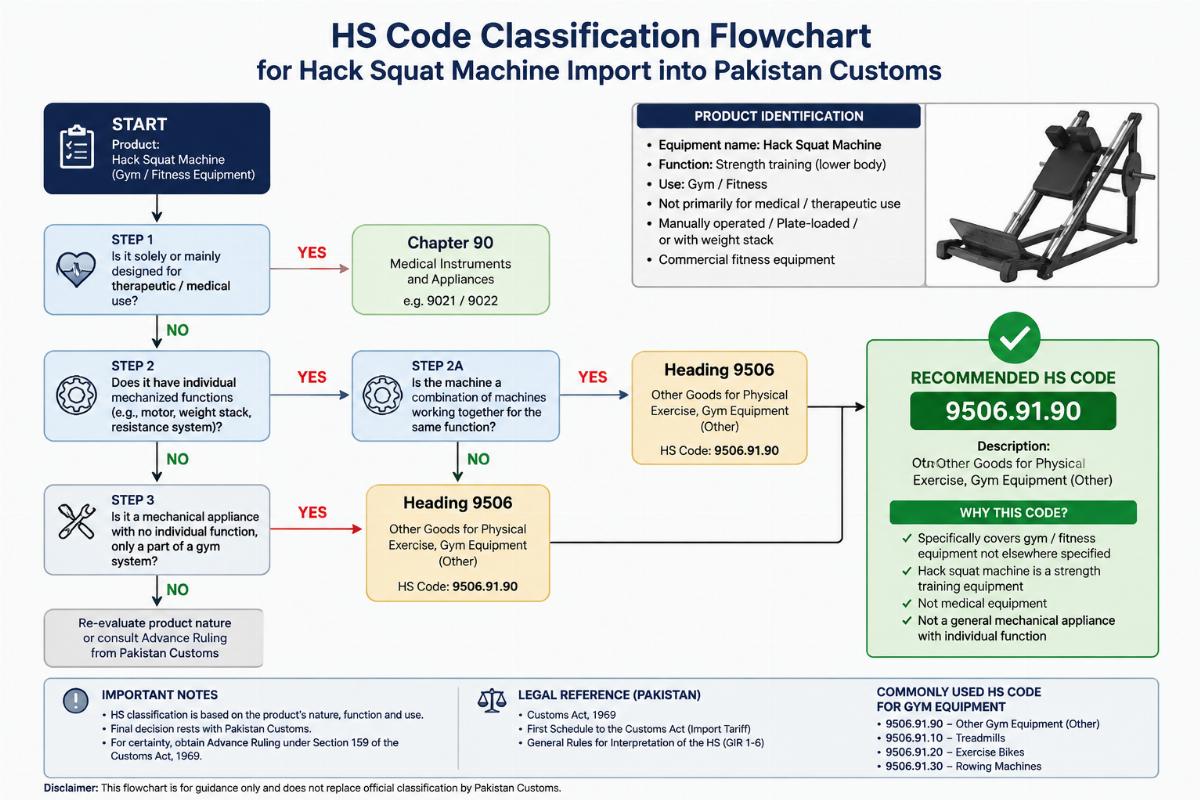
HS Code Accuracy: Hex dumbbells fall under the fitness equipment classification, but the specific subheading matters. Rubber-coated hex dumbbells, urethane hex dumbbells, and raw iron hex dumbbells can sometimes be classified differently depending on the material composition declared. Getting this wrong triggers an automatic flag at the port of entry [NEED_CITE: HS code classification rules for weight training equipment under Egyptian customs tariff schedule].
-
Weight Declaration: This is where dumbbell shipments fail most often. The gross weight on the ACID must include the product weight, packaging weight, and pallet weight. If the factory in Shandong loads the container and the actual weighbridge reading at Sokhna differs by more than a narrow tolerance, the container gets pulled for physical inspection.
-
Consignee Import Code: The Egyptian buyer must hold a valid Import Code issued by the tax authority. Without it, the ACID cannot be validated, and the cargo cannot clear—even if it is sitting in a bonded warehouse.
I have reviewed shipment files where the ACID declared one weight class for a hex dumbbell set, but the factory’s packing list showed a different count per box. The per-unit weight was correct, but the total quantity per container was off by a few cartons. That small gap was enough to freeze the release.
What Common Mistakes Cause Delays at Egyptian Ports?
Three traps account for the majority of bonded warehouse delays on fitness equipment shipments: document gaps, classification errors, and missing importer credentials.
I have watched containers of dumbbells, barbells, and weight plates sit in bonded storage at Egyptian ports because of issues that were entirely preventable before the cargo left China. Here is what goes wrong most often:
Missing or Incomplete Documents
Egyptian customs requires a specific set of documents for clearance: commercial invoice, packing list, bill of lading, certificate of origin, and the ACID printout. For fitness equipment, some ports also request a conformity certificate or a product specification sheet. If any document is missing, the cargo stays in bonded storage until the paperwork arrives. I have seen a shipment delayed because the certificate of origin was issued by the wrong chamber of commerce—it needed re-issuance, and that took days.
HS Code Mismatch
As mentioned, the HS code on the ACID must align with the actual product. A hex dumbbell set wholesale supplier might classify the product under one code for export from China, but the Egyptian importer may file a different code on the Nafeza platform. If the two do not match, customs will hold the container. The Nafeza system does not allow quick corrections—amending a locked ACID is a formal process that involves the importer, the forwarding agent, and customs review [NEED_CITE: Nafeza system ACID amendment procedure and timeline for Egyptian imports].
Invalid or Expired Import Code
The Import Code is not a one-time registration. It requires periodic renewal, and some importers let it lapse without realizing it. When the cargo arrives and the Import Code is expired, the bonded warehouse holds the goods until the renewal is processed. For a hex dumbbell set that weighs multiple tons, the daily storage fees during that renewal window add up fast.
A Middle East fitness distributor once told me that his biggest single loss on an Egypt shipment was not the product cost or the freight—it was the bonded storage bill for a container of dumbbells that sat for an extended period because of an Import Code renewal delay. The storage fees alone were a substantial hit to the order’s profitability.
How to Calculate Bonded Warehouse Costs vs. Direct Clearance?
The decision between bonded storage and direct clearance comes down to one calculation: how many days of delay risk versus how much daily storage cost.
When a hex dumbbell set wholesale supplier ships a full container to Egypt, the importer has two main paths at the port of arrival:
-
Direct Clearance: If all documents are in order, the Import Code is valid, and the ACID matches the physical cargo, the container clears customs and moves to the buyer’s warehouse. Duties and taxes are paid at the time of clearance. This is the fastest and usually the cheapest route.
-
Bonded Warehouse Storage: If there is a document gap, a credential delay, or a need to defer duty payment for cash-flow reasons, the container moves to bonded storage. Duties are deferred, but daily storage fees begin accumulating immediately.
The cost model is straightforward in theory but brutal in practice for heavy goods. Bonded warehouse fees in Egyptian ports are typically calculated per ton per day. A container of hex dumbbells is among the heaviest cargo types in fitness equipment—far heavier than a container of resistance bands or yoga mats. The daily storage cost for a dumbbell container is multiples of the cost for lighter goods.
| Cost Factor | Direct Clearance | Bonded Warehouse (Short-Term) | Bonded Warehouse (Extended) |
|---|---|---|---|
| Duty Payment Timing | Immediate | Deferred | Deferred |
| Daily Storage Fee | None | Applicable | Applicable and compounding |
| Document Flexibility | Must be complete before arrival | Allows short window for correction | Risk of cost overrun |
| Risk for Heavy Cargo | Low if documents match | Manageable for brief delays | Substantially erodes margin |
The lesson from my own experience: if you are working with a hex dumbbell set wholesale supplier, the best cost-control measure is not finding a cheaper bonded warehouse—it is making sure the cargo never needs one. Pre-shipment weight verification, ACID pre-checks, and Import Code validation before the vessel departs are the real savings tools.
What Documents Should Importers Prepare Before Shipment?
The single most effective way to avoid bonded warehouse delays is to complete every document check before the container is sealed at the factory.
When I work with Egyptian buyers on dumbbell and barbell orders, the document preparation starts weeks before the cargo is loaded. Here is the checklist that prevents the most common clearance failures:
-
Valid Import Code: Confirm with the Egyptian buyer that their Import Code is current and has not expired. Request a copy of the valid certificate before production begins.
-
CargoX Registration: Both the Egyptian importer and the exporting company must be registered on the CargoX blockchain platform. The importer needs an active digital signature from an approved provider such as Misr Al Makasa or Egypt Trust [NEED_CITE: CargoX digital signature provider requirements for Egyptian Nafeza platform].
-
ACID Pre-Draft Review: Before the ACID is finalized, the importer should share a draft of the declaration with the hex dumbbell set wholesale supplier. Cross-check the HS code, gross weight, net weight, and product description against the factory’s packing list and commercial invoice.
-
Certificate of Origin: Confirm which issuing authority Egyptian customs requires. Some ports accept CCPIT-issued certificates; others may have specific requirements.
-
Product Specification Sheet: For fitness equipment, having a detailed spec sheet—material composition, coating type, weight range—on hand helps customs officers verify the HS code classification without pulling the container for physical inspection.
-
Packing List Accuracy: The packing list must reflect the exact number of units, the weight per unit, and the total gross weight including packaging. Any rounding or estimation at this stage is a risk.
A North Africa gym chain buyer once avoided a major delay because we caught a weight discrepancy during the pre-shipment document review. The factory’s initial packing list showed a total gross weight that was slightly below what the ACID had declared. We re-weighed the loaded container at the factory, updated the packing list, and the importer amended the ACID before the vessel sailed. The cargo cleared at Sokhna without a single day in bonded storage.
Conclusion
Bonded warehouses solve temporary problems but create permanent costs if misused.
Importing hex dumbbell sets into Egypt through bonded channels works only when the importer treats the bonded warehouse as a short-term bridge—not a storage strategy. Accurate ACID declarations, valid Import Codes, and pre-shipment weight verification are the three controls that keep cargo moving. For any buyer working with a hex dumbbell set wholesale supplier, the cheapest clearance is the one that never touches bonded storage in the first place.