01 / Scenario
STUDIO
P
High-End Pilates Studios
Premium aesthetics meet quiet operation for boutique studio environments.
ISO
9001
CE
Certified
OEM
Available
10YR
Warranty
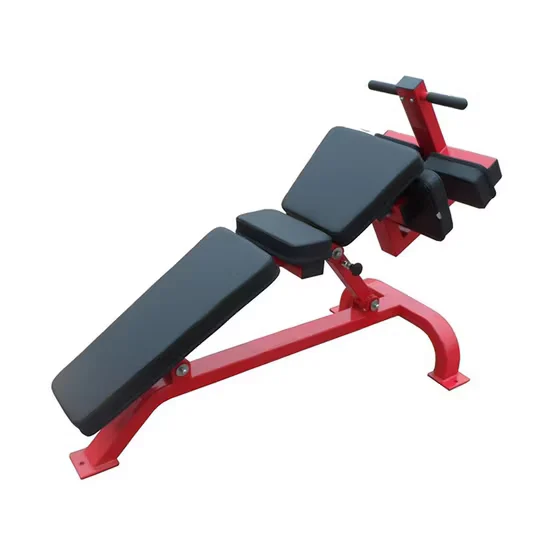
Commercial Adjustable Abdominal Board, 1400×680×600mm, 48kg Net Weight — engineered with 11-gauge steel frame and robotic MIG continuous welding to eliminate cold joints under repeated heavy loading. High-density upholstery resists collapse in high-traffic environments, with multi-angle adjustment mechanism built for daily commercial use. Every unit undergoes full load testing before shipment, backed by a 10-year frame warranty.
// Spec Highlights
• Direct from Manufacturer · No Middlemen · Worldwide Shipping
01
// Material
Imported Solid Wood
Premium hardwood frames sourced for density and visual warmth.
02
// Hardware
Medical-Grade Silent
Whisper-quiet pulleys and springs for clinical environments.
03
// Customization
Appearance OEM
Color, upholstery, and branding tailored to your studio.
04
// Service
Layout Design
Free venue planning for studios and rehab institutions.
Every component is selected for longevity, performance, and aesthetic harmony - from imported hardwood frames to silent medical-grade accessories.
// Features
Continuous Welds Resist Repetitive Impact — Robotic MIG welding eliminates spot-weld weak points that crack under daily abdominal flexion loading.
| Parameter | Value |
|---|---|
| Product Type | Abdominal Trainer |
| Product Dimensions | 1400×680×600mm |
| Net Weight | 48kg |
| Material | Steel |
| Exercise Part | Abdominal |
| Age Group | Adult |
| Gender | Unisex |
| Adjustment Positions | Multi-angle adjustable |
| Certification | ISO 9001, CE |
| OEM/ODM | Available |
| Production Capacity | 500 PCS/Month |
| HS Code | 9506911900 |
| Facility Type | Typical Use |
|---|---|
| Commercial Gym Strength Floor | Core conditioning station adjacent to free weight zone |
| University Athletic Facility | High-repetition abdominal training for team conditioning programs |
| Hotel Fitness Room | Compact core trainer for diverse guest fitness levels |
| Community Fitness Center | Durable abdominal workstation for general membership use |
| Health Club | Supplemental core station in functional training area |
A commercial adjustable abdominal board must survive repeated impact loading at the pivot point — not just look sturdy on day one.
Most budget abdominal boards use thin-wall tubing joined by spot welds at the angle adjustment bracket. The repetitive flex-and-release motion of sit-ups concentrates stress at these weld nodes. Within months, micro-cracks propagate through the incomplete fusion zones, and the frame develops lateral play that compromises user safety. [NEED_CITE: weld classification and fatigue performance in structural steel] The padding compresses and splits shortly after, but by then the structural failure has already occurred.
This commercial adjustable abdominal board occupies the core training zone, typically placed between the free weight section and functional rig area. The multi-angle adjustment mechanism accommodates users from beginner to advanced levels, allowing progressive overload through incline variation. The 1400×680mm footprint fits standard commercial gym spacing requirements while maintaining safe clearance from adjacent equipment. It pairs naturally with cable crossover stations and hyperextension benches to create a comprehensive core training circuit.
Commercial abdominal boards face a unique combination of static and dynamic loading that differs from most strength equipment. Users generate impact forces at the hip pivot point during each repetition, creating cyclic stress at the adjustment bracket and base frame junction. The padding surface endures continuous compression from varied body weights, while the adjustment pin mechanism experiences shear forces during angle changes. Sweat and cleaning chemicals accelerate corrosion at contact points where powder coating is thin or compromised. [NEED_CITE: EN 957 structural requirements for stationary training equipment]
The 48kg net weight indicates substantial steel mass in the frame construction, necessary to resist deflection under dynamic abdominal training loads. Frame tube dimensions and wall thickness directly determine the bending moment capacity at the pivot point — undersized tubing will flex perceptibly under heavier users, creating an unstable training platform. The multi-angle adjustment system must maintain positional integrity through thousands of pin insertions and removals; loose tolerances develop play that compromises exercise form. Steel grade selection affects long-term dimensional stability; lower-grade materials may creep under sustained loading, gradually altering the frame geometry. The powder coating system must withstand both mechanical abrasion from user contact and chemical exposure from gym cleaning protocols.
Thin-wall tubing may pass initial visual inspection but deflects noticeably under repeated loading, creating a perception of instability that discourages use. Spot welds at stress concentration points fail without warning, generating liability exposure for facility operators. Non-sealed adjustment mechanisms accumulate dust and debris, developing stiffness that frustrates users and increases maintenance calls. Low-density padding compresses permanently within weeks of commercial use, requiring full replacement rather than simple cover swaps. Inadequate powder coating chips at high-contact areas, exposing bare steel to sweat-induced corrosion that spreads beneath adjacent coating.
Every commercial adjustable abdominal board undergoes individual load testing before shipment, verifying structural integrity under simulated commercial use conditions. The steel frame construction utilizes mill-certified materials traceable to the original coil, ensuring consistent mechanical properties across production batches. Robotic MIG welding produces continuous weld seams without the cold-joint defects inherent in manual spot welding. The 200μm industrial powder coating system provides scratch resistance and chemical protection suitable for high-traffic commercial environments. Facility planners receive CAD-supported layout assistance to optimize spacing between this abdominal trainer and adjacent equipment, ensuring safe user clearance and efficient traffic flow.
Provide your strength area dimensions and equipment list to receive 2D-3D layout planning that optimizes commercial adjustable abdominal board placement within your core training zone. Specify average daily user volume to confirm the appropriate structural grade for your traffic intensity. Indicate target user body weight range to verify adjustment mechanism capacity and padding density requirements. Custom options including frame color, upholstery selection, and facility branding are available for bulk orders.
Q: How does frame construction differ between commercial and light-commercial abdominal boards?
A: Commercial grade uses heavier gauge steel with continuous robotic welding at all stress points, particularly the adjustment bracket junction. Light-commercial models often employ thinner tubing with spot welds that develop cracks under repetitive impact loading. The commercial unit maintains structural rigidity through thousands of daily repetitions without frame flex.
Q: Can the padding be replaced independently when it wears out?
A: Yes, the upholstery system uses separate cover panels attached with replaceable fasteners. When the high-density foam compresses or the vinyl surface splits, only the affected component requires replacement rather than discarding the entire pad assembly. This design significantly reduces long-term maintenance costs.
Q: What determines how many angle positions the adjustment mechanism supports?
A: The adjustment range depends on the bracket design and pin hole spacing along the support arc. More positions provide finer gradations for progressive training but require precise hole alignment to prevent binding. The mechanism must maintain positive lock under dynamic loading without developing play at the pivot point.
Q: How does frame weight relate to stability during abdominal exercises?
A: The 48kg mass indicates substantial steel construction that resists lifting or shifting during vigorous sit-up movements. Lighter frames may shift on the floor or develop harmonic vibration during use, creating an unstable platform. Adequate mass ensures the board remains stationary throughout the full range of motion.
Q: What spacing should be maintained around this abdominal board?
A: Allow minimum 600mm clearance on all sides for safe user approach and dismount. This spacing accommodates users mounting from either side and prevents interference with adjacent equipment during exercise. Additional clearance may be needed based on traffic flow patterns in your specific layout.
Premium aesthetics meet quiet operation for boutique studio environments.
Medical-grade silence and precision for sports & postpartum recovery.
Furniture-grade craftsmanship for premium residential installations.
Compact premium setups for one-on-one and small-group training.
Aesthetic Pilates integration for hybrid wellness studio programming.
Multi-unit deployment with instructor-grade reliability for certification programs.
Tell us about your project. Our team will respond within 24 hours with pricing, customization options, and shipping details.
// Sales Director
William
+86 132 2531 1800
// Export Manager
Bella
+86 198 5412 8032
william@bickfit.com