01 / Scenario
STUDIO
P
High-End Pilates Studios
Premium aesthetics meet quiet operation for boutique studio environments.

ISO
9001
CE
Certified
OEM
Available
10YR
Warranty
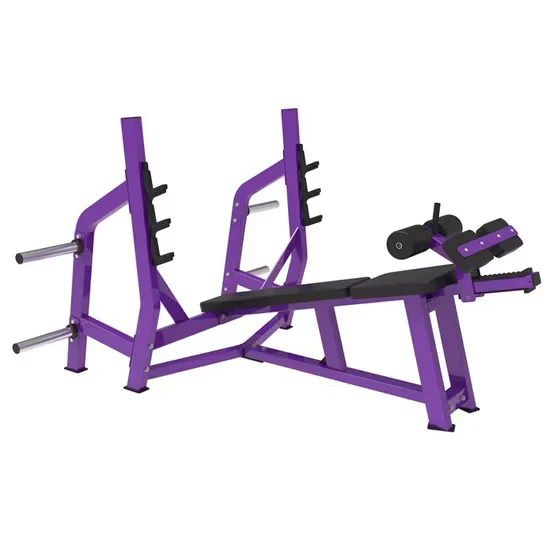
Adjustable Incline Decline Bench, 50×100×3mm Frame Tube, 230kg Net Weight — engineered with 3mm wall thickness to resist deflection under heavy pressing loads and manual adjustment mechanism for repeated daily repositioning in commercial environments. Each unit undergoes individual load testing before shipment, backed by 10-year frame warranty and mill-certified steel traceability.
// Spec Highlights
• Direct from Manufacturer · No Middlemen · Worldwide Shipping
01
// Material
Imported Solid Wood
Premium hardwood frames sourced for density and visual warmth.
02
// Hardware
Medical-Grade Silent
Whisper-quiet pulleys and springs for clinical environments.
03
// Customization
Appearance OEM
Color, upholstery, and branding tailored to your studio.
04
// Service
Layout Design
Free venue planning for studios and rehab institutions.
Every component is selected for longevity, performance, and aesthetic harmony - from imported hardwood frames to silent medical-grade accessories.
// Features
11-Gauge Frame Steel — 50×100×3mm Q235 steel tubing with mill certification traceable to the coil, engineered to resist flex under heavy pressing loads.
| Parameter | Value |
|---|---|
| Product Type | Adjustable Bench |
| Frame Tube Size | 50×100×3mm |
| Frame Steel | 11-gauge industrial steel |
| Welding Type | Robotic MIG continuous weld |
| Powder Coating | 200μm scratch-resistant |
| Product Dimensions | 1400×670×490 mm |
| Net Weight | 230 kg |
| Adjustment Positions | Incline, Flat, Decline |
| Material | Iron |
| Power Source | Manual |
| Folded | Unfolded |
| Upholstery Options | Standard or high-density options |
| Color Options | Customized |
| Certification | RoHS, ISO 9001, CE |
| Warranty | 10-year frame warranty |
| Facility Type | Typical Use |
|---|---|
| Commercial gym free weight zone | Dumbbell and barbell pressing, accessory lifts |
| Hotel fitness center | Multi-angle pressing and seated exercises |
| University strength and conditioning room | Athlete pressing work and hypertrophy training |
| Community fitness center | General strength training for adult members |
A 3mm wall on 50×100mm tubing holds its line where lighter gauge steel deflects under load.
Benches labeled "commercial grade" often ship with vague steel specifications — no gauge number, no mill cert, no way to verify what’s actually under the powder coat. In a high-traffic free weight zone, that ambiguity becomes visible fast. Thin-wall tubing bends under repeated heavy dumbbell pressing, spot-welded pivot joints crack at the adjustment ladder, and the bench gets pulled from the floor within a year. [NEED_CITE: EN 957 structural requirements for stationary training equipment] When a facility replaces benches annually, the procurement cost doubles while members work around broken stations. This adjustable incline decline bench uses verifiable 50×100×3mm steel and continuous robotic MIG welding at every pivot point to eliminate that cycle.
A commercial adjustable incline decline bench covers pressing movements across three planes — incline for upper chest and anterior deltoid, flat for overall pectoral development, and decline for lower chest emphasis. In a strength floor layout, it sits between dumbbell racks and plate-loaded or selectorized chest stations, filling the gap where free weight pressing requires adjustable support. For facilities running high member density, multiple benches positioned with adequate clearance on all sides allow simultaneous use without plate-loading interference. The 1400×670mm footprint fits standard commercial spacing, accommodating users of varying torso lengths across the full incline-to-decline range.
When a member loads heavy dumbbells and drops into a decline press, the frame absorbs off-center impact through the seat rail and adjustment ladder simultaneously. [NEED_CITE: weld classification and fatigue performance in structural steel] Repeated daily use means hundreds of adjustment cycles per week — pins pulled, backrest dropped, ladder re-engaged — each cycle stressing the pivot welds. Sweat and cleaning chemicals attack the powder coat at contact points, while the upholstery compresses under body weight and dumbbell stabilization forces. The seat and back pad junction takes the heaviest wear, where moisture penetration and vinyl splitting start first in commercial environments.
The 50×100mm rectangular cross-section provides a higher moment of inertia in the direction of pressing load compared to square tubing of equivalent weight, meaning it resists bending more effectively along the bench’s primary stress axis. The 3mm wall thickness sets a deflection threshold well above what typical dumbbell pressing generates, even at the upper end of commercial loading. Continuous robotic MIG welding eliminates the heat-affected zone gaps inherent in spot welding, distributing stress across the full joint length rather than concentrating it at discrete points. [NEED_CITE: robotic versus manual MIG weld penetration in structural joints] The 200μm powder coating, applied after sandblasting, provides consistent coverage at weld seams where corrosion typically starts, extending the visible life of the frame in humid or heavily cleaned environments.
A thinner wall tube saves material cost upfront but deforms under sustained loading, creating a bench that wobbles during use and requires frame replacement rather than simple part swaps. Spot-welded adjustment ladders pass initial inspection but fail progressively — a crack starts at one weld point, shifts load to adjacent spots, and cascades through the joint within months of commercial use. Low-density foam compresses permanently, leaving a pad that no longer supports proper positioning and must be replaced entirely. [NEED_CITE: foam density and compression set in commercial upholstery] When replacement upholstery is unavailable from the original manufacturer, the entire bench becomes disposable.
The 11-gauge frame steel comes with mill certification traceable to the coil, so you can verify the material grade on every unit received. Robotic MIG welding produces continuous weld lines at the adjustment pivot — no spot-weld weak points to inspect or monitor over time. Every bench is load-tested before shipment, not sampled from a batch. The 200μm industrial powder coating resists chipping at high-contact points where plates and dumbbells touch the frame. A 10-year frame warranty backs the structural specification. For facility planning, the 1400×670mm footprint is compatible with standard free weight zone spacing, and 2D-3D CAD layout support is available to confirm clearance and workflow around each station. OEM customization covers frame color, upholstery material, and logo application to match facility branding.
Provide your free weight zone square footage and current equipment list to receive a 2D-3D layout confirming bench placement and safe clearance around each station. Specify expected daily user volume so we can confirm the structural grade matches your traffic pattern. Identify the body size range of your member population to verify the adjustment positions cover the full spectrum. Indicate any custom requirements — frame color, upholstery grade, or logo placement — for a complete specification quote.
Q: How do I distinguish a commercial-grade adjustable bench from a light-commercial one?
A: Request the frame tube dimensions and wall thickness in writing — a genuine commercial adjustable bench specifies exact measurements like 50×100×3mm rather than vague terms. Check the welding method at pivot points; continuous robotic MIG welds indicate commercial intent, while spot welds suggest cost-cutting. Ask for mill-certified steel documentation that traces the material grade back to the source coil.
Q: What frame specification is needed for safe heavy dumbbell pressing?
A: Heavy dumbbell pressing generates off-center loads that test both tube rigidity and weld integrity. An 11-gauge frame with 50×100mm rectangular tubing and a minimum 3mm wall thickness provides the necessary deflection resistance. The welding at the adjustment ladder and seat rail junctions must be continuous rather than spot-welded to distribute stress across the full joint under repeated loading cycles.
Q: How does the adjustment mechanism type affect long-term stability?
A: Ladder-and-pin mechanisms rely on weld continuity at each engagement point — if spot-welded, individual rungs fail progressively under repeated adjustment cycles. A pin that engages a continuously welded ladder distributes force across the full joint, maintaining positional stability over thousands of cycles. The pin diameter and engagement depth also determine whether the bench develops lateral play over time.
Q: What upholstery specification prevents splitting in daily commercial use?
A: Commercial environments require high-density foam that resists compression set and vinyl thick enough to withstand repeated body contact and cleaning chemicals. Confirm that replacement pads are available from the manufacturer, because when upholstery is proprietary or discontinued, a split pad forces full bench replacement. Stitching pattern and edge sealing also determine wh*
Premium aesthetics meet quiet operation for boutique studio environments.
Medical-grade silence and precision for sports & postpartum recovery.
Furniture-grade craftsmanship for premium residential installations.
Compact premium setups for one-on-one and small-group training.
Aesthetic Pilates integration for hybrid wellness studio programming.
Multi-unit deployment with instructor-grade reliability for certification programs.
Tell us about your project. Our team will respond within 24 hours with pricing, customization options, and shipping details.
// Sales Director
William
+86 132 2531 1800
// Export Manager
Bella
+86 198 5412 8032
william@bickfit.com