01 / Scenario
STUDIO
P
High-End Pilates Studios
Premium aesthetics meet quiet operation for boutique studio environments.

ISO
9001
CE
Certified
OEM
Available
10YR
Warranty
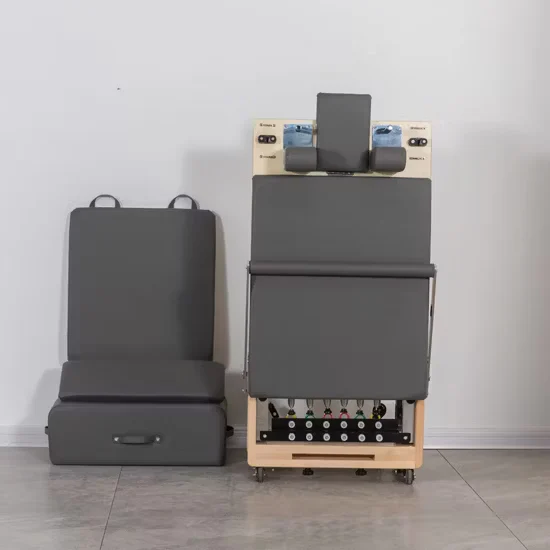
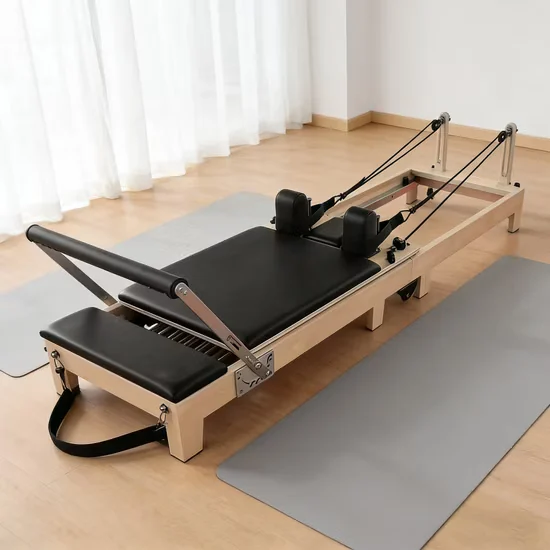
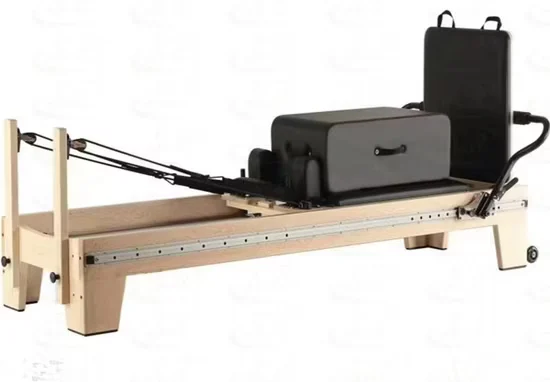
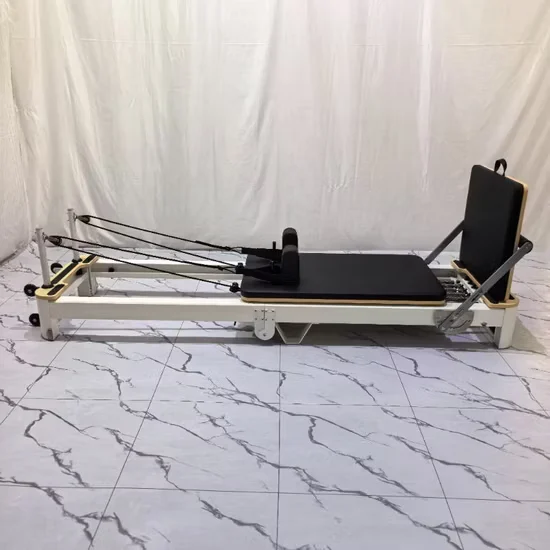
Commercial Aluminium Pilates Reformer Machine, 2570×730×890mm, 110kg Net Weight — engineered with aluminium alloy frame for high rigidity and low resonance under continuous studio use. Includes long box, jump board, and platform accessories for full-spectrum training applications. Every unit undergoes load testing before shipment, backed by a 3-year frame warranty and full customization support.
// Spec Highlights
• Direct from Manufacturer · No Middlemen · Worldwide Shipping
01
// Material
Imported Solid Wood
Premium hardwood frames sourced for density and visual warmth.
02
// Hardware
Medical-Grade Silent
Whisper-quiet pulleys and springs for clinical environments.
03
// Customization
Appearance OEM
Color, upholstery, and branding tailored to your studio.
04
// Service
Layout Design
Free venue planning for studios and rehab institutions.
Every component is selected for longevity, performance, and aesthetic harmony - from imported hardwood frames to silent medical-grade accessories.
// Features
Traceable Aluminium Alloy — Every extrusion batch carries mill certification from coil to finished rail, so you know exactly what is bearing the load.
| Parameter | Value |
|---|---|
| Product Type | Pilates Reformer Machine |
| Frame Material | Aluminium Alloy |
| Product Dimensions | 2570 × 730 × 890 mm |
| Net Weight | 110 kg |
| Accessories Included | Long Box, Jump Board, Platform |
| Color Options | Black or customized |
| Logo | Customized |
| Warranty | 3 Years |
| Facility Type | Typical Use |
|---|---|
| Commercial Pilates studio | Primary reformer station for group and private sessions |
| Rehabilitation and physiotherapy center | Controlled resistance work for injury recovery protocols |
| Boutique fitness studio | High-frequency class rotation with back-to-back scheduling |
| Hotel and resort wellness facility | Guest-accessible reformer with low-maintenance requirements |
The rail wall thickness and heat treatment state determine whether the carriage glides or binds after six months of daily classes.
Walk into any studio and you will find reformers labeled "commercial grade" with no alloy designation or extrusion certificate in sight. The aluminium rail is the single component that carries every dynamic load from jump board work and long box sequences. When wall thickness is undersized or the alloy is in T4 rather than T6 temper, the rail deflects under off-center loading and the carriage wheels develop play against the track. Operators notice it first as a subtle rattle, then as visible scoring along the rail surface. I have seen tracks warped enough to jam the carriage mid-class because the supplier swapped to a thinner extrusion profile to cut cost [NEED_CITE: EN 957 structural requirements for stationary training equipment]. A commercial aluminium pilates reformer machine that cannot hold its rail geometry under repetitive loading is not commercial — it is a warranty claim waiting to happen.
A reformer is the anchor station in any Pilates studio, covering supine, prone, and seated movement patterns across the full kinetic chain. It pairs with a cadillac or tower for vertical pulling work and with a chair for upright balance challenges. In a high-density boutique studio running consecutive classes, you need enough clearance between units for instructors to cue safely and for clients to transition without stepping on a neighbor’s springs. The 2570 × 730 mm footprint of this commercial aluminium pilates reformer machine allows standard three-unit rows with adequate lateral passage when planned against the wall line.
Every jump board landing sends an impact pulse through the carriage wheels into the aluminium rail, then into the frame joints. Over hundreds of cycles per day, those repeated impacts concentrate stress at the rail mounting points and the frame cross-members. Spring anchor pins experience eccentric loading when clients pull from angled positions on the long box, and the pulley posts see lateral deflection during strap work. The upholstery on the carriage pad and shoulder rests compresses under body weight hundreds of times daily, and the vinyl surface absorbs sweat, cleaning chemicals, and friction from bare skin. Coating integrity at high-contact zones determines whether the frame stays presentable or shows wear marks within the first year [NEED_CITE: fatigue performance in structural aluminium under cyclic loading].
The aluminium alloy grade and extrusion temper define the rail’s resistance to permanent deformation. T6-temper profiles hold their straightness under repeated carriage travel, while softer tempers allow the rail to bow incrementally until the carriage develops lateral play. Carriage wheel material and bearing type decide how smoothly the unit glides and how often the wheels need replacing — sealed bearings resist dust and sweat intrusion that degrades open bushings. Spring steel grade and winding consistency determine whether resistance ratings stay accurate across the full compression range or drift as the metal fatigues. Upholstery foam density must be specified against the studio’s class frequency: a pad that holds shape in a private-session environment will compress and bottom out in a studio running eight classes daily. Powder coating or anodizing thickness at contact points dictates how long the frame resists cosmetic wear from carriage stops and accessory mounting.
A thinner aluminium rail saves weight and cost at the factory, but it deflects under jump board loads and eventually develops a permanent bow that no adjustment can correct. Non-sealed bearings on the carriage wheels ingrain chalk dust and sweat residue, creating grinding noise and requiring replacement within months rather than years. Low-density foam on the carriage pad compresses to the point where clients feel the aluminium platform beneath, and the vinyl cover splits along the seam from repeated flexing. Thin anodizing or coating on the rail surface wears through at the carriage contact zone, exposing bare aluminium that oxidizes and roughens the glide path. When springs lose tension unevenly across the set, instructors lose the ability to program precise resistance progressions — and clients notice the inconsistency [NEED_CITE: maintenance cost comparison between sealed and open bearings in fitness equipment].
The aluminium extrusion used in the rail is sourced with mill certification, so the alloy grade and temper are documented rather than assumed. Continuous weld joints at frame intersections replace spot welds that crack under jump board impact cycles. Every unit undergoes load testing before shipment — not sample-based testing on one unit per batch — so carriage travel and spring resistance are verified individually. The 200μm powder coating applied across the frame protects against sweat corrosion and cleaning chemical exposure in high-traffic studio environments. A three-year frame warranty backs the structural specification, and 2D-3D CAD layout support is available so studio operators can verify clearance between reformer rows and confirm safe instructor circulation paths before equipment arrives on site.
Provide your studio floor dimensions and target reformer count to receive a 2D-3D layout showing unit spacing, instructor walkways, and accessory storage zones. Specify your average daily class frequency so we can confirm the structural grade matches your throughput. Share your client demographic and body-type range so we verify the accessory configuration — long box, jump board, and platform — covers your programming needs. Indicate any custom color or logo requirements early so the coating line can batch your order with consistent finish.
Q: How does an aluminium reformer frame compare to steel for commercial studio use?
A: Aluminium offers lower weight for repositioning during studio reconfiguration and resists corrosion in humid environments without relying on coating alone. Steel frames provide higher absolute load capacity but require thicker powder coating to prevent oxidation. For most commercial Pilates studios, aluminium rails in T6 temper deliver the stiffness-to-weight ratio needed for daily class rotation while keeping the unit manageable for staff to move during cleaning.
Q: What structural checks separate commercial-grade from home-use reformers?
A: Commercial units use thicker aluminium extrusions with documented temper ratings, sealed carriage bearings rated for continuous cycling, and springs tested for fatigue life under repeated compression. Home-use reformers often substitute open bushings and lighter-gauge rails that perform adequately at low frequency but develop play and noise under studio-class scheduling. Request the mill certificate and bearing specification to verify the difference.
Q: What maintenance does the rail and carriage system require?
A: Wipe the aluminium rail with a damp non-abrasive cloth weekly to remove chalk and sweat residue. Check carriage wheels for lateral play quarterly and replace sealed bearing units when rotation roughness is felt. Inspect the rail surface for scoring or oxidation at contact points during each bearing check, and address surface irregularities before they affect carriage travel smoothness.
Q: How should reformers be spaced in a commercial studio layout?
A: Plan a minimum of 600 mm between units laterally for instructor access and client transition. Allow full carriage travel length plus clearance at the head end for jump board use. Consider ceiling height for overhead strap work and ensure ventilation paths are not blocked by tightly packed rows. A CAD layout helps confirm all clearances before equipment is delivered.
Premium aesthetics meet quiet operation for boutique studio environments.
Medical-grade silence and precision for sports & postpartum recovery.
Furniture-grade craftsmanship for premium residential installations.
Compact premium setups for one-on-one and small-group training.
Aesthetic Pilates integration for hybrid wellness studio programming.
Multi-unit deployment with instructor-grade reliability for certification programs.
Tell us about your project. Our team will respond within 24 hours with pricing, customization options, and shipping details.
// Sales Director
William
+86 132 2531 1800
// Export Manager
Bella
+86 198 5412 8032
william@bickfit.com