01 / Scenario
STUDIO
P
High-End Pilates Studios
Premium aesthetics meet quiet operation for boutique studio environments.
ISO
9001
CE
Certified
OEM
Available
10YR
Warranty
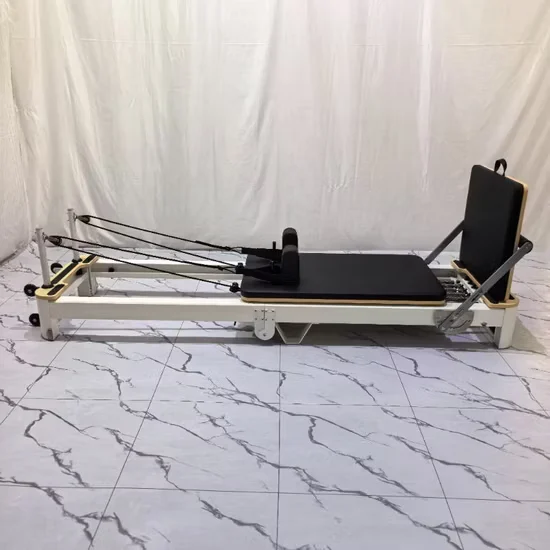
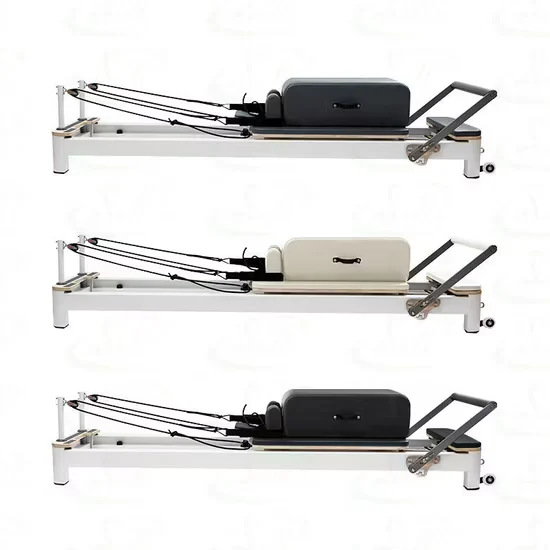
Pilates Reformer, Aluminum Frame, 2570×730mm, 90kg Net Weight — extruded aluminum structure eliminates rust and rail binding, maintaining glide consistency under continuous studio rotation; integrated quick-swap interface for long box, jump board, and platform supports rapid class turnover without tooling. Every unit undergoes carriage load testing and spring fatigue verification before shipment, backed by a 3-year frame warranty and full OEM customization.
// Spec Highlights
• Direct from Manufacturer · No Middlemen · Worldwide Shipping
01
// Material
Imported Solid Wood
Premium hardwood frames sourced for density and visual warmth.
02
// Hardware
Medical-Grade Silent
Whisper-quiet pulleys and springs for clinical environments.
03
// Customization
Appearance OEM
Color, upholstery, and branding tailored to your studio.
04
// Service
Layout Design
Free venue planning for studios and rehab institutions.
Every component is selected for longevity, performance, and aesthetic harmony - from imported hardwood frames to silent medical-grade accessories.
// Features
Aluminum Extrusion Integrity — extruded alloy rails resist corrosion and maintain glide alignment under daily studio rotation.
| Parameter | Value |
|---|---|
| Product Type | Pilates Reformer |
| Model NO. | SRY-12 |
| Frame Material | Aluminum |
| Color | White (customization available) |
| Product Dimensions | 2570 × 730 × 270 mm |
| Net Weight | 90 kg |
| Included Accessories | Long Box / Jump Board / Platform |
| Logo | Customized Is Allowed |
| Target User | Adult / Unisex |
| Warranty | 3 Years |
| Facility Type | Typical Use |
|---|---|
| Commercial Pilates studio | Group reformer classes with high daily turnover |
| Boutique Pilates facility | Semi-private sessions requiring quick accessory swaps |
| Rehabilitation & physical therapy center | Controlled movement therapy with adjustable resistance |
| Hotel & resort wellness center | Guest-use Pilates and flexibility programming |
| Commercial fitness club yoga & Pilates zone | Supplemental mind-body offering alongside strength floors |
Extruded aluminum eliminates the rust-induced binding that plagues steel-frame reformers in humid studio environments.
Most reformers marketed as commercial grade rely on thin-walled welded steel frames. In high-humidity studios where sweat, cleaning agents, and constant spring tension converge, those steel rails develop surface oxidation within the first year. That oxidation creates friction points along the carriage travel path, and the result is a reformer that sticks under eccentric loading or develops lateral play that instructors notice immediately during standing series work [NEED_CITE: EN 957 structural requirements for stationary training equipment]. This commercial aluminum Pilates reformer replaces that failure mode entirely by using extruded aluminum profiles that do not oxidize in the same way steel does, keeping the carriage glide consistent across thousands of cycles without rail maintenance.
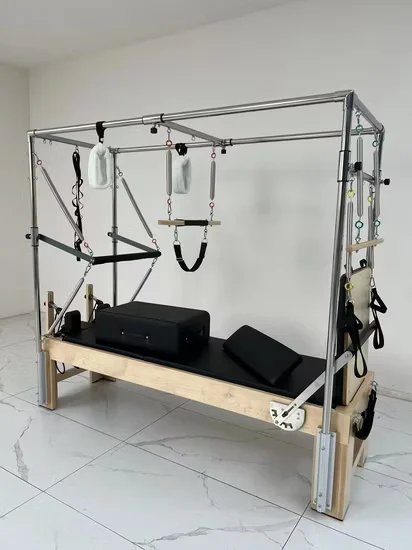
This unit covers the full sagittal and frontal plane movement spectrum — footwork, spinal articulation, standing balance work, and plyometric jump-board sequences. In a studio layout, it pairs naturally with Cadillac towers for decompression work and chair units for unilateral loading. Facilities running group classes at high density benefit from the 2570 mm length and standardized accessory interface, which keeps floor planning predictable. The commercial aluminum Pilates reformer accommodates users across a broad height range without requiring carriage stop adjustments between every client.
The primary load vectors on a reformer are cyclical spring tension and impact loading from jump-board work. Springs cycle through tension and release hundreds of times daily, and the anchor points absorb that fatigue load at the frame connection. Standing series and jump-board sequences introduce dynamic impact forces that test the carriage-to-rail interface [NEED_CITE: fatigue performance standards for cyclically loaded fitness equipment]. Upholstery contact points on the shoulder rests and headrest compress repeatedly under user weight, and the vinyl surface must resist splitting from cleaning chemicals applied between every session. The aluminum frame avoids the corrosion-fatigue interaction that accelerates crack propagation in welded steel joints exposed to the same sweat and humidity environment.
The 2570 mm frame length paired with 90 kg net weight creates a mass-to-length ratio that resists walking or shifting during dynamic jump-board use without requiring floor anchoring. Aluminum extrusion profiles provide consistent cross-sectional geometry along the entire rail length — unlike welded steel assemblies where joint misalignment can introduce tracking deviation. The accessory interface accepts long box, jump board, and platform swaps without tooling, which directly reduces class turnover time in group programming environments. White powder-coated finish on the aluminum surface provides scratch resistance during accessory changes and daily cleaning protocols.
Light-duty reformers save weight by using thinner wall profiles and narrower rail channels. Under repeated spring tension and jump-board impact, those thin sections develop micro-deflection that accumulates into permanent rail deformation over time. Non-sealed carriage bearings ingest dust and cleaning residue, creating grinding that instructors feel through the foot bar before the bearing fails outright [NEED_CITE: bearing contamination and service life in fitness equipment environments]. Low-density upholstery foam compresses permanently within months of commercial use, forcing studios to budget for pad replacement far earlier than expected. Proprietary accessory interfaces on budget units mean that when a jump board breaks, the entire unit sits idle until the manufacturer ships a replacement — if they still stock the part.
The aluminum frame provides corrosion immunity that steel cannot match in humid studio environments, meaning rail alignment stays consistent without preventive sanding or re-lubrication cycles. The integrated accessory system — long box, jump board, platform — uses a standardized quick-swap interface so instructors transition between exercises without searching for tools between classes. The 90 kg net weight anchors the unit during standing and plyometric work, removing the need for floor anchoring in leased commercial spaces where drilling is restricted. Each unit ships with a 3-year warranty covering frame integrity, which signals confidence in the extrusion profile and spring fatigue life. OEM logo and color customization are available with sample approval before production runs, allowing studio branding consistency across equipment purchases.
Provide your studio floor dimensions and planned reformer count to receive a 2D layout drawing with safe clearance spacing between units and instructor circulation paths. Specify your average daily class volume so the structural grade matches your actual traffic pattern. Confirm user height range expectations to verify carriage travel adequacy. Note any branding requirements including logo placement and frame color preferences for sample approval before full order commitment.
Q: How do I verify the aluminum frame is genuinely commercial grade rather than light-duty?
A: Request the aluminum alloy grade designation and extrusion mill certification tied to your production batch. Commercial-grade extrusions use specific alloy compositions with documented yield properties, while light-duty frames use generic profiles without traceable specifications. Verify the net weight relative to frame length — units below a certain mass-to-length threshold will shift during jump-board use and require floor anchoring.
Q: What maintenance difference does an aluminum frame make compared to steel over several years?
A: Steel rails develop surface oxidation in humid studio environments, creating friction points that require periodic sanding and re-lubrication to maintain carriage glide. Aluminum extrusions do not produce iron oxide, so the rail surface stays consistent without corrosion maintenance. This difference becomes significant in studios running group classes where cleaning chemicals and sweat exposure accelerate steel degradation.
Q: How quickly can accessories be swapped between group class exercises?
A: The long box, jump board, and platform use a quick-swap interface that requires no tooling for removal or installation. Instructors transition between accessories during natural class rest intervals without interrupting session flow. This modularity matters in group programming where class choreography alternates between supine, seated, and standing exercise sequences within a single session.
Q: What floor spacing do I need between reformer units for safe instructor access?
A: Plan minimum lateral clearance that allows an instructor to walk between units and observe client form from both sides. The 2570 mm unit length plus required head-end and foot-end clearance determines your total room length requirement. Provide your studio dimensions for a CAD layout that accounts for door swing, storage zones, and emergency exit path compliance.
Premium aesthetics meet quiet operation for boutique studio environments.
Medical-grade silence and precision for sports & postpartum recovery.
Furniture-grade craftsmanship for premium residential installations.
Compact premium setups for one-on-one and small-group training.
Aesthetic Pilates integration for hybrid wellness studio programming.
Multi-unit deployment with instructor-grade reliability for certification programs.
Tell us about your project. Our team will respond within 24 hours with pricing, customization options, and shipping details.
// Sales Director
William
+86 132 2531 1800
// Export Manager
Bella
+86 198 5412 8032
william@bickfit.com