01 / Scenario
STUDIO
P
High-End Pilates Studios
Premium aesthetics meet quiet operation for boutique studio environments.

ISO
9001
CE
Certified
OEM
Available
10YR
Warranty
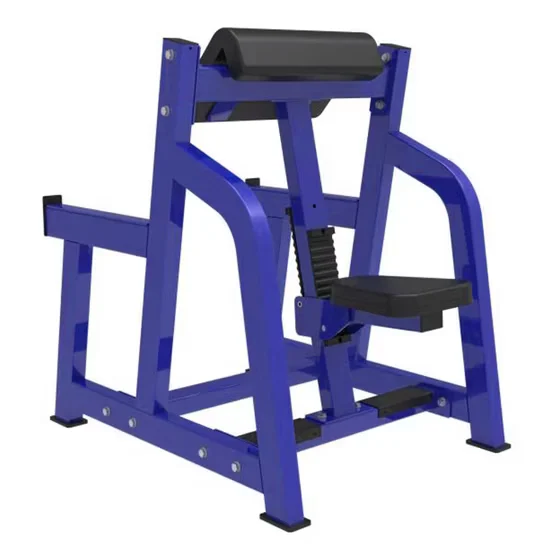
Commercial Back Extension Machine, 1763×1210×1669mm, 42kg Net Weight — constructed with industrial steel frame and robotic MIG continuous welding to eliminate pivot joint failures under repetitive loaded hyperextension. Sealed bearings and reinforced pad mounting ensure structural integrity across high-traffic commercial environments. Every unit undergoes individual load testing before shipment, backed by a 10-year frame warranty for professional gym installations.
// Spec Highlights
• Direct from Manufacturer · No Middlemen · Worldwide Shipping
01
// Material
Imported Solid Wood
Premium hardwood frames sourced for density and visual warmth.
02
// Hardware
Medical-Grade Silent
Whisper-quiet pulleys and springs for clinical environments.
03
// Customization
Appearance OEM
Color, upholstery, and branding tailored to your studio.
04
// Service
Layout Design
Free venue planning for studios and rehab institutions.
Every component is selected for longevity, performance, and aesthetic harmony - from imported hardwood frames to silent medical-grade accessories.
// Features
11-Gauge Frame Steel with Mill Traceability — The main frame uses Q235 industrial-grade steel with 3×3 inch tubing, certified at the coil level to prevent gauge substitution that leads to torsional flex under loaded hyperextension.
| Parameter | Value |
|---|---|
| Product Type | Commercial Back Extension Machine |
| Model NO. | 5054 |
| Frame Steel | 11-gauge, 3×3 inch tube |
| Steel Grade | Q235 industrial steel, mill-certified |
| Welding Type | Robotic MIG continuous weld |
| Exercise Part | Back |
| Product Dimensions | 1763×1210×1669mm |
| Net Weight | 42kg |
| Powder Coating | 200μm scratch-resistant industrial finish |
| Certification | ISO 9001, CE |
| OEM/ODM | Available |
| Warranty | 10-year frame warranty |
| Facility Type | Typical Use |
|---|---|
| Commercial gym strength floor | Dedicated lumbar and posterior chain station |
| Hotel fitness center | Low-maintenance back training for transient guests |
| University athletic facility | High-repetition posterior chain conditioning |
| Rehabilitation and performance center | Controlled loaded hyperextension protocols |
Many commercial back extension machines carry a "commercial grade" label that masks thin-wall tubing and spot-welded pivot joints — connections that pass visual QC but fracture within months of daily loaded use.
Robotic MIG continuous welding at every structural joint eliminates the spot-weld failure mode entirely.
In a back extension machine, the pivot point where the torso pad assembly meets the base frame absorbs repeated eccentric and concentric loading cycles. Spot welds at this junction create stress concentration points; under high-repetition use with progressive plate loading, micro-cracks propagate along the weld toe until the joint separates. The result is not a gradual performance decline but a sudden structural failure mid-repetition. Robotic continuous welds distribute stress along the entire joint length, removing these single-point vulnerabilities and maintaining frame integrity across thousands of loading cycles [NEED_CITE: weld classification and fatigue performance in structural steel joints].
This commercial back extension machine occupies the lumbar extension movement plane, targeting the erector spinae, gluteal complex, and hamstring insertion points through controlled hip-hinge hyperextension. It pairs naturally with Romanian deadlift stations, hip thrust benches, and cable-based pull-through setups to form a complete posterior chain training cluster. The 1763×1210mm footprint fits standard 3×3 inch frame spacing conventions, allowing integration into commercial gym strength floors with predictable traffic flow. The fixed-angle pad configuration accommodates a wide user height range without adjustable hardware that introduces play over time.
A back extension machine endures a distinct loading profile: the user’s body weight plus external plate resistance creates a dynamic eccentric-concentric cycle concentrated at the pivot axis and pad mounting brackets. Unlike steady-state cardio equipment, each repetition introduces impact loading at the bottom of the movement and deceleration forces at the top, generating torsional stress on the frame tube and shear stress at welded joints. The pivot bearing assembly must maintain rotational smoothness despite sweat ingress, chalk dust, and cleaning chemical exposure. Pad mounting bolts experience cyclic preload variation as users of different body weights and torso lengths apply force at varying lever arms. The 200μm powder coating must resist chipping at contact points where users grip the frame for stabilization, and at pad bracket interfaces where micro-movement occurs [NEED_CITE: powder coating adhesion standards under cyclic mechanical stress].
The 3×3 inch 11-gauge frame tube provides a section modulus that resists torsional deflection during loaded hyperextension — a critical factor when users add plates beyond their body weight. Thinner gauge or smaller cross-section tubing will flex visibly under load, creating an unstable platform that compromises movement control and accelerates weld fatigue. Robotic MIG continuous welding produces a uniform weld bead with consistent penetration depth, eliminating the cold joints and incomplete fusion defects common in manual spot welding. The sealed pivot bearing assembly prevents contamination ingress that would otherwise increase rotational friction and require frequent disassembly for maintenance. The 200μm powder coating, applied after sandblast surface preparation, provides a thickness that withstands contact abrasion and chemical exposure without exposing bare steel to corrosion. Pad mounting uses through-bolt hardware with lock nuts rather than self-tapping screws, ensuring the connection remains secure through thousands of load cycles.
Switching from 11-gauge to thinner tubing reduces material cost per unit but introduces visible frame flex under loaded use — a deformation that users perceive as instability and that accelerates fatigue cracking at welded joints. Replacing continuous robotic welds with manual spot welds saves labor time but creates single-point failure locations at the pivot assembly, where structural failure during use carries significant liability exposure. Unsealed pivot bearings degrade rapidly in commercial environments, developing rotational play that requires replacement within the first year of high-traffic use. Low-density pad foam compresses permanently after months of daily use, requiring full replacement rather than surface maintenance. Thin powder coating chips at grip points and pad brackets, exposing bare steel to sweat-induced corrosion that spreads beneath the coating layer. Non-standard pad mounting hardware makes replacement parts unavailable from third-party suppliers, forcing complete frame disassembly or equipment retirement when fasteners fail.
The 11-gauge Q235 steel frame with mill-certified traceability ensures every unit meets the specified structural standard — no batch-to-batch gauge variation that undermines load capacity. Robotic MIG continuous welding at all structural joints eliminates spot-weld failure points at the pivot assembly, the highest-stress location on the machine. Every unit undergoes individual load testing before shipment, verifying structural integrity rather than relying on sample-based inspection protocols. The 200μm industrial powder coating provides long-term surface protection against sweat, cleaning chemicals, and contact abrasion in high-traffic commercial environments. The 10-year frame warranty reflects confidence in the structural engineering and manufacturing quality control. The 1763×1210×1669mm footprint allows precise floor planning with adequate safety clearance between adjacent stations, supported by 2D-3D CAD layout services that optimize strength zone density without compromising user access paths.
Provide your strength zone floor dimensions and equipment list to receive a 2D-3D CAD layout showing optimal station placement and safety clearances for this commercial back extension machine. Specify your average daily user volume so the structural grade can be matched to expected loading frequency and intensity. Indicate the target user population height and weight range to confirm pad positioning and frame dimensions accommodate your member demographics. Custom color, logo placement, and upholstery specifications are available for facility branding alignment.
Q: How does 11-gauge frame steel differ from unspecified "commercial grade" tubing?
A: 11-gauge steel has a defined wall thickness that provides measurable resistance to torsional flex under loaded hyperextension. Unspecified "commercial grade" claims allow manufacturers to substitute thinner tubing that reduces cost but introduces visible frame movement and accelerates weld fatigue at pivot joints. Mill certification with traceable documentation confirms the actual gauge delivered matches the specification.
Q: What welding method prevents pivot joint failure in back extension machines?
A: Robotic MIG continuous welding creates a uniform weld bead along the entire joint length, distributing stress evenly rather than concentrating it at discrete spot-weld locations. This eliminates the single-point failure mode where cracks initiate at spot weld toes under repetitive eccentric loading. Continuous welds maintain structural integrity across thousands of loading cycles without progressive degradation.
Q: How does pivot bearing type affect long-term maintenance requirements?
A: Sealed pivot bearings prevent sweat, chalk dust, and cleaning chemical ingress that would otherwise contaminate the bearing race and increase rotational friction over time. Unsealed bearings or simple bushings require frequent disassembly for cleaning and lubrication, and develop noticeable rotational play within months of commercial use. Sealed designs maintain smooth operation with minimal maintenance intervention.
Q: What pad specifications ensure commercial lifespan under daily use?
A: High-density foam resists permanent compression from repeated loading, maintaining original thickness and support characteristics over extended service life. Through-bolt mounting hardware with lock nuts secures the pad to the frame without the loosening common in self-tapping screw installations. Replaceable upholstery allows surface maintenance without full pad replacement when covering material shows wear.
Q: How should back extension machines be spaced in a commercial strength zone?
A: A minimum 600mm clearance on all sides accommodates user approach, plate loading, and safe exit without interfering with adjacent equipment traffic. The 1763×1210mm footprint of this unit fits standard 3×3 inch frame spacing conventions. Floor planning should account for the full range of motion at the pad assembly to prevent contact with neighboring stations during loaded repetitions.
Premium aesthetics meet quiet operation for boutique studio environments.
Medical-grade silence and precision for sports & postpartum recovery.
Furniture-grade craftsmanship for premium residential installations.
Compact premium setups for one-on-one and small-group training.
Aesthetic Pilates integration for hybrid wellness studio programming.
Multi-unit deployment with instructor-grade reliability for certification programs.
Tell us about your project. Our team will respond within 24 hours with pricing, customization options, and shipping details.
// Sales Director
William
+86 132 2531 1800
// Export Manager
Bella
+86 198 5412 8032
william@bickfit.com