01 / Scenario
STUDIO
P
High-End Pilates Studios
Premium aesthetics meet quiet operation for boutique studio environments.

ISO
9001
CE
Certified
OEM
Available
10YR
Warranty
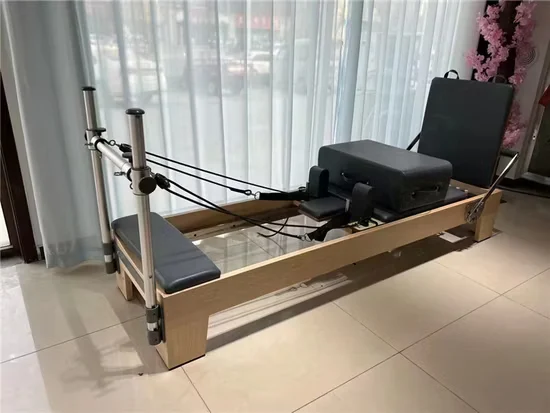
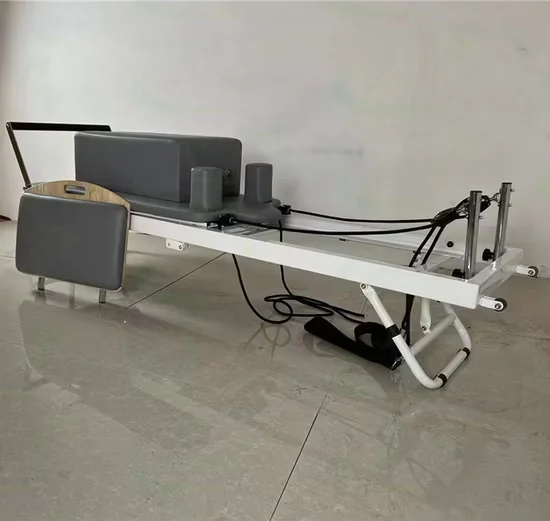
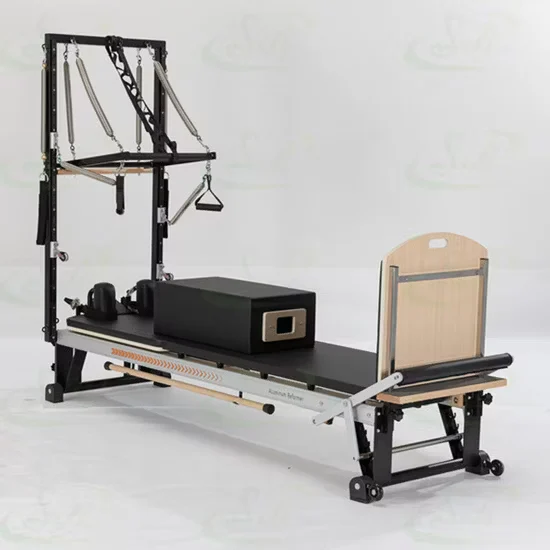
Beech Wood Pilates Reformer, Solid Frame, 2460×730×680mm, 100kg — engineered with solid beech wood for dimensional stability and vibration-free carriage glide under daily studio use. Includes long box, jump board, and platform for full-range programming, with customizable logo options. Backed by a 3-year warranty and 32-point inspection with 100% load testing before shipment.
// Spec Highlights
• Direct from Manufacturer · No Middlemen · Worldwide Shipping
01
// Material
Imported Solid Wood
Premium hardwood frames sourced for density and visual warmth.
02
// Hardware
Medical-Grade Silent
Whisper-quiet pulleys and springs for clinical environments.
03
// Customization
Appearance OEM
Color, upholstery, and branding tailored to your studio.
04
// Service
Layout Design
Free venue planning for studios and rehab institutions.
Every component is selected for longevity, performance, and aesthetic harmony - from imported hardwood frames to silent medical-grade accessories.
// Features
Solid Beech Core — Solid beech wood frame resists carriage rail deflection and maintains parallel alignment through years of studio-grade repetition cycles.
| Parameter | Value |
|---|---|
| Product Type | Pilates Reformer |
| Frame Material | Solid Beech Wood |
| Product Dimensions | 2460×730×680mm |
| Net Weight | 100kgs |
| Color Options | Solid color finish, custom color available on request |
| Accessory Kit | Long Box / Jump Board / Platform |
| Logo | Customized logo allowed |
| Warranty | 3 Years |
| Production Capacity | 80 Pieces/Month |
| Facility Type | Typical Use |
|---|---|
| Commercial Pilates studio | Daily group and private reformer classes with high carriage cycling frequency |
| Boutique fitness studio | Hybrid reformer sessions combining mat and apparatus work in limited floor space |
| Rehabilitation and physical therapy center | Controlled resistance exercises for post-injury mobility and core stabilization |
| Home and personal training | One-on-one instruction with full accessory range for progressive programming |
Solid hardwood prevents the slow rail divergence that laminated frames develop under daily studio loads.
When a reformer frame is built from laminated plywood or hollow-core composites, the layered glue lines absorb moisture unevenly across seasons. Over hundreds of daily carriage cycles, the rails drift out of parallel, and wheels begin to chatter or bind against the track. I have seen an entire batch of reformers returned because a beech frame used traditional joinery without steel-core reinforcement at the slide rail mounting points — the rail deflected under off-center loading, and the rollers seized within months. Solid beech holds its dimensional tolerance because the grain structure runs continuously through the rail anchor, resisting the lateral shear that carriage travel generates [NEED_CITE: wood dimensional stability and moisture equilibrium in load-bearing frames].
This reformer addresses the full sagittal and transverse plane repertoire — footwork series, mid-back pulls, long spine, and jump board plyometrics — all from a single carriage platform. In a studio layout, it pairs with a cadillac or tower unit for spinal articulation work that the reformer carriage alone cannot support. The 2460mm length accommodates users across a wide height range without requiring carriage stop adjustments between clients. Facilities running back-to-back sessions in high-density scheduling benefit from the integrated accessory mounting, since swapping long box and jump board hardware takes seconds rather than requiring a separate station.
The carriage imposes a cyclic eccentric load on the frame rails with every press and return. Each footwork repetition drives force through the wheel-to-rail contact patch, and the jump board adds an impact component that multiplies the static load substantially. The spring anchor points experience repeated pull-out stress at the frame insert, especially when users load the heaviest spring configuration. The beech frame’s density at these anchor inserts determines whether the hardware stays seated or works loose over months of use. Sweat and cleaning solvents also attack the rail surface finish, and any coating failure exposes raw wood to moisture absorption that alters the glide tolerance [NEED_CITE: cyclic fatigue loading on hardwood apparatus frames in commercial fitness environments].
The frame material choice governs three structural behaviors. First, density at the rail mounting face determines how well the wheel track maintains parallelism — beech’s tight grain structure resists the compressive creep that softer species develop under continuous carriage weight. Second, the moisture content at the time of assembly sets the baseline for seasonal movement; wood that ships above equilibrium moisture content will shrink in climate-controlled studios and pull the rails inward. Third, the joinery method at the corner joints — whether mortise-and-tenon, doweled, or steel-reinforced — decides how the frame handles the torsional load when a user presses asymmetrically on the carriage. The solid color finish seals the surface against humidity exchange, and the accessory mounting points rely on bolt engagement depth into solid grain rather than particle board core.
Reformers built on composite cores save weight and material cost upfront but introduce failure modes that surface only after warranty claims accumulate. A veneered MDF frame looks identical to solid beech in a showroom photograph, yet the rail anchor inserts pull free from the composite core under repeated spring tension. Once the rail loses parallelism, carriage wheels develop flat spots from scrubbing against the misaligned track, and replacement wheels become a recurring consumable cost. Non-standard mounting hardware on budget frames means that when an accessory bracket fails, the studio cannot source a replacement bolt with the correct thread engagement. Thin surface finishes chip at the long box contact edge, exposing the substrate to moisture that accelerates delamination [NEED_CITE: comparative failure rates of solid wood versus composite frame apparatus in commercial studios].
The solid beech frame provides a dimensionally stable base that maintains carriage glide consistency across seasonal humidity shifts in climate-controlled studio environments. The integrated accessory kit — long box, jump board, and platform — eliminates the need to source and store separate components, keeping the floor layout clean between sessions. The three-year warranty reflects confidence in the frame’s fatigue resistance under daily commercial cycling. Custom logo application allows studio branding without compromising the structural finish. The 80-piece monthly production capacity supports multi-unit studio buildouts with consistent lead times. Facilities planning a full reformer floor can request 2D layout drawings to verify unit spacing against safe carriage extension clearance [NEED_CITE: EN 957 structural requirements for stationary training equipment].
Provide your studio floor dimensions and the total number of reformer stations planned so that a 2D-3D layout can confirm unit spacing and instructor circulation paths. Specify the expected daily session volume per unit to verify that the frame construction grade matches your traffic profile. Indicate the user population — clinical rehab patients, group class participants, or athletic performance clients — to confirm the accessory kit covers your programming requirements. Note any branding requirements including logo placement and color matching to existing studio finishes.
Q: How can I verify that a reformer frame is solid beech rather than veneer over composite?
A: Inspect the end grain at an exposed joint or mounting point. Solid beech shows continuous grain lines running through the full cross-section, while veneer reveals a thin wood layer over a uniform particle or MDF core. Request the manufacturer’s wood species certificate and moisture content reading at assembly, which documents the material origin and confirms the frame was built at equilibrium moisture for dimensional stability.
Q: What determines whether the carriage will glide smoothly after years of daily use?
A: Glide consistency depends on rail parallelism maintained by frame density, wheel material hardness matched to the rail finish, and bearing quality inside each wheel. Solid beech resists the compressive creep that causes rails to diverge over time. If the wheel material is too hard for the rail surface, it creates chatter; too soft and the wheels develop flat spots. Sealed bearings prevent dust and cleaning residue from entering the wheel hub.
Q: How does spring configuration affect the feel and longevity of the resistance system?
A: Spring gauge and coil count determine the resistance progression — lighter springs offer a gradual increase suitable for rehabilitation, while heavier springs provide the linear load profile that athletic users expect. The anchor hardware at each spring mounting point must be rated for repeated pull cycles without loosening from the frame insert. Request spring fatigue test data to confirm the hook and frame insert withstand your daily session volume.
Q: Are the long box, jump board, and platform interchangeable with other reformer brands?
A: Accessory compatibility depends on mounting point spacing, bolt thread specification, and load rating at each attachment interface. This reformer’s accessories are engineered for its specific frame geometry and hardware configuration. Before mixing components across brands, verify that the bolt engagement depth and shear rating at the mounting insert meet the load requirements of your intended exercises, particularly for jump board plyometrics.
Q: What does the three-year warranty cover on a commercial beech wood pilates reformer?
A: The warranty covers structural frame integrity against deformation, carriage rail parallelism, and hardware failure under normal commercial use. Consumable components including springs, upholstery, and wheel bearings follow a separate replacement schedule based on usage volume. Confirm the specific warranty terms for each subsystem and the documentation required when filing a claim, including maintenance records and usage logs.
Premium aesthetics meet quiet operation for boutique studio environments.
Medical-grade silence and precision for sports & postpartum recovery.
Furniture-grade craftsmanship for premium residential installations.
Compact premium setups for one-on-one and small-group training.
Aesthetic Pilates integration for hybrid wellness studio programming.
Multi-unit deployment with instructor-grade reliability for certification programs.
Tell us about your project. Our team will respond within 24 hours with pricing, customization options, and shipping details.
// Sales Director
William
+86 132 2531 1800
// Export Manager
Bella
+86 198 5412 8032
william@bickfit.com