01 / Scenario
STUDIO
P
High-End Pilates Studios
Premium aesthetics meet quiet operation for boutique studio environments.
ISO
9001
CE
Certified
OEM
Available
10YR
Warranty
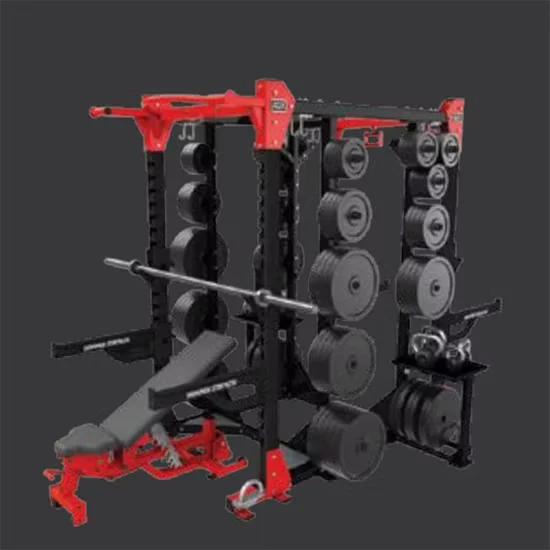
Commercial Full Rack Power Rack, 2089×1330×2815mm Frame, 300kg Net Weight — engineered with industrial steel construction and manual power source for professional gym environments. ISO 9001 and CE certified, available with OEM/ODM customization options. Every unit undergoes unit-by-unit load testing before shipment, ensuring structural integrity for high-traffic commercial use.
// Spec Highlights
• Direct from Manufacturer · No Middlemen · Worldwide Shipping
01
// Material
Imported Solid Wood
Premium hardwood frames sourced for density and visual warmth.
02
// Hardware
Medical-Grade Silent
Whisper-quiet pulleys and springs for clinical environments.
03
// Customization
Appearance OEM
Color, upholstery, and branding tailored to your studio.
04
// Service
Layout Design
Free venue planning for studios and rehab institutions.
Every component is selected for longevity, performance, and aesthetic harmony - from imported hardwood frames to silent medical-grade accessories.
// Features
Mill-Certified Steel — Every tube traces back to the Q235 or Q345 coil certificate, no anonymous commercial-grade claims.
| Parameter | Value |
|---|---|
| Product Type | Power Rack |
| Frame Tube Size | 3×3 inch steel tube |
| Frame Dimensions | 2089×1330×2815mm |
| Frame Steel | Q235 / Q345 industrial steel, mill-certified |
| Welding Type | Robotic MIG continuous weld |
| Loading Type | Plate loaded / Manual |
| Powder Coating | 200μm scratch-resistant finish |
| Net Weight | 300kg |
| Certification | ISO 9001, CE |
| Assembly State | Unfolded |
| OEM/ODM | Available |
| Fit Area | Professional gym and club |
| Transport Package | Plywood case |
| HS Code | 9506911900 |
| Production Capacity | 500 PCS/Month |
| Facility Type | Typical Use |
|---|---|
| Commercial gym strength floor | Primary squat and rack station for daily member traffic |
| University strength and conditioning room | Team-based training cycles with multiple athletes rotating per session |
| Hotel and resort fitness center | Durable anchor station in compact fitness areas with varied user sizes |
| CrossFit box functional zone | Olympic lifts, heavy pulls, and rigging attachments in high-abuse environments |
| Institutional athletic department | In-season and off-season strength programming with verified load capacity |
Thicker wall steel holds alignment where lighter tubes deflect and transfer shear into weld joints.
I have watched racks built with vague "commercial grade" claims start showing visible frame flex around 200kg on the bar. The cross-section tube may look substantial from the outside, but when wall thickness is undersized, the uprights twist during unracking, and that torsional stress concentrates directly at the base welds. After months of this cyclic loading, micro-cracks propagate through spot welds — not because the steel failed, but because the joint geometry could not distribute the force [NEED_CITE: weld classification and fatigue performance in structural steel]. A commercial full rack power rack machine must resist that torsion before it ever reaches the weld line, and that starts with steel gauge and tube dimensions that match the load path.
This unit covers the foundational movement plane — squats, presses, rack pulls, and overhead work — making it the anchor that every surrounding station orbits around. In a high-density commercial layout, a commercial full rack power rack machine pairs with plate-loaded iso-lateral machines for accessory work and cable stations for isolation movements, creating a flow where athletes move from compound to targeted exercises without crossing traffic lanes. The footprint accommodates users across a wide height range, and the upright spacing supports standard Olympic bar clearance. Facilities running six or more hours of daily strength traffic benefit most from this configuration, as the frame mass and footprint stability prevent any perceptible sway during dynamic barbell movements.
Static holds during paused squats apply sustained compressive force through the uprights, while kipping and dynamic movements generate shock loads that travel from the base through every welded connection. In a busy commercial gym, a single station may see hundreds of loading cycles per day, each one demanding the weld lines absorb and redistribute stress without developing hot spots. The continuous MIG weld pattern eliminates the cold joints that spot welding leaves between contact points, keeping the load path uninterrupted. At the contact zones — J-hooks, safety arm receivers, pull-up bar mounts — the 200μm powder coating resists abrasion from repeated metal-on-metal engagement and exposure to cleaning chemicals and sweat residue [NEED_CITE: EN 957 structural requirements for stationary training equipment].
The 3×3 inch tube cross-section paired with industrial-gauge wall thickness sets the deformation threshold well above typical gym loads, meaning the uprights maintain plumb alignment through years of asymmetric barbell placement. Robotic MIG welding produces continuous bead lines along every structural joint, removing the intermittent weak points that hand-welded or spot-welded frames introduce at stress concentration areas. Before powder coating, the frame undergoes sandblast pre-treatment to remove mill scale and create mechanical adhesion for the 200μm finish — without that step, coating delamination begins at high-contact areas within the first year. The 2815mm height clears standard pull-up bar clearance requirements while keeping the center of gravity low enough that the 1330mm depth provides adequate anti-tip resistance without requiring floor anchoring in most installations. The 300kg net weight reflects the actual steel mass in the frame rather than filler or oversized cosmetic panels.
Undersized tube walls may pass a static showroom load test but develop visible flex under repeated eccentric loading, which accelerates fatigue at every connection point. Spot-welded joints that look acceptable on visual inspection concentrate stress into small contact zones, and those zones crack under the cyclic impact of dropped bars and aggressive reracking. Non-sealed bearings in pulley attachments — if any are added — develop play within months as gym dust and chalk infiltrate the race, requiring frequent replacement or generating cable tracking issues. Thin powder coatings chip at J-hook contact surfaces, exposing bare steel to humidity and sweat-borne corrosion that spreads under the surrounding finish.
The Q235 and Q345 steel sourcing with mill-certified coil documentation means every tube is traceable to its heat lot, eliminating the guesswork of generic material claims. Robotic MIG welding runs continuous beads along structural joints, which I have compared side-by-side against spot-welded returns where cracking propagated from unwelded gaps. Each unit undergoes load testing before crating — not sample-based batch testing, but individual verification. The 200μm industrial powder coating with sandblast pre-treatment survives repeated bar contact and cleaning cycles without exposing substrate. A 10-year frame warranty backs the structural steel, and 2D-3D CAD layout support ensures the 2089×1330mm footprint integrates with safe clearance zones between adjacent stations.
Provide your strength zone square footage and existing equipment list to receive a 2D-3D layout showing clearance zones and traffic flow around this unit. Specify your estimated daily user volume so the structural grade and finish system match your operational intensity. Confirm the height and limb-length range of your primary user population to verify safety arm and J-hook positioning covers the full range. Note any custom color, logo, or upholstery requirements if the unit will anchor a branded training area.
Q: How do you tell a true commercial power rack from a light-commercial one?
A: Request the actual steel gauge and wall thickness documentation rather than accepting a generic commercial-grade label. Inspect weld lines for continuous bead patterns without gaps or cold joints. Verify the powder coating thickness specification and whether each unit is individually load tested before shipment or only sample-tested by batch.
Q: What does steel gauge and tube size mean for long-term durability?
A: Larger tube cross-sections and thicker walls resist torsional deflection under asymmetric barbell loads, preventing stress migration into weld joints. When uprights flex under load, the cyclic deformation fatigues connection points over time, which is why industrial facilities specify traceable steel with documented wall dimensions rather than visual estimates.
Q: How does welding quality affect rack safety during heavy lifts?
A: Continuous robotic MIG welds distribute force along the entire joint length, eliminating the localized stress concentrations that spot welds create. Under dynamic loading — such as a dropped bar or aggressive reracking — spot-welded connections experience shear forces at discrete points, which accelerates crack initiation and propagation through the heat-affected zone.
Q: What clearance and spacing ensure safe multi-station layouts?
A: Each rack needs sufficient depth clearance behind for barbell travel during squats and pulls, plus lateral spacing that allows a loaded bar to extend without crossing into adjacent station zones. A detailed CAD layout accounts for the actual footprint, bar overhang, and user movement patterns to prevent traffic conflicts during peak hours.
Premium aesthetics meet quiet operation for boutique studio environments.
Medical-grade silence and precision for sports & postpartum recovery.
Furniture-grade craftsmanship for premium residential installations.
Compact premium setups for one-on-one and small-group training.
Aesthetic Pilates integration for hybrid wellness studio programming.
Multi-unit deployment with instructor-grade reliability for certification programs.
Tell us about your project. Our team will respond within 24 hours with pricing, customization options, and shipping details.
// Sales Director
William
+86 132 2531 1800
// Export Manager
Bella
+86 198 5412 8032
william@bickfit.com