01 / Scenario
STUDIO
P
High-End Pilates Studios
Premium aesthetics meet quiet operation for boutique studio environments.
ISO
9001
CE
Certified
OEM
Available
10YR
Warranty
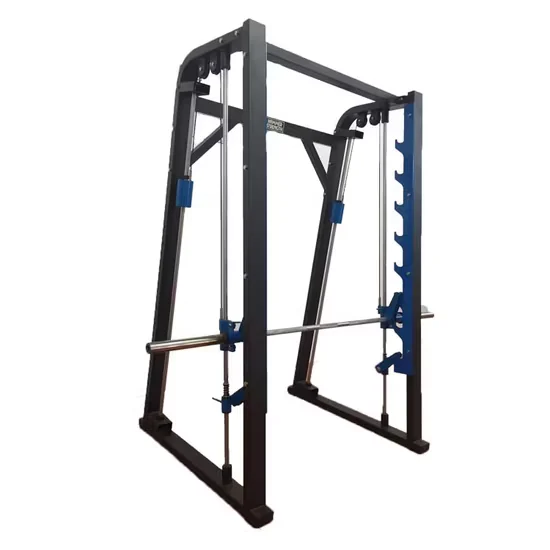
Commercial Smith Machine, 3×3 inch Frame Tube, 215kg Net Weight — engineered with industrial-grade steel construction and guided barbell system for high-traffic strength zones. Continuous robotic MIG welding eliminates spot-weld weak points, while sealed bearings ensure smooth linear movement with minimal maintenance. Every unit undergoes individual load testing before shipment, backed by 10-year frame warranty and professional floor planning support.
// Spec Highlights
• Direct from Manufacturer · No Middlemen · Worldwide Shipping
01
// Material
Imported Solid Wood
Premium hardwood frames sourced for density and visual warmth.
02
// Hardware
Medical-Grade Silent
Whisper-quiet pulleys and springs for clinical environments.
03
// Customization
Appearance OEM
Color, upholstery, and branding tailored to your studio.
04
// Service
Layout Design
Free venue planning for studios and rehab institutions.
Every component is selected for longevity, performance, and aesthetic harmony - from imported hardwood frames to silent medical-grade accessories.
// Features
Mill-Certified Frame Steel — every tube in this Commercial Smith Machine traces back to the coil with verifiable Q235/Q345 grade documentation.
| Parameter | Value |
|---|---|
| Product Type | Smith Machine |
| Frame Tube Size | 3×3 inch |
| Steel Grade | Q235 / Q345 industrial steel, mill-certified |
| Welding Type | Robotic MIG, continuous weld lines |
| Loading Type | Guided barbell on linear bearings |
| Bearing Type | Sealed industrial bearings |
| Product Dimensions | 1340 × 2266 × 2384 mm |
| Net Weight | 215 kg |
| Powder Coating | 200μm scratch-resistant, sandblast pre-treated |
| Color Options | Optional |
| Upholstery | Available in standard or high-density options |
| Certification | ISO 9001, CE |
| OEM | Available |
| Warranty | 10-year frame |
| Facility Type | Typical Use |
|---|---|
| Commercial gym strength floor | Primary squat, press, and rack pull station for open gym members |
| University strength and conditioning room | Supervised compound lifts for athletic teams with fixed bar path safety |
| Hotel fitness center | Self-guided full-body training for guests without spotter availability |
| Rehabilitation and performance center | Controlled movement path for return-to-training protocols under load |
A Smith Machine lives or dies by how its frame handles off-axis loading.
When a lifter drives unevenly through a squat or press, the guided barbell transfers lateral force directly into the uprights and rail mounts. Machines built with vaguely specified "commercial grade" tubing and spot-welded joints begin to show play within the first year of high-traffic use. The rails develop binding points, the bar no longer glides, and maintenance calls multiply. [NEED_CITE: EN 957 structural requirements for stationary training equipment]
This commercial Smith Machine addresses that failure mode with 3×3 inch frame tubing cut to ±0.1mm tolerance by 6kW fiber laser, paired with robotic MIG welding that produces continuous weld lines along every joint. No spot-weld weak points, no cold joints that crack under repeated eccentric loading cycles.
The Smith Machine covers the primary sagittal plane for squats, presses, rack pulls, and inverted rows. On a strength floor, it complements free-weight power racks by offering a fixed-path alternative for members training alone or learning compound movement patterns. The guided bar path suits high-density gym layouts where spotters are not always available. Its 1340mm width footprint fits standard commercial spacing grids, and the 2384mm height clears most facility ceilings with adequate overhead clearance for pull-up attachments.
A commercial Smith Machine endures three distinct load types across a single operating day: static holds during paused squats, impact loading when bars are returned to catches, and eccentric overload during controlled negatives. The rail mounting points experience the highest cyclic stress, particularly where the bearing housings meet the upright welds. Sealed industrial bearings resist contamination from chalk dust and cleaning solvents that degrade unsealed bushings. The 200μm powder coating, applied over sandblast pre-treatment, withstands repeated contact from barbell knurling and sweat exposure without chipping at high-wear contact points. [NEED_CITE: fatigue performance of welded joints under cyclic loading in fitness equipment]
The 3×3 inch frame tube cross-section provides a high moment of inertia, meaning the uprights resist bending deformation when lateral forces transfer through the guided bar. Steel grade matters as much as tube size — Q235 and Q345 grades offer documented yield thresholds traceable to the mill coil, unlike generic "commercial steel" claims with no verifiable specification. Robotic MIG welding eliminates the inconsistency of manual welds; continuous bead lines distribute stress along the full joint length rather than concentrating it at discrete spot-weld points. Sealed bearings on the guide rails prevent the play that develops when chalk dust and sweat penetrate unsealed bushing surfaces. The sandblast pre-treatment before powder coating ensures adhesion at the molecular level, preventing the flaking that exposes bare steel to corrosion in humid gym environments.
Thin-wall tubing deflects visibly under heavy barbell loads, causing the guide rails to bind and the bar to stutter mid-repetition. Spot-welded joints pass visual inspection at delivery but crack along stress concentration points after months of repeated impact loading, creating liability exposure for gym operators. Unsealed bushings develop play as chalk and moisture infiltrate the guide surface, requiring frequent replacement and generating maintenance downtime. Low-density upholstery compresses permanently within months of commercial use, exposing hard surfaces that deter member use. Coating applied below industrial thickness chips at barbell contact points, allowing sweat-driven corrosion to undermine the frame from the surface inward. [NEED_CITE: comparative maintenance cost of sealed versus unsealed bearing systems in commercial fitness equipment]
The 11-gauge frame steel in this Smith Machine carries mill certification traceable to the originating coil, so operators can verify material grade independently. Robotic MIG welding produces continuous weld lines with no cold joints or spot-weld failures under guided bar impact loading. Every unit undergoes individual load testing before shipment — not sample-based batch testing — so the machine arriving at a facility has documented performance under stress. The 200μm industrial powder coating resists chipping from barbell contact and cleaning chemicals across years of daily rotation. A 10-year frame warranty backs the structural investment. For facility planning, the 1340 × 2266mm footprint integrates with standard commercial spacing grids, and 2D-3D CAD layout support ensures safe clearance distances between adjacent stations.
Provide the strength zone dimensions and current equipment list to receive a 2D-3D floor plan showing how this Smith Machine integrates with existing stations and traffic flow. Specify the expected daily user volume so the structural grade matches the operational demand. Confirm the target user population body size range to validate the bar hook positions and safety catch settings. Indicate any customization requirements including frame color, logo application, or upholstery density preference for OEM branding alignment.
Q: How does frame steel gauge affect Smith Machine performance under heavy loading?
A: Frame gauge determines how much the uprights deflect when lateral force transfers through the guided barbell during off-axis squats or presses. Thicker gauge steel with a larger cross-section resists this deformation, keeping the guide rails aligned and the barbell travel smooth. Machines built with thin-wall tubing develop binding points as the frame distorts under repeated commercial use, requiring increasing maintenance intervention over time.
Q: What is the difference between sealed bearings and bushings on guide rails?
A: Sealed industrial bearings prevent chalk dust, sweat, and cleaning solvents from entering the rolling surface, maintaining smooth barbell travel across years of high-frequency use. Bushings and unsealed bearings allow contaminants to infiltrate the contact surface, developing play and requiring more frequent replacement. For commercial environments operating eight or more hours daily, sealed bearings reduce maintenance intervals and keep the guided bar path consistent.
Q: How should a Smith Machine be positioned within a commercial strength floor layout?
A: Positioning requires adequate lateral clearance for loading plates and safe entry and exit, plus overhead clearance matching the full frame height. The fixed bar path means the machine does not need the wider safety perimeter of a free-weight rack, but adjacent equipment must not obstruct the user movement zone. Floor planning CAD files help verify that spacing between stations meets safe operational distances while maximizing floor density.
Q: What documentation should a buyer request to verify structural claims?
A: Request mill-certified steel grade documentation that traces the frame tubing to the source coil, individual load test records for the specific unit being purchased, and weld inspection reports confirming continuous weld construction rather than spot welding. Certification documents such as ISO 9001 and CE declarations should be current and verifiable. These records distinguish machines with documented structural integrity from those relying on unverifiable marketing claims.
Premium aesthetics meet quiet operation for boutique studio environments.
Medical-grade silence and precision for sports & postpartum recovery.
Furniture-grade craftsmanship for premium residential installations.
Compact premium setups for one-on-one and small-group training.
Aesthetic Pilates integration for hybrid wellness studio programming.
Multi-unit deployment with instructor-grade reliability for certification programs.
Tell us about your project. Our team will respond within 24 hours with pricing, customization options, and shipping details.
// Sales Director
William
+86 132 2531 1800
// Export Manager
Bella
+86 198 5412 8032
william@bickfit.com