01 / Scenario
STUDIO
P
High-End Pilates Studios
Premium aesthetics meet quiet operation for boutique studio environments.

ISO
9001
CE
Certified
OEM
Available
10YR
Warranty
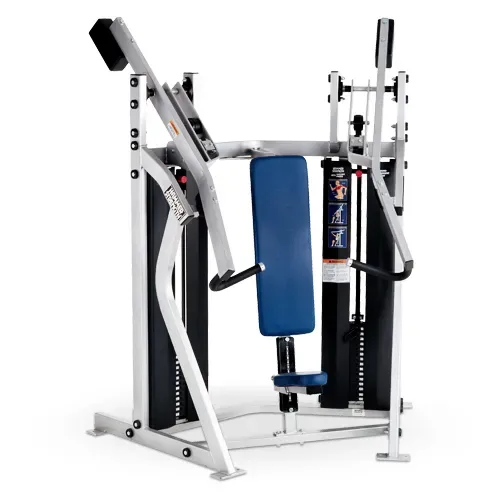
Commercial Selectorized Lateral Raise Machine, Pin-Select Stack, 1050×1506×1300mm — engineered with 3×3 inch frame steel and sealed industrial bearings for play-free shoulder isolation under high-volume use. The aircraft-cable pulley system ensures smooth resistance delivery through converging movement patterns across 58 selectorized models. Every unit undergoes three-stage QC with load testing before shipment, backed by a 10-year frame warranty and mill-certified steel traceability.
// Spec Highlights
• Direct from Manufacturer · No Middlemen · Worldwide Shipping
01
// Material
Imported Solid Wood
Premium hardwood frames sourced for density and visual warmth.
02
// Hardware
Medical-Grade Silent
Whisper-quiet pulleys and springs for clinical environments.
03
// Customization
Appearance OEM
Color, upholstery, and branding tailored to your studio.
04
// Service
Layout Design
Free venue planning for studios and rehab institutions.
Every component is selected for longevity, performance, and aesthetic harmony - from imported hardwood frames to silent medical-grade accessories.
// Features
11-Gauge Traceable Steel — Every tube in this commercial selectorized lateral raise machine traces back to the mill coil with certified Q235/Q345 grade documentation, not vague "commercial grade" claims.
| Parameter | Value |
|---|---|
| Product Type | Selectorized Lateral Raise Machine |
| Frame Steel Gauge | 11-gauge |
| Frame Tube Size | 3×3 inch |
| Steel Grade | Q235 / Q345 mill-certified |
| Welding Type | Robotic MIG continuous weld |
| Loading Type | Pin select weight stack |
| Weight Stack | Up to 150kg |
| Bearing Type | Sealed industrial bearings |
| Pulley System | Aircraft-cable pulley system |
| Powder Coating | 200μm scratch-resistant |
| Product Dimensions | 1050×1506×1300mm |
| Net Weight | 102kg |
| Certification | ISO 9001:2015, CE |
| Warranty | 10-year frame |
| Facility Type | Typical Use |
|---|---|
| Commercial gym strength floor | High-repetition shoulder isolation in peak-hour traffic |
| Hotel and resort fitness center | Guest-accessible shoulder work with minimal supervision |
| University strength and conditioning room | Athletic program shoulder prehab and hypertrophy blocks |
| Rehabilitation and performance center | Controlled lateral deltoid activation under guided load paths |
Continuous robotic MIG welds eliminate the cold joints that propagate fatigue cracks under cyclic lateral loading.
Most equipment labeled "commercial grade" never discloses whether the frame joints are spot-welded or continuously welded. On a selectorized lateral raise machine, the arm pivot and weight stack tower experience repeated off-axis torque every rep. Spot welds pass a visual inspection on day one, then develop micro-fractures within months of high-traffic use [NEED_CITE: weld classification and fatigue performance in structural steel]. When that joint is on a shoulder isolation station, the failure mode is not subtle — the arm develops play, the cable slackens, and the isolation path drifts off the deltoid. I have seen gym owners in Latin America pull machines off the floor after less than a year because the pivot bearings had visible play and the weld seams showed hairline cracks under the powder coat.
This commercial selectorized lateral raise machine targets the lateral deltoid through a fixed converging arc, filling the gap between overhead presses and front raises in a complete shoulder training layout. It pairs logically beside a rear deltoid station and a cable column, giving members a three-plane shoulder circuit without crossing the floor. The footprint suits medium-to-high density commercial layouts where members rotate through stations during peak hours. The seat and pad geometry accommodates a wide range of torso lengths, keeping the pivot axis aligned with the glenohumeral joint for users of varying builds.
Each repetition applies an eccentric load to the pivot shaft as the user decelerates the stack at the bottom of the arc, creating fatigue cycles concentrated at the bearing housing and the weld connecting the tower to the base frame [NEED_CITE: EN 957 structural requirements for stationary training equipment]. In a facility running twelve or more hours daily, that joint endures thousands of micro-impacts per week. The sealed industrial bearings resist dust and humidity ingress that would otherwise accelerate play in unsealed bushings. Aircraft-grade cable runs over matched-diameter pulleys, distributing wear evenly across the strand rather than concentrating fatigue at a single bend point. The 200μm powder coat at cable contact zones resists chipping from repeated cable slap and cleaning chemical exposure.
The 11-gauge, 3×3 inch tube section sets the deflection threshold — when a user loads the stack near maximum and pushes through a slow eccentric, the frame must resist torsional flex that would shift the movement path off the intended arc. Robotic MIG continuous welding means the entire joint perimeter is fused in one pass, removing the start-stop discontinuities that create crack initiation points in manual or spot-welded assemblies. Sealed bearings at every rotation node keep the arm pivot smooth across years of sweat and dust exposure, whereas open bushings develop radial play that degrades isolation quality. The 200μm powder coating, applied over sandblasted steel, provides a scratch-resistant surface at the grip contact points and cable guide zones where cosmetic damage normally accumulates first.
Thin-wall tubing deflects visibly under heavy stack loads, turning a controlled isolation movement into an unstable balance exercise. Spot-welded joints that pass initial inspection become liability points once cyclic loading opens micro-cracks beyond the powder coat surface. Unsealed bearings require scheduled replacement in humid gym environments, adding labor cost and machine downtime that compounds across a full floor of equipment [NEED_CITE: bearing maintenance intervals in commercial fitness environments]. Low-density upholstery compresses permanently within months of daily use, forcing reupholstery or full pad replacement. Underspecified powder coating chips at cable contact zones, exposing bare steel to sweat corrosion that spreads beneath adjacent coating.
The 11-gauge frame with mill-traceable Q235/Q345 steel means you can audit the material certificate against the coil number on any unit. Robotic MIG continuous welds on every joint remove the human inconsistency that creates cold joints in manual welding bays. Every unit undergoes load testing before crating — not sample-based batch testing. The 200μm industrial powder coating survives the contact-point abrasion specific to cable machines. A 10-year frame warranty backs the structural assembly. Floor planning CAD support ensures this station’s 1050×1506mm footprint maintains safe clearance from adjacent machines, accounting for the full arm sweep arc and user entry path.
Provide your strength zone square footage and current equipment list to receive a 2D-3D layout showing safe spacing around this station’s full range of motion. Specify average daily user volume so we can confirm whether the standard bearing and cable specification matches your traffic intensity. Indicate the target user population to verify the seat and pad adjustment range covers your member demographics. State any custom requirements including frame color, logo placement, or upholstery density preference for OEM branding.
Q: How do I tell a true commercial selectorized lateral raise from light-commercial equipment?
A: Request the frame steel gauge with mill certification, not just a "commercial grade" label. Verify the welding is continuous robotic MIG rather than spot-welded. Confirm sealed industrial bearings at every pivot. Check that powder coating thickness meets 200μm at contact zones. True commercial units ship with individual load test records, not sample-based batch reports.
Q: What steel gauge and tube size should a high-traffic shoulder machine use?
A: An 11-gauge frame with 3×3 inch tubing provides the deflection resistance needed when users load near stack capacity and perform slow eccentric repetitions. Lighter gauges will flex torsionally under lateral loads, shifting the movement path and reducing isolation effectiveness over time.
Q: Should I choose selectorized or plate-loaded lateral raise for my facility?
A: Selectorized systems suit high-traffic commercial floors where quick weight changes reduce station turnover time. Plate-loaded units fit strength-focused facilities where users prefer granular loading and do not mind handling plates. Match the loading type to your average session flow and member preference.
Q: How do sealed bearings compare to bushings in a humid gym environment?
A: Sealed industrial bearings prevent sweat, dust, and cleaning moisture from entering the race, maintaining smooth pivot action over years of daily use. Open bushings absorb contaminants that accelerate wear, requiring earlier replacement and creating play that degrades the isolation movement path.
Premium aesthetics meet quiet operation for boutique studio environments.
Medical-grade silence and precision for sports & postpartum recovery.
Furniture-grade craftsmanship for premium residential installations.
Compact premium setups for one-on-one and small-group training.
Aesthetic Pilates integration for hybrid wellness studio programming.
Multi-unit deployment with instructor-grade reliability for certification programs.
Tell us about your project. Our team will respond within 24 hours with pricing, customization options, and shipping details.
// Sales Director
William
+86 132 2531 1800
// Export Manager
Bella
+86 198 5412 8032
william@bickfit.com