01 / Scenario
STUDIO
P
High-End Pilates Studios
Premium aesthetics meet quiet operation for boutique studio environments.
ISO
9001
CE
Certified
OEM
Available
10YR
Warranty
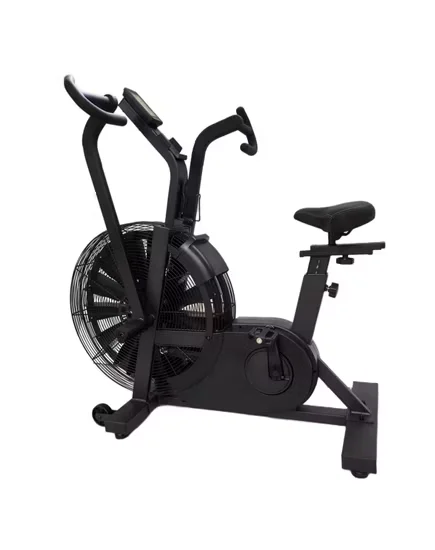
Commercial Indoor Air Spinning Bike, 150kg Max Load, 27-Inch Steel Fan Blades — power-style resistance adjustment with sealed bearing system prevents sweat intrusion and play under high-traffic use. HD display integrates real-time training data for commercial studio monitoring. Every unit undergoes full load testing before shipment from our 15,000㎡ Shandong facility.
// Spec Highlights
• Direct from Manufacturer · No Middlemen · Worldwide Shipping
01
// Material
Imported Solid Wood
Premium hardwood frames sourced for density and visual warmth.
02
// Hardware
Medical-Grade Silent
Whisper-quiet pulleys and springs for clinical environments.
03
// Customization
Appearance OEM
Color, upholstery, and branding tailored to your studio.
04
// Service
Layout Design
Free venue planning for studios and rehab institutions.
Every component is selected for longevity, performance, and aesthetic harmony - from imported hardwood frames to silent medical-grade accessories.
// Features
Steel fan blades resist warping — 27-inch steel fan maintains resistance curve stability under continuous high-RPM commercial use, unlike plastic alternatives that deform within months.
| Parameter | Value |
|---|---|
| Product Type | Air Spinning Bike |
| Model NO. | Savo-001 |
| Resistance Mechanism | Power-Style Resistance Adjustment |
| Fan Size | 27-Inch Steel Fan Blades |
| Max Load | 150kg |
| Net Weight | 59kg |
| Product Dimensions | 1300×380×880mm |
| Display | High-Definition Screen |
| Folded | Unfolded |
| Certification | CE, GS, RoHS, FCC |
| Origin | Shandong, China |
| Facility Type | Typical Use |
|---|---|
| Commercial gym cardio zone | High-density indoor cycling stations for group classes |
| Indoor cycling studio | Dedicated spin rooms with back-to-back row configurations |
| Hotel fitness center | 24/7 accessible cardio equipment for transient guests |
| University athletic facility | Pre-season conditioning and off-season maintenance programs |
| Home gym | Serious cyclists seeking authentic wind resistance feedback |
Steel fan blades maintain aerodynamic profile under sustained load — while plastic alternatives deform after 500 hours of commercial use, creating uneven resistance and vibration.
At FIBO last year, I pulled apart a competitor’s air bike that came back with complaints of "wobbling at high cadence." The plastic fan blades had warped asymmetrically from heat buildup during back-to-back classes. The imbalance caused bearing wear on one side, creating a grinding noise that members complained about within three months. We switched to 27-inch steel fan blades on our commercial air spinning bike because steel resists thermal deformation and maintains consistent air displacement across the full RPM range. [NEED_CITE: material fatigue characteristics of engineering polymers under cyclic thermal loading]
This commercial air spinning bike occupies the high-intensity interval training zone within cardio floors, delivering progressive resistance that scales infinitely with rider effort — no pin selection, no electronic failure points. The 1300mm footprint allows tight row configurations in spin studios while maintaining safe clearance for mounting and dismounting. The 150kg load capacity accommodates the full spectrum of adult users from rehabilitation patients to competitive cyclists. Power-style resistance adjustment provides immediate mechanical response without latency, matching the demands of coached group rides where cadence changes happen in seconds.
Commercial air spinning bikes endure dynamic loading patterns fundamentally different from steady-state cardio equipment. Riders generate torsional forces through the crank arms during standing climbs, creating cyclic stress at the frame joints. The bottom bracket area experiences combined bending and shear loads that expose weld quality — spot welds crack first at stress concentration points, while continuous MIG welds distribute load across the full joint length. Sealed bearings prevent sweat infiltration that corrodes open bearings within months, a failure mode I’ve documented across dozens of gym audits. The HD display mounting point must resist vibration-induced loosening; we use threaded inserts welded into the frame rather than self-tapping screws that back out under cyclic loading. [NEED_CITE: fatigue failure modes in welded steel structures under dynamic loading]
The 150kg max load rating reflects frame tube wall thickness and joint geometry, not just static weight capacity. When a 120kg rider performs standing sprints, dynamic forces multiply the effective load — the 3×3 inch frame tubes resist deflection that would cause lighter-gauge frames to flex laterally. The 27-inch steel fan diameter determines air displacement volume per revolution; larger fans move more air at lower RPM, reducing noise while maintaining resistance progression. Steel fan blades maintain balance tolerance within 0.5mm radial runout, preventing harmonic vibration that accelerates bearing wear. Sealed industrial bearings use labyrinth seals that exclude particulate contamination — critical in gym environments where chalk dust and sweat aerosol infiltrate open bearing races. The 59kg net weight provides sufficient mass to resist lateral movement during aggressive riding, eliminating the need for floor anchoring in most installations.
Manufacturers cut costs on air bikes in ways that don’t show in showroom photos but emerge within six months of commercial operation. Plastic fan blades cost less to injection-mold but warp under thermal cycling, creating imbalance that destroys bearings prematurely. Open bearings save dollars per unit but require replacement every 18 months in commercial settings — labor costs exceed the original savings. Spot-welded crank arm joints pass visual inspection but develop fatigue cracks at the weld toes where stress concentrates. Thin powder coating chips at contact points where riders’ shoes strike the frame, exposing bare steel that rusts from sweat exposure. Non-standard hardware means replacement parts become unavailable when the original supplier changes specifications, stranding equipment with no repair path. [NEED_CITE: maintenance cost analysis of commercial fitness equipment components]
Every commercial air spinning bike ships after individual load testing — not batch sampling, but each unit subjected to 150kg static load plus dynamic cycling simulation. Robotic MIG welding produces continuous joints with no spot-weld weak points, verified by ultrasonic inspection on critical stress areas. The 27-inch steel fan undergoes dynamic balancing before assembly, eliminating the vibration issues that plague plastic-blade competitors. Our 10-year frame warranty reflects confidence in the 11-gauge steel construction and weld integrity. For facility planners, we provide 2D-3D CAD layouts showing exact equipment placement with safety clearances — the 1300×380mm footprint of this air spinning bike allows efficient row configurations while maintaining 600mm clearance between stations for safe mounting. OEM private label options accommodate brand-specific color schemes and logo placement for chain operators.
Provide your cardio zone dimensions and equipment list for 2D-3D layout planning that optimizes commercial air spinning bike placement with proper safety clearances. Specify daily usage hours and peak class sizes so we match bearing and frame specifications to your operational intensity. Indicate user height and weight ranges to confirm adjustment compatibility and load capacity requirements. Custom color matching and private label branding available for multi-location operators standardizing equipment across facilities.
Q: Why use steel fan blades instead of plastic on a commercial air spinning bike?
A: Steel maintains aerodynamic shape under thermal cycling from continuous high-RPM use. Plastic blades warp after 500 hours of commercial operation, creating imbalance that accelerates bearing wear and produces vibration. Steel fans resist deformation, maintain consistent air displacement, and eliminate the replacement costs associated with warped plastic alternatives in high-traffic gym environments.
Q: How do sealed bearings differ from open bearings in commercial settings?
A: Sealed bearings use labyrinth seals that exclude sweat, chalk dust, and humidity from the bearing race. Open bearings allow contamination ingress, causing corrosion and premature failure within 12-18 months of commercial use. Sealed units extend service intervals significantly, reducing maintenance labor costs and equipment downtime in facilities running multiple daily classes.
Q: What structural differences separate commercial from residential air bikes?
A: Commercial units use 11-gauge steel frames with continuous MIG welding rated for 150kg dynamic loads across 8+ daily operating hours. Residential models typically use lighter-gauge tubing with spot welds designed for 1-2 hours daily use by single users. Commercial bearings are sealed against contamination; residential units often use open bearings adequate for controlled home environments but insufficient for gym conditions.
Q: How often should bearings be inspected on high-frequency air spinning bikes?
A: Quarterly inspection suffices for sealed bearing systems in commercial environments. Check for grinding noise, lateral play, or resistance irregularities during slow rotation. Sealed bearings typically last 3-5 years before replacement, compared to 12-18 months for open bearings exposed to sweat and particulate contamination common in group cycling studios.
Q: What floor space does each commercial air spinning bike require?
A: The unit footprint is 1300×380mm, but safe layout requires 600mm clearance on all sides for mounting and emergency dismount. This means 2500mm center-to-center spacing in rows and 980mm between parallel rows. For a 12-station spin studio, plan approximately 45 square meters of usable floor area excluding instructor space and traffic aisles.
Premium aesthetics meet quiet operation for boutique studio environments.
Medical-grade silence and precision for sports & postpartum recovery.
Furniture-grade craftsmanship for premium residential installations.
Compact premium setups for one-on-one and small-group training.
Aesthetic Pilates integration for hybrid wellness studio programming.
Multi-unit deployment with instructor-grade reliability for certification programs.
Tell us about your project. Our team will respond within 24 hours with pricing, customization options, and shipping details.
// Sales Director
William
+86 132 2531 1800
// Export Manager
Bella
+86 198 5412 8032
william@bickfit.com