01 / Scenario
STUDIO
P
High-End Pilates Studios
Premium aesthetics meet quiet operation for boutique studio environments.

ISO
9001
CE
Certified
OEM
Available
10YR
Warranty
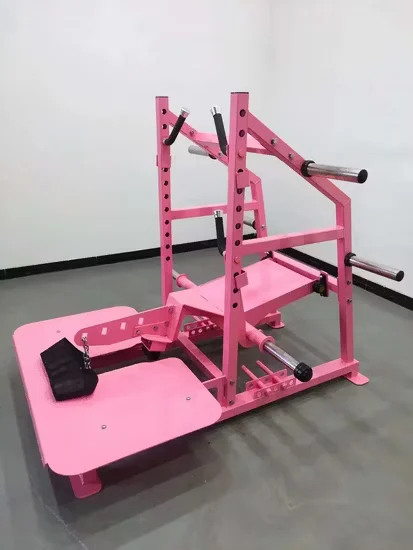
ISO-Lateral Decline Bench Machine, 141kg Net Weight, 1300×1150×1750mm Dimensions — engineered with 3×3 inch frame steel and robotic MIG continuous welding for joint integrity under repetitive decline pressing loads. Sealed industrial bearings minimize play in pivot joints during high-traffic commercial use. Every unit undergoes load testing before shipment with mill-certified steel traceable to coil origin.
// Spec Highlights
• Direct from Manufacturer · No Middlemen · Worldwide Shipping
01
// Material
Imported Solid Wood
Premium hardwood frames sourced for density and visual warmth.
02
// Hardware
Medical-Grade Silent
Whisper-quiet pulleys and springs for clinical environments.
03
// Customization
Appearance OEM
Color, upholstery, and branding tailored to your studio.
04
// Service
Layout Design
Free venue planning for studios and rehab institutions.
Every component is selected for longevity, performance, and aesthetic harmony - from imported hardwood frames to silent medical-grade accessories.
// Features
Robotic Continuous Welds — Every joint on the ISO-Lateral Decline Bench uses full-penetration MIG welding with no spot-weld weak points, eliminating fatigue cracks under repetitive decline pressing loads.
| Parameter | Value |
|---|---|
| Product Type | ISO-Lateral Decline Bench Machine |
| Model NO. | 5004 |
| Exercise Part | Chest |
| Material | Steel (Q235 / Q345 industrial grade, mill-certified) |
| Frame Steel Gauge | 11-gauge, 3×3 inch tube |
| Welding Type | Robotic MIG continuous weld |
| Net Weight | 141 kg |
| Product Dimensions | 1300 × 1150 × 1750 mm |
| Powder Coating | 200μm scratch-resistant industrial finish |
| Bearing Type | Sealed industrial bearings |
| Upholstery | Available in standard or high-density options |
| Certification | ISO 9001, CE |
| OEM/ODM | Available |
| Production Capacity | 500 PCS/Month |
| HS Code | 9506911900 |
| Facility Type | Typical Use |
|---|---|
| Commercial gym strength floor | Primary chest pressing station for high-traffic hypertrophy zones |
| Hotel and resort fitness center | Durable decline pressing option for diverse guest strength levels |
| University athletic training facility | Structurally rated for team-based conditioning and off-season programs |
| Rehabilitation and performance center | Iso-lateral path for controlled unilateral chest rehabilitation |
Continuous robotic MIG welding preserves joint integrity through thousands of decline pressing cycles.
Many suppliers label frames "commercial grade" without specifying gauge or tube dimensions — then rely on spot welds that pass visual inspection but crack under the eccentric loading pattern of a decline press. The downward angle of this movement places asymmetric shear forces on pivot joints and arm connections, accelerating fatigue at any welded junction that lacks full penetration. [NEED_CITE: weld classification and fatigue performance in cyclic-loaded structural steel] Operators who have opened up machines after two years of heavy use often find cold joints and incomplete fusion hidden beneath powder coating — failures that no surface-level QC check can catch.
The commercial ISO-lateral decline bench machine occupies the lower-angle chest pressing plane, targeting the sternal and costal fibers through a converging iso-lateral path that mirrors natural joint travel. It pairs with flat and incline iso-lateral stations to complete a three-angle pressing array, and its independent arm design allows unilateral loading for athletes addressing strength asymmetries. The 1300 × 1150 mm footprint fits standard commercial gym strength zones with safe clearance on all sides, while the sealed pivot bearings maintain smooth arc travel regardless of plate loading imbalance.
Decline pressing generates a distinct loading profile: the initial push from the bottom position creates peak eccentric torque at the arm pivot, while the lockout phase transfers compressive force through the seat frame and base structure. In facilities running 8+ hours of daily use, these cyclic loads accumulate rapidly — each rep introduces a stress reversal at every welded joint and bearing seat. Non-sealed bearings in pivot points allow dust and chalk infiltration, developing play that shifts the movement arc and creates uneven wear on the iso-lateral cam. [NEED_CITE: bearing seal classification and contamination resistance in gym equipment] The 200μm powder coating on contact adjustment points resists chipping from repeated seat and pad repositioning, while the sealed industrial bearings at each pivot maintain rotational accuracy without maintenance intervention.
The 11-gauge, 3×3 inch frame tube establishes a deformation threshold that resists flex under heavy plate loading — thinner gauge or smaller cross-section tubes will deflect visibly at the arm pivot under loads exceeding 200 kg, altering the iso-lateral path and creating joint discomfort. Robotic MIG continuous welding produces a uniform weld bead with consistent penetration depth, meaning the joint fatigue life approaches that of the base metal rather than failing at a weak spot. Sealed industrial bearings at the iso-lateral pivot points exclude dust, chalk, and moisture — the three primary contaminants that degrade unsealed bushings and introduce play within the first year of commercial use. [NEED_CITE: bearing seal IP ratings and contamination exclusion in industrial pivots] The 200μm powder coating, applied over sandblasted surface preparation, provides chip resistance at adjustment interfaces and contact points where bare steel exposure would initiate corrosion.
Frames built with thin-wall tubing and spot welds may pass initial visual inspection, but the decline pressing motion concentrates asymmetric stress at every joint — spot welds crack progressively under this cyclic shear, eventually producing audible popping and visible frame movement. Unsealed bearings develop play that shifts the iso-lateral arc, forcing users to compensate with stabilizer muscles and increasing injury risk. Low-density upholstery compresses permanently within months of commercial use, requiring full replacement rather than simple cover swaps. Powder coating applied below 150μm chips at adjustment contact points, exposing bare steel to sweat and cleaning chemicals that accelerate corrosion from the inside out. [NEED_CITE: powder coating thickness standards for heavy-use fitness equipment]
Every ISO-Lateral Decline Bench is built on an 11-gauge, 3×3 inch frame with mill-certified Q235/Q345 steel traceable to the coil origin — no vague "commercial grade" claims without documentation. Robotic MIG welding produces continuous, full-penetration joints on every frame connection, verified through three-stage QC inspection. Each unit undergoes individual load testing before shipment, not sample-based batch testing, ensuring the 141 kg structure performs as rated from day one. The 200μm industrial powder coating over sandblasted preparation resists chipping and corrosion through years of commercial use. BICKFIT provides 2D-3D CAD floor planning support, ensuring this 1300 × 1150 × 1750 mm unit integrates into your strength zone with proper safety clearances and complementary equipment spacing. OEM private label and custom color options are available for chain operators standardizing across multiple locations.
Provide your strength zone dimensions and current equipment list to receive a 2D-3D CAD layout showing how the ISO-Lateral Decline Bench integrates with your existing pressing stations and safe traffic flow. Specify your average daily user count so we can confirm the structural rating matches your facility’s usage intensity. Indicate any custom requirements for frame color, upholstery density, or private label branding to receive a detailed quotation with full specification documentation.
Q: How can I verify that the frame steel is genuinely 11-gauge rather than a vague "commercial grade" claim?
A: Request mill-certified test reports that trace the steel specification back to the original coil. Legitimate manufacturers provide documentation showing chemical composition and mechanical properties matching Q235 or Q345 industrial grade, with tube wall thickness verifiable by caliper measurement at multiple points on the frame.
Q: What is the relationship between frame tube gauge and load capacity for decline pressing movements?
A: The 11-gauge, 3×3 inch tube cross-section establishes a deformation threshold that prevents visible frame flex under heavy plate loading. Thinner gauge or smaller tubes will deflect at the arm pivot under asymmetric decline pressing loads, altering the iso-lateral movement path and creating joint discomfort for the user.
Q: How do iso-lateral and converging movement patterns differ for chest training?
A: Iso-lateral design allows each arm to move independently, accommodating natural asymmetries and enabling unilateral loading. The converging path of the decline bench mirrors the natural arc of the shoulder joint during a decline press, reducing shear stress compared to fixed-bar machines that force both arms into a single plane of motion.
Q: What equipment spacing and floor planning requirements apply to this commercial ISO-lateral decline bench machine?
A: The 1300 × 1150 mm footprint requires minimum 600 mm clearance on all sides for safe plate loading, user access, and emergency egress. Proper floor planning ensures complementary spacing with flat and incline pressing stations to create an efficient three-angle chest training array without traffic congestion.
Q: What upholstery density options are available for high-traffic commercial use?
A: Upholstery is available in standard or high-density foam options. High-density upholstery resists permanent compression under daily commercial use, extending replacement intervals and maintaining consistent pad support for users across varying body weights and pressing loads.
Premium aesthetics meet quiet operation for boutique studio environments.
Medical-grade silence and precision for sports & postpartum recovery.
Furniture-grade craftsmanship for premium residential installations.
Compact premium setups for one-on-one and small-group training.
Aesthetic Pilates integration for hybrid wellness studio programming.
Multi-unit deployment with instructor-grade reliability for certification programs.
Tell us about your project. Our team will respond within 24 hours with pricing, customization options, and shipping details.
// Sales Director
William
+86 132 2531 1800
// Export Manager
Bella
+86 198 5412 8032
william@bickfit.com