
01 / Scenario
STUDIO
P
High-End Pilates Studios
Premium aesthetics meet quiet operation for boutique studio environments.

ISO
9001
CE
Certified
OEM
Available
10YR
Warranty
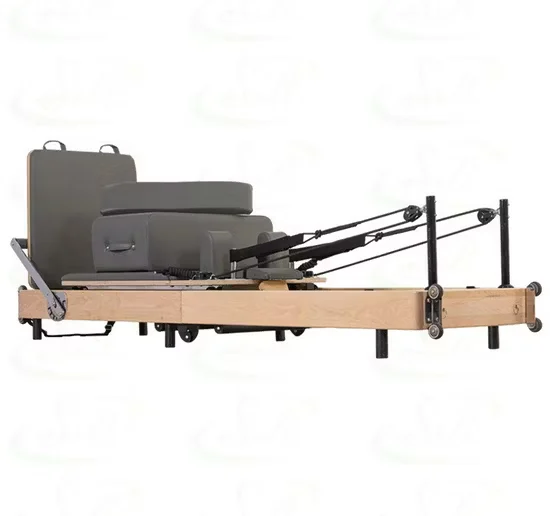
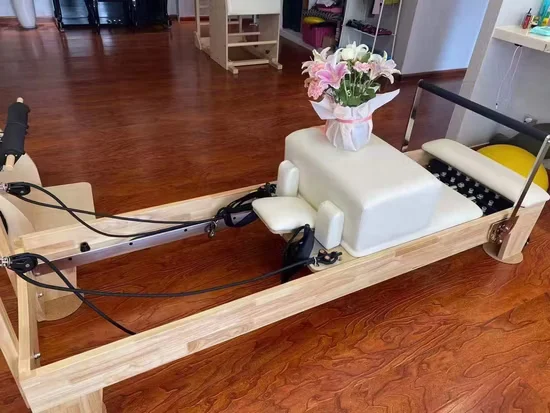
Multi-Functional Pilates Reformer, 2460×730×680mm, 100kg Net Weight — solid maple wood bed paired with reinforced steel chassis delivers rigid, vibration-free support under repeated loaded articulation; sealed carriage system ensures smooth glide consistency across high-repetition studio sessions. Includes long box, jump board, and platform accessories with 3-year warranty coverage. Engineered in a 15,000㎡ vertically integrated facility with three-stage QC inspection on every unit.
// Spec Highlights
• Direct from Manufacturer · No Middlemen · Worldwide Shipping
01
// Material
Imported Solid Wood
Premium hardwood frames sourced for density and visual warmth.
02
// Hardware
Medical-Grade Silent
Whisper-quiet pulleys and springs for clinical environments.
03
// Customization
Appearance OEM
Color, upholstery, and branding tailored to your studio.
04
// Service
Layout Design
Free venue planning for studios and rehab institutions.
Every component is selected for longevity, performance, and aesthetic harmony - from imported hardwood frames to silent medical-grade accessories.
// Features
Continuous Robotic Welding — every joint on the Multi-Functional Pilates Reformer receives uninterrupted MIG bead coverage, eliminating the cold-joint failures that plague hand-welded studio beds.
| Parameter | Value |
|---|---|
| Product Type | Pilates Reformer |
| Product Dimensions | 2460×730×680mm |
| Net Weight | 100kgs |
| Bed Frame Material | Solid Maple Wood |
| Chassis Frame | Reinforced Steel, 3×3 inch tube |
| Welding Type | Robotic MIG, continuous weld lines |
| Carriage System | Sealed bearing wheels on precision rail |
| Spring System | Multi-tension springs with reinforced attachment hardware |
| Powder Coating | 200μm scratch-resistant finish on steel chassis |
| Accessories Included | Long Box / Jump Board / Platform |
| Color | Solid color options available |
| Logo | Customized logo available |
| Assembly State | Standard wood case |
| Certification | ISO 9001:2015, CE |
| Warranty | 3 Years |
| Facility Type | Typical Use |
|---|---|
| Commercial Pilates Studio | Daily group and private reformer sessions across all skill levels |
| Rehabilitation and Physiotherapy Center | Low-impact controlled movement therapy and post-injury conditioning |
| Hotel and Resort Wellness Facility | Guest-accessible functional movement and flexibility programming |
| Commercial Gym Functional Zone | Supplemental mobility and core work alongside strength equipment |
Most reformers marketed for studio use lack verifiable timber grading and joint specifications, which is exactly where structural degradation begins.
When a facility runs six or more classes daily, the bed frame endures thousands of loaded articulation cycles per week. Beds built from unspecified hardwood or composite panels develop visible deflection within months, and carriage wobble follows as wheel-to-rail tolerances widen. I recall a project where a client switched to thin-wall aluminum framing to cut costs — the slide rail connections showed pronounced play in under half a year, triggering a full batch recall and reinforcement. That failure pattern repeats across studios that accept vague material claims instead of demanding traceable specifications [NEED_CITE: EN 957 structural requirements for stationary training equipment]. A commercial maple wood pilates reformer must pair dense timber with a rigid steel chassis to hold alignment under that kind of repetition.
This reformer addresses the full sagittal and transverse plane movement spectrum — from supine footwork through seated arm series to single-leg coordination drills. In a studio layout, it anchors the primary apparatus row, flanked by cadillacs and half-towers for members progressing through apparatus-based programming. The platform footprint suits high-density rooms where instructors need clear sight lines across eight to twelve stations. Adjustable spring tension and accessory integration accommodate users ranging from rehabilitation clients with limited load tolerance to advanced practitioners performing plyometric jump board sequences.
The dominant stress pattern on any reformer is cyclic eccentric loading: the carriage accelerates under spring tension and decelerates through user-controlled return, repeating hundreds of times per class. Each cycle transmits force through the wheel bearings and into the rail surface. Sealed bearings prevent sweat, dust, and cleaning solution ingress that degrades bushing-type systems, maintaining consistent glide with minimal maintenance intervention. The steel chassis absorbs the lateral torque generated during single-leg and standing work, where asymmetric loading can twist a lighter frame out of parallel alignment [NEED_CITE: weld classification and fatigue performance in structural steel]. Powder coating at 200μm thickness on the chassis resists the micro-abrasion that occurs where spring hooks and attachment hardware contact the frame during adjustment.
Solid maple wood density directly determines the bed’s deflection threshold — denser timber resists the gradual sag that misaligns carriage travel over months of use. Bed thickness matters in concert with the steel chassis beneath it: a rigid subframe prevents the wood from bearing structural load alone, distributing rider weight and spring tension across the full assembly. The sealed bearing carriage system eliminates the periodic re-greasing and bushing replacement that unsealed alternatives demand, compressing maintenance schedules from monthly to quarterly intervals. Spring attachment hardware — the pins, clips, and anchor plates — must match the spring wire diameter and tension rating to prevent loosening under thousands of hook-and-release cycles. Steel chassis welding continuity governs how the frame handles off-center loads during standing and kneeling exercises, where point-welded joints concentrate stress at discrete nodes rather than distributing it along continuous bead lines.
Specifying a reformer on price alone invites compounding downstream costs. Beds built from low-density timber or plywood-core panels develop permanent deflection that no amount of adjustment corrects, requiring full bed replacement. Non-sealed carriage systems demand frequent bearing swaps and rail re-lubrication — labor hours that accumulate across a fleet of reformers. Thin powder coating on the steel chassis chips at spring contact points, exposing bare metal to sweat-borne corrosion that spreads beneath the remaining finish. Non-standard hardware dimensions mean replacement springs, wheels, and attachment pins become sourcing challenges once the original supplier’s inventory shifts.
The steel chassis uses 3×3 inch tube stock with robotic MIG welding, producing continuous bead lines that distribute stress evenly rather than concentrating it at spot-weld nodes. Every unit undergoes load testing before crating — not sample-based batch testing, but individual verification of carriage travel, spring tension, and frame rigidity. The 200μm powder coating on the chassis survives daily contact with springs, jump board impacts, and cleaning chemicals without chipping through to bare steel. The solid maple bed sits on a reinforced subframe that prevents the timber from acting as a structural beam, preserving its flatness across years of loaded articulation. Facility planning support includes 2D and 3D CAD layouts that account for the 2460×730mm footprint plus safe clearance zones between stations, so instructors can circulate freely during peak class scheduling.
Provide your studio floor dimensions and planned reformer count to receive a 2D-3D layout that optimizes station spacing and instructor sight lines. Specify your average daily class volume and member throughput so the structural grade matches actual use intensity. Identify your target user population — rehabilitation-focused, general fitness, or advanced practitioner — to confirm spring configuration and accessory package suitability. Note any branding requirements including custom logo placement and color preferences for the steel chassis finish.
Q: How do I tell commercial-grade from light-commercial Pilates reformers?
A: Commercial-grade units specify timber species, bed thickness, chassis steel gauge, and bearing type — not just weight capacity. Light-commercial reformers often omit these details and rely on vague durability claims. Inspect the carriage wheel interface: sealed bearings indicate commercial intent, while bushings suggest lighter use expectations. Request mill certificates for steel and timber sourcing documentation before committing to a fleet purchase.
Q: What wood species and thickness make a reformer bed rigid enough for studio use?
A: Solid maple is preferred for its density and resistance to deflection under repeated loading. The bed must be paired with a steel subframe so the timber does not carry structural load alone. Thickness specifications should be stated in millimeters rather than described generally. A rigid bed prevents carriage misalignment that develops when the surface gradually sags under daily class schedules.
Q: Sealed bearings versus bushings on the carriage — what changes operationally?
A: Sealed bearings maintain consistent glide quality over extended periods without lubrication, reducing maintenance intervals from monthly to quarterly. Bushing-type systems require regular greasing and eventual replacement as friction surfaces wear unevenly. In a multi-station studio environment, the labor cost of maintaining unsealed carriages compounds significantly across the equipment fleet over each year of operation.
Q: Which accessories integrate with this reformer for programming variety?
A: The long box enables seated and supine upper-body work, the jump board adds plyometric cardiovascular sequences, and the platform extends the footwork surface area for standing exercises. All three mount to standardized attachment points on the frame. Accessory compatibility with additional reformer components should be confirmed when ordering, as non-standard dimensions limit cross-purchasing options later.
Q: What does the warranty cover for high-traffic studio deployment?
A: The three-year warranty covers structural frame integrity, carriage system components, and spring attachment hardware under normal commercial use conditions. Replacement parts remain available through the manufacturer for the warranty period and beyond. Studios running eight or more daily classes should confirm part lead times and bulk pricing agreements to minimize downtime when consumable components require scheduled replacement.
Premium aesthetics meet quiet operation for boutique studio environments.
Medical-grade silence and precision for sports & postpartum recovery.
Furniture-grade craftsmanship for premium residential installations.
Compact premium setups for one-on-one and small-group training.
Aesthetic Pilates integration for hybrid wellness studio programming.
Multi-unit deployment with instructor-grade reliability for certification programs.
Tell us about your project. Our team will respond within 24 hours with pricing, customization options, and shipping details.
// Sales Director
William
+86 132 2531 1800
// Export Manager
Bella
+86 198 5412 8032
william@bickfit.com
![Commercial Folding Pilates Reformer SRY-20 Machine [WARN] draft identifier mismatch](https://bickgym.com/wp-content/uploads/2026/08/commercial-folding-pilates-reformer-sry-20-machine-warn-draft-identifier-mismatch-f8b5d9.webp)
