01 / Scenario
STUDIO
P
High-End Pilates Studios
Premium aesthetics meet quiet operation for boutique studio environments.
ISO
9001
CE
Certified
OEM
Available
10YR
Warranty
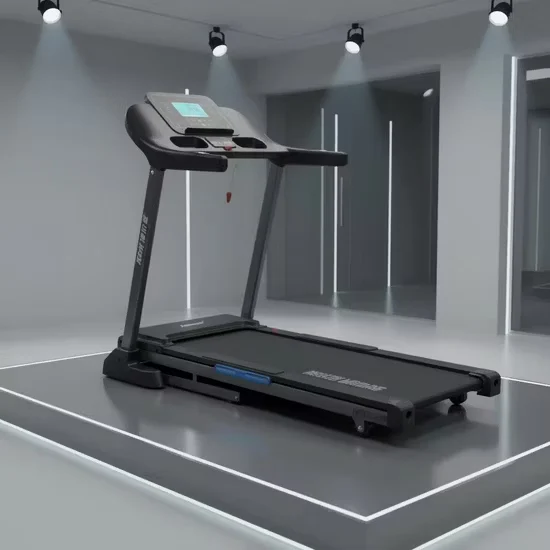
Motorized Walking Treadmill with Auto-Incline, 1000x400mm Runway, 6 Preset Programs — engineered with electric motor drive and automatic incline mechanism for sustained commercial use, featuring LED display tracking speed, distance, time, and calories across 100-160kg unit weight for operational stability. Each unit undergoes load testing before shipment, backed by 10-year frame warranty and floor planning support for high-traffic cardio zones.
// Spec Highlights
• Direct from Manufacturer · No Middlemen · Worldwide Shipping
01
// Material
Imported Solid Wood
Premium hardwood frames sourced for density and visual warmth.
02
// Hardware
Medical-Grade Silent
Whisper-quiet pulleys and springs for clinical environments.
03
// Customization
Appearance OEM
Color, upholstery, and branding tailored to your studio.
04
// Service
Layout Design
Free venue planning for studios and rehab institutions.
Every component is selected for longevity, performance, and aesthetic harmony - from imported hardwood frames to silent medical-grade accessories.
// Features
Continuous welds resist fatigue cycling — robotic MIG welding eliminates spot-weld weak points across the 100-160kg chassis, maintaining structural integrity under sustained motorized operation and auto-incline actuation.
| Parameter | Value |
|---|---|
| Product Type | Motorized Treadmill |
| Running Surface | 1000 × 400 mm |
| Speed Range | 1–6 km/h |
| Maximum Speed | Below 15 km/h |
| Incline Function | Auto-incline, motorized |
| Console Display | LED — Speed / Distance / Time / Calories |
| Preset Programs | 6 |
| Foldable | No — fixed unfolded configuration |
| Net Weight | 100–160 kg |
| Product Dimensions | 1250 × 520 × 1255 mm |
| Certification | CE, RoHS |
| Customization | Available |
| Production Capacity | 3000 units per month |
| Facility Type | Typical Use |
|---|---|
| Commercial gym cardio zone | High-traffic member-facing aerobic stations |
| Hotel and resort fitness center | Variable-intensity use across diverse guest fitness levels |
| Corporate wellness facility | Steady-state and interval cardio during peak lunch hours |
| Home fitness use | Single-user daily aerobic conditioning |
Auto-incline actuators require sealed drive components and reinforced chassis mounting to prevent binding and frame flex at sustained angles.
Commercial motorized treadmill with auto-incline units in high-traffic facilities face a specific failure mode: the incline motor and lift mechanism experience cyclic loading every session, and unsealed actuators accumulate dust and sweat residue that causes gradual binding. Without a chassis designed to handle the torsional stress of inclined running, the frame develops micro-flex that accelerates belt wear and motor strain. Operators report incline motors drawing excess current within months, a symptom of structural misalignment rather than motor failure alone [NEED_CITE: motor current draw as diagnostic indicator of mechanical binding in inclined treadmill systems].
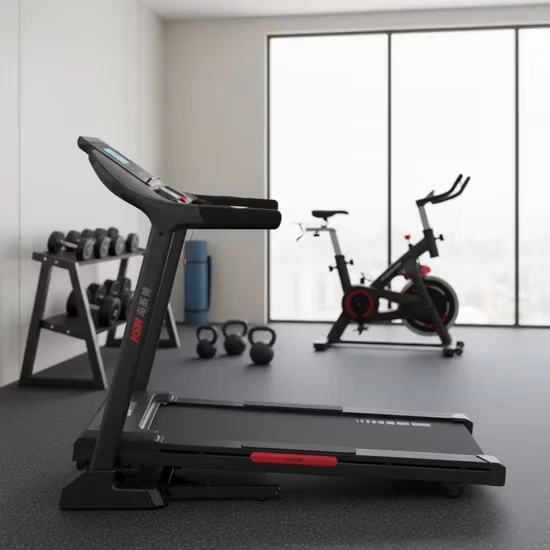
This motorized treadmill occupies the steady-state and moderate-incline training zone of a commercial cardio deck, complementing air bikes and rowers that serve peak-power and upper-body aerobic demands. The 1000 × 400 mm running surface accommodates users across a broad stride-length range, while the 1–6 km/h speed band and auto-incline function support walking-based conditioning protocols common in hotel fitness centers and corporate wellness facilities. A commercial motorized treadmill with auto-incline of this specification pairs naturally with self-powered cardio units to create a diversified aerobic floor that serves multiple intensity profiles without overloading electrical circuits.
Motorized treadmills in commercial environments accumulate thousands of incline actuation cycles monthly, subjecting the lift mechanism, chassis welds, and running deck mounting points to repeated static and dynamic loading. The incline motor mount experiences concentrated stress each time the deck transitions between angles, and non-reinforced mounting plates develop fatigue cracks at weld toes over time. Belt tension fluctuates with incline changes, transferring variable lateral forces to the roller bearings and side rail joints. The running deck surface endures continuous abrasive contact, and inadequate belt material degrades faster under the combined thermal load of motor friction and incline-position operation [NEED_CITE: belt wear acceleration under inclined treadmill operation and thermal cycling].
The 100–160 kg net weight range signals chassis mass sufficient to dampen vibration at incline, directly affecting user comfort and component longevity — lighter frames transmit motor harmonics into the floor and accelerate fastener loosening. The 1000 × 400 mm running surface dimension determines the effective stride accommodation window; surfaces below this threshold force shorter-stride users into compromised foot placement, increasing impact loading on the deck and belt. The six preset programs and LED data feedback (speed, distance, time, calories) require a console board rated for continuous duty cycling, not the intermittent-duty electronics found in residential units. Auto-incline actuation speed and range determine how quickly the unit transitions between protocols — slow actuators create dead time in interval sessions, while insufficient range caps the training stimulus for advanced users.
Thin-wall chassis tubing on inclined treadmills permits visible deck deflection when heavier users engage the auto-incline at speed, creating a perception of instability that erodes member confidence and generates complaint tickets. Non-sealed incline motor bearings exposed to gym-floor dust and cleaning chemicals develop play within months, producing noise complaints and eventual motor replacement costs that exceed the initial savings from cheaper components. Inadequate powder coating on the incline mechanism’s pivot points chips under repeated articulation, exposing bare steel to sweat corrosion that seizes the lift assembly — a failure that requires full mechanism replacement rather than simple repainting. Undersized console electronics operating outside their thermal rating produce erratic speed and incline readings, leading to member dissatisfaction and premature board replacement.
Every commercial motorized treadmill with auto-incline shipped from this facility undergoes individual load testing before dispatch, verifying that the incline mechanism, deck mounting, and chassis welds perform under simulated commercial duty rather than passing only sample-based inspection. The 200μm industrial powder coating applied after sandblast surface preparation protects all structural and pivot surfaces against sweat and cleaning chemical corrosion throughout the equipment’s service life. CE and RoHS certification confirms compliance with European safety and environmental standards for electrical equipment in commercial fitness environments. Two-dimensional and three-dimensional floor planning CAD support ensures this treadmill is positioned with correct service clearances and electrical access, preventing the unsafe spacing that creates trip hazards and blocks maintenance access. Customization options allow facility operators to align console labeling, color schemes, and branding with their existing equipment fleet for visual coherence across the cardio deck.
Provide your cardio deck floor area and target equipment count to receive a two-dimensional or three-dimensional layout plan showing this treadmill’s placement with correct service clearances and electrical routing. Specify your average daily user volume so the structural duty rating can be matched to your actual usage intensity rather than a generic classification. Indicate your target user demographic’s height and weight range to confirm the running surface and speed parameters accommodate your member profile. Customization requirements for console language, frame color, or facility branding should be noted at inquiry stage to align production scheduling with your facility opening timeline.
Q: How does the auto-incline mechanism differ structurally from manual incline systems?
A: Motorized auto-incline uses an electric actuator linked to the deck pivot, requiring reinforced chassis mounting points and sealed drive components to handle cyclic loading. Manual systems rely on a pin-and-bar mechanism with no electrical dependency but require the user to dismount for adjustment. The motorized approach enables seamless program transitions between incline levels, though it introduces additional maintenance points around the actuator and its mounting hardware that must be inspected periodically.
Q: What running surface dimensions are appropriate for commercial walking treadmill use?
A: The 1000 × 400 mm surface on this unit accommodates walking gaits across a broad user height range while maintaining a compact footprint suitable for high-density cardio deck layouts. Surfaces narrower than 400 mm force lateral foot placement constraints that increase impact loading on the deck and user joints. For running-focused commercial applications, longer surfaces above 1400 mm are typically specified, but walking-oriented facilities benefit from the reduced spatial requirement without compromising stride comfort for the intended speed range.
Q: What maintenance intervals apply to the incline actuator and drive components?
A: The incline actuator pivot points and drive mechanism should be inspected quarterly for wear indicators, fastener torque, and lubrication condition. Dust and moisture accumulation around sealed bearings accelerates wear in high-traffic environments, so visual inspection of the actuator housing for contamination ingress is recommended monthly. Console electronics and program selection function should be verified during the same maintenance cycle to ensure incline commands execute at the expected actuation speed without delay or erratic behavior.
Q: Can this treadmill be integrated into a facility-wide equipment branding program?
A: Customization options allow frame color, console labeling language, and facility logo application to align with existing equipment fleet visual standards. Production capacity of 3000 units monthly supports coordinated fleet rollouts across multiple locations. Branding customization should be specified at inquiry stage to ensure color matching and logo placement are confirmed before production scheduling, avoiding mid-run changes that delay delivery timelines.
Premium aesthetics meet quiet operation for boutique studio environments.
Medical-grade silence and precision for sports & postpartum recovery.
Furniture-grade craftsmanship for premium residential installations.
Compact premium setups for one-on-one and small-group training.
Aesthetic Pilates integration for hybrid wellness studio programming.
Multi-unit deployment with instructor-grade reliability for certification programs.
Tell us about your project. Our team will respond within 24 hours with pricing, customization options, and shipping details.
// Sales Director
William
+86 132 2531 1800
// Export Manager
Bella
+86 198 5412 8032
william@bickfit.com