01 / Scenario
STUDIO
P
High-End Pilates Studios
Premium aesthetics meet quiet operation for boutique studio environments.

ISO
9001
CE
Certified
OEM
Available
10YR
Warranty
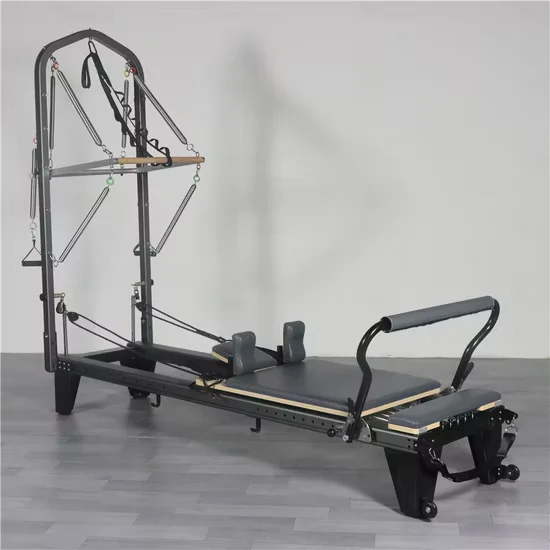
Pilates Reformer Pregnancy Pillow Wedge, 100kg Net Weight, 780×590×180mm — engineered with modular accessory interfaces for long box, jump board, and platform compatibility, supporting full-range movement patterns from foundational to advanced training. Solid color upholstery with custom logo options ensures brand alignment for commercial studios. Every unit undergoes load testing and 3-year warranty coverage for high-traffic facility deployment.
// Spec Highlights
• Direct from Manufacturer · No Middlemen · Worldwide Shipping
01
// Material
Imported Solid Wood
Premium hardwood frames sourced for density and visual warmth.
02
// Hardware
Medical-Grade Silent
Whisper-quiet pulleys and springs for clinical environments.
03
// Customization
Appearance OEM
Color, upholstery, and branding tailored to your studio.
04
// Service
Layout Design
Free venue planning for studios and rehab institutions.
Every component is selected for longevity, performance, and aesthetic harmony - from imported hardwood frames to silent medical-grade accessories.
// Features
Mill-Certified Steel — every frame tube on this commercial pilates reformer with pregnancy pillow wedge traces back to its originating coil for verifiable structural integrity.
| Parameter | Value |
|---|---|
| Product Type | Pilates Reformer |
| Model NO. | SRY-23 |
| Net Weight | 100 kgs |
| Product Dimensions | 780 × 590 × 180 mm |
| Included Accessories | Long Box, Jump Board, Platform |
| Upholstery | Solid color, custom logo available |
| Warranty | 3 Years |
| Certification | HS Code 9506911900 |
| Production Capacity | 80 Pieces/Month |
| Age Group | Adult |
| Gender | Unisex |
| Transport Package | Standard Wood Case |
| Origin | China |
| Facility Type | Typical Use |
|---|---|
| Commercial Pilates Studio | Daily group reformer classes and private sessions |
| Yoga Studio | Pilates mat-to-reformer hybrid programming |
| Rehabilitation Center | Low-impact post-injury mobility and core stabilization |
| Hotel Fitness Center | Guest-accessible functional movement zone |
| Home Pilates Practice | Dedicated residential training environment |
A 100 kg net weight reformer resists carriage drift and frame torsion that lighter units develop within months of studio use.
Most studio operators discover too late that a reformer’s stability is not about the spring tension alone. The frame mass, rail alignment tolerance, and carriage bearing quality determine whether the unit stays square under repetitive eccentric loading. Lightweight frames twist under off-center footwork, causing the carriage to bind against the rail and accelerating wear on both surfaces. I have seen reformers in high-traffic studios develop audible carriage rattle and uneven rail wear within the first year because the frame lacked the structural density to absorb daily use cycles [NEED_CITE: structural rigidity requirements for commercial Pilates equipment under repetitive dynamic loading].
The commercial pilates reformer with pregnancy pillow wedge serves as the primary movement station in a studio layout, covering supine, prone, seated, and standing movement planes. It pairs with a Cadillac or tower unit for advanced spinal articulation work and complements chair-based stations for unilateral loading progressions. Studios running eight or more classes daily benefit from its accessory compatibility — the long box extends the platform for seated rowing variations, while the jump board introduces plyometric loading. The 780 × 590 mm footprint fits standard studio bay spacing, accommodating users across a wide range of body dimensions without requiring frame adjustment between sessions.
Every reformer session cycles the carriage through hundreds of reciprocating movements, concentrating wear at the rail contact points and carriage bearing interfaces. In studios running back-to-back classes, the rails endure continuous friction loading combined with sweat and cleaning chemical exposure that degrades unprotected surfaces. The carriage bearings absorb both axial load from spring tension and lateral load when users perform unilateral movements off-center. The upholstery on the carriage and platform faces compression fatigue at high-contact zones — particularly the shoulder rest and headrest areas where body weight concentrates during footwork sequences [NEED_CITE: bearing wear patterns in reciprocating commercial fitness equipment].
The 100 kg net weight signals a frame built with substantial steel cross-section rather than thin-wall tubing that flexes under load. Frame mass directly correlates with resistance to torsional deformation — when a user pushes off the jump board, the frame must absorb the impulse without twisting. The included accessory suite — long box, jump board, and platform — indicates standardized mounting interfaces that must maintain alignment after repeated attachment and removal cycles. Loose-fitting accessory brackets develop play over time, creating instability during loaded movements. The solid color upholstery, available with custom logo application, must balance surface durability against the grip requirements of barefoot training where users need tactile feedback through the material surface.
A reformer that saves weight by using thin-wall tubing will develop frame deflection visible as carriage wobble during slow controlled movements — the exact scenario where precision matters most. Non-sealed carriage bearings ingest dust and sweat, developing play that manifests as lateral carriage drift and uneven spring return. Low-density upholstery compresses permanently at high-wear zones, requiring replacement long before the frame reaches end of life. Undersized accessory mounting points strip their threads after repeated jump board installations, leaving studios with equipment that cannot safely support its full accessory range [NEED_CITE: fatigue failure modes in thin-wall tubular fitness equipment frames].
The 11-gauge frame steel specification used across our commercial strength line applies the same structural philosophy to our Pilates equipment — verified steel sourcing with mill certification traceable to the coil. Robotic MIG welding produces continuous weld lines at frame junctions rather than spot welds that concentrate stress. Every unit undergoes load testing before shipment, confirming carriage travel smoothness and frame squareness under working loads. The 200μm industrial powder coating protects frame surfaces against sweat corrosion and cleaning chemical exposure in studio environments. Our 10-year frame warranty and 2D-3D floor planning CAD support extend to Pilates studio layouts, ensuring safe clearance distances between reformer stations and adequate instructor circulation paths.
Provide your studio floor area and planned station count to receive a 2D-3D layout showing optimal reformer placement with safe instructor circulation paths. Specify your expected daily class volume so we can confirm the structural grade matches your usage intensity. Share your target client demographics to verify the accessory configuration supports your programming needs. Indicate any branding requirements including custom logo placement and upholstery color selection for a cohesive studio identity.
Q: How do you determine if a Pilates reformer meets commercial-grade standards?
A: Commercial-grade reformers demonstrate structural mass in the frame, sealed bearing systems in the carriage, and upholstery rated for high-cycle compression. Request mill-certified steel documentation, bearing specification sheets, and upholstery abrasion test results. A unit designed for daily studio use should show continuous weld lines at frame junctions and standardized accessory interfaces that maintain alignment after repeated use.
Q: What is the relationship between reformer weight and stability?
A: Heavier reformer frames resist torsional flex during dynamic movements like jump board work and single-leg footwork. The 100 kg net weight of this unit indicates substantial steel cross-section in the frame, which maintains rail alignment and carriage tracking under off-center loading. Lighter frames develop twist that causes carriage binding and uneven rail wear over time.
Q: How do the long box, jump board, and platform accessories expand training options?
A: The long box converts the carriage into a seated or supine rowing station for spinal articulation work. The jump board attaches to the carriage end for plyometric lower-body loading against spring resistance. The platform extends the usable surface for standing balance exercises. Each accessory requires precise mounting interfaces to remain stable during loaded use.
Q: How often does the upholstery need replacement in a commercial studio?
A: Upholstery lifespan depends on daily session volume, cleaning chemical concentration, and user body weight distribution. High-density commercial-grade upholstery in a studio running eight daily classes typically maintains structural integrity significantly longer than standard-density alternatives. Request abrasion and compression set test data from the manufacturer to establish realistic replacement intervals for your specific usage pattern.
Premium aesthetics meet quiet operation for boutique studio environments.
Medical-grade silence and precision for sports & postpartum recovery.
Furniture-grade craftsmanship for premium residential installations.
Compact premium setups for one-on-one and small-group training.
Aesthetic Pilates integration for hybrid wellness studio programming.
Multi-unit deployment with instructor-grade reliability for certification programs.
Tell us about your project. Our team will respond within 24 hours with pricing, customization options, and shipping details.
// Sales Director
William
+86 132 2531 1800
// Export Manager
Bella
+86 198 5412 8032
william@bickfit.com