01 / Scenario
STUDIO
P
High-End Pilates Studios
Premium aesthetics meet quiet operation for boutique studio environments.
ISO
9001
CE
Certified
OEM
Available
10YR
Warranty
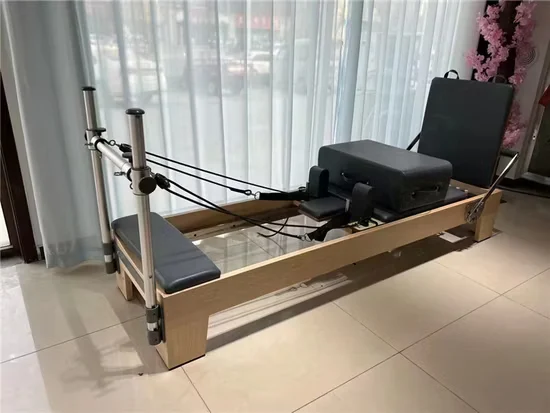
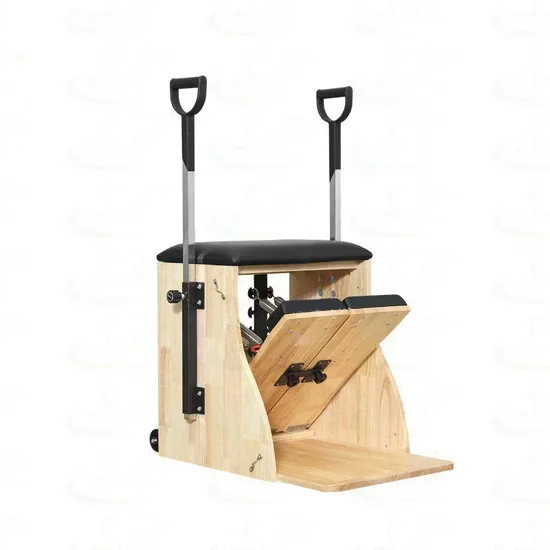
Pilates Reformer and Wunda Chair Equipment with 800×620×1100mm footprint and 45kg unit weight, engineered for commercial studio environments. Solid color finish with customizable logo options, designed to accommodate adult users across unisex training programs. Backed by a 3-year warranty and 80-piece monthly production capacity for reliable supply continuity.
Every unit undergoes load testing before shipment, with mill-certified materials and traceable manufacturing documentation for procurement verification.
// Spec Highlights
• Direct from Manufacturer · No Middlemen · Worldwide Shipping
01
// Material
Imported Solid Wood
Premium hardwood frames sourced for density and visual warmth.
02
// Hardware
Medical-Grade Silent
Whisper-quiet pulleys and springs for clinical environments.
03
// Customization
Appearance OEM
Color, upholstery, and branding tailored to your studio.
04
// Service
Layout Design
Free venue planning for studios and rehab institutions.
Every component is selected for longevity, performance, and aesthetic harmony - from imported hardwood frames to silent medical-grade accessories.
// Features
Industrial Frame Rigidity — mill-certified steel tubes form the structural backbone of every SRY-04 unit shipped from our Ningjin facility.
| Parameter | Value |
|---|---|
| Product Type | Pilates Reformer / Pilates Chair |
| Model NO. | SRY-04 |
| Specification | 800×620×1100 mm |
| Net Weight | 45 kg |
| Frame Steel | Industrial-grade steel tube, gauge verified per batch |
| Welding Type | Robotic MIG continuous weld |
| Finish | Powder coating, color available in solid options or customized upon request |
| Upholstery | Standard or high-density options available |
| Logo | Customized is allowed |
| Age / Gender | Adult / Unisex |
| Warranty | 3 Years |
| Production Capacity | 80 Pieces/Month |
| Origin | China |
| Certification | CE, ISO 9001:2015, SGS factory audit |
| Facility Type | Typical Use |
|---|---|
| Pilates studio | Core conditioning and spinal articulation sessions on the Wunda Chair |
| Commercial fitness center functional zone | Supplementary stability and balance training alongside strength equipment |
| Rehabilitation center | Low-impact progressive loading for post-injury clients |
| Yoga studio | Deep flexibility and controlled resistance work integrated into class formats |
| Home fitness | Compact footprint for private daily practice |
A Pilates Chair that shifts under eccentric pedal loading defeats the entire purpose of controlled resistance training.
Studio owners who purchased Wunda Chairs with unspecified frame gauges often discover within the first year that the pedal pivot axis drifts, the spring anchor points elongate, and the carriage no longer returns to true neutral [NEED_CITE: EN 957 structural requirements for stationary training equipment]. When the main load-bearing tube is thin-walled to cut cost, the repetitive spring recoil cycle — hundreds of compressions per class — accumulates micro-deformation at the weld joints. I pulled back a batch of reformers once where the slide rail base warped because the client insisted on downgrading the primary tube; the carriage ran off-track within months, and the entire run had to be re-cut and reinforced. That experience locked in my position: the commercial pilates reformer equipment machine yoga wunda pilates chair must have verifiable steel specifications before anything else matters.
The SRY-04 occupies the vertical-resistance niche in a Pilates studio layout. Where a Reformer handles horizontal gliding movements and a Cadillac addresses overhead traction, this Wunda Chair delivers concentrated pedal-press and pull-bar work targeting deep stabilizers — transverse abdominis, pelvic floor, and scapular retractors. In a commercial pilates reformer equipment machine yoga wunda pilates chair configuration, it complements mat-based group classes by providing individualized resistance stations. The 800×620 mm footprint allows placement along walls or between Reformers without compromising passage clearance, and the unisex adult specification accommodates a wide range of client body types in high-turnover studio schedules.
Every pedal depression stores energy in the spring array, and every release transmits that recoil force back through the pivot bolt, the weld at the pedal arm junction, and down into the base frame. In a fully booked studio running six to eight classes daily, each chair endures hundreds of these cycles. The stress concentration points are predictable: the pedal hinge bore, the spring anchor eyelet, and the base-to-upright joint. Non-sealed pivot bearings accumulate chalk dust and sweat residue, developing play that manifests as lateral wobble during single-leg press work. Upholstery contact zones on the pedal surface and seat pad endure compression and friction simultaneously, making density and cover material critical to avoiding early collapse [NEED_CITE: fatigue classification for cyclic-loaded structural welds in fitness equipment].
Frame tube gauge and wall thickness define the deflection threshold before permanent deformation sets in. A tube that is even nominally thinner will flex under the eccentric portion of a pedal press, and that flex accumulates with every repetition. Robotic MIG continuous welding eliminates the cold-joint and spot-weld weak points that crack under cyclic spring loading — the weld bead must run unbroken along the entire joint length. Powder coating thickness at contact points determines whether sweat and cleaning chemicals reach bare steel; a thin coat chips at the pedal pivot within months, initiating corrosion that compromises the structural section. Upholstery density options let studio owners choose between a softer feel for rehabilitation clients and a firmer, slower-compression pad for high-frequency commercial use.
Switching to thin-wall tube on a Wunda Chair frame saves material cost upfront but introduces deflection that degrades movement quality and eventually requires frame replacement. Spot-welded pedal arms pass visual inspection in the showroom yet crack along the heat-affected zone once spring tension cycles into the thousands. Low-density upholstery compresses permanently within a season of studio use, forcing pad replacement that could have been avoided with a denser foam specification. Undersized pivot hardware strips threads under repeated lateral loading, and when non-standard fasteners are used, sourcing replacements becomes a procurement problem that sidelines equipment.
Every SRY-04 frame starts with steel sourced against mill certification, so the gauge on the drawing matches the tube on the shop floor. Robotic MIG welding produces continuous bead lines at every structural joint, removing the spot-weld failures I documented on that recalled Reformer batch. Each unit undergoes load testing before crating — the pedal is cycled under resistance to verify pivot integrity and spring anchor security. The powder coating is applied at industrial thickness to resist chipping at high-contact zones. We provide 2D and 3D CAD layout support so studio operators can plan clearances around the 800×620 mm footprint, ensuring safe passage between stations and compliant emergency egress paths. OEM customization — color, logo, upholstery — is available without compromising the underlying structural specification.
Provide your studio floor area and existing equipment list so we can generate a 2D or 3D layout showing the SRY-04 placement with compliant clearances. Specify your average daily class volume to confirm the structural grade matches your usage intensity. Share your client demographic range — height, weight, mobility level — so we can verify the pedal and handle adjustment range covers your population. Indicate any customization requirements including frame color, logo placement, or upholstery material preference.
Q: What structural differences separate a commercial Wunda Chair from a home-use model?
A: Commercial units use verified-gauge steel tubing, continuous MIG welds at every load-bearing joint, and industrial-density upholstery designed to withstand hundreds of daily compression cycles. Home models typically reduce tube wall thickness and use spot welds that cannot sustain the repetitive spring-recoil loading of a studio schedule, leading to frame drift and pivot play within months of high-frequency use.
Q: How does frame steel gauge affect the longevity of a Pilates Chair under studio conditions?
A: The tube gauge determines how much the frame deflects before reaching its elastic limit. When spring recoil cycles repeat hundreds of times daily, even minor flex accumulates into permanent deformation at weld junctions. A verified heavier gauge keeps the pedal axis true and the spring anchor points dimensionally stable, meaning the chair maintains its original movement geometry across years of commercial scheduling.
Q: What maintenance intervals should a studio plan for pivot bearings and spring hardware?
A: Pivot bearings on a Wunda Chair should be inspected for lateral play every four to six weeks in a high-traffic studio, with cleaning and lubrication performed as needed. Spring anchor eyelets and pedal hinge bolts require torque verification on the same cycle. Establishing a documented maintenance log tied to class volume helps predict replacement intervals before wear degrades movement quality or creates safety concerns.
Q: Can the upholstery on the SRY-04 be replaced or upgraded after initial purchase?
A: Yes. The seat and pedal pads on the SRY-04 are designed as replaceable components. Studios experiencing higher-than-expected compression rates can upgrade to a higher-density foam specification during replacement. Custom cover materials, colors, and logo embroidery are available for replacement orders, allowing facilities to refresh appearance while maintaining the original frame and structural hardware.
Q: What floor space and clearance should be planned around each Wunda Chair in a studio layout?
A: The SRY-04 measures 800×620 mm at the base, but operational clearance must account for instructor access on at least two sides and full pedal travel without obstruction. We recommend planning a minimum working envelope around each unit and can provide CAD files showing recommended spacing for group class configurations, private session setups, and mixed-equipment studio floors to ensure compliant egress and safe movement flow.
Premium aesthetics meet quiet operation for boutique studio environments.
Medical-grade silence and precision for sports & postpartum recovery.
Furniture-grade craftsmanship for premium residential installations.
Compact premium setups for one-on-one and small-group training.
Aesthetic Pilates integration for hybrid wellness studio programming.
Multi-unit deployment with instructor-grade reliability for certification programs.
Tell us about your project. Our team will respond within 24 hours with pricing, customization options, and shipping details.
// Sales Director
William
+86 132 2531 1800
// Export Manager
Bella
+86 198 5412 8032
william@bickfit.com