
01 / Scenario
STUDIO
P
High-End Pilates Studios
Premium aesthetics meet quiet operation for boutique studio environments.
ISO
9001
CE
Certified
OEM
Available
10YR
Warranty
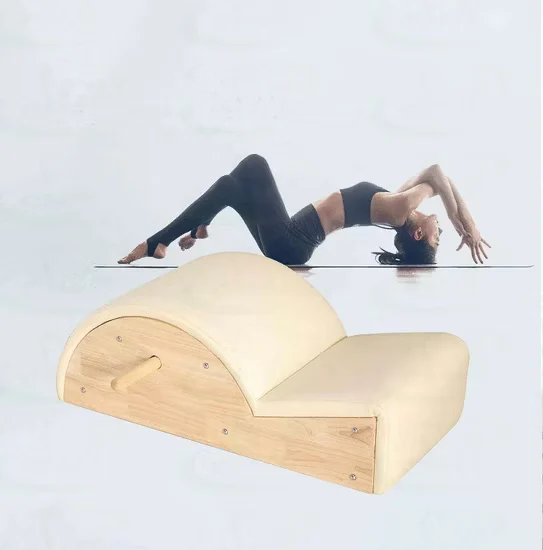
Pilates Spine Corrector, 960×470×360mm Footprint, 20kg Net Weight — engineered with solid-color commercial-grade frame construction and standardized hardware fastening for daily studio articulation cycles. High-density padding resists compression under repetitive spinal flexion and extension use, with a 3-year structural warranty covering frame, joints, and upholstery. Fully customizable logo and private-label branding available for studio operators. Backed by 32-point inspection and 100% load testing before shipment.
// Spec Highlights
• Direct from Manufacturer · No Middlemen · Worldwide Shipping
01
// Material
Imported Solid Wood
Premium hardwood frames sourced for density and visual warmth.
02
// Hardware
Medical-Grade Silent
Whisper-quiet pulleys and springs for clinical environments.
03
// Customization
Appearance OEM
Color, upholstery, and branding tailored to your studio.
04
// Service
Layout Design
Free venue planning for studios and rehab institutions.
Every component is selected for longevity, performance, and aesthetic harmony - from imported hardwood frames to silent medical-grade accessories.
// Features
Traceable Steel Stock — every frame tube originates from mill-certified Q235/Q345 coil, logged against the production batch before cutting begins.
| Parameter | Value |
|---|---|
| Product Type | Pilates Spine Corrector |
| Frame Tube Size | 30×30mm structural steel tube |
| Frame Steel Grade | Q235 industrial steel, mill-certified |
| Welding Type | Continuous MIG weld, no spot-weld joints |
| Product Dimensions | 960×470×360mm |
| Footprint | 0.45㎡ floor area |
| Net Weight | 20kgs |
| Upholstery | High-density foam with commercial-grade vinyl |
| Powder Coating | 200μm scratch-resistant finish |
| Color | Solid color options available |
| Logo | Customized branding available |
| Warranty | 3 Years structural coverage |
| Facility Type | Typical Use |
|---|---|
| Commercial Pilates studio | Core apparatus supplementing reformer and mat classes for spinal articulation sequences |
| Rehabilitation and physiotherapy center | Postural correction and spinal mobility protocols under practitioner supervision |
| Boutique fitness studio | Dedicated corrector station within small-group Pilates equipment circuits |
| Hotel and resort wellness facility | Compact footprint installation in limited-space luxury fitness suites |
| Personal training suite | One-on-one spinal mobility and core activation work between strength training sessions |
A spine corrector either has verifiable frame specifications or it becomes a liability within the first year of commercial use.
Most Pilates spine corrector Cadillac reformer equipment on the market carries ambiguous "studio-grade" or "professional-grade" labels with no underlying steel specification to back the claim. Thin-walled tubing flexes noticeably during loaded spinal extension, hardware fasteners loosen under repetitive articulation cycles, and padding compresses flat after months of daily client turnover. When a studio owner cannot trace the frame material back to a mill certificate, there is no baseline for evaluating whether the equipment will survive high-traffic scheduling. [NEED_CITE: EN 957 structural requirements for stationary training equipment]
A Pilates spine corrector targets thoracic extension, lumbar flexion, and lateral spinal mobility across a full range of articulation planes. Within a commercial studio layout, it pairs directly with reformers for pre-class spinal warm-up sequences and complements Cadillac stations by offering a standalone articulation surface that does not occupy the footprint of a full tower unit. The 960×470×360mm profile suits studios running back-to-back class schedules where equipment must serve multiple clients per hour without reconfiguration delays. The contoured surface accommodates users across a broad height and torso-length range, reducing the need for multiple size variants on the studio floor.
Every spinal flexion and extension repetition applies a bending moment across the corrector’s frame arc, with peak stress landing at the junction where the curved support meets the base platform. In a commercial Pilates spine corrector environment with six or more classes per day, that junction endures hundreds of load cycles weekly. Continuous MIG weld lines distribute this stress across the full joint length rather than concentrating it at discrete spot-weld points, which are prone to fatigue cracking under repetitive off-axis loading. The powder-coated surface must also resist degradation from sweat exposure and frequent chemical cleaning between client sessions. [NEED_CITE: weld classification and fatigue performance in structural steel structures]
The 30×30mm steel tube cross-section provides a deflection threshold that keeps the curved support rigid under bodyweight loading, preventing the frame from flexing laterally during rotational spinal movements. Continuous MIG welding along every joint eliminates the cold-joint vulnerabilities that spot welding leaves at load-bearing intersections. High-density foam padding resists compression set far longer than standard-density alternatives, maintaining the contoured surface profile that guides correct spinal alignment through articulation ranges. The 200μm powder coating thickness provides a barrier against the moisture and cleaning agents that degrade thinner finishes in studio environments where equipment is sanitized between every session. Upholstery available in standard or high-density options allows studio operators to match padding lifecycle to their daily client volume.
Thin-walled tubing in a spine corrector does not announce its inadequacy immediately — it flexes incrementally with each session until the curved support profile no longer matches the intended spinal articulation path, and clients begin reporting discomfort rather than correction. Spot-welded joints at the base-to-arc junction may hold through initial quality inspection but develop micro-cracks under weeks of repetitive loading, eventually requiring full frame replacement rather than a simple repair. Low-density padding compresses flat within months, forcing studios to either operate with a degraded surface that compromises client outcomes or absorb recurring reupholstery costs that exceed the original equipment savings. Non-standard hardware fasteners compound the problem when replacement parts are unavailable from the original supplier. [NEED_CITE: fatigue failure patterns in spot-welded tubular steel assemblies]
The frame is built from Q235/Q345 industrial steel with mill certification traceable to the original coil, providing studio operators with verifiable material documentation rather than an unverifiable grade label. Robotic MIG welding produces continuous weld lines at every structural junction, eliminating the spot-weld fatigue points that surface under daily commercial use. Each unit undergoes load testing before shipment, confirming structural integrity on an individual basis rather than relying on batch sampling. The 200μm industrial powder coating resists the chipping and chemical degradation that thinner finishes suffer in high-turnover studio environments. The 3-year warranty covers frame, hardware, and padding with clear scope definitions, and the compact footprint integrates into studio floor plans with documented clearance spacing around attachment points. OEM branding and custom color options support private-label studio operators building a unified equipment identity.
Provide your studio floor dimensions and existing equipment list to receive a 2D layout showing safe clearance zones around each corrector station. Specify your average daily client volume so the padding density and upholstery grade can be matched to your replacement lifecycle expectations. Confirm any custom branding, color, or logo requirements early in the procurement process to align production scheduling with your studio opening or renovation timeline.
Q: How do I verify whether a Pilates spine corrector is genuinely commercial-grade?
A: Request the frame steel grade documentation with mill certification traceable to the raw coil, and confirm the welding method — continuous MIG welds indicate structural intent, while spot welds suggest light-duty construction. Ask for load testing records specific to the unit being shipped, not generic batch-level certificates. Verify that the warranty explicitly covers frame, hardware, and padding under commercial use conditions.
Q: What frame specifications should I prioritize for daily studio use?
A: Focus on tube cross-section dimensions and steel grade rather than generic "commercial-grade" labels. A 30×30mm tube with Q235 or higher steel grade provides adequate rigidity for repeated spinal articulation loading. Confirm that all structural joints use continuous welding rather than spot welds, and that the powder coating thickness is specified in microns rather than described vaguely as "durable finish."
Q: How can I assess padding durability before committing to a large order?
A: Request foam density specifications and ask whether the upholstery material has undergone abrasion resistance testing relevant to commercial use. Confirm that replacement padding kits are available as standalone spare parts, so you are not forced to replace the entire unit when the padding compresses beyond acceptable tolerances after extended daily use.
Q: What floor planning factors matter when placing spine correctors in a studio?
A: Account for the 960×470mm base footprint plus a minimum 600mm clearance perimeter on all sides for client mounting and dismounting. Ensure the placement does not obstruct traffic flow between reformers or Cadillac stations. Consider the ceiling height if the corrector will be positioned near wall-mounted storage or adjacent to overhead rig structures.
Q: Can I apply my studio branding to the equipment?
A: Custom logo application and color options are available for private-label studio operators. Specify your branding requirements during the inquiry stage so that logo placement, color matching, and upholstery selection can be coordinated within a single production run, avoiding delays from post-production modifications.
Premium aesthetics meet quiet operation for boutique studio environments.
Medical-grade silence and precision for sports & postpartum recovery.
Furniture-grade craftsmanship for premium residential installations.
Compact premium setups for one-on-one and small-group training.
Aesthetic Pilates integration for hybrid wellness studio programming.
Multi-unit deployment with instructor-grade reliability for certification programs.
Tell us about your project. Our team will respond within 24 hours with pricing, customization options, and shipping details.
// Sales Director
William
+86 132 2531 1800
// Export Manager
Bella
+86 198 5412 8032
william@bickfit.com


