01 / Scenario
STUDIO
P
High-End Pilates Studios
Premium aesthetics meet quiet operation for boutique studio environments.

ISO
9001
CE
Certified
OEM
Available
10YR
Warranty
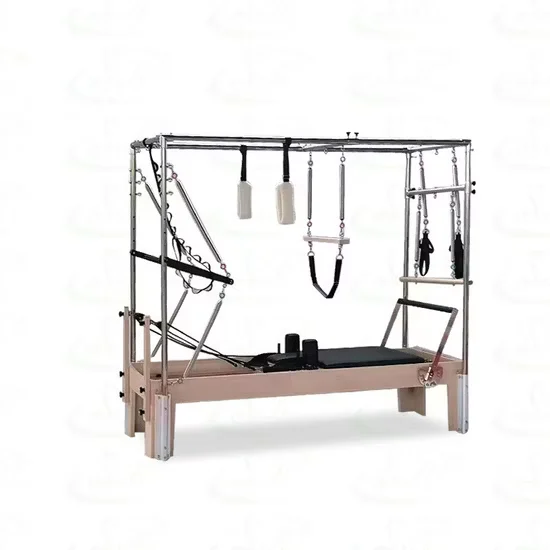
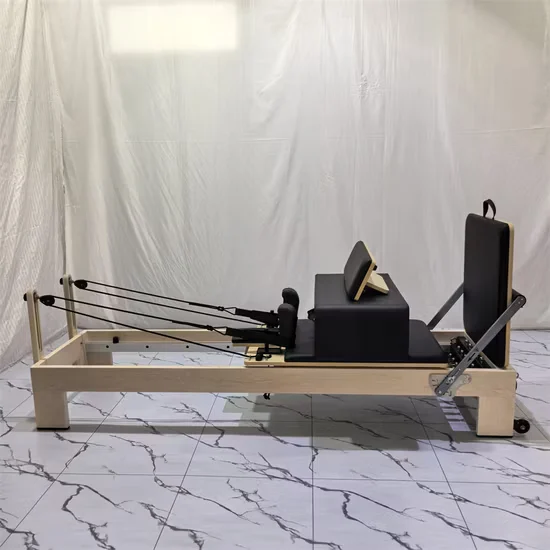
Pilates Wall Unit Reformer, Solid Wood Frame, Full Tracking Carriage, 2460×730×680mm — engineered with precision rail alignment to prevent lateral drift and ensure consistent movement paths under repetitive studio use. Integrated wall unit design maximizes floor space while maintaining structural rigidity for commercial environments. Includes jump board, platform, and long box accessories with reinforced connection points. Backed by ISO 9001:2015 and CE certification, with 3-year warranty and custom logo options available. Every unit undergoes 32-point inspection and 100% load testing before shipment.
// Spec Highlights
• Direct from Manufacturer · No Middlemen · Worldwide Shipping
01
// Material
Imported Solid Wood
Premium hardwood frames sourced for density and visual warmth.
02
// Hardware
Medical-Grade Silent
Whisper-quiet pulleys and springs for clinical environments.
03
// Customization
Appearance OEM
Color, upholstery, and branding tailored to your studio.
04
// Service
Layout Design
Free venue planning for studios and rehab institutions.
Every component is selected for longevity, performance, and aesthetic harmony - from imported hardwood frames to silent medical-grade accessories.
// Features
Solid Wood Rigidity — joinery-reinforced frame with full tracking carriage tested under continuous studio cycling to prevent lateral drift and rail wear.
| Parameter | Value |
|---|---|
| Product Type | Pilates Wall Unit Reformer |
| Model NO. | SRY-19 |
| Product Dimensions | 2460 × 730 × 680 mm |
| Net Weight | 100 kg |
| Frame Material | Solid Wood |
| Carriage System | Full Tracking |
| Accessories Included | Long Box / Jump Board / Platform |
| Color | Solid Color options available |
| Logo | Customized Is Allowed |
| Target User | Adult, Unisex |
| Warranty | 3 Years |
| Production Capacity | 80 Pieces / Month |
| Origin | China |
| HS Code | 9506911900 |
| Certification | ISO 9001:2015, CE, SGS |
| Facility Type | Typical Use |
|---|---|
| Commercial Pilates studio | Daily group reformer classes and private sessions with full wall unit spring resistance |
| Boutique wellness facility | Integrated mat-to-reformer programming in limited floor space layouts |
| Rehabilitation center | Controlled resistance movement for post-injury and mobility recovery protocols |
| Hotel fitness room | Compact wall-mounted configuration serving transient guest use across varying skill levels |
| University athletic department | Supplemental flexibility and core stability work alongside primary strength training zones |
Solid wood construction with reinforced joinery resists the cyclic loading that delaminates thin veneer frames in daily studio environments.
Many Pilates reformers marketed for commercial use rely on particleboard cores wrapped in decorative veneer. Under the repetitive lateral forces generated by carriage travel and spring tension, these composite panels separate at the glue lines within the first year of daily classes. The wall unit tower adds vertical load paths that amplify stress at the base connection points, making structural failure a scheduling problem for studio operators who cannot afford equipment downtime between booked sessions. A commercial Pilates wall unit wood sliding reformer built on solid wood stock eliminates the delamination failure mode entirely [NEED_CITE: wood joinery fatigue performance under cyclic dynamic loading in fitness equipment].
The wall unit reformer addresses the sagittal and frontal planes through spring-loaded resistance across push, pull, and rotational movement patterns, engaging the full posterior chain, hip stabilizers, and deep core musculature. In a studio layout, this single station replaces the need for separate reformer, tower, and mat zones — a meaningful floor space saving for facilities operating at high class density. The commercial Pilates wall unit wood sliding reformer fits practitioners ranging from petite to above-average height without frame modification, owing to the adjustable spring bar positions and full-length carriage travel. It pairs naturally with open mat zones and small apparatus areas rather than duplicating their function.
The carriage system endures hundreds of reciprocating cycles per day in a fully booked studio, generating lateral forces at the rail interface that compound over weeks of continuous operation. The full tracking carriage constrains movement to a precise linear path, distributing load across the entire rail length rather than concentrating wear at the mid-stroke position where most exercises occur. Pulley redirect points at the tower experience both axial and off-axis loading when clients move through rotational exercises, demanding bearing and bushing specifications that maintain alignment under eccentric pull. Wood-to-wood joinery at the base frame and tower upright must resist racking forces generated by asymmetric spring tension, particularly when a single client works unilateral patterns. The protective finish on exposed wood surfaces must tolerate sweat contact and routine cleaning agents without degrading the grain seal [NEED_CITE: structural wood joint performance under asymmetric cyclic loading conditions].
Solid wood frame thickness directly determines the deflection threshold when the tower is loaded with multiple springs at maximum tension — a thicker cross-section resists bending and keeps the vertical pulley plane stable throughout the exercise range. The joinery method at critical junctions, whether doweled, mortise-and-tenon, or mechanically fastened with concealed steel brackets, dictates how the frame handles the transition from static holds to dynamic carriage returns. Full tracking carriage systems employ dual or multi-rail guidance that prevents the lateral drift inherent in single-rail or basic track designs, maintaining movement consistency as the rail surfaces accumulate wear hours. Pulley and rope material grade affects both the smoothness of resistance delivery and the interval between scheduled replacements; high-cycle studio use demands rope specifications that resist fraying under repeated redirect tension.
A reformer built with non-sealed bearings and basic rail profiles may glide smoothly on the showroom floor, but wood dust, studio chalk residue, and ambient humidity penetrate the open raceway within months, causing the carriage to develop play and produce audible friction during use. This forces the studio into unscheduled maintenance — pulling carriages, cleaning tracks, replacing worn bushings — each incident pulling a revenue-generating station offline during peak booking hours. Thin veneer frames that chip at the edges expose composite core material to moisture, accelerating structural breakdown at the exact connection points where the wall unit tower transfers load. Studios that specify equipment on upfront cost alone absorb these recurring service expenses across the full ownership cycle, often exceeding the price difference of a structurally specified unit from the outset [NEED_CITE: bearing seal integrity and maintenance interval correlation in commercial sliding fitness equipment].
Solid wood stock with traceable species and thickness documentation ensures the frame performs predictably under the specific load profile of wall unit reformer work rather than relying on generic "commercial grade" claims. Full tracking carriage components with sealed bearings and precision-machined rail surfaces hold alignment through thousands of class hours, reducing the maintenance burden on studio staff. Each unit undergoes load testing before shipment to verify carriage travel smoothness, pulley system function, and frame rigidity under spring tension — not sample-based inspection that misses unit-to-unit variation. The 200μm industrial-grade protective finish on contact and wear surfaces resists sweat corrosion and cleaning chemical breakdown. Facility planning support includes 2D and 3D CAD layouts that account for the SRY-19 footprint, required clearance around the carriage travel zone, and safe spacing between adjacent reformer stations in a multi-unit studio configuration. OEM customization covers color matching, studio branding on the frame, and upholstery selection to align with facility design standards.
Provide your studio floor dimensions and target station count to receive a 2D or 3D layout that integrates the SRY-19 with proper spacing for safe client flow between units. Specify your average daily class volume and session length to confirm the structural grade matches your operational demand. Identify the practitioner height and body weight range your clientele represents so the adjustable spring bar positions and carriage travel can be validated against your population. Communicate any custom requirements including frame color, studio logo placement, and upholstery selection to align the equipment finish with your interior design specification.
Q: How do I distinguish a commercial-grade Pilates reformer from a home-use model?
A: Inspect the frame construction first. Commercial units use solid wood with reinforced joinery at the tower base and carriage endpoints, while home models often rely on thinner stock or composite panels. Check the carriage system — full tracking with sealed bearings is standard for studio environments where hundreds of daily cycles would destroy basic rail systems within months. Verify that pulleys and ropes carry load ratings appropriate for repeated spring tension use.
Q: What makes the full tracking carriage different from a basic rail system?
A: Basic rail systems allow the carriage to drift laterally under asymmetric loading, creating uneven wear and requiring frequent realignment. A full tracking carriage uses multi-point guidance that constrains movement to a precise linear path across the entire rail length. This maintains exercise consistency as components age and significantly extends the interval between maintenance events — a critical factor when a studio station generates revenue through continuous daily scheduling.
Q: How should I plan floor space for wall unit reformers in a multi-station studio?
A: Start with the unit dimensions and add the full carriage extension distance at both ends. Then account for client mounting clearance on at least one long side and instructor passage between stations. A proper CAD layout prevents the common mistake of placing reformers too close together, which restricts movement patterns that require arm or leg extension beyond the frame boundary and creates safety hazards during dynamic exercises.
Q: What maintenance does the pulley and rope system require in a high-traffic studio?
A: Inspect ropes at each redirect pulley monthly for surface wear, fraying, or stiffness indicating internal fiber breakdown. Check pulley rotation for smoothness and lateral play; sealed bearings should turn freely without grinding or catching. Replace ropes showing any core exposure immediately — a rope failure under spring tension creates a safety incident mid-class. Schedule full system inspection quarterly to verify connection hardware tightness and spring anchor integrity.
Premium aesthetics meet quiet operation for boutique studio environments.
Medical-grade silence and precision for sports & postpartum recovery.
Furniture-grade craftsmanship for premium residential installations.
Compact premium setups for one-on-one and small-group training.
Aesthetic Pilates integration for hybrid wellness studio programming.
Multi-unit deployment with instructor-grade reliability for certification programs.
Tell us about your project. Our team will respond within 24 hours with pricing, customization options, and shipping details.
// Sales Director
William
+86 132 2531 1800
// Export Manager
Bella
+86 198 5412 8032
william@bickfit.com