01 / Scenario
STUDIO
P
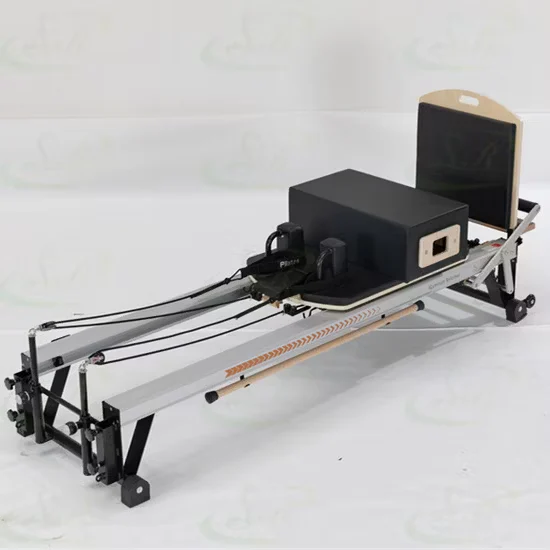
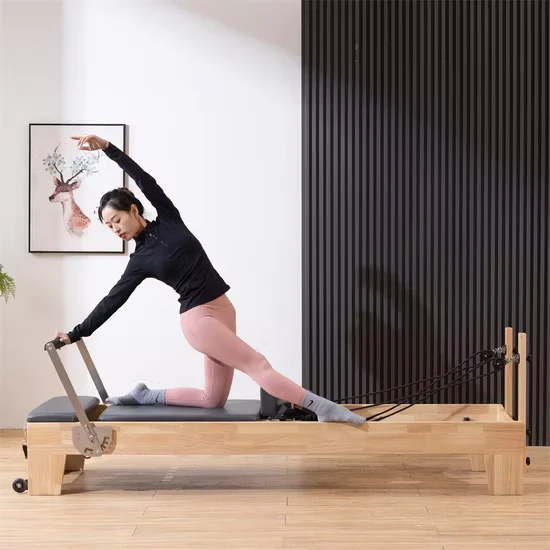
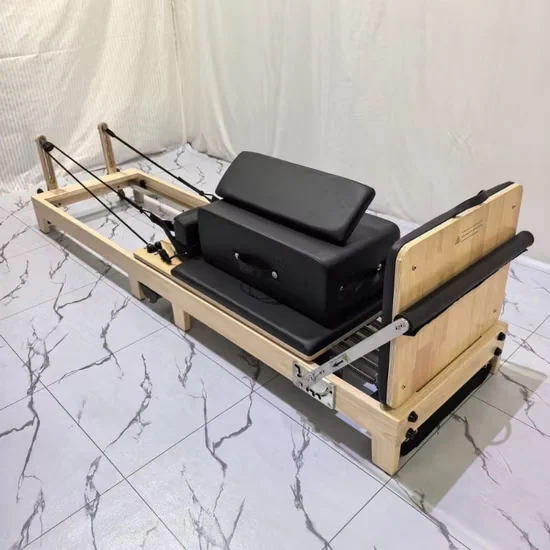
High-End Pilates Studios
Premium aesthetics meet quiet operation for boutique studio environments.

ISO
9001
CE
Certified
OEM
Available
10YR
Warranty
Commercial Pilates Wunda Chair, 800×620×1100mm, 45kg Net Weight — reinforced steel frame engineered for repetitive pedal resistance in high-traffic studio environments, with solid-color upholstery and spring systems built to maintain tension consistency across daily commercial use. Backed by a 3-year warranty and direct-from-factory pricing with no distributor markup.
// Spec Highlights
• Direct from Manufacturer · No Middlemen · Worldwide Shipping
01
// Material
Imported Solid Wood
Premium hardwood frames sourced for density and visual warmth.
02
// Hardware
Medical-Grade Silent
Whisper-quiet pulleys and springs for clinical environments.
03
// Customization
Appearance OEM
Color, upholstery, and branding tailored to your studio.
04
// Service
Layout Design
Free venue planning for studios and rehab institutions.
Every component is selected for longevity, performance, and aesthetic harmony - from imported hardwood frames to silent medical-grade accessories.
// Features
Commercial Pilates Wunda Chair — reinforced steel frame and industrial-grade components engineered to withstand repetitive studio use without structural play or pedal drift.
| Parameter | Value |
|---|---|
| Product Type | Pilates Wunda Chair |
| Frame Construction | Reinforced steel, heavy-duty tube section |
| Spring System | Multiple resistance levels, commercial-grade steel springs |
| Pedal Mechanism | Split pedal with independent spring tension |
| Upholstery | High-density foam, commercial vinyl cover |
| Product Dimensions | 800 × 620 × 1100 mm |
| Net Weight | 45 kg |
| Color Options | Solid color, custom logo application available |
| Warranty | 3 Years |
| Facility Type | Typical Use |
|---|---|
| Pilates and boutique fitness studio | Group reformer-chair classes, semi-private sessions |
| Rehabilitation and physiotherapy center | Lower-limb recovery, core stabilization protocols |
| Hotel and resort wellness facility | In-room or spa-adjacent movement programming |
| Personal training studio | One-on-one functional movement assessment and training |
Pedal resistance forces concentrate at the base welds, where thin tubing yields before the springs fatigue.
Most light-commercial chairs specify the frame only as "commercial grade" without naming the steel gauge or tube wall thickness. In a studio running back-to-back classes, the pedal mechanism generates repeated eccentric loading at the frame-to-base junction. Over months, this cyclic stress exposes spot welds and thin-wall sections — the chair develops lateral play, the pedal feels uneven, and the upholstery compresses into permanent hollows [NEED_CITE: EN 957 structural requirements for stationary training equipment]. When you source a commercial pilates wunda chair, the frame specification is the first line of defense against these failures.
The Wunda Chair targets unilateral leg press, seated torso work, and standing balance exercises that reformers and Cadillacs cannot replicate in a compact footprint. It pairs with a reformer for comprehensive Pilates programming, filling the gap between supine-loaded movements and upright functional challenges. Studios with limited square footage prioritize this chair because it delivers a wide exercise vocabulary within a small floor area. The commercial pilates wunda chair accommodates users from rehabilitation clients to athletic populations, with split pedals allowing independent resistance adjustments for asymmetrical loading.
Every pedal depression generates an eccentric force vector that transfers through the spring anchor points into the main frame. In a studio scheduling six or more sessions per day, the chair endures hundreds of these cycles daily. The stress concentrates at the weld where the pedal axle housing meets the vertical frame member — a joint that must resist both downward compression and lateral shear. Spring fatigue is secondary; structural failure initiates at weld seams that lack full penetration or at tube sections too thin to distribute the load [NEED_CITE: weld classification and fatigue performance in structural steel]. Upholstery compression and vinyl splitting at contact edges follow a parallel degradation path under continuous use.
The frame tube wall thickness determines how the chair responds to off-center pedal loading — when a user presses one split pedal independently, the asymmetric force tries to twist the base. A heavier gauge and wider tube section resist this torsion, keeping the pedal travel path consistent. The spring steel grade dictates whether resistance remains linear through the full range or develops dead zones after extended compression cycles. Upholstery density measured in kilograms per cubic meter predicts how quickly the seat and pedal pads compress into permanent depressions; high-density foam maintains shape under daily loading far longer than standard-density alternatives. The vinyl cover thickness and seam construction determine resistance to splitting at stress points where users grip or where hardware penetrates the material.
A chair built with thin-wall tubing may pass initial quality checks but develops lateral pedal wobble within the first year of commercial scheduling. Spot welds at the pedal pivot, invisible beneath powder coating, crack under repetitive eccentric loading and create safety liability when a client’s foot slips mid-exercise. Low-density foam compresses into permanent hollows, forcing the studio to reorder replacement pads or retire the unit. Non-standard spring dimensions mean the chair cannot accept aftermarket replacements, turning a maintenance issue into a full equipment write-off [NEED_CITE: equipment lifecycle cost analysis in commercial fitness facilities]. These failures compound: a studio replacing pads and springs quarterly spends more on upkeep than a competitor who invested in heavier construction upfront.
The frame uses industrial-grade steel with mill certification traceable to the coil, so material origin is verifiable rather than claimed. Robotic MIG welding produces continuous weld lines at the pedal-to-frame junction, eliminating the spot-weld weak points that crack under cyclic loading. Every unit undergoes load testing before shipment — not sample-based inspection, but per-unit verification. The powder coating reaches 200μm thickness, resisting chipping at contact points where bare steel would otherwise corrode from sweat and cleaning chemicals. The 3-year warranty covers structural components, and replacement springs, pedals, and upholstery panels remain available for long-term maintenance. Custom logo application and color options allow studios to maintain brand consistency across their equipment fleet.
Provide your studio floor plan and daily class schedule volume to receive a 2D-3D layout that positions the commercial pilates wunda chair with correct safety clearances and traffic flow. Specify your target user population — rehabilitation clients, general fitness members, or athletic training groups — so the spring resistance configuration matches actual programming needs. Communicate color and logo customization requirements early in the procurement cycle to align with your brand standards.
Q: How do I distinguish a commercial-grade Wunda Chair from light-commercial alternatives?
A: Request the frame steel gauge and tube wall thickness in writing — commercial units specify these values while light-commercial products often list only "commercial grade." Check the welding method; continuous MIG welds resist cyclic fatigue better than spot welds. Ask whether load testing is performed on every unit or only on production samples, and confirm that replacement springs and upholstery are stocked as standard spare parts.
Q: What frame specifications should I prioritize for daily studio use?
A: The tube section dimensions and wall thickness determine resistance to torsional flex when users press split pedals independently. Continuous weld lines at the pedal-to-frame junction prevent crack propagation under repetitive eccentric loading. A frame net weight around 45 kg indicates sufficient material density for stability without floor anchoring in most studio environments.
Q: How do spring resistance options affect exercise programming on the Wunda Chair?
A: Multiple spring tensions allow instructors to scale resistance from rehabilitation-level loading through advanced athletic training without changing equipment. Split pedals with independent spring adjustment enable unilateral work that addresses strength asymmetries. Commercial-grade steel springs maintain linear resistance profiles over extended use cycles, preventing the dead zones that develop in lower-grade alternatives.
Q: What footprint planning considerations apply to multi-chair studio layouts?
A: Each chair requires clearance beyond its 800 × 620 mm base for safe pedal travel and instructor access on multiple sides. Arrange chairs so users face away from traffic aisles to prevent collisions during standing exercises. Leave adequate spacing between units for mat work that often accompanies chair-based programming in group class formats.
Q: Are replacement parts available for long-term maintenance?
A: Commercial-grade chairs should offer replacement springs, pedal assemblies, and upholstery panels as standard stocked items. Confirm that spring dimensions and mounting hardware follow common specifications rather than proprietary designs that lock you into a single source. Upholstery replacement should be straightforward, with covers that attach via standard fasteners rather than permanent adhesive.
Premium aesthetics meet quiet operation for boutique studio environments.
Medical-grade silence and precision for sports & postpartum recovery.
Furniture-grade craftsmanship for premium residential installations.
Compact premium setups for one-on-one and small-group training.
Aesthetic Pilates integration for hybrid wellness studio programming.
Multi-unit deployment with instructor-grade reliability for certification programs.
Tell us about your project. Our team will respond within 24 hours with pricing, customization options, and shipping details.
// Sales Director
William
+86 132 2531 1800
// Export Manager
Bella
+86 198 5412 8032
william@bickfit.com