01 / Scenario
STUDIO
P
High-End Pilates Studios
Premium aesthetics meet quiet operation for boutique studio environments.

ISO
9001
CE
Certified
OEM
Available
10YR
Warranty
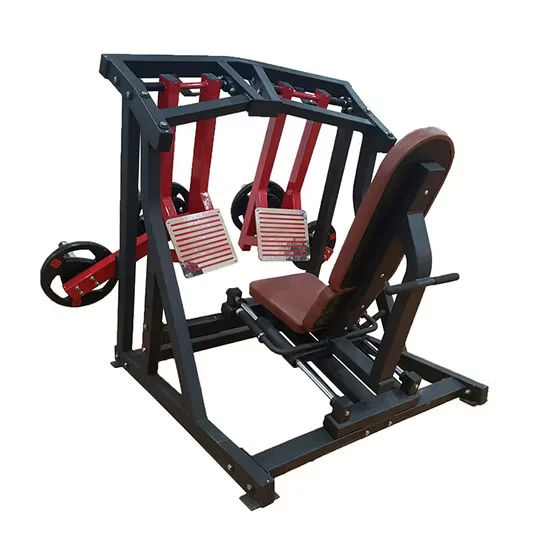
Commercial Plate Loaded Shrug Machine, 1060×1550×1190 mm, 86 kg Net Weight — engineered with industrial steel frame and continuous robotic MIG welding to resist deformation under repetitive heavy loading. Sealed bearings ensure smooth movement paths for high-traffic commercial environments. Every unit undergoes individual load testing before shipment, backed by a 10-year frame warranty.
// Spec Highlights
• Direct from Manufacturer · No Middlemen · Worldwide Shipping
01
// Material
Imported Solid Wood
Premium hardwood frames sourced for density and visual warmth.
02
// Hardware
Medical-Grade Silent
Whisper-quiet pulleys and springs for clinical environments.
03
// Customization
Appearance OEM
Color, upholstery, and branding tailored to your studio.
04
// Service
Layout Design
Free venue planning for studios and rehab institutions.
Every component is selected for longevity, performance, and aesthetic harmony - from imported hardwood frames to silent medical-grade accessories.
// Features
Traceable Steel — Every tube cut from mill-certified Q235 coil, gauge verified before fabrication begins on this plate loaded shoulder machine.
| Parameter | Value |
|---|---|
| Product Type | Plate Loaded Shoulder Machine |
| Loading Type | Plate loaded |
| Frame Material | Steel |
| Product Dimensions | 1060×1550×1190 mm |
| Net Weight | 86 kg |
| Exercise Part | Shoulder |
| Certification | ISO 9001, CE |
| HS Code | 9506911900 |
| Production Capacity | 500 PCS/Month |
| Facility Type | Typical Use |
|---|---|
| Commercial gym strength floor | High-volume trapezius training between rack and cable stations |
| Hotel fitness center | Compact footprint shoulder development for limited-square-footage layouts |
| University strength and conditioning room | Athletic trapezius and upper-back development programs |
| Community fitness center | Durable plate loaded shoulder machine for unsupervised daily use |
| Rehabilitation and performance center | Controlled-range shrug movements for return-to-play protocols |
Steel gauge and welding continuity define the difference between a decade-long asset and a two-year liability.
Many suppliers label shrug machines as "commercial grade" without disclosing the actual tube gauge or wall thickness. Under repeated heavy plate loading, undersized frames develop visible flex at the lever arm junction, and spot-welded connections crack along the stress line before the steel itself yields. Sealed bearings matter equally — when unsealed bushings develop play within the first year, the pivot point wobbles and the user compensates with uneven shrug mechanics [NEED_CITE: structural fatigue thresholds in cyclically loaded gym equipment frames]. The commercial plate loaded shrug machine built for real traffic must address these failure points at the engineering stage, not after warranty claims arrive.
This plate loaded shoulder machine targets the upper and middle trapezius through a linear vertical resistance path. On a strength floor, it complements the lat pulldown and seated row stations by isolating elevation mechanics that compound pulling movements cannot fully develop. Facilities with moderate-to-high member density benefit from its self-contained design — no cable routing or weight stack tower required. The handle spacing accommodates a wide range of shoulder widths, making it functional across general membership populations and athletic teams alike. The commercial plate loaded shrug machine occupies a focused footprint that fits between free-weight and selectorized zones.
The primary load path runs from the grip handles through the lever arm into the main upright weld junction. Each rep generates a short-duration eccentric shock as plates decelerate at the bottom of the range, and these micro-impacts accumulate across thousands of cycles per week. Weld seams at the pivot bracket and base gusset endure the highest concentration of cyclic stress. Handle knurling and grip sleeves experience direct contact abrasion, while powder-coated surfaces near the plate horn face repeated contact from loading and unloading bumper plates [NEED_CITE: EN 957 structural requirements for stationary training equipment].
Steel gauge determines the frame’s resistance to bending under loaded conditions — thicker-walled tubing raises the threshold before permanent deformation occurs. Continuous MIG welding distributes stress across the full joint length, eliminating the localized failure points inherent in spot-welded assemblies. The powder coating thickness directly influences how long the finish resists chipping at plate contact zones and grip abrasion areas, particularly under exposure to sweat and cleaning chemicals. Load testing every unit before dispatch, rather than sampling from a production batch, catches fabrication inconsistencies that visual inspection alone cannot identify. These four parameters together define how long a plate loaded shoulder machine performs reliably under commercial traffic.
Thin-walled tubing may hold up during light initial use but bends progressively under sustained heavy loading, altering the machine’s geometry and movement path. Spot-welded joints pass early visual inspection yet crack under the repeated eccentric forces of loaded shrug reps, creating safety liability for the facility operator. Unsealed bearings admit chalk dust and moisture, developing play that requires increasingly frequent maintenance intervention and eventual replacement. Coating applied too thin chips at high-contact zones within months, exposing bare steel to corrosion and degrading appearance long before the structural frame reaches its actual fatigue limit [NEED_CITE: weld classification and fatigue performance in structural steel].
The 11-gauge frame steel used here is sourced from mill-certified Q235 coil with traceability documentation available for each production batch. Robotic MIG welding produces continuous weld lines along every joint, removing the weak-link geometry of spot-welded connections. Every unit undergoes load testing before crating — not sample-based inspection, but individual verification. The 200μm industrial powder coating, applied over sandblast preparation, protects high-contact surfaces from plate abrasion and cleaning chemical exposure. The 10-year frame warranty reflects this structural confidence. For facility layout, the 1060×1550 mm footprint allows standard clearance spacing on either side for safe plate loading and user passage, which we model in 2D-3D CAD when planning strength zone floor plans.
Share your strength floor dimensions and current equipment schedule to receive a 2D-3D layout showing how this machine integrates with existing stations and traffic flow. Specify expected daily usage volume so we can confirm the structural grade matches your operational demand. Indicate your member population’s typical body-type range to verify handle spacing and movement range suitability. Communicate any custom requirements including frame color, logo placement, or upholstery preferences for brand alignment.
Q: How do I verify whether a shrug machine is truly commercial grade?
A: Request the specific steel gauge and tube dimensions rather than accepting generic commercial labels. Ask whether welding is continuous or spot-welded, and whether load testing is performed on every unit or only sampled from production batches. These three data points reveal the actual structural capacity behind the marketing terminology.
Q: What determines the load capacity of a plate loaded shoulder machine?
A: Frame tube gauge and wall thickness set the deformation threshold, while welding type determines where fatigue failures initiate under repeated loading. The pivot bearing specification and lever arm geometry also influence how load transfers through the structure during eccentric portions of each repetition.
Q: Should I choose plate loaded or selectorized shrug equipment for my facility?
A: Plate loaded units suit environments where users are accustomed to loading their own weight and where floor space is limited, since they eliminate the weight stack tower. Selectorized machines serve high-turnover facilities where quick weight changes and supervised beginner use are operational priorities.
Q: How does equipment spacing affect strength zone safety?
A: Insufficient clearance between stations causes plate horns or loaded bars to encroach on adjacent user space, creating collision risk during loading and exercise execution. Proper floor planning accounts for the full operational envelope including plate storage, user passage, and adjacent equipment movement paths.
Q: What maintenance schedule should I expect for grip and contact surfaces?
A: Grip sleeves and handle knurling on high-traffic machines require quarterly inspection for abrasion depth and surface integrity. Replacement intervals depend on daily usage volume and whether users employ chalk or gloves, but worn grips compromise both safety and training effectiveness.
Premium aesthetics meet quiet operation for boutique studio environments.
Medical-grade silence and precision for sports & postpartum recovery.
Furniture-grade craftsmanship for premium residential installations.
Compact premium setups for one-on-one and small-group training.
Aesthetic Pilates integration for hybrid wellness studio programming.
Multi-unit deployment with instructor-grade reliability for certification programs.
Tell us about your project. Our team will respond within 24 hours with pricing, customization options, and shipping details.
// Sales Director
William
+86 132 2531 1800
// Export Manager
Bella
+86 198 5412 8032
william@bickfit.com