
01 / Scenario
STUDIO
P
High-End Pilates Studios
Premium aesthetics meet quiet operation for boutique studio environments.

ISO
9001
CE
Certified
OEM
Available
10YR
Warranty
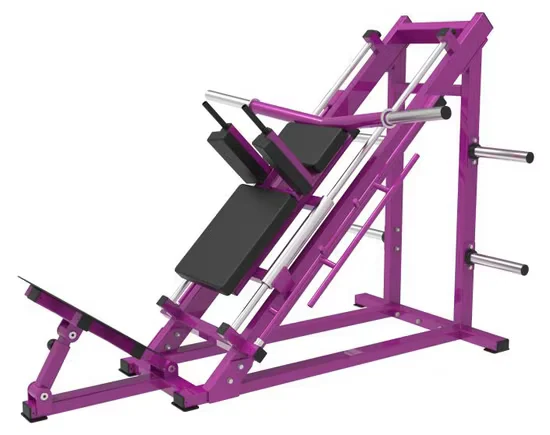
Commercial Smith Machine, 3×3 Inch Frame, Plate Loaded — linear bearing glide system with chrome-plated guide rods ensures smooth barbell travel under heavy eccentric loads. Customizable frame and upholstery colors available for facility branding. Every unit undergoes full load testing before shipment with 10-year frame warranty and floor planning support included.
// Spec Highlights
• Direct from Manufacturer · No Middlemen · Worldwide Shipping
01
// Material
Imported Solid Wood
Premium hardwood frames sourced for density and visual warmth.
02
// Hardware
Medical-Grade Silent
Whisper-quiet pulleys and springs for clinical environments.
03
// Customization
Appearance OEM
Color, upholstery, and branding tailored to your studio.
04
// Service
Layout Design
Free venue planning for studios and rehab institutions.
Every component is selected for longevity, performance, and aesthetic harmony - from imported hardwood frames to silent medical-grade accessories.
// Features
Mill-Traceable Steel Frames — every tube lot carries a coil certificate from mill to shop floor, eliminating unverified "commercial grade" claims that leave buyers guessing.
| Parameter | Value |
|---|---|
| Product Type | Smith Machine |
| Frame Tube Size | 3×3 inch |
| Steel Grade | Q235 / Q345 industrial steel, mill-certified |
| Loading Type | Plate loaded |
| Product Dimensions | 1340 × 2266 × 2384 mm |
| Net Weight | 215 kg |
| Bearing Type | Linear bearing |
| Guide Rod | Chrome-plated guide rods |
| Powder Coating | Available (color according to customer requirements) |
| Upholstery | Available (color according to customer requirements) |
| Certification | ISO 9001:2015, CE |
| Assembly State | Folded |
| OEM/ODM | Acceptable |
| Facility Type | Typical Use |
|---|---|
| Commercial gym strength floor | Dedicated squat and press station with guided barbell path for high-volume member use |
| University strength and conditioning room | Supervised team training sessions requiring repeatable movement standards across athlete groups |
| Hotel and resort fitness center | Low-supervision environment where guided rail system reduces injury risk for transient users |
| CrossFit box functional zone | Heavy compound lift station integrated alongside free-weight racks and functional rigs |
| Rehabilitation and performance center | Controlled vertical loading for return-to-training protocols under therapist supervision |
Frame wall thickness decides whether the upright bends or holds when uneven loads hit the carriage off-center.
Most procurement sheets say "commercial grade steel" without naming the gauge, the wall thickness, or the mill that rolled it. In a smith machine, the uprights absorb lateral shear every time a user un-racks with one arm stronger than the other. Thin-wall tubing passes a static demo but develops visible deflection within months of daily loading cycles. The gap between "looks commercial" and "survives commercial" is almost always the steel cross-section, not the paint color. [NEED_CITE: structural steel tube gauge and deflection thresholds under eccentric loading]
A commercial smith machine occupies a distinct lane between free squat racks and selectorized leg press stations. It covers the vertical pressing and squatting plane — back squats, front squats, overhead presses, inverted rows — with a guided bar path that reduces the need for spotters during heavy singles. On a high-density strength floor, it complements half racks used for Olympic lifts and pairs with an adjacent adjustable bench for incline and decline work. The footprint suits facilities that serve a wide range of body sizes, because the fixed vertical plane accommodates users who may not yet have the stability for fully free barbell work.
The highest stress events on a plate-loaded smith machine are not the smooth reps — they are the failed lifts where a user drops weight unevenly onto the catch hooks. Each failure event sends an asymmetric shock through the carriage, into the linear bearings, and down the guide rods into the base frame. [NEED_CITE: fatigue failure patterns in guided resistance equipment under repeated off-center loading] Welds at the upright-to-base junction see the most concentration, which is why continuous robotic MIG passes outperform spot welds that leave cold-joint gaps invisible to a quick visual check. The chrome-plated guide rods also face wear from microscopic debris carried into the bearing housing by sweat evaporation, meaning seal quality determines whether the carriage still glides true after thousands of cycles.
The 3×3 inch frame tube sets a deformation threshold that narrower sections cannot match under heavy plate loads, because the moment of inertia scales with the cube of the cross-section dimension. Linear bearings, as opposed to simple bushings, distribute load across multiple ball circuits, reducing point contact and keeping the carriage travel smooth even when plates are loaded unevenly on one side. Chrome plating on the guide rods is not cosmetic — it provides a hard, low-friction surface that resists corrosion from the humidity and sweat typical in commercial gym environments. The powder coating thickness, specified at 200μm after sandblast pre-treatment, prevents the chipping that exposes bare steel at barbell contact points and catch hook zones where metal-on-metal impact is routine.
A frame built from lighter gauge tube saves money at purchase but accumulates cost through visible deflection that alarms experienced lifters and drives them toward competing facilities. Spot-welded joints that crack under repeated eccentric loading create liability exposure for gym operators, especially in unsupervised hotel and apartment fitness rooms. Non-sealed bearings develop lateral play that makes the barbell carriage feel loose and unreliable, triggering maintenance calls that pull staff away from member-facing duties. [NEED_CITE: lifecycle cost comparison between sealed bearing and bushing systems in commercial fitness equipment] Thin powder coatings chip at high-contact zones within months, exposing steel to sweat-driven corrosion that no amount of touch-up paint can fully resolve once it begins beneath the coating layer.
The 11-gauge, 3×3 inch uprights are sourced from Q235 and Q345 coil with mill certificates traceable to the heat number, so any frame section can be verified back to the steel mill. Robotic MIG welding produces continuous bead lines at every structural junction, eliminating the cold-joint risk inherent in manual spot welding on high-volume production runs. Every unit undergoes individual load testing — not sample-based QC — before it leaves the Ningjin floor, catching guide rod alignment issues that would otherwise surface as barbell binding at the customer site. The 200μm powder coat, applied over full sandblast pre-treatment, gives the frame a scratch-resistant surface rated for years of plate contact and cable abrasion. A 10-year frame warranty backs the structural package, and 2D-3D CAD layout support ensures this smith machine is positioned with safe clearance from adjacent racks, accounting for plate overhang and user traffic flow.
Share your strength zone dimensions and current equipment list to receive a 2D-3D placement plan that accounts for safe traffic flow around this commercial smith machine. Specify expected daily user volume so we can confirm the structural grade matches your traffic profile. Provide target user demographics to verify the fixed movement plane accommodates your membership’s body size range. Communicate any custom requirements for frame color, upholstery tone, or logo placement before production begins.
Q: How do I tell a true commercial smith machine from a light-commercial one just by looking at the specs?
A: Check for three structural markers: frame tube dimensions listed in exact measurements rather than vague "heavy-duty" language, bearing type specified as linear bearing rather than bushing, and steel grade named with a traceable standard such as Q235 or Q345. Light-commercial units often omit gauge numbers entirely and use thinner coatings that chip quickly under plate contact.
Q: What difference does a linear bearing make compared to a bushing system in daily gym use?
A: Linear bearings distribute load through recirculating ball circuits, which keeps carriage travel smooth even under off-center plate loads. Bushings rely on surface-to-surface contact that wears faster under the sweat and dust typical in gym environments, leading to lateral play that requires more frequent maintenance visits and eventual replacement.
Q: How does guide rod diameter influence stability when a lifter loads plates unevenly?
A: A thicker chrome-plated guide rod resists lateral deflection when weight is concentrated on one side of the carriage. If the rod is undersized, the linear bearings develop visible play that makes the barbell path feel unpredictable, especially during heavy eccentric phases where control matters most for user safety.
Q: What safety features should I prioritize for a smith machine placed in an unsupervised hotel gym?
A: Look for multiple catch hook positions along the upright so users can set a fail-safe height, a barbell carriage that locks securely at the top and bottom of travel, and a frame heavy enough to remain stable without floor anchoring if bolt-down is not possible in that facility.
Premium aesthetics meet quiet operation for boutique studio environments.
Medical-grade silence and precision for sports & postpartum recovery.
Furniture-grade craftsmanship for premium residential installations.
Compact premium setups for one-on-one and small-group training.
Aesthetic Pilates integration for hybrid wellness studio programming.
Multi-unit deployment with instructor-grade reliability for certification programs.
Tell us about your project. Our team will respond within 24 hours with pricing, customization options, and shipping details.
// Sales Director
William
+86 132 2531 1800
// Export Manager
Bella
+86 198 5412 8032
william@bickfit.com


![Commercial Plate Loaded Pendulum Squat Machine SRH-72 for Gym [WARN] draft identifier mismatch](https://bickgym.com/wp-content/uploads/2026/08/commercial-plate-loaded-pendulum-squat-machine-srh-72-for-gym-warn-draft-identifier-mismatch-554a24.webp)