
01 / Scenario
STUDIO
P
High-End Pilates Studios
Premium aesthetics meet quiet operation for boutique studio environments.
ISO
9001
CE
Certified
OEM
Available
10YR
Warranty
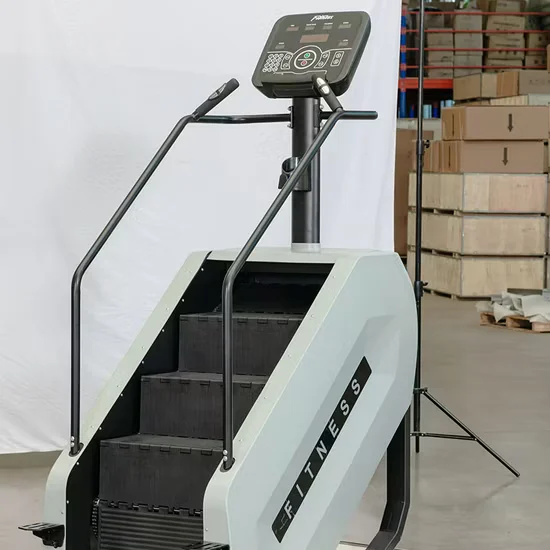
Commercial Stair Climber Machine, 180kg Max User Weight, Motor Drive, 15–164 Steps/Min — Steel pipe frame with 148kg net weight ensures structural stability during continuous high-step-rate operation. Variable speed motor drive and PP plastic step surfaces are engineered for sustained daily use in high-traffic environments. Every unit undergoes load testing before shipment to verify 180kg capacity is validated, not just stated.
// Spec Highlights
• Direct from Manufacturer · No Middlemen · Worldwide Shipping
01
// Material
Imported Solid Wood
Premium hardwood frames sourced for density and visual warmth.
02
// Hardware
Medical-Grade Silent
Whisper-quiet pulleys and springs for clinical environments.
03
// Customization
Appearance OEM
Color, upholstery, and branding tailored to your studio.
04
// Service
Layout Design
Free venue planning for studios and rehab institutions.
Every component is selected for longevity, performance, and aesthetic harmony - from imported hardwood frames to silent medical-grade accessories.
// Features
Motor-Driven Stability at 180kg Load — The 148kg net mass and steel pipe frame construction anchor this commercial stair climber machine against lateral shift during sustained high-step-rate operation.
| Parameter | Value |
|---|---|
| Product Type | Stair Climber |
| Max User Weight | 180kg |
| Net Weight | 148kg |
| Product Dimensions | 1450 × 820 × 2080mm |
| Step Area | 560 × 235 × 220mm |
| Mains Input | AC220V±10% / AC110V±10% |
| Type of Drive | Motor Drive |
| Running Velocity | 15 – 164 steps/min |
| Display Functions | Time, Climb, Calories, Steps, Heart Rate |
| Material | Steel Pipe + PP Plastic |
| Folded | Unfolded |
| Color | Black |
| Certification | CE |
| Facility Type | Typical Use |
|---|---|
| Commercial Gym Cardio Zone | High-traffic, multi-user daily climbing sessions |
| Hotel and Resort Fitness Center | Durable cardio option with low maintenance demands |
| University Athletic Performance Room | Pre-season conditioning and general fitness programming |
| Home Gym Setup | Compact footprint relative to full climbing stroke range |
A 148kg machine mass and verifiable steel pipe construction separate this commercial stair climber machine from units that flex and wobble within months. Many stair climbers marketed for gym use rely on thin-wall tubing and spot-welded joints that cannot sustain the torsional stress generated at higher step rates. Under continuous daily operation, frame flex transfers into the motor mount, accelerating bearing wear and creating uneven step resistance. [NEED_CITE: structural fatigue performance of welded steel frames under cyclic loading] Operators who have replaced units within the first year often trace the failure back to frame gauge that was never independently verified.
This commercial stair climber machine occupies a dedicated vertical-motion slot on the cardio floor, complementing treadmills, ellipticals, and rowers by targeting sustained lower-body output through a full stepping range. The 1450 × 2080mm footprint and 560mm step area accommodate a wide user height range without requiring ceiling-height clearance beyond standard gym specifications. Motor-driven operation at 15–164 steps/min allows facilities to serve both warm-up intensity and structured conditioning within the same hardware platform. Heart rate display integration supports monitored sessions without additional peripheral equipment.
Every step cycle on a motor-driven climber generates impact loading at the pedal linkage, lateral force at the handrail mount, and continuous rotational torque through the drive motor. Over thousands of daily cycles, stress concentrates at welded joints connecting the step mechanism to the main frame, while bearing surfaces in the pedal roller path experience wear from dust and sweat infiltration. The PP plastic step surface must resist abrasion from footwear rubber without developing smooth spots that compromise grip. Frame rigidity directly determines whether vibration remains isolated or propagates into the console mount and handrail assembly. [NEED_CITE: bearing seal effectiveness in high-traffic fitness equipment environments]
The 148kg net weight relative to the 1450 × 820mm base footprint indicates sufficient structural mass to resist lateral movement during intense climbing at higher step rates. Steel pipe frame construction provides the rigidity needed to keep the motor-driven step mechanism aligned under the rated 180kg user load. The motor drive system with a 15–164 steps/min range must sustain continuous thermal duty without derating, which depends on motor winding quality and housing ventilation design. The 560 × 235 × 220mm step area paired with PP plastic surfaces balances foot placement stability with long-term wear resistance. CE certification confirms conformity with European safety requirements for stationary training equipment.
Thin-wall steel tubing that saves material cost at purchase will flex visibly under a 180kg user, transferring vibration into the console and handrail — a failure pattern that accelerates electronic component fatigue and creates user discomfort. Spot-welded joints at the step linkage mount may pass visual inspection at the factory but develop cracks within months of continuous gym operation, requiring full frame disassembly for repair. Non-sealed bearings in the pedal roller path allow sweat and dust to degrade lubrication, producing noise and play that operators cannot correct without full bearing replacement. Units with inadequate powder coating develop surface corrosion at contact points, undermining both appearance and structural integrity over time. [NEED_CITE: corrosion progression on inadequately coated steel in humid gym environments]
The steel pipe frame and motor-driven step mechanism are engineered as an integrated system, with the 148kg machine mass providing the stability foundation for the 180kg user load rating. Every unit undergoes load testing before shipment rather than relying on sample-based quality checks. The 1450 × 820 × 2080mm dimensions are factored into 2D-3D floor planning support, ensuring adequate safety clearance between this commercial stair climber machine and adjacent equipment. CE certification provides documented conformity for facility compliance requirements. Color and branding customization options allow integration into existing facility design standards.
Provide your cardio zone dimensions and existing equipment list to receive a 2D-3D layout showing optimal placement of this commercial stair climber machine with verified safety clearances. Specify your estimated daily user count so the structural duty rating can be matched to your traffic volume. Indicate target user height and weight ranges to confirm step area and load capacity alignment. Custom color and facility branding options are available for integrated design consistency.
Q: How can I verify whether a stair climber is built for true commercial use rather than light commercial?
A: Check whether the manufacturer provides verifiable frame material specifications and load testing documentation rather than vague commercial-grade claims. A true commercial unit will document its steel pipe gauge, net weight relative to footprint, and per-unit load test records. Motor drive systems rated for continuous duty at maximum step velocity indicate engineering for high-traffic environments. Request the material test report and load test certificate before committing to purchase.
Q: What frame and structural specs should I prioritize when evaluating stair climber durability?
A: Frame steel pipe wall thickness and overall section dimensions determine resistance to flex under the rated user load. Net weight relative to the base footprint indicates whether the machine will resist lateral movement during high-step-rate operation. Motor mount construction and step linkage joint design directly affect long-term reliability under continuous cycling. Verify that bearings in the pedal roller path are sealed against dust and moisture infiltration typical in gym environments.
Q: Does a motor-driven stair climber suit high-traffic commercial use better than a self-powered model?
A: Motor-driven units maintain consistent step velocity regardless of user effort, which supports structured programming and heart-rate-monitored sessions across varied fitness levels. The motor must be rated for continuous thermal duty to sustain operation through peak gym hours without overheating. Self-powered models place all drive resistance on the user and may not maintain target step rates at lower effort levels. For facilities with diverse user populations, motor-driven operation provides more predictable performance.
Q: What maintenance intervals should I expect for the step mechanism on a commercial stair climber?
A: Step linkage pivot points and motor mount hardware should be inspected for tightness at 90-day intervals under continuous commercial operation. Bearings in the pedal roller path require periodic inspection for noise or play indicating lubrication breakdown. PP plastic step surfaces should be cleaned regularly with non-abrasive products to maintain grip texture. Keep a spare parts list on file covering step rollers, linkage bushings, and drive belt components for timely replacement.
Premium aesthetics meet quiet operation for boutique studio environments.
Medical-grade silence and precision for sports & postpartum recovery.
Furniture-grade craftsmanship for premium residential installations.
Compact premium setups for one-on-one and small-group training.
Aesthetic Pilates integration for hybrid wellness studio programming.
Multi-unit deployment with instructor-grade reliability for certification programs.
Tell us about your project. Our team will respond within 24 hours with pricing, customization options, and shipping details.
// Sales Director
William
+86 132 2531 1800
// Export Manager
Bella
+86 198 5412 8032
william@bickfit.com


