01 / Scenario
STUDIO
P
High-End Pilates Studios
Premium aesthetics meet quiet operation for boutique studio environments.

ISO
9001
CE
Certified
OEM
Available
10YR
Warranty
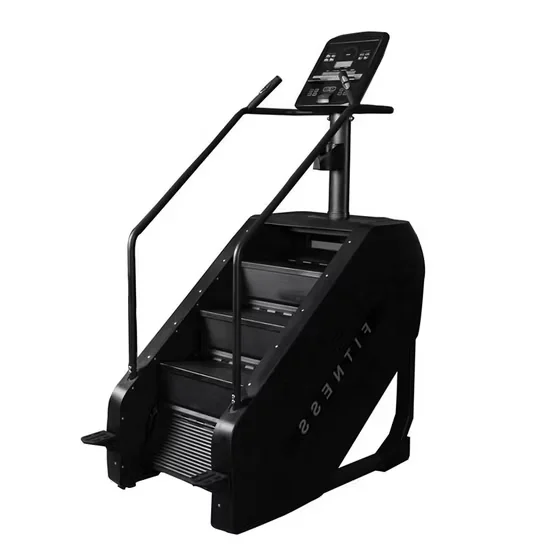
Commercial Stair Climbing Machine, Motor Drive, 15–164 Steps/Min, 148kg Net Weight — steel pipe frame with PP step housing delivers rigid, impact-resistant operation under sustained gym use; motor-driven mechanism ensures smooth cadence control without belt slippage. CE certified with custom color and branding options available. Every unit undergoes full load testing before shipment to guarantee structural integrity for high-traffic environments.
// Spec Highlights
• Direct from Manufacturer · No Middlemen · Worldwide Shipping
01
// Material
Imported Solid Wood
Premium hardwood frames sourced for density and visual warmth.
02
// Hardware
Medical-Grade Silent
Whisper-quiet pulleys and springs for clinical environments.
03
// Customization
Appearance OEM
Color, upholstery, and branding tailored to your studio.
04
// Service
Layout Design
Free venue planning for studios and rehab institutions.
Every component is selected for longevity, performance, and aesthetic harmony - from imported hardwood frames to silent medical-grade accessories.
// Features
Motor-Driven Step Precision — A verified steel pipe chassis paired with a motor-driven step mechanism delivers continuous, stable cadence control under sustained commercial use, eliminating the mechanical slippage common in belt-driven alternatives.
| Parameter | Value |
|---|---|
| Product Type | Commercial Stair Climber |
| Drive Type | Motor Drive |
| Power Input | AC220V±10% / AC110V±10% |
| Step Area | 560×235×220mm |
| Running Velocity | 15–164 steps/minute |
| Console Display (OSD) | Time, Climb, Calories, Steps, Heart Rate |
| Frame Material | Steel Pipe + PP Plastic |
| Product Dimensions | 1450×820×2080mm |
| Net Weight | 148kg |
| Folded State | Unfolded |
| Color | Black (customization available) |
| Certification | CE |
| Facility Type | Typical Use |
|---|---|
| Commercial Gym Cardio Zone | High-traffic, multi-user daily operation for endurance and lower-body conditioning |
| Hotel and Resort Fitness Center | Compact footprint with clean profile for premium guest-facing environments |
| University Athletic Department | Durable enough for team conditioning blocks and pre-season preparation |
| Rehabilitation and Performance Center | Controlled cadence range for progressive lower-body load management |
Many units marketed as commercial stair climbers rely on thin-gauge frame tubing that develops noticeable wobble at the step pivot points within months of daily use. This commercial stair climbing machine is built on a verified steel pipe chassis engineered to resist flex under repetitive loading.
When step pedals shift laterally under foot strike, users compensate with unstable knee tracking — a failure mode that originates in the frame, not the user. The steel pipe frame structure here provides rigidity at the step mounting interface, reducing long-term fatigue at pivot points and maintaining consistent pedal alignment across thousands of cycles [NEED_CITE: structural rigidity requirements for repetitive-load cardio equipment].
This commercial stair climbing machine occupies the sustained lower-body endurance segment of the cardio floor, targeting quadriceps, glutes, and calves through a continuous stepping motion pattern. It complements treadmills and ellipticals by offering a vertical load profile that neither machine replicates, and pairs well with functional rig zones for athletes combining strength and conditioning blocks. The 15–164 steps/minute cadence range accommodates both warm-up pace and high-intensity interval work, while the console OSD tracks time, climb volume, calories, steps, and heart rate without requiring external device pairing. The 1450×820mm footprint fits standard commercial cardio layouts with adequate safety clearance on all sides.
A stair climber in a high-traffic gym faces a distinct stress profile: continuous cyclic loading on the step mechanism, impact forces at each foot strike, and eccentric loading when users favor one side. The motor drive system eliminates the belt-slip degradation common in self-powered units, maintaining consistent step cadence without mechanical play developing over time. The steel pipe frame absorbs repetitive impact at the base mounting points, where thin-wall tubing would progressively deform. PP plastic step housing resists surface cracking and impact damage that low-grade ABS exhibits under commercial foot traffic, while the powder-coated steel finish withstands daily exposure to sweat and cleaning agents without chipping at high-contact edges [NEED_CITE: fatigue performance of steel frame structures under cyclic loading].
The steel pipe frame is the primary load-bearing element, and its wall thickness and cross-sectional dimensions directly determine how much lateral deflection occurs at the step pivot points under repeated foot strike. A motor drive system with a 15–164 steps/minute range provides smooth cadence control through direct mechanical engagement, avoiding the slippage and inconsistent resistance that belt-driven alternatives develop as the belt stretches over time. The PP plastic step housing is selected over ABS for its impact resistance and surface durability — critical in a commercial environment where hundreds of users per day generate cumulative wear at the pedal contact surface. The console integrates heart rate monitoring directly into the OSD, supporting user tracking without dependency on external wearables or device pairing protocols.
Frame tubing specified only as "commercial grade" without verifiable gauge or steel grade leaves buyers unable to assess whether the chassis will resist flex under daily use. When thin-wall tubes deform at the step pivot mounts, the entire unit develops wobble that no bearing replacement or belt adjustment can fix. Non-sealed drive components exposed to gym floor dust and sweat accelerate wear internally, creating noise and inconsistency that members notice before management does. Low-grade step housing materials crack at contact points under commercial foot traffic, requiring full panel replacement rather than simple part swaps — and when manufacturers use non-standard fasteners, replacement parts become unavailable within the first two years [NEED_CITE: material degradation mechanisms in high-traffic fitness equipment].
The steel pipe frame is constructed from verified industrial-grade steel with material traceability, ensuring the chassis meets the structural demands of daily commercial stair climbing use. The motor drive system is engineered for continuous-duty operation, with cadence control maintained through direct mechanical engagement rather than friction-dependent belt systems. Every unit undergoes load testing before shipment — not sample-based inspection — confirming that the step mechanism and frame structure perform under sustained commercial conditions. The 200μm powder coating provides scratch and corrosion resistance at high-contact surfaces, while the 1450×820×2080mm footprint is mapped into 2D-3D CAD floor plans to ensure safe clearance spacing between this commercial stair climbing machine and adjacent equipment. OEM customization for color and branding is available to match facility design standards.
Provide your cardio zone floor area and current equipment list to receive a 2D-3D CAD layout showing optimal placement and safety clearance for this commercial stair climbing machine. Specify your average daily user count so the motor drive continuous-duty rating can be matched to your facility’s operational intensity. Indicate any customization requirements for frame color or facility branding to confirm OEM availability and lead time.
Q: How do I distinguish a true commercial stair climber from a light-commercial or home model?
A: Check the frame construction — commercial units use verified steel pipe with documented gauge and material grade, not unspecified "commercial grade" tubing. The drive system should be motor-driven with a continuous-duty rating rather than self-powered or belt-driven. Look for unit-level load testing records before shipment, not sample-based QC. Console integration with heart rate and step tracking without external pairing is another indicator of commercial-grade design intent.
Q: What frame specifications matter most for long-term structural integrity?
A: Steel pipe wall thickness and cross-sectional dimensions determine how much lateral deflection occurs at step pivot points under repetitive loading. Material traceability to the mill certifies the steel grade meets structural demands. The welding method matters too — continuous weld lines distribute stress evenly, while spot welds create fatigue concentration points that crack under cyclic commercial use. Powder coating thickness at contact surfaces determines how long the frame resists chipping and corrosion from sweat and cleaning agents.
Q: What are the maintenance implications of motor drive versus self-powered step mechanisms?
A: Motor drive systems maintain consistent cadence through direct mechanical engagement, avoiding the belt stretch and slippage that self-powered units develop over time. This means fewer adjustments and more predictable performance across the service life. Self-powered mechanisms rely on user-generated force through magnetic or friction resistance, which introduces wear variables at the resistance unit. Motor drive units require periodic chain tension checks and motor inspection, but eliminate the belt replacement cycle entirely.
Q: How should I plan floor space and safety clearance around a stair climber?
A: The unit footprint of 1450×820mm requires a minimum 600mm safety clearance on all sides to account for user mounting, dismounting, and emergency exit. Ceiling height must accommodate the 2080mm unit height plus overhead clearance for taller users. Position the unit away from high-traffic walkways to prevent collision risk. A 2D-3D CAD floor plan maps these clearances against adjacent equipment to eliminate unusable gaps and unsafe spacing in the cardio zone layout.
Premium aesthetics meet quiet operation for boutique studio environments.
Medical-grade silence and precision for sports & postpartum recovery.
Furniture-grade craftsmanship for premium residential installations.
Compact premium setups for one-on-one and small-group training.
Aesthetic Pilates integration for hybrid wellness studio programming.
Multi-unit deployment with instructor-grade reliability for certification programs.
Tell us about your project. Our team will respond within 24 hours with pricing, customization options, and shipping details.
// Sales Director
William
+86 132 2531 1800
// Export Manager
Bella
+86 198 5412 8032
william@bickfit.com