01 / Scenario
STUDIO
P
High-End Pilates Studios
Premium aesthetics meet quiet operation for boutique studio environments.

ISO
9001
CE
Certified
OEM
Available
10YR
Warranty
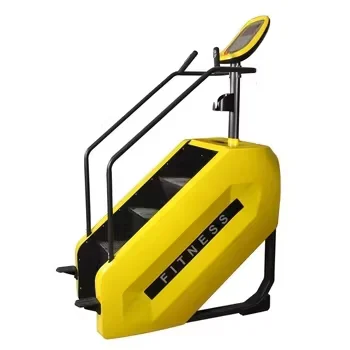
Commercial Stair Climbing Machine, Motor Drive, 164 Steps/Min — engineered with steel pipe frame and PP plastic step components for continuous high-traffic operation. Features adjustable velocity from 15 to 164 steps/min, integrated heart rate monitoring console, and 148 kg net weight ensuring stability during 8+ hour daily use cycles. Every unit undergoes full load testing before shipment, backed by 10-year structural warranty and factory-direct pricing with no distributor markup.
// Spec Highlights
• Direct from Manufacturer · No Middlemen · Worldwide Shipping
01
// Material
Imported Solid Wood
Premium hardwood frames sourced for density and visual warmth.
02
// Hardware
Medical-Grade Silent
Whisper-quiet pulleys and springs for clinical environments.
03
// Customization
Appearance OEM
Color, upholstery, and branding tailored to your studio.
04
// Service
Layout Design
Free venue planning for studios and rehab institutions.
Every component is selected for longevity, performance, and aesthetic harmony - from imported hardwood frames to silent medical-grade accessories.
// Features
Motor-Driven Endurance — 148 kg net weight anchors this commercial stair climbing machine against vibration at maximum step velocity.
| Parameter | Value |
|---|---|
| Product Type | Commercial Stair Climber |
| Model | SQ1017 |
| Drive Type | Motor Drive (Electric) |
| Running Velocity | 15 – 164 steps/min |
| Step Area | 560 × 235 × 220 mm |
| Product Dimensions | 1450 × 820 × 2080 mm |
| Net Weight | 148 kg |
| Mains Input | AC220V±10% / AC110V±10% |
| Console Display | Time, Climb, Calories, Steps, Heart Rate |
| Material | Steel Pipe + PP Plastic |
| Certification | CE |
| Customization | Available (color, branding) |
| Facility Type | Typical Use |
|---|---|
| Commercial gym cardio zone | High-traffic continuous operation, 8+ hours daily |
| Hotel & resort fitness center | Premium member experience with low maintenance demand |
| University athletic department | Pre-season conditioning and aerobic capacity testing |
Many machines labeled as a commercial stair climbing machine avoid disclosing steel tube gauge or welding methodology. The result: stable feel on day one, then pedal wobble, handrail play, and motor noise within six months — all traceable to vague structural specs and uncontrolled assembly tolerances.
The difference lies in whether the frame can resist torsional flex at 164 steps per minute under a 120 kg user, not whether it looks sturdy at rest.
Manufacturers who quote "commercial grade" steel without mill certification leave buyers unable to verify whether the frame tube meets the load demands of continuous motor-driven operation. Spot-welded joints pass visual inspection but develop micro-cracks under the cyclic loading pattern unique to stair climbing — a vertical impulse force repeated thousands of times per session [NEED_CITE: fatigue failure mechanisms in cyclically loaded welded steel structures].
This commercial stair climbing machine occupies the high-intensity aerobic station within a well-configured cardio zone. It targets the quadriceps, gluteal complex, and calf musculature through a continuous stepping pattern that differs fundamentally from treadmill running or elliptical motion. In facility layouts, it pairs with self-powered treadmills and air bikes to create a three-tier cardiovascular circuit covering steady-state, interval, and stair-specific conditioning. The 1450 × 820 mm footprint requires a minimum 600 mm rear clearance for motor ventilation and a 900 mm side aisle for safe user mounting — dimensions that must be verified during floor planning before procurement.
Unlike plate-loaded strength equipment where loads are static between reps, a commercial stair climbing machine subjects its frame to continuous dynamic loading — a vertical impact force at each step cycle, compounded by lateral sway from alternating foot placement. At 164 steps per minute, the pedal assembly undergoes over 10,000 load cycles per hour of operation. The motor mount and main frame junction experience the highest stress concentration, requiring continuous weld penetration rather than intermittent spot welds. Step surface bonding to the pedal arm must resist shear fatigue without delamination, while the PP plastic step housing must maintain dimensional stability under sustained compression and sweat exposure. Bearing points in the step chain drive system operate in a dust-laden, high-humidity environment where unsealed components degrade rapidly [NEED_CITE: bearing seal classification for fitness equipment in high-particulate environments].
The steel pipe frame of this commercial stair climbing machine determines the entire unit’s rigidity threshold. Tube wall thickness and cross-sectional dimension together define the moment of inertia — the engineering property that governs how much the frame deflects under load. A thicker wall in a larger cross-section resists torsional twist at high step velocities, preventing the handlebar sway that users interpret as instability. The motor drive system’s continuous duty rating matters more than peak power — a motor sized only for intermittent use will overheat during back-to-back user sessions in a 24-hour gym. The step area of 560 × 235 × 220 mm provides a surface large enough for varied foot placement while keeping the pedal mechanism compact enough to maintain a manageable 2080 mm total height. The 148 kg net weight is a structural advantage: it lowers the center of gravity and reduces vibration transmission to the floor, which matters when multiple units operate simultaneously on an elevated gym mezzanine.
Frames built with thin-wall tubing deflect visibly under heavier users, creating a wobbling sensation that erodes member confidence and triggers complaint calls. Spot-welded joints at the motor mount and pedal rail junctions crack without warning — a safety liability that exposes the facility operator to injury claims. Non-sealed bearings in the step drive system accumulate dust and sweat residue, generating grinding noise and requiring replacement within the first year. Low-density PP step housings crack under sustained loading, while inadequate powder coating exposes bare steel at handrail contact points within months of commercial use. When hardware uses non-standard fasteners, replacement parts become unavailable, forcing full assembly swaps instead of simple component exchanges [NEED_CITE: total cost of ownership comparison between sealed and unsealed bearing systems in commercial fitness equipment].
The commercial stair climbing machine SQ1017 is manufactured in a 15,000 ㎡ vertically integrated facility using Q235 and Q345 industrial steel with mill certification traceable to the original coil. Robotic MIG welding produces continuous weld lines at every structural joint — no spot-weld weak points at the motor mount or pedal rail connections. Every unit undergoes load testing before shipment, verified against operational parameters at maximum step velocity, not sampled from a production batch. The 200μm scratch-resistant powder coating is applied after sandblast surface preparation, providing corrosion protection at handrail and console contact zones. A 10-year frame warranty backs the structural integrity of the steel pipe chassis. For facility planning, 2D-3D CAD layout support ensures this 1450 × 820 mm unit is positioned with correct rear ventilation clearance and safe side-aisle spacing relative to adjacent equipment. OEM customization in color and branding is available for chain operators deploying a unified visual identity across multiple locations.
Provide your cardio zone floor area and current equipment list to receive a 2D-3D layout plan showing optimal placement of the commercial stair climbing machine with correct clearance spacing. Specify your average daily user volume so we can confirm whether the motor-driven continuous duty rating matches your operational intensity. Indicate your target user body size range to verify that the 560 × 235 mm step area and 2080 mm console height accommodate your membership profile. Custom color and branding options are available for multi-site operators requiring visual consistency across facilities.
Q: How does a motor-driven commercial stair climbing machine differ from a self-powered stepper in structural terms?
A: Motor-driven units use an electric drive system that maintains consistent step speed regardless of user weight, requiring a heavier frame to absorb motor vibration and a reinforced motor mount. Self-powered steppers rely on user weight to drive the step mechanism, placing different stress patterns on the frame. The motor-driven configuration suits high-traffic facilities where consistent pace matters for programmed workouts.
Q: What floor load capacity is needed to install this commercial stair climbing machine?
A: The unit weighs 148 kg at rest. Under dynamic operation at maximum velocity with a heavy user, peak floor loading increases significantly. Most commercial gym floors rated for standard strength equipment can support this machine. For elevated mezzanine installations or upper-floor placements, structural engineers should verify that the floor system handles both the static weight and the rhythmic dynamic loading pattern unique to stair climbing equipment.
Q: How should I plan spacing between this machine and adjacent cardio equipment?
A: The 1450 × 820 mm footprint requires 600 mm rear clearance for motor ventilation and service access. Side aisles should maintain at least 900 mm for safe user mounting and dismounting. When placing multiple units in a row, allow 1200 mm between user standing positions to prevent elbow contact during operation. These dimensions should be verified in a floor plan before procurement to avoid unusable gaps or unsafe clearances.
Q: What maintenance does the motor drive system require under daily commercial use?
A: The motor drive requires periodic belt tension checks and step chain alignment verification. Dust accumulation around the motor housing should be cleaned quarterly to prevent overheating. Unlike self-powered systems with no electrical components, motor-driven units need mains connection inspection and console electronics monitoring. Sealed bearings in the step mechanism reduce but do not eliminate the need for periodic lubrication checks in high-humidity environments.
Q: Can this commercial stair climbing machine be customized for branded gym chains?
A: Color customization and private-label branding are available for the frame powder coating and console housing. Customization is handled at the factory level during production, ensuring coating adhesion and finish quality match standard production units. Multi-site operators can specify unified color schemes across locations. Contact the procurement team with your branding requirements and deployment volume to receive a customized quotation.
Premium aesthetics meet quiet operation for boutique studio environments.
Medical-grade silence and precision for sports & postpartum recovery.
Furniture-grade craftsmanship for premium residential installations.
Compact premium setups for one-on-one and small-group training.
Aesthetic Pilates integration for hybrid wellness studio programming.
Multi-unit deployment with instructor-grade reliability for certification programs.
Tell us about your project. Our team will respond within 24 hours with pricing, customization options, and shipping details.
// Sales Director
William
+86 132 2531 1800
// Export Manager
Bella
+86 198 5412 8032
william@bickfit.com