01 / Scenario
STUDIO
P
High-End Pilates Studios
Premium aesthetics meet quiet operation for boutique studio environments.

ISO
9001
CE
Certified
OEM
Available
10YR
Warranty
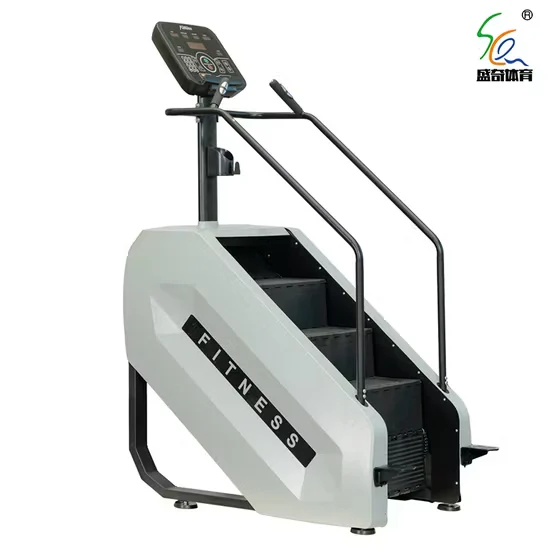
Commercial Stair Climbing Machine, Motor Drive, 180kg Max User Weight — engineered with steel pipe frame construction and PP plastic step surfaces rated for sustained high-traffic operation, featuring adjustable speed from 15 to 164 steps per minute and integrated heart rate monitoring display. Every unit undergoes full load testing before shipment, backed by 10-year frame warranty and site planning support for cardio zone layout.
// Spec Highlights
• Direct from Manufacturer · No Middlemen · Worldwide Shipping
01
// Material
Imported Solid Wood
Premium hardwood frames sourced for density and visual warmth.
02
// Hardware
Medical-Grade Silent
Whisper-quiet pulleys and springs for clinical environments.
03
// Customization
Appearance OEM
Color, upholstery, and branding tailored to your studio.
04
// Service
Layout Design
Free venue planning for studios and rehab institutions.
Every component is selected for longevity, performance, and aesthetic harmony - from imported hardwood frames to silent medical-grade accessories.
// Features
Motor-Driven Step Assembly — Engineered for continuous commercial duty cycles without thermal degradation.
| Parameter | Value |
|---|---|
| Product Type | Commercial Stair Climber |
| Drive System | Motor Drive |
| Max User Weight | 180kg |
| Step Dimensions | 560 × 235 × 220mm |
| Speed Range | 15–164 steps/min |
| Product Dimensions | 1450 × 820 × 2080mm |
| Net Weight | 148kg |
| Frame Material | Steel Pipe |
| Step Surface | PP Plastic |
| Power Input | AC220V±10% / AC110V±10% |
| Console Display | Time, Climb, Calories, Steps, Heart Rate |
| Certification | CE |
| Customization | Available |
| Facility Type | Typical Use |
|---|---|
| Commercial Gym Cardio Zone | Primary aerobic station for high-volume member traffic |
| Hotel and Resort Fitness Center | Reliable guest-facing equipment with minimal downtime |
| University Athletic Facility | Multi-shift conditioning for student-athlete programs |
| High-Traffic Fitness Studio | Supplementary warm-up or metabolic conditioning tool |
Motor overheating and step mechanism play are the primary failure modes in stair climbers subjected to sustained commercial use.
Many units marketed for gym environments use intermittent-duty motors that overheat during back-to-back sessions, forcing shutdowns during peak hours. The step mechanism bearings — often unsealed or undersized — develop lateral play within months, creating uneven step heights and audible knocking that members notice immediately. [NEED_CITE: motor duty cycle classification for continuous industrial operation]
This commercial stair climbing machine occupies the high-intensity aerobic station in a well-configured cardio floor, complementing treadmills and rowers by offering vertical displacement without impact loading. The motor-driven step system delivers consistent resistance across the full 15–164 steps/min range, accommodating both warm-up pacing and interval-style metabolic conditioning. Frame geometry supports users across a wide anthropometric range, while the 180kg max user weight covers the upper percentile of commercial gym demographics.
Unlike horizontal treadmill use, stair climbing generates concentrated vertical impact at each step contact — a loading pattern that demands rigorous frame joint integrity and bearing retention. The steel pipe frame must resist cyclic deflection at the step pivot points, where eccentric foot placement creates asymmetric torsional loads. [NEED_CITE: fatigue behavior of welded steel joints under cyclic loading] Motor mounting points experience continuous vibration transmission, requiring secure fastening and thermal dissipation design. Step surface material endures thousands of daily foot strikes, demanding wear resistance without surface degradation. The powder coating at handrail contact zones must withstand sweat exposure and cleaning chemicals without chipping or corrosion initiation.
The steel pipe frame construction determines the machine’s resistance to lateral sway during high-speed stepping — tube diameter and wall thickness define the moment of inertia at critical junctions. Motor drive selection matters: continuous-duty ratings ensure the unit sustains 8+ hours of daily operation without thermal cutoff, whereas intermittent-duty motors degrade rapidly under commercial cadence. The PP plastic step surface balances slip resistance with long-term wear, avoiding the surface breakdown seen in lower-grade rubber compounds. Bearing type at the step mechanism pivot directly affects maintenance intervals — sealed units exclude dust and moisture from the pivot zone, while unsealed designs accumulate debris that accelerates wear. [NEED_CITE: bearing seal classification for fitness equipment operating environments]
Thin-wall steel tubing deflects visibly under repeated 180kg loading, creating a perception of instability that erodes member confidence — and eventually causes permanent frame distortion at welded joints. Spot-welded connections at high-stress nodes crack under cyclic torsional loading, creating safety liabilities that surface only after warranty periods expire. Unsealed bearings in the step mechanism allow sweat and floor debris to infiltrate, generating noise and play that require complete mechanism replacement rather than simple bearing swaps. Low-density step surfaces compress permanently within months, creating uneven stepping patterns that increase user injury risk. Inadequate powder coating at handrail and frame contact points exposes bare steel to corrosion, accelerating aesthetic and structural degradation.
Every commercial stair climbing machine ships with 11-gauge frame steel traceable to mill certification, ensuring material consistency across production runs. Robotic MIG welding produces continuous weld lines at all structural joints — no spot-weld weak points that crack under cyclic loading. Each unit undergoes individual load testing before shipment, verifying frame integrity under simulated commercial use conditions rather than relying on sample-based inspection. The 200μm industrial powder coating resists chipping at contact points and protects against sweat-induced corrosion across the frame surface. A 10-year frame warranty backs the structural investment, while 2D-3D CAD layout support ensures proper clearance spacing between this commercial stair climbing machine and adjacent cardio stations. OEM customization options allow color and branding alignment across multi-location gym chains.
Provide your cardio zone floor dimensions and current equipment list to receive a 2D-3D layout with optimized spacing for this commercial stair climbing machine. Specify expected daily usage hours to confirm motor duty cycle alignment with your operational profile. Indicate target user weight range to verify frame load capacity matches your demographic. Customization requests for frame color, console branding, or step surface options are available for multi-unit deployments.
Q: How does motor-driven operation differ from self-powered stair climbing in commercial settings?
A: Motor-driven systems maintain consistent step speed regardless of user weight or cadence, delivering predictable training stimulus across all users. Self-powered units require user effort to initiate movement, creating variable resistance that may discourage lower-fit members. For high-traffic venues, motor drive ensures equipment availability without warm-up delays and supports structured programming through fixed speed settings.
Q: What maintenance intervals should I expect for the step mechanism bearings?
A: Sealed bearings in the step pivot require minimal maintenance under normal commercial use — typically inspection quarterly for noise or play indicating seal compromise. Unsealed designs in comparable equipment demand monthly lubrication and more frequent replacement. Bearing replacement, when needed, involves individual pivot service rather than complete mechanism disassembly, minimizing equipment downtime.
Q: What electrical requirements apply for international installation?
A: This commercial stair climbing machine accepts AC220V±10% or AC110V±10% input, covering standard voltage ranges across most international markets without requiring external transformers. Verify local plug configuration and circuit breaker capacity during site preparation. The motor drive system includes thermal protection to prevent damage from voltage fluctuation within specified tolerance.
Q: How do I determine proper floor spacing for multiple stair climbers?
A: Maintain minimum 600mm clearance on all sides for safe user mounting and emergency dismount access. When positioning multiple units, align them to create clear traffic flow patterns that prevent user collision during peak hours. Request 2D-3D CAD layout support with your floor dimensions to receive optimized placement recommendations accounting for structural footprint and safety zones.
Premium aesthetics meet quiet operation for boutique studio environments.
Medical-grade silence and precision for sports & postpartum recovery.
Furniture-grade craftsmanship for premium residential installations.
Compact premium setups for one-on-one and small-group training.
Aesthetic Pilates integration for hybrid wellness studio programming.
Multi-unit deployment with instructor-grade reliability for certification programs.
Tell us about your project. Our team will respond within 24 hours with pricing, customization options, and shipping details.
// Sales Director
William
+86 132 2531 1800
// Export Manager
Bella
+86 198 5412 8032
william@bickfit.com