01 / Scenario
STUDIO
P
High-End Pilates Studios
Premium aesthetics meet quiet operation for boutique studio environments.

ISO
9001
CE
Certified
OEM
Available
10YR
Warranty
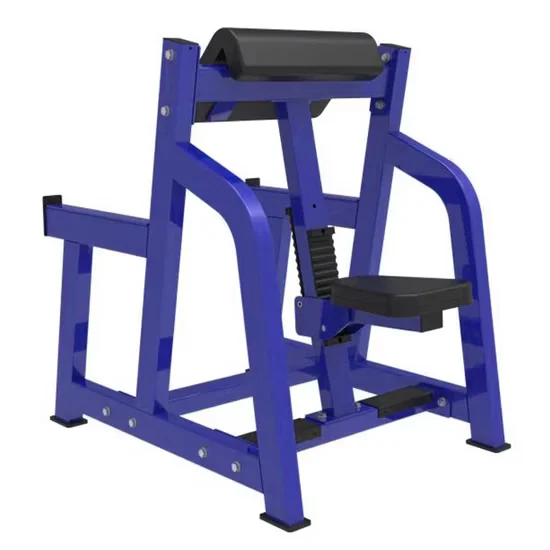
Commercial Vertical Leg Press, 3×3 inch Frame Tube, Plate Loaded — engineered with Q235 industrial steel and robotic MIG continuous welding to eliminate spot-weld failures under repeated heavy cycling. Sealed industrial bearings at pivot points maintain alignment without play during high-traffic daily use. Every unit undergoes load testing before shipment, backed by a 10-year frame warranty and factory-direct floor planning support.
// Spec Highlights
• Direct from Manufacturer · No Middlemen · Worldwide Shipping
01
// Material
Imported Solid Wood
Premium hardwood frames sourced for density and visual warmth.
02
// Hardware
Medical-Grade Silent
Whisper-quiet pulleys and springs for clinical environments.
03
// Customization
Appearance OEM
Color, upholstery, and branding tailored to your studio.
04
// Service
Layout Design
Free venue planning for studios and rehab institutions.
Every component is selected for longevity, performance, and aesthetic harmony - from imported hardwood frames to silent medical-grade accessories.
// Features
Mill-Certified Frame Steel — Q235 steel with coil traceability on every unit, ensuring structural integrity under heavy plate loaded cycling.
| Parameter | Value |
|---|---|
| Product Type | Plate Loaded Leg Press |
| Frame Tube Size | 3×3 inch |
| Steel Grade | Q235 |
| Welding Type | Robotic MIG continuous weld |
| Loading Type | Plate loaded |
| Bearing Type | Sealed industrial bearings |
| Powder Coating | 200μm scratch-resistant |
| Product Dimensions | 1300×1050×1800mm |
| Net Weight | 122kg |
| Certification | ISO 9001, CE |
| Color Options | Main frame and cushion colors customizable per customer requirements |
| Upholstery | Commercial-grade vinyl, standard or high-density options |
| OEM/ODM | Acceptable |
| Assembly State | Folded |
| Power Source | Manual |
| Facility Type | Typical Use |
|---|---|
| Commercial gym strength floor | Primary lower-body pressing station in high-traffic plate loaded zones |
| Hotel and resort fitness center | Durable leg press option for mixed-ability guests under minimal supervision |
| University strength and conditioning room | Heavy loading station for athletic off-season and in-season programs |
| Rehabilitation and performance center | Controlled concentric and eccentric pressing with stable back support |
| Crossfit box functional zone | Accessory strength work for Olympic weightlifters and field athletes |
Continuous robotic MIG welds distribute cyclic stress across the entire joint, eliminating the brittle failure points that spot welds create under repeated heavy pressing.
Most equipment spec sheets describe frames as "commercial grade" without disclosing gauge, wall thickness, or welding method. We tore down a vertical leg press after three months of daily use: the carriage guide rods had sloppy tolerances, thin-wall tubing flexed under eccentric loads, and spot-welded joints showed hairline cracks radiating outward from each weld nugget [NEED_CITE: weld classification and fatigue performance in structural steel]. That machine was scrap. The difference between a unit that survives years of loaded repetitions and one that fails within a single fiscal quarter comes down to verifiable steel specifications and continuous weld penetration on every structural joint. When a gym operator invests in a commercial plate loaded vertical leg press, the weld quality is what determines whether the frame outlasts the upholstery or the other way around.
This vertical leg press targets the quadriceps, glutes, and hamstrings through a fixed linear pressing path, isolating lower-body pushing musculature without the spinal loading of free-weight squats. In a commercial strength floor, it complements hack squat machines, hip thrust stations, and plate loaded lunges by offering a distinct movement angle and a stable back-supported pressing position. Facilities running high member throughput benefit from its straightforward loading and minimal adjustment sequence. The back pad and foot platform accommodate a broad range of user statures, from shorter members needing a higher foot placement to taller athletes requiring full extension clearance. The commercial plate loaded vertical leg press earns its footprint when members load it heavily and move through sets without waiting on selectorized stack changes.
A plate loaded leg press endures a punishing stress profile: static load when plates sit on the carriage, dynamic impact during controlled eccentrics, and peak shear at pivot bearings during the transition from descent to press. In a high-traffic gym, a single station may see dozens of loaded cycles per hour, each one sending force through the pivot bearings, carriage guide surfaces, and weld joints [NEED_CITE: EN 957 structural requirements for stationary training equipment]. The powder coating faces abrasion from plate contact and chemical exposure from sweat and cleaning agents. Upholstery compression cycles number in the tens of thousands annually, and hand grips endure repeated grip-release friction. Sealed bearings at every pivot keep contamination out, maintaining alignment long after open bushings would develop lateral play.
The 3×3 inch frame tube size and Q235 steel grade together determine the deformation threshold before the frame yields under maximal loaded pressing. Larger cross-section tubing resists bending moment forces that would flex narrower profiles during heavy sets. Robotic MIG continuous welding*length, preventing the micro-fractures that propagate from incomplete fusion zones in manual spot welds. Sealed industrial bearings at the carriage pivot points block moisture, chalk dust, and sweat ingress that degrade unsealed bushings within months of commercial use. The 200μm scratch-resistant powder coating, applied over sandblasted surfaces, resists chipping at plate contact zones and adjustment pin insertion points where bare steel would otherwise corrode.
Thin-wall tubing on a plate loaded leg press will flex perceptibly under heavy loads, shifting the carriage path and forcing guide surfaces into binding contact. Spot-welded joints may pass a visual inspection on day one, but each weld nugget creates a stress concentration that accelerates crack propagation under cyclic loading — a liability issue before it becomes a maintenance issue. Unsealed bearings develop lateral play as dust and moisture penetrate the race, turning smooth pressing into a shuddering, unsafe motion. Low-density upholstery compresses permanently within months, exposing members to the hard frame beneath. Underspecified powder coating chips at adjustment contact points, leaving bare steel to oxidize in the humid, sweat-heavy environment of a commercial gym floor [NEED_CITE: corrosion protection standards for commercial fitness equipment surfaces].
The 11-gauge steel frame uses Q235 industrial steel with mill certification traceable to the original coil, not vague commercial grade claims. Robotic MIG continuous welding on every structural joint eliminates spot-weld weak points that fail under repeated heavy loading cycles. Every unit undergoes three-stage QC inspection with load testing before shipment, rather than relying on sample-based quality checks pulled from a production batch. The 200μm industrial powder coating withstands plate contact, adjustment hardware friction, and daily cleaning without exposing the substrate. The 10-year frame warranty reflects confidence in the steel specification and weld integrity under sustained commercial use. Facility layout CAD support ensures this leg press is positioned with correct safety clearances, accounting for plate loading zones and user entry and exit paths.
Share your strength floor square footage and current equipment list to receive a 2D or 3D layout that positions this leg press with correct safety spacing and traffic flow. Specify average daily user volume so we can confirm the structural grade matches your throughput. Provide the target user demographic to verify the adjustment range covers your membership. State any custom requirements including frame color, upholstery color, or logo placement for OEM production runs.
Q: How can I tell if a vertical leg press is truly commercial grade?
A: Request the frame steel gauge and tube dimensions with mill certification, not just a commercial grade label. Inspect the welding method — continuous MIG welds on every joint outperform spot welds under cyclic loading. Confirm the bearings are sealed industrial units rated for daily commercial traffic. Ask for load testing documentation on the specific unit, not a general sample report.
Q: What frame steel gauge is needed for heavy-duty plate loaded leg presses?
A: Commercial environments with heavy daily loading require frame tubing that resists deformation under maximal pressing loads. Look for verified gauge specifications with mill traceability rather than generic commercial grade claims. Tube cross-section size matters equally — larger profiles like 3×3 inch sections resist bending moments that narrower tubing cannot handle during loaded eccentric and concentric phases.
Q: Plate loaded or selectorized leg press — which fits a high-traffic gym better?
A: Plate loaded leg presses eliminate weight stack cable maintenance and guide rod alignment issues, making them lower-maintenance in high-use settings. They also scale loading beyond fixed stack limits, accommodating advanced members. Selectorized units offer faster weight changes between users but introduce cable, pulley, and stack guide components that require regular inspection under commercial traffic volumes.
Q: How much floor space does a plate loaded vertical leg press need?
A: Beyond the physical dimensions, account for plate storage clearance on both sides, user entry and exit paths at the front, and safe walking distance between adjacent stations. Floor planning should consider the loaded carriage travel range and ensure no structural columns or other equipment encroach on the pressing motion. CAD layout files help verify these clearances before installation.
Q: How often does upholstery need replacement on commercial leg press equipment?
A: Replacement cycles depend on upholstery density and daily use volume. Standard commercial vinyl on high-traffic machines may show compression and surface cracking within the first year. Higher-density options extend service intervals meaningfully. Confirm that replacement pads and mounting hardware are available from the manufacturer, since discontinued wear parts force full upholstery rebuilds with third-party suppliers.
Premium aesthetics meet quiet operation for boutique studio environments.
Medical-grade silence and precision for sports & postpartum recovery.
Furniture-grade craftsmanship for premium residential installations.
Compact premium setups for one-on-one and small-group training.
Aesthetic Pilates integration for hybrid wellness studio programming.
Multi-unit deployment with instructor-grade reliability for certification programs.
Tell us about your project. Our team will respond within 24 hours with pricing, customization options, and shipping details.
// Sales Director
William
+86 132 2531 1800
// Export Manager
Bella
+86 198 5412 8032
william@bickfit.com